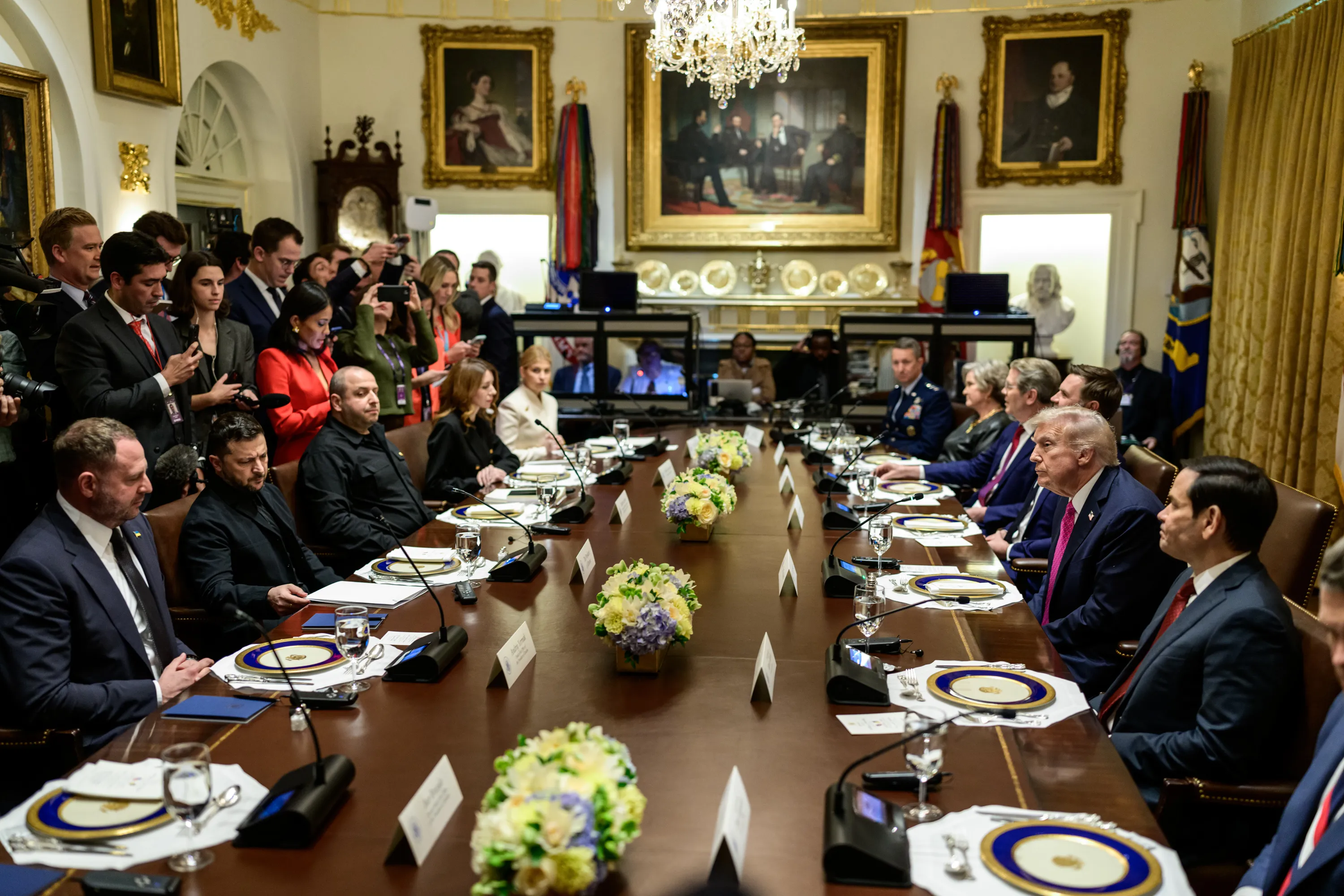
On May 13, 2026, the Prime Minister’s Office in Jerusalem announced that Israeli Prime Minister Benjamin Netanyahu had made a secret visit to the United Arab Emirates during Israel’s 66-day military campaign against Iran, meeting personally with UAE President Sheikh Mohammed bin Zayed. Within hours, the UAE Ministry of Foreign Affairs, speaking through state news agency WAM, formally denied that any such visit took place. Both statements were on the record. Both came from official channels. They cannot both be fully true, and as of this writing, no independent verification has resolved which is closer to the facts.
This is an Open Questions piece. It does not allege wrongdoing. It records what each government has said, what evidence is in the public domain, what named analysts have argued, and what remains genuinely unknown.
What Happened
According to a statement issued by the Israeli Prime Minister’s Office on May 13, 2026, Netanyahu “secretly visited the United Arab Emirates, where he met with UAE President Sheikh Mohammed bin Zayed” at some point during Operation Roaring Lion, the Israeli code name for the recently concluded military campaign against Iran. The PMO described the meeting as “a historic breakthrough in relations between Israel and the United Arab Emirates.”
Public reporting, including in Israeli outlets, places the alleged meeting in Al Ain — an Emirati oasis city near the Oman border — and dates it to approximately March 26, 2026, roughly in the middle of the 66-day campaign. The PMO statement did not give a date or location. It did not release photographs, a joint readout, or any independently verifiable artifact of the encounter.
The following day, May 14, Ziv Agmon, who served as a spokesman for Netanyahu, told Israeli media that he had personally accompanied the prime minister on the trip and that Netanyahu was “received in Abu Dhabi with the honor of kings,” according to the Times of Israel. Agmon’s account was the first by-name confirmation from anyone who claims direct knowledge of the visit. It is also, to date, the only such account in the public record.
The UAE government has said the visit did not happen.
What Officials Say
The UAE Ministry of Foreign Affairs issued a formal denial on May 13, 2026, distributed through WAM. The ministry did not characterize the Israeli statement as an error or a misunderstanding; it stated directly that UAE–Israel relations “are public and conducted within the framework of the well-known and officially declared Abraham Accords” — language that placed the denial within an existing diplomatic structure rather than a new bilateral channel.
The Abraham Accords, signed at the White House in September 2020, normalized formal diplomatic relations between Israel and the UAE. The treaty established embassies, direct flights, and an open public framework for bilateral contact. The UAE’s invocation of that framework on May 13 functioned as a statement that any legitimate Israel–UAE business runs through declared channels, and that a secret head-of-state meeting was not among them.
Dr. Anwar Gargash, diplomatic adviser to the UAE president, reinforced that posture in public remarks during the same week, emphasizing diplomacy and signaling that Abu Dhabi did not wish to be associated with Israeli framing of the wartime period.
Israel’s PMO has not retracted, modified, or expanded its original statement. As of May 15, no photograph, transcript, joint statement, or third-government acknowledgment has been produced to substantiate the meeting Netanyahu’s office described.
Evidence Available
Several adjacent items are in the public domain and not in dispute.
The Wall Street Journal reported during the Iran war that Mossad Director David Barnea made at least two visits to the UAE — in March and April 2026 — for security coordination, and that Shin Bet chief David Zini also traveled to the UAE during that window. Neither government officially confirmed those intelligence-service visits, but neither has denied them in the categorical terms the UAE used on May 13. They have remained reported but un-rebutted.
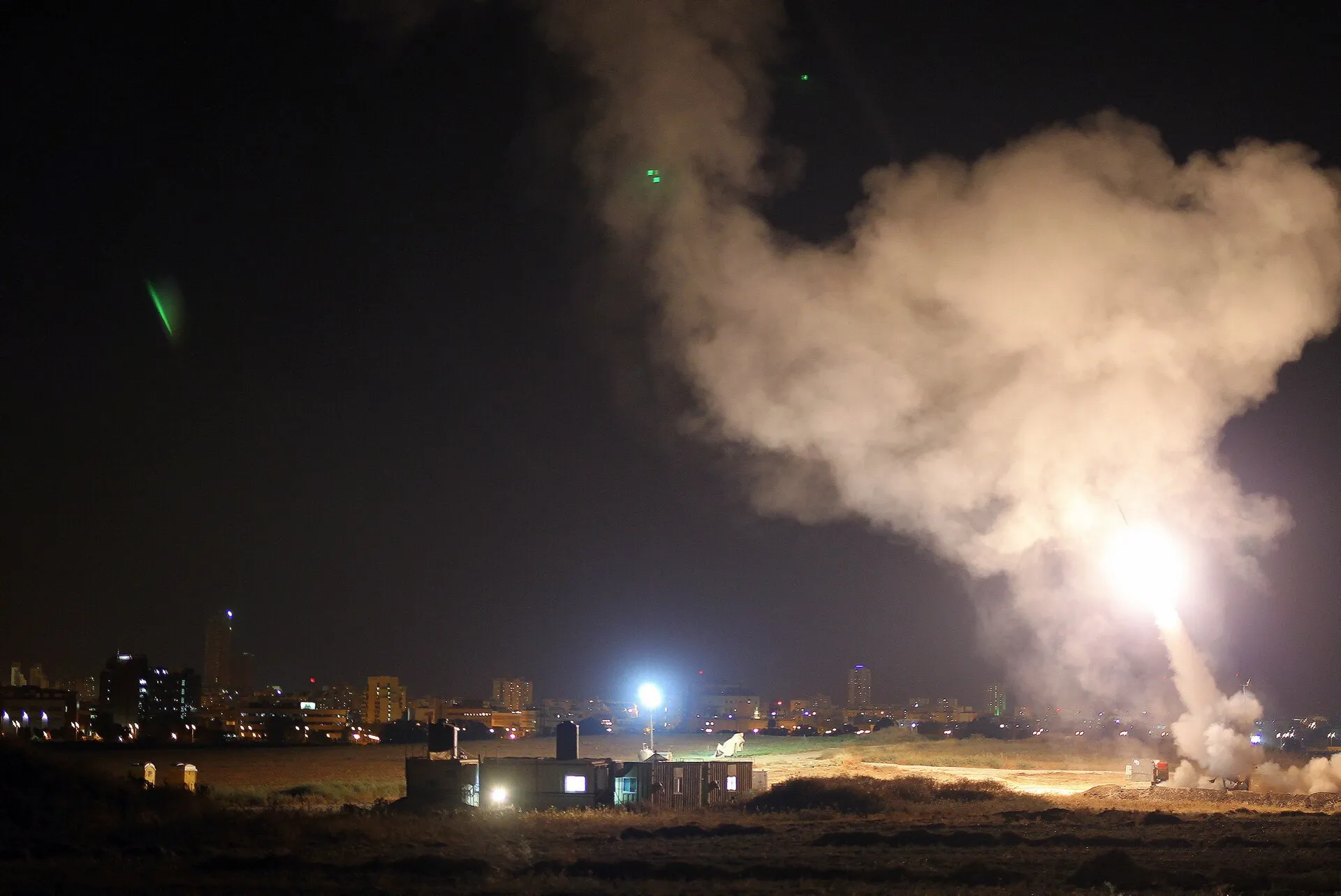
U.S. Ambassador to Israel Mike Huckabee stated publicly in Tel Aviv during the week of May 13 that Israel deployed Iron Dome air-defense batteries and personnel to the UAE during the Iran war. That deployment is consistent with a period in which Iran’s foreign minister publicly accused the UAE of cooperating with Israel, and during which the UAE itself came under direct Iranian attack on its eastern oil hub at Fujairah. It does not, on its own, establish that Netanyahu personally visited Sheikh Mohammed bin Zayed.
What does not exist in the public record, as of this writing, is any independently verifiable evidence of a face-to-face PM-level meeting. No photograph has surfaced. No third-government readout has confirmed it. No documentary trail — flight records, joint communiqué, on-camera arrival — has been produced by the Israeli side that made the claim. The only on-the-record corroboration is Agmon’s, and Agmon is a former Netanyahu spokesman rather than an independent witness.
What Critics Question
Several named analysts have publicly questioned the Israeli account, on the record, in the days since the announcement.
Dr. Yoel Guzansky, a senior researcher at the Institute for National Security Studies in Tel Aviv and a former Iran and Gulf coordinator at Israel’s National Security Council, told Ynetnews during the week of May 13 that the disclosure was likely tied to the upcoming Israeli legislative election. Guzansky also argued that the UAE is “trying to differentiate between security cooperation and cooperating with this government” — a framing in which Abu Dhabi may be willing to maintain working-level intelligence ties while declining to associate itself, in public, with the Netanyahu government’s wartime conduct.
Jalel Harchaoui, a regional political-economy analyst, made a related argument in remarks to Middle East Eye and The New Arab on May 13 and 14. Harchaoui contended that the public dispute reflects an Emirati effort to preserve plausible distance from Israeli policy in Gaza while continuing security coordination at the working level. In his telling, the disagreement is less about whether some form of wartime contact occurred than about whether the UAE is willing to allow Jerusalem to characterize that contact as a personal Netanyahu–bin Zayed meeting.
These are interpretive arguments by named analysts, not findings of fact. Each is tied to a specific person, a specific outlet, and a specific date. Neither analyst has claimed direct knowledge of what did or did not occur in Al Ain.
Competing Theories
Three explanations are circulating in public commentary by named figures. None has been independently verified.
The first, advanced by the Israeli PMO and corroborated only by Agmon, is that the visit happened as described: Netanyahu traveled to the UAE, was received by bin Zayed, and the two leaders discussed wartime coordination. Under this account, the UAE’s denial is a diplomatic disavowal rather than a factual rebuttal — an attempt to keep the meeting off the public ledger after the Israeli side disclosed it unilaterally.
The second, consistent with the UAE Foreign Ministry’s statement and with Gargash’s framing, is that no head-of-state meeting took place. Under this reading, intelligence-level coordination (the Barnea and Zini visits, the Iron Dome deployments Huckabee described) did occur, but no Netanyahu–bin Zayed encounter happened, and the Israeli announcement either overstates or fabricates the personal meeting.
The third, articulated by Guzansky, is that some form of in-person contact may have occurred at a level lower than the principals — possibly involving advisers, possibly in a less formal setting than the “honor of kings” reception Agmon described — and that the Israeli account inflates that contact into a head-of-state meeting for domestic political purposes ahead of the upcoming election.
Each theory is attributable to a named source. Each is consistent with some, but not all, of the publicly known facts. None of them can be confirmed or ruled out on the basis of what is currently in the public record.
What Remains Unknown
A list, with no inferences:
- Whether the PM-level visit actually occurred.
- Whether Sheikh Mohammed bin Zayed personally met Netanyahu, or whether any in-person encounter took place involving lower-ranking Emirati officials.
- Whether the UAE’s denial reflects (a) the meeting did not happen, (b) the meeting happened but Abu Dhabi is declining to acknowledge it, or (c) a lower-level encounter is being characterized in Jerusalem as something larger.
- Why the Israeli PMO chose to disclose the alleged visit on May 13, 2026 — including whether the timing is related to the upcoming Israeli legislative election, as Guzansky has argued.
- Whether the confirmed intelligence visits by Barnea and Zini are entirely separate from the disputed PM visit, or whether the Israeli announcement conflates the two in public-facing language.
- Whether any third government — the United States, Egypt, Jordan, or another Abraham Accords signatory — has independent knowledge of what occurred, and whether any such government may eventually speak to it on the record.
The Bottom Line
What is confirmed: the Israeli Prime Minister’s Office, on May 13, 2026, publicly stated that Netanyahu met Sheikh Mohammed bin Zayed in the UAE during the Iran war. The UAE Ministry of Foreign Affairs, on the same day, formally denied that any such visit occurred. A former Netanyahu spokesman, Ziv Agmon, has publicly claimed to have accompanied the prime minister on the trip. Mossad Director David Barnea and Shin Bet chief David Zini are reported by the Wall Street Journal to have visited the UAE during the war, and U.S. Ambassador Mike Huckabee has confirmed that Israel deployed Iron Dome batteries and personnel to the UAE during the campaign — a campaign whose broader cost the Pentagon addressed in congressional testimony and whose maritime dimension played out in repeated incidents in and around the Strait of Hormuz.
What is not confirmed: the head-of-state meeting itself. No independently verifiable evidence — no photograph, no third-government readout, no joint communiqué — has been produced as of May 15, 2026. The Israeli account rests on the PMO statement and Agmon’s first-person claim. The UAE account rests on a formal Foreign Ministry denial issued through WAM. Both governments are on the record, and they contradict each other. Until additional evidence enters the public domain, that contradiction is the story.
Sources 7 cited · 2 primary
- UAE denies Netanyahu visited in 'secret' during US-Israel war on Iran
- Netanyahu reveals he secretly visited UAE during Iran war, hails 'historic breakthrough'
- UAE denies Israel's Netanyahu secretly visited the country
- Netanyahu Made Secret UAE Visit During Iran War, Israeli Government Says
- Mossad chief, Shin Bet head visited UAE to coordinate during Operation Roaring Lion — report
- 'Not a pawn in Netanyahu's politics': UAE keeps Israel security ties in the shadows
- Iran's Araghchi accuses UAE of abetting Israel after Netanyahu visit revealed
American Courant cites its sources and links to primary documents where they exist. How we report →