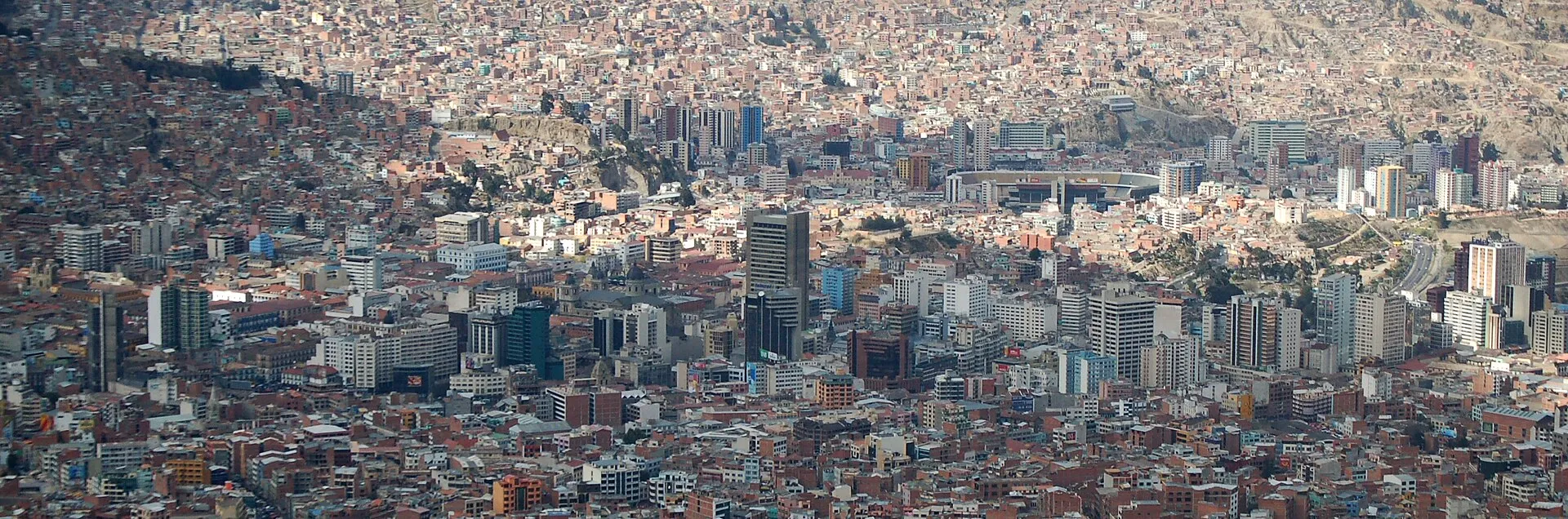
Bolivia’s president has put soldiers on the streets to break a revolt that had brought his country’s economy to a standstill. On June 20, President Rodrigo Paz declared a state of emergency and authorized the military to clear road blockades that, after roughly seven weeks of protests, had cut the administrative capital, La Paz, off from fuel and food. By the weekend, troops and police had begun dismantling barricades that demonstrators had used to choke the country’s main supply routes.
The crisis is the most serious test yet of a government that came to power promising to remake Bolivia’s economy. At its center is a single decision: Paz’s move to scrap long-standing fuel subsidies in an effort to shrink the deficit and steady a currency in free fall. That decision lit a fuse in a country where cheap fuel had been a fixture of daily life for two decades, and the explosion has now drawn in the army, the International Monetary Fund and the future of some of the most strategically important mineral deposits on earth.
Why It Matters
For American readers, Bolivia can feel distant — a landlocked Andean nation of about 12 million people, far from the headlines that dominate U.S. news. But the country sits on what is believed to be the world’s largest store of lithium, the metal at the heart of the batteries that power electric vehicles, phones and grid storage. Bolivia holds more than a fifth of the world’s identified lithium reserves, an estimated 23 million tons concentrated largely in the Salar de Uyuni salt flat. Who gets to develop that resource, and on what terms, is a question with direct bearing on the global battery supply chain that the United States, China and Europe are all racing to secure.
That makes Bolivia’s political stability a matter of more than humanitarian concern. The unrest is unfolding as Western governments try to reduce their dependence on Chinese-controlled critical-mineral supply chains — the same competition driving U.S. policy elsewhere, including sanctions tied to the scramble for cobalt and coltan in central Africa. A Bolivia that descends into prolonged instability is a Bolivia where no large mining investment, Western or otherwise, is safe. The protests now making lithium development “increasingly difficult to sustain,” as one industry assessment put it, are therefore a problem that reaches well beyond the country’s borders.
The Background: Cheap Fuel and an Empty Treasury
To understand the anger, follow the money. Paz took office on November 8, 2025, after winning an election that ended roughly two decades of rule by the leftist Movement for Socialism, or MAS. The center-right leader inherited an economy in acute distress: foreign reserves that had collapsed from around $15 billion a decade ago to barely $4.5 billion, much of it held in gold, and a chronic dollar shortage that left importers struggling to pay for goods from abroad.
Fuel was the sharpest edge of that crisis. Bolivia, once a natural-gas exporter, now imports fuel at a cost of nearly $3 billion a year against gas exports worth roughly $1 billion — a gap the government covered through subsidies it could no longer afford. Paz’s decision to cut those subsidies was aimed at closing the deficit and was made amid talks with the IMF, whose support typically comes with demands for exactly this kind of fiscal tightening. To his backers, it was overdue medicine. To the unions, Indigenous federations and transport workers who poured into the streets, it was austerity imposed on the poor, and they demanded he reverse it or resign.
The result was a 50-day standoff. Miners marched alongside transport workers; Indigenous federations maintained blockades on key highways; and the barricades isolating La Paz emptied supermarket shelves and, by some accounts, left hospitals short of oxygen. Authorities reported hundreds of arrests and dozens of injuries as confrontations between demonstrators and riot police turned violent. The economic paralysis, more than any single clash, is what finally pushed the government to invoke emergency powers.
The Timeline
The sequence is compressed. Protests escalated through the spring as the subsidy cut took hold and the dollar crunch worsened, with blockades spreading across the country over roughly five weeks. As supply lines to La Paz seized up — fuel scarce, food prices climbing daily — pressure built on the government to act. On June 20, Paz declared the state of emergency, a measure that grants the military broad authority to remove blockades and restore movement on the highways. Security forces began clearing barricades immediately afterward, and the government framed the step as a necessary move to reopen the economy rather than a crackdown on dissent.
What the emergency declaration does not resolve is the underlying dispute. Clearing a road removes the symptom; it does not restore the fuel subsidy the protesters want back, nor does it refill the treasury that made the subsidy unaffordable in the first place.
The Global Impact
Bolivia’s turmoil lands in an unusually fragile global moment. The same forces buffeting the country — high energy costs, a strong dollar squeezing emerging-market borrowers, and the heavy debt loads many governments accumulated through the pandemic — are the ones the World Bank cited this month when it cut its forecast for the global economy to the weakest pace since the pandemic. Bolivia is, in many respects, a concentrated example of that wider strain: a fuel-importing, debt-burdened economy with thin reserves, forced into painful adjustment at the worst possible time.
The lithium dimension is what gives the story its strategic weight. Paz had campaigned on opening Bolivia to private and foreign investment and on reviewing the opaque lithium contracts his predecessors signed with Chinese and Russian companies — a pivot Western governments and automakers had watched with interest. That opening depends entirely on stability. Investors weighing multibillion-dollar, decades-long projects do not commit capital to a country where the army is clearing protesters off the roads. Every week of unrest narrows the window in which Paz can credibly pitch Bolivia as a reliable supplier of the metal the energy transition runs on.
What Comes Next
The immediate question is whether the state of emergency restores order without deepening the conflict. Military deployments against domestic protests carry their own risks, and a heavy hand could harden the opposition rather than break it. Watch whether the blockades stay cleared or simply reassemble once troops move on, and whether the protest movement’s leaders return to negotiation or escalate.
The economic signposts are just as concrete. Watch the IMF talks: any agreement would likely lock in the subsidy cuts that triggered the unrest, testing whether Paz can sell austerity to a population that has just spent seven weeks rejecting it. Watch the dollar reserves and the fuel supply, the two pressures that turned a policy decision into a national emergency. And watch the lithium contracts — whether a government consumed by crisis still has the bandwidth to court the foreign investment it staked its presidency on.
Bolivia’s standoff is, at its core, a story about the cost of an empty treasury meeting the expectations of a country accustomed to cheap fuel. How Paz manages that collision will determine not only the stability of his own government but who, ultimately, gets to develop one of the largest lithium prizes on the planet. Readers can follow our world coverage as the crisis and its consequences unfold.
Sources 5 cited
- Bolivia's president declares a state of emergency as road blockades choke supplies
- Bolivia's president declares state of emergency over blockade crisis
- Bolivia declares state of emergency amid blockade crisis
- New president, new policy: Bolivia's shift against lithium protectionism
- Lithium: Can Bolivia's new president revive the country's 'white gold' dream?
American Courant cites its sources and links to primary documents where they exist. How we report →