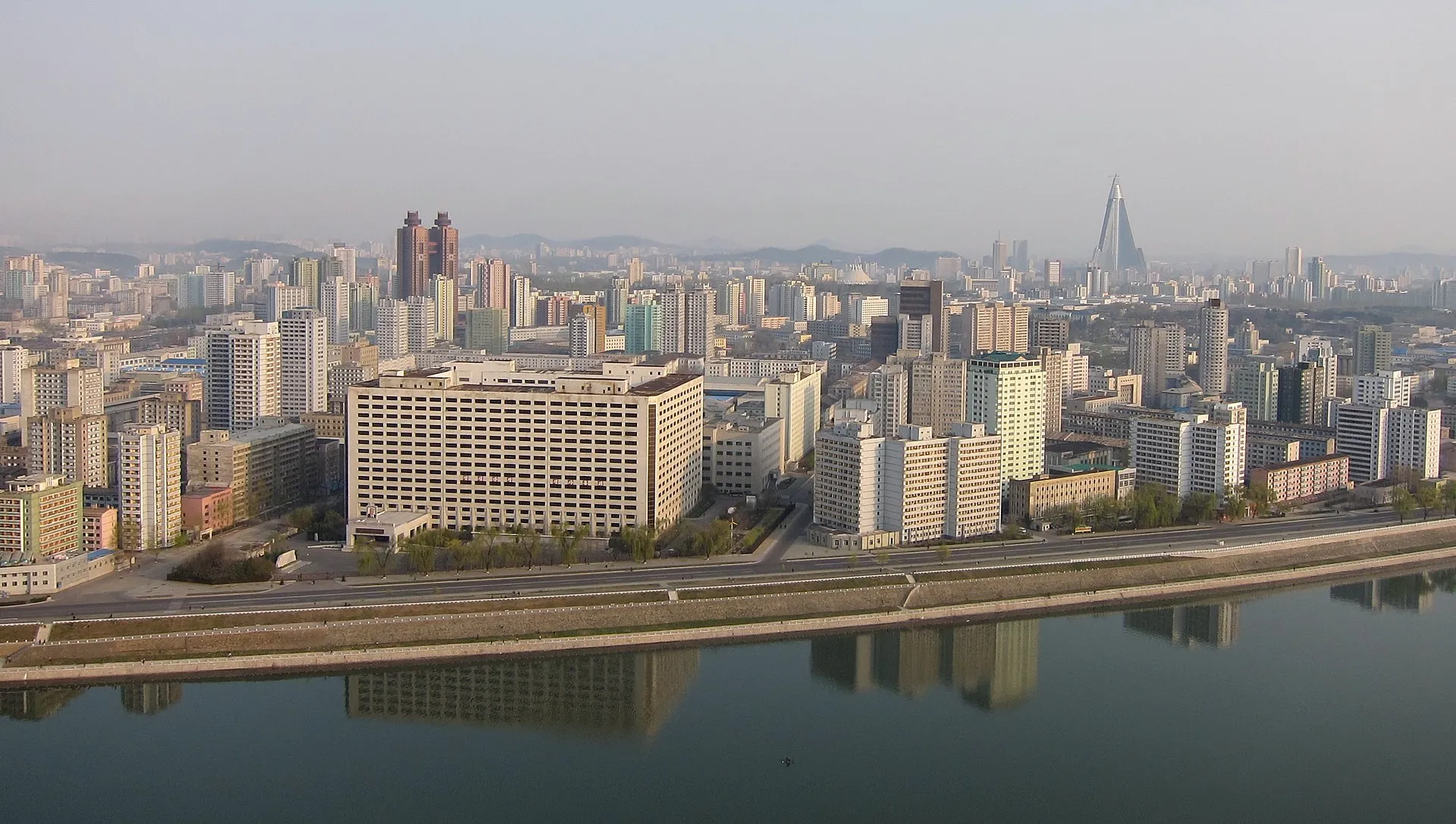
Xi Jinping went to Pyongyang this week and made a point of what he did not say. During his first visit to North Korea in seven years, the Chinese leader called for deepening “strategic coordination and cooperation” with Kim Jong Un’s government, presided over a state banquet and pledged to expand economic ties — and never publicly raised the subject of North Korea’s nuclear weapons.
That silence is the news. For Washington, which has framed its North Korea policy around the goal of denuclearization, Xi’s two-day state visit on June 8 and 9 was a signal that the country’s most important patron is no longer even pretending to push Pyongyang toward giving up its arsenal. Instead, China appeared to accept North Korea as it is — a nuclear-armed state whose “sovereignty and security” interests, in the language analysts used to describe Xi’s posture, Beijing is prepared to defend.
It was Xi’s first trip to North Korea since 2019 and, by most counts, the seventh meeting between the two leaders. North Korean state media KCNA reported that Xi said he and Kim had reached an “important consensus” and agreed to safeguard regional and global peace, while the two sides pledged to expand cooperation across politics, the economy and culture. Reuters, citing North Korean state media, reported that the leaders agreed to broaden ties across multiple sectors.
Why It Matters
The visit lands directly on a U.S. policy claim. During President Trump’s three-day visit to Beijing in May, a White House readout said the two leaders shared a “goal to denuclearize North Korea.” Beijing never publicly echoed that language, and the gap has now widened into open daylight. On June 6, North Korean official Kim Yo Jong — Kim Jong Un’s sister and a frequent voice for the regime — dismissed the U.S. characterization as “fake information,” according to reporting on the exchange. Xi’s trip, days later, reinforced the message: China is not carrying Washington’s denuclearization agenda to Pyongyang.
For the United States, that matters because China is the one country with real leverage over North Korea — its dominant trading partner, fuel supplier and diplomatic shield at the United Nations. American strategy has long assumed that pressure on Pyongyang runs through Beijing. If Xi has decided to stop treating denuclearization as a shared objective, the central premise of that approach erodes. Analysts cited in the coverage suggested the visit will likely raise the threshold for any future North Korean engagement with the United States and South Korea, making Pyongyang less inclined to negotiate from a position it now shares with a great-power backer.
The visit also fits a broader pattern in Beijing’s diplomacy. Xi traveled to Pyongyang only weeks after hosting both Trump and Russian President Vladimir Putin, in a stretch of summitry that put China at the center of the world’s major-power negotiations. The North Korea trip extends that effort, this time to shore up a neighbor and treaty ally rather than to manage a rival.
The Diplomatic Stakes
What North Korea wants from China is recognition and relief — acceptance of its nuclear status and an easing of the sanctions that have squeezed its economy for years. Xi did not grant those things explicitly, but by avoiding the nuclear question and emphasizing the regime’s security concerns, he moved in their direction without paying for it openly. Some analysts said Xi was likely to offer concrete economic incentives, such as shipments of rice and fertilizer, while declining to press on weapons.
Kim, for his part, offered Xi something China prizes. He told the Chinese leader he would fully support the “One China principle,” Beijing’s position that Taiwan is part of China — a statement that aligns Pyongyang with China on the issue Beijing treats as its highest priority. That exchange laid bare how the two governments are trading mutual backing: North Korea endorses China’s line on Taiwan, a flashpoint that has drawn sharp U.S. and congressional attention, while China shelters North Korea from pressure on its nuclear program.
Kim arrives at this moment with more standing than he has had in years. By supplying Russia with troops and munitions for its war in Ukraine, North Korea has turned itself from an isolated pariah into a supplier whose help a permanent UN Security Council member needed. That has given Pyongyang leverage and a second great-power patron, complicating any Western effort to isolate it. The warmth on display in Pyongyang reflects that shift — Xi courting a partner whose value has risen, not lecturing a dependent.
The relationship Xi was tending is the oldest formal alliance either country has. China and North Korea are bound by a 1961 mutual-aid treaty that commits each to the other’s defense, the only such pact China maintains, and Beijing fought alongside Pyongyang in the Korean War — the history the Sino-Korean Friendship Tower the two leaders visited was built to commemorate. For decades China has also been North Korea’s economic lifeline, accounting for the overwhelming majority of its trade and the fuel and food that keep its economy running. That dependence is the lever Washington has counted on Beijing to pull; Xi’s visit suggested he would rather reinforce the alliance than use it against Pyongyang.
The Timeline
Xi arrived in Pyongyang on June 8 at Kim’s invitation, greeted at the airport by Kim and his wife, Ri Sol Ju, with a ceremonial welcome and bouquets presented by children. The leaders met at the Kumsusan State Guest House and attended a state banquet, and on June 9 visited the Sino-Korean Friendship Tower, a monument to the two countries’ alliance during the Korean War, before Xi departed.
The visit followed months of warming ties. China and North Korea reopened border crossings and transport links earlier this year, with flights and passenger train service between Beijing and Pyongyang resuming in March after a roughly six-year suspension dating to the pandemic. Those practical steps set the stage for the summit, signaling that the relationship was moving from frozen to active well before Xi’s plane touched down. The trip came just weeks after Xi hosted Trump and Putin in Beijing in separate visits, placing the North Korea stop within a dense season of Chinese diplomacy.
What Comes Next
The immediate question is whether the economic pledges translate into visible support — grain and fertilizer shipments, expanded trade through the reopened crossings, or energy assistance that would blunt the effect of sanctions. Watch, too, for how Washington and Seoul respond to a China that has stopped echoing the denuclearization line, and whether North Korea uses its strengthened position to harden its terms for any talks. For South Korea, which has watched its northern neighbor draw closer to both Beijing and Moscow, the visit sharpens a strategic problem: a nuclear-armed North backed by two great powers is far harder to pressure or engage than one isolated and dependent.
For the Trump administration, the visit is a setback dressed in protocol. The denuclearization goal it described after the Beijing summit now looks less like a shared objective than an American aspiration that its most essential partner declines to share. The grand spectacle in Pyongyang — the banquet, the friendship monument, the talk of “important consensus” — was, in substance, China planting its flag beside a nuclear-armed North Korea and inviting the rest of the region to take note. American Courant follows the diplomatic fallout on our world news coverage.
Sources 6 cited · 2 primary
- China's Xi says he reached important consensus with Kim in North Korea visit, KCNA reports
- North Korea, China Agree to Expand Cooperation in Various Sectors, North Korea's State Media Says
- China's Xi Jinping calls for strengthened 'strategic cooperation' with North Korea in rare summit with Kim Jong Un
- China re-centers North Korea ties as nuclear silence reshapes balance
- Korean Peninsula Update, June 9, 2026
- China's Xi Jinping to make rare trip to North Korea next week
American Courant cites its sources and links to primary documents where they exist. How we report →