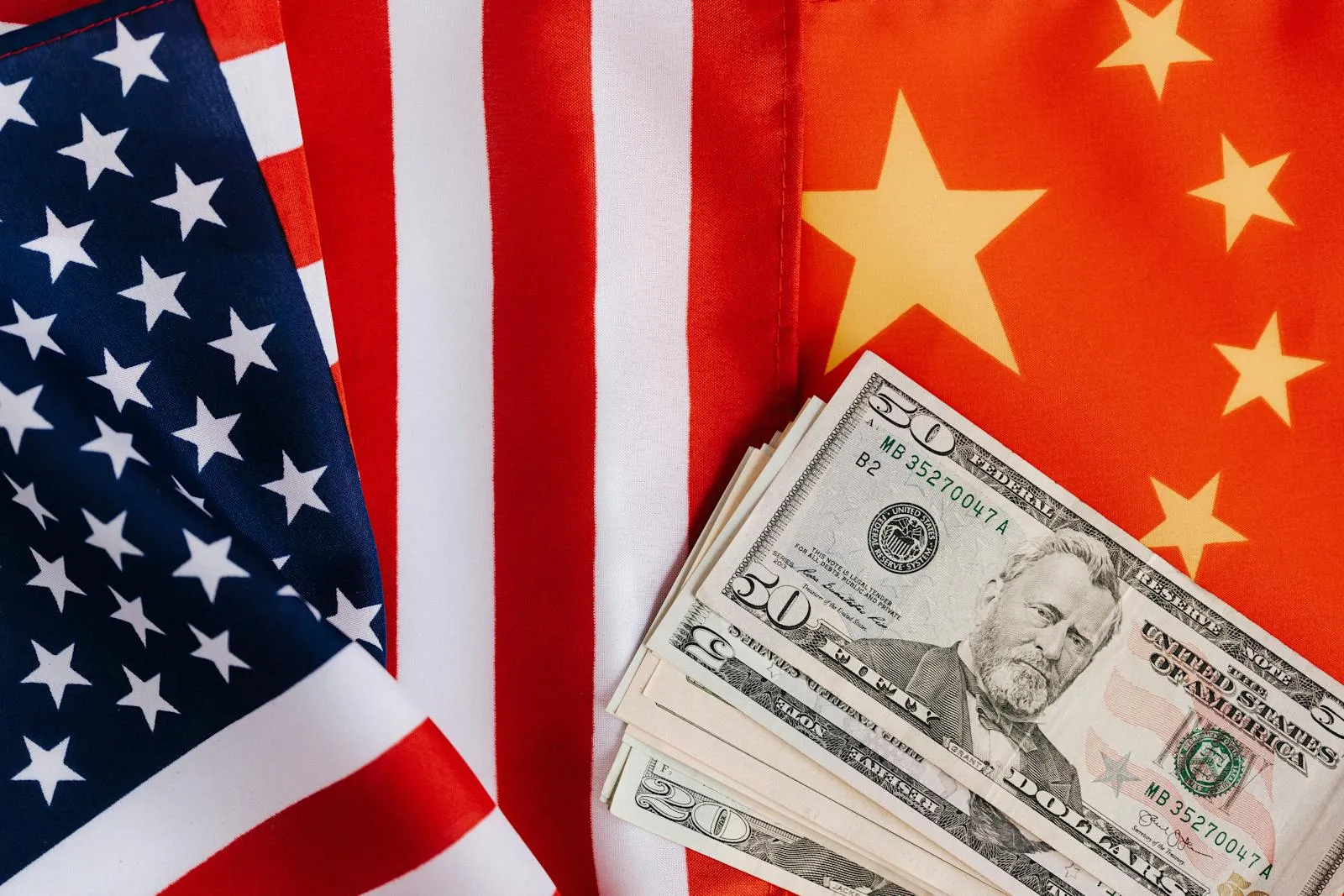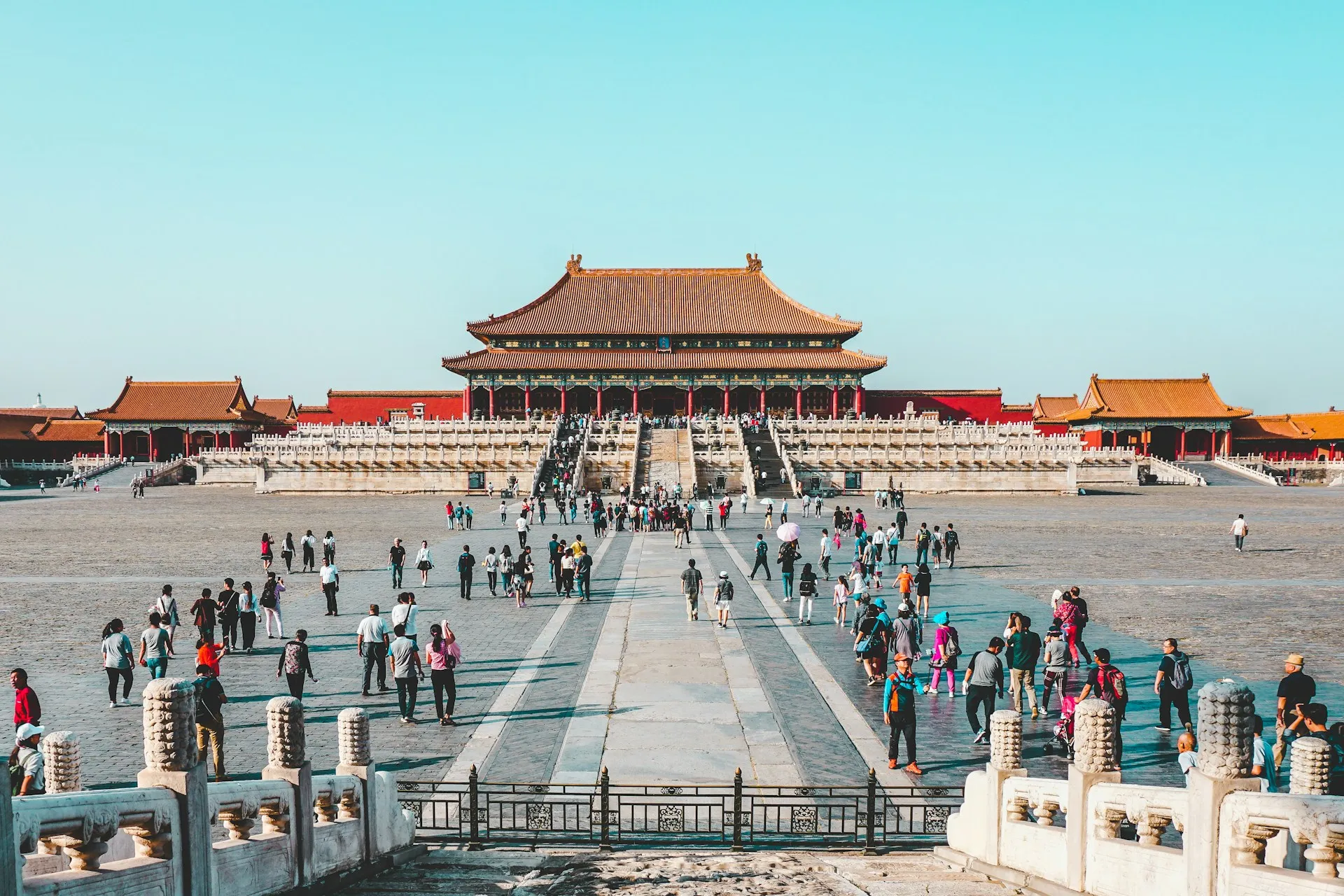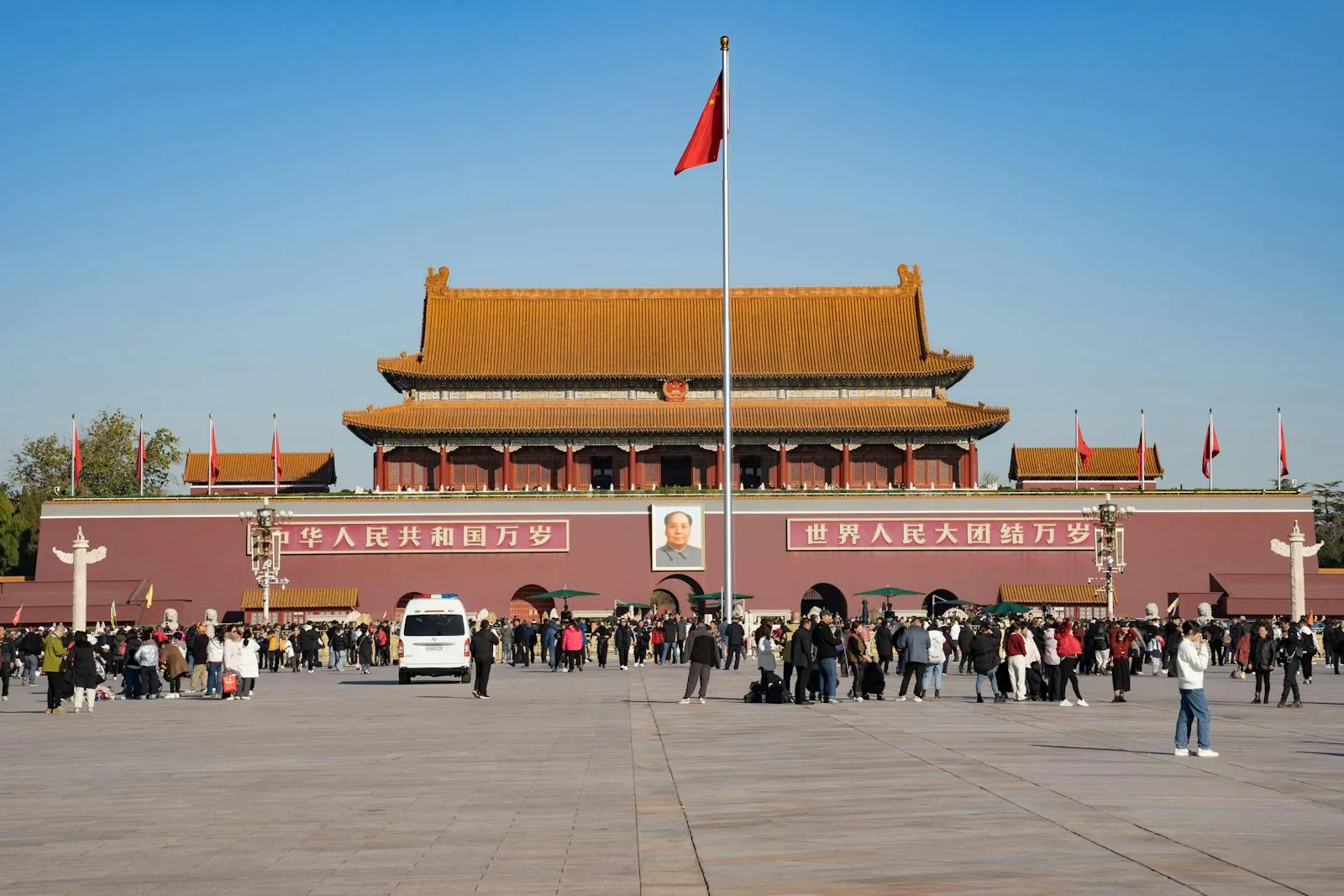
President Donald Trump touched down at Beijing Capital International Airport Wednesday evening local time to a formal military reception, beginning a state visit to China that runs through May 15. The arrival capped a day of parallel diplomatic activity: as Air Force One crossed the Pacific, Treasury Secretary Scott Bessent and Chinese Vice Premier He Lifeng completed two days of economic sessions in Seoul, establishing the trade architecture that Trump and President Xi Jinping will be asked to ratify when they meet Thursday morning at the Great Hall of the People.
The separation of tracks — economic preparation in Seoul, security agenda in Beijing — was deliberate. By resolving as many transactional variables as possible before the principals sat down, both governments aimed to give Thursday’s bilateral session room to address the two questions that no amount of advance work can settle in advance: what China will do to help end the Iran war and reopen the Strait of Hormuz, and whether Trump will leave Beijing having preserved or compromised the American commitment to Taiwan’s defense.
What Bessent and He Lifeng Accomplished in Seoul
The Treasury Department confirmed Wednesday that the Seoul sessions produced a preliminary framework covering three of the four main economic agenda items heading into the summit. On agriculture, the two sides agreed on an annualized target for Chinese purchases of American soybeans through 2028, consistent with commitments Beijing made in the November 2025 South Korea trade truce. On aviation, China’s Civil Aviation Administration and the FAA agreed to advance technical certification talks for the Boeing 737 Max 10, clearing the regulatory runway — if not yet the commercial terms — for a large aircraft order that analysts have expected Trump to announce at the summit. On critical minerals, Beijing agreed to extend general export licenses for rare earths, gallium, and germanium through December 2026, preserving the suspension of controls that was a centerpiece of last fall’s deal.
The fourth item — the fate of the broader tariff suspension, which expires November 10, 2026 — was explicitly left for the leaders themselves. According to Bloomberg’s reporting on the Seoul sessions, both sides concluded that extending the tariff truce required a political signal from Trump and Xi that lower-level officials could not credibly deliver on their own.
Boeing’s situation illustrates how economic and security agendas interact. A Chinese order for several hundred aircraft — the company has not received a large Chinese purchase in nearly a decade — would be the summit’s most visible business headline and a domestic win for Trump. But finalizing it requires Beijing’s cooperation on aviation certification, which remains entirely within China’s discretionary authority, giving Chinese officials quiet leverage over the economic timeline even after the Seoul sessions closed.
Trump’s Arrival and the Signal It Sends
The protocol of Trump’s arrival carries its own diplomatic information. China’s state reception extended to the airport — a level of ceremony that Beijing reserves for visits it assigns particular significance and from which it expects particular returns. Chinese state media’s coverage of the arrival was notably restrained in its pre-summit characterization, describing the visit as an opportunity to “stabilize” the relationship without telegraphing specific outcomes. That framing — positive but non-committal — was read by analysts in Washington and Taipei as consistent with Beijing seeking flexibility to announce a package deal on its own terms rather than accepting a partial-win framing from the American side.
Trump’s brief remarks to the press pool upon landing carried a different tone. He described the summit as “maybe the most important meeting of my presidency” and said both Taiwan and Iran were “on the agenda.” The explicit naming of Taiwan — before he had walked into a single session — continues the pattern from his Tuesday departure, when he confirmed Taiwan arms sales as a summit topic in response to the Senate letter warning against trading away Taiwan’s security. By naming the issue publicly before any session begins, Trump raises the political cost of a quiet concession that never surfaces in a joint statement.
The Iran Equation at the Summit Table
China is the single most important variable in the diplomatic effort to end the conflict and reopen the Strait of Hormuz. Beijing is Iran’s largest oil buyer, accounting for roughly 90 percent of Iran’s crude exports since American and European sanctions eliminated other significant markets. That dependency gives China genuine leverage over Tehran that no other party at the table possesses — and it makes Beijing a necessary participant in any durable Hormuz solution even if China has no formal role in the U.S.-Iran diplomatic track.
The challenge for Trump is that exercising that leverage costs Beijing something real. Cutting oil purchases, or publicly endorsing American pressure on Tehran, would damage China’s energy supply calculus and damage a bilateral relationship Beijing has carefully maintained as a hedge against Western pressure. Saudi Aramco’s CEO warned earlier this week that oil markets may not normalize until 2027 if the Hormuz disruption persists — a timeline that affects Chinese industry, Chinese inflation, and Chinese political stability nearly as much as it affects American consumers. That shared pain gives Trump something to work with. But shared pain does not automatically translate into Chinese willingness to act.
The American ask, according to officials briefed on the summit preparation, is that Xi communicate to Iranian leadership that Beijing supports a verifiable Hormuz reopening as a condition of continued oil purchasing relationships. That falls short of a formal embargo threat, but it would represent a materially new Chinese posture if delivered publicly. The question is what Trump offers Beijing in exchange.
Taiwan: The Summit’s Defining Variable
The original summit-agenda article published Monday laid out Beijing’s expected asks on Taiwan in detail: a change in declaratory language from “not supporting” Taiwan independence to “opposing” it, and some form of pre-consultation on U.S. arms sales to the island. Either concession would represent a significant departure from the policy framework that has held since the Reagan administration.
What’s changed since Monday is that the Senate letter from eight bipartisan senators — and Trump’s decision to name Taiwan publicly in his departure remarks and again at the Beijing airport — has raised the political cost of a quiet concession. Any Taiwan language that appears in a joint statement will now be read by Capitol Hill through the lens of that letter. Any language that doesn’t appear — if Taiwan advocates expected it should — will also be analyzed. The senators have set a surveillance trap around the summit’s Taiwan outputs.
The frozen $14 billion arms package — interceptor missiles for Taiwan’s Patriot batteries, surface-to-air missile systems, and anti-drone equipment, held at the State Department since January — is the concrete test case. Three outcomes are possible: the package advances after the summit (signaling the administration held the line), it remains frozen with no explanation (ambiguous), or Trump makes a declaratory language concession that makes advancing the package politically untenable — a capitulation that may not be visible in the immediate joint statement.
The two governments have not pre-confirmed whether a joint statement will be issued at the summit’s close. If one is issued, what it says — or conspicuously does not say — about Taiwan will be the first hard evidence of what changed at the summit table. The Council on Foreign Relations noted before the summit that Beijing “will have the upper hand” precisely because Xi can offer Trump economic deliverables that play domestically as wins — and attach security conditions that may not be apparent in the business headlines. On Taiwan, the Senate’s preemptive letter and Trump’s public naming of the issue have raised the political cost of opacity. On Iran, the domestic stakes are concrete: the conflict is currently costing a two-car household an estimated $1,753 more in fuel this year, giving the administration strong incentive to publicize any Chinese commitment on Hormuz as a win.
What Comes Next
Thursday’s schedule begins with a formal welcome ceremony at the Great Hall of the People, followed by the first extended bilateral session. A state banquet follows in the evening. Friday brings working-level sessions on trade, investment, aviation, and energy, along with whatever substantive follow-up the Thursday bilateral requires. Trump is scheduled to depart Saturday morning.
The specific signals to watch as the summit progresses: whether a joint statement is issued and what Taiwan-related language it contains or omits; whether the Boeing order gets announced as a formal deliverable; whether Xi makes any public statement linking China’s Iran policy to the Hormuz reopening; and whether the State Department’s Taiwan arms package moves in the weeks immediately after the visit. The last of those will take longer to appear — but it is the one that carries the most durable policy significance.
The Seoul sessions established the economic floor. The summit that begins Thursday morning will determine whether the security questions get answered — or buried beneath the business headlines.
Sources 6 cited · 3 primary
- Readout of President Trump's Arrival in Beijing
- China Ministry of Foreign Affairs: Xi Jinping to Hold Talks With US President Trump
- Bessent Concludes Two Days of Economic Talks With Chinese Vice Premier He Lifeng in Seoul
- US, China Reach Preliminary Framework on Boeing Orders, Agriculture in Seoul Talks
- Trump Arrives in Beijing for Summit That Will Test China's Role in Iran War
- Before the Summit: What Bessent and He Lifeng Are Actually Trying to Lock In
American Courant cites its sources and links to primary documents where they exist. How we report →