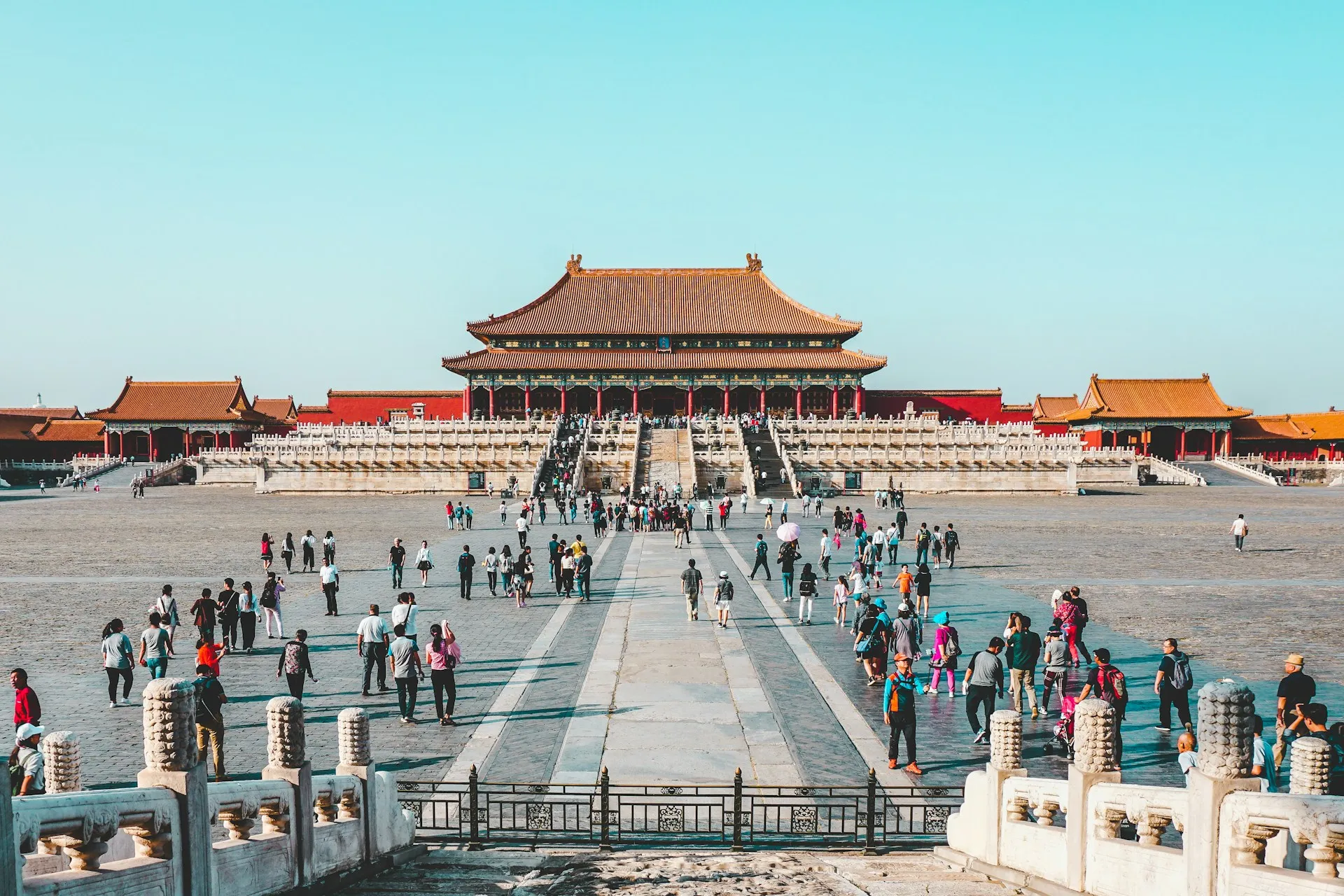
Xi Jinping opened his bilateral meeting with Donald Trump at the Great Hall of the People on Thursday morning with a question that has become the defining frame of US–China relations for more than a decade: whether the two countries can transcend the historic Thucydides Trap and avoid the path that every previous rising and ruling power has taken into war.
The phrase, captured in the official Chinese Foreign Ministry readout of the talks and echoed in the parallel PRC Embassy version, was the first substantive line Xi delivered to the American president after the handshake photographs. “The world is watching whether the two countries can transcend the Thucydides Trap and forge a new model of major-country relations,” Xi said. He paired it with a sentence that has become the standard Chinese framing of the alternative to that descent: “When the two sides cooperate, both benefit; when they fight, both suffer.”
Trump’s response, delivered minutes later in his own opening remarks, did not engage the question. “The relationship between China and the USA is going to be better than ever before,” he said. He thanked Xi for the welcome ceremony, referenced the corporate delegation he had brought with him, and pivoted to trade.
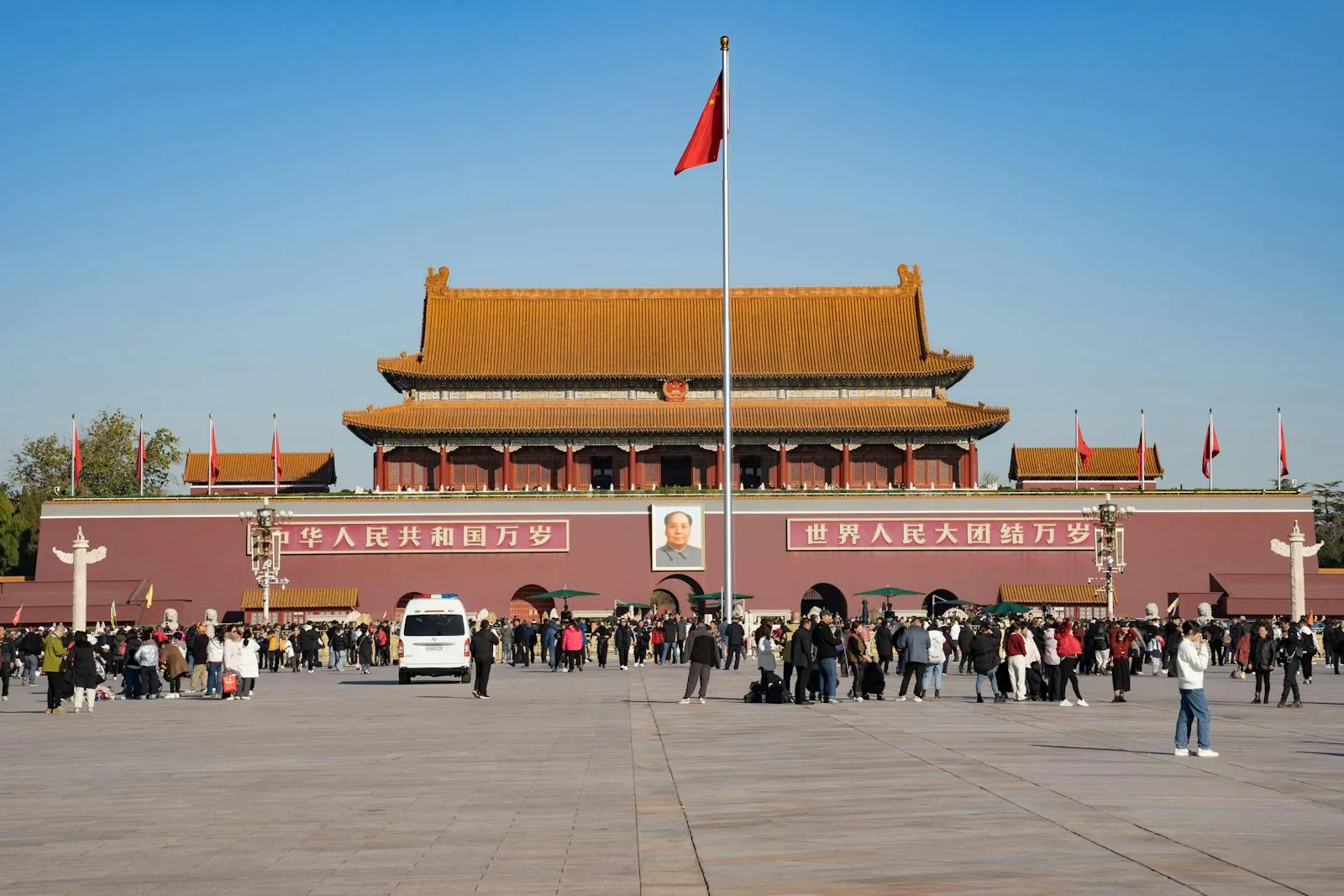
The two leaders were speaking past each other on the largest question of the century, and they were doing it on camera, in the Great Hall, on the opening day of a state visit whose agenda runs through Friday.
What Xi Actually Said, and Why the Framing Matters
The Thucydides Trap is not a Chinese diplomatic concept. The phrase was coined by Graham Allison, a political scientist at Harvard’s Kennedy School, in a 2012 essay for the Financial Times that he later expanded into a 2017 book, Destined for War: Can America and China Escape Thucydides’s Trap?. The frame draws on the Greek historian Thucydides’s account of the Peloponnesian War, in which the established power, Sparta, went to war with the rising power, Athens, because — in Thucydides’s reading — Sparta could no longer tolerate the structural anxiety of being overtaken.
Allison’s research, conducted at Harvard’s Belfer Center, surveyed sixteen historical cases over the past five centuries in which a rising power confronted an established power. Twelve of those cases ended in war. The four that did not — Portugal yielding to Spain in the late fifteenth century, the United Kingdom yielding to the United States in the early twentieth, the Soviet Union and the United States stepping back from the Cold War, and Germany’s reunification within a unified Europe — required specific structural circumstances or deliberate restraint mechanisms.
Xi has invoked the phrase in public before. He used it in a 2015 speech in Seattle on his first state visit to the United States. He used it at the World Economic Forum in Davos in 2017. He has used it in interviews with Western press. But the use of the phrase at the opening minute of a 2026 summit with Trump, against the backdrop of a $14 billion Taiwan arms package that the administration has held in suspension for months, registers differently. It places the largest possible question — whether the two countries are going to war — on the table before the trade items even open.
The Taiwan Pairing
Xi did not leave the Thucydides framing as an abstraction. In the same opening session, according to readouts from both governments and reporting from NPR and The Hill, Xi described Taiwan as “the most important issue” in the bilateral relationship and warned that mishandling it could push relations to a “dangerous” place — leading, in his phrasing, to “clashes and even conflicts.”
The conjunction is the operational content of the opening framing. Xi’s question about avoiding war was not a philosophical one. It was a question with a specific subject. The Thucydides Trap, in Xi’s deployment of it, runs through the Taiwan Strait.
A bipartisan group of eight senators — four Republicans and four Democrats — sent Trump a public letter on Monday warning him not to use the summit to alter American policy toward Taiwan. They wrote that “American support for Taiwan is not up for negotiation” and pressed him to advance the arms package, which has been frozen since shortly after his February phone call with Xi. The Senate warning over Taiwan arms and the Six Assurances did not slow Xi’s framing in the room.
Trump’s Response — and What He Didn’t Say
Trump’s opening remarks, delivered after Xi finished, ran shorter. They contained no reference to Taiwan. They contained no reference to the Thucydides Trap, to great-power competition, or to the historical question Xi had placed at the center of the meeting. Trump praised the welcome ceremony, called the relationship “going to be better than ever,” and moved to the economic agenda.
The omission is consistent with the trip’s prevailing posture. Trump arrived in Beijing on Wednesday with a corporate delegation that included Tesla’s Elon Musk, Apple’s Tim Cook, BlackRock’s Larry Fink, and — added at the last minute — Nvidia’s Jensen Huang. The CEO delegation anchored by Huang and the unresolved question of H200 AI chip exports signaled what the administration was bringing to the negotiation: deliverables, not declarations.
Trump’s response left the framing of the meeting to Xi. The American president did not push back on the Thucydides characterization, did not contest the implication that the relationship’s central question is whether war is avoidable, and did not assert an alternative frame. That silence is itself a diplomatic event, captured by the cameras and the readouts.
The Two-Track Summit
Even as the existential framing dominated the opening minute, the working agenda of the summit — laid out before Trump’s arrival in the pre-summit agenda preview covering Iran, Taiwan, and the expiring trade truce — ran on a parallel track of concrete deliverables. China signaled commitments to purchase roughly 20 million tons of American soybeans and additional volumes of US crude oil. The agenda included continued discussion of the November 2025 trade framework, AI chip export licensing, semiconductor end-use verification, rare-earth supply commitments, and the Iran conflict in the Persian Gulf.
These items are the visible business of the summit. They will be the subject of joint statements, fact sheets, and follow-on technical talks at the Diaoyutai State Guesthouse on Friday. They will produce headlines about commercial agreements and tariff extensions. They are not, in the framing Xi opened with, the question.
The two-track structure is familiar from earlier US–China summits in the Obama and Biden years. The deliverable track produces signed paper. The framing track produces the political language each side takes home for its domestic audience. What is unusual about Thursday’s opening is that Xi made the framing track the louder one, and Trump did not contest it.
What the Thucydides Trap Actually Predicts
Allison’s framework is descriptive rather than deterministic. The twelve cases that ended in war did not end there because the rising power and the established power were structurally incapable of avoiding it. They ended in war because the leaders of those moments failed to construct the institutions, the restraint mechanisms, or the deliberate ambiguity that the four non-war cases relied on.
The British-American transition of the early twentieth century, the closest historical parallel that Allison’s framework offers, took place over roughly thirty years and involved a series of concessions by London and reciprocal restraint by Washington — including the Hay-Pauncefote Treaty of 1901, the resolution of the Alaska boundary dispute in 1903, and a strategic decision by the Royal Navy to concentrate force in the North Atlantic rather than the Caribbean. None of those moves were inevitable. They were chosen.
That is the implication of Xi’s framing. The question of whether the United States and China go to war is not, in either the Chinese reading or in Allison’s reading, a question to be left to historical drift. It is a question to be answered through specific decisions made by specific people in specific rooms. The Great Hall of the People on Thursday morning was one of those rooms.
Whether the summit’s deliverable track — the prospective Boeing orders, the soybean commitments, the AI chip licensing — adds up to the kind of structural restraint mechanism that Allison’s four non-war cases required, or whether it is simply commercial activity proceeding around an unresolved strategic confrontation, will not be answered by anything signed this week. It will be answered over years, by both governments, in the choices made about Taiwan, semiconductors, and freedom of navigation in the Pacific.
For now, what is on the record is this: the leader of the People’s Republic of China, in the Great Hall of the People, opened a state visit by the American president by asking whether the two countries can avoid war. The American president did not answer.
Sources 8 cited · 3 primary
- Xi Jinping Holds Talks With U.S. President Donald Trump
- Xi Jinping Holds Talks With U.S. President Donald Trump
- Thucydides's Trap — An Overview
- What Is the Thucydides Trap, and Why Did Xi Raise It With Trump?
- Xi asks Trump if U.S. and China can avoid the 'Thucydides Trap' at Beijing summit
- China's leader warns Trump that differences over Taiwan could lead to a clash
- Thucydides Trap, personal touches: takeaways from Xi-Trump summit
- Xi warns Trump on Taiwan in Beijing talks
American Courant cites its sources and links to primary documents where they exist. How we report →