The Treasury Department added two more names to its Congo blacklist this week, and the choice of targets says a great deal about how badly Washington’s signature African peace effort is going.
On June 2, the Office of Foreign Assets Control sanctioned John Imani Nzenze, the chief of intelligence for the Rwanda-backed M23 rebel movement, and Gustave Kubwayo, a commander in the FDLR, a Hutu militia with roots among the perpetrators of Rwanda’s 1994 genocide. The two men sit on opposite sides of eastern Congo’s war. Blacklisting both on the same day was the point: the United States is signaling that it holds armed groups on every side responsible for a conflict it has spent nearly a year trying to end.
That conflict is the test case for one of President Trump’s most-touted diplomatic wins. Last June, the U.S. — working alongside Qatar — brokered a framework in Washington meant to halt the fighting between Congo and Rwanda. Nearly a year later, the guns have not gone quiet, and the sanctions keep coming.
Why It Matters
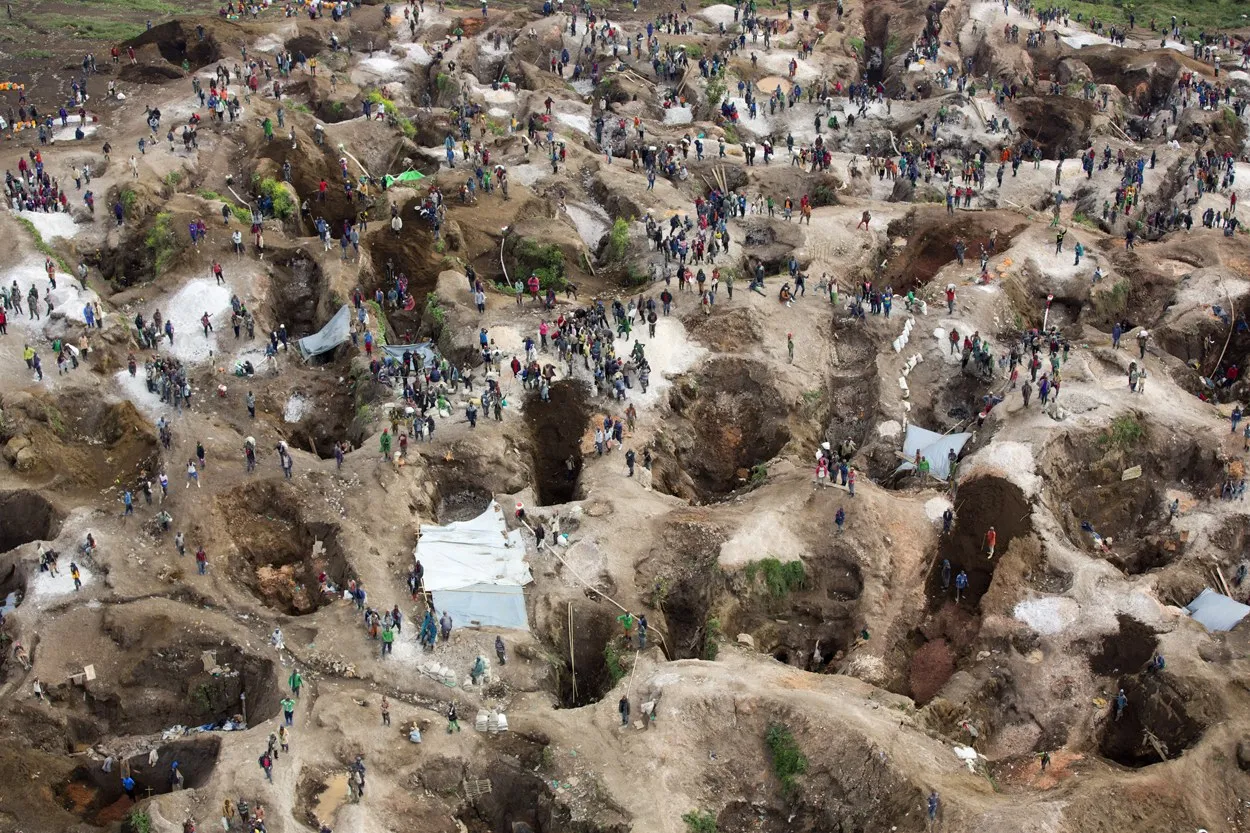
Eastern Congo is the site of one of the world’s deadliest and most protracted conflicts, and it sits on top of minerals the global economy cannot do without. The region around Rubaya, in North Kivu, holds some of the planet’s richest deposits of coltan — the ore refined into tantalum, the metal packed into the capacitors inside phones, laptops, cars and data-center servers. Whoever controls those pits controls a revenue stream that buys weapons.
For the Trump administration, the war is also a credibility problem. The June 2025 accord was sold as proof that American mediation could settle a fight that had defeated the United Nations and the African Union for decades. Each new round of sanctions is an admission that the deal on paper has not become a deal on the ground — and a bet that financial pressure can force the parties back toward it.
The human cost gives that bet its urgency. Eastern Congo has been at war, on and off, for three decades, and the latest M23 surge has produced one of the world’s largest displacement crises, with people fleeing repeatedly as front lines shift. The fighting since December alone has killed more than 1,500 civilians and uprooted hundreds of thousands more, and it has unfolded in the same provinces where aid groups struggle to deliver food, shelter and medical care to populations already stretched past the breaking point.
What the Sanctions Target
OFAC designated both men under Executive Order 13413, as amended by E.O. 13671, the legal architecture the U.S. uses for Congo. The action freezes any assets they hold in the United States and generally bars Americans from doing business with them.
The Treasury identified Nzenze as one of the closest confidants of Sultani Makenga, M23’s overall military commander, who has been under U.S. and U.N. sanctions for years. Nzenze has been an M23 figure since the group’s first rebellion in 2012 and 2013, when it briefly seized the eastern city of Goma before being beaten back. This time M23 has held on: the group still controls Goma and Bukavu, the capitals of North and South Kivu, and seized the Rubaya mining zone in 2024.
Kubwayo — known by the nom de guerre “Colonel Sirkoof” — leads an FDLR intelligence and special-operations unit. According to the Treasury, he commanded an FDLR structure in North Kivu’s Nyiragongo territory that formed in 2022, after M23 offensives scattered the militia. The State Department issued a companion statement the same day, framing the designations as part of a sustained campaign against the armed groups destabilizing the region.
The pairing is deliberate because the two groups are bound together. Rwanda has long justified its involvement in Congo as a response to the FDLR, whose leadership traces back to the Hutu extremists who carried out the 1994 genocide and then fled across the border. Kigali casts M23 — and, its critics say, its own military support for the group — as a shield against that threat. Congo and U.N. investigators counter that the FDLR is a fraction of its former strength and that Rwanda’s real interest is territory and minerals. By sanctioning a senior figure from each group on the same day, Washington is refusing to accept either side’s framing as a license for the war to continue.
The U.S. has not treated this as a one-sided fight. In March, Washington sanctioned elements of the Rwandan military for backing M23, and Treasury Secretary Scott Bessent has said the United States wants Rwandan troops, weapons and equipment out of Congo. Pairing an M23 leader with an FDLR commander this week extends that even-handed posture to the rebels themselves.
A Peace Deal Under Strain
The diplomacy looked promising a year ago. In June 2025, Congolese President Félix Tshisekedi and Rwandan President Paul Kagame committed to the U.S.- and Qatar-brokered framework, with a parallel track running through Doha. Trump hailed it as a new chapter for central Africa. In December, the two governments reaffirmed their commitments.
The fighting told a different story. Within days of one of those December reaffirmations, Tshisekedi accused Rwanda of launching fresh attacks in South Kivu. There have been partial pullbacks since — M23 left the town of Uvira in January under American pressure and withdrew from several areas near the Burundian border in May — but the front lines have never gone quiet, and no durable cease-fire has held.
That mixed record is the backdrop here. This is not the conflict zone in Ituri Province, where an Ebola outbreak has spread through areas armed groups have made unreachable for responders; it is the parallel, longer-running war in the Kivus, where the prize is territory and minerals rather than a virus to contain. Both, though, point to the same fact: the eastern provinces remain beyond any government’s full control.
The Minerals Beneath the War
Coltan is what makes eastern Congo strategically valuable far beyond its borders. The ore is the leading global source of tantalum, and Congo accounts for a large share of world supply. When M23 took Rubaya, it did not just capture ground — it captured a financing engine, and the revenue helps explain why the group has been so reluctant to give up what it holds.
That puts the war squarely inside a debate American policymakers have been having about supply chains. The sanctions sit alongside Washington’s wider push to police forced labor and tainted sourcing in the goods Americans buy, and they touch the same raw materials feeding the global appetite for the electronics and computing hardware behind the AI boom. A blacklisted commander cannot legally move tantalum into the formal Western market — which is exactly the chokepoint Treasury is trying to squeeze.
What Comes Next
The designations take effect immediately, but their bite depends on enforcement and on whether they change behavior. Sanctions on individual commanders rarely halt a war by themselves; their value is as leverage, applied while diplomats keep working the Washington and Doha tracks.
The near-term questions are concrete. Does M23 widen or freeze its lines around Goma and Bukavu? Do Rwandan forces draw down, as Bessent has demanded? And does the next round of talks produce a verifiable cease-fire rather than another reaffirmation that fighters ignore? Washington has now staked real diplomatic capital — and a string of sanctions — on getting a yes. A year in, it is still waiting for one.
Sources 6 cited · 2 primary
- Treasury Sanctions Rebel Commanders Driving Conflict in the Democratic Republic of the Congo
- United States Sanctions Armed Group Leaders in Eastern Democratic Republic of the Congo
- US imposes sanctions on commanders over fighting in eastern Congo
- US imposes fresh sanctions on M23 and FDLR leaders
- DRC accuses Rwanda of peace deal violations as M23 advances in the east
- US sanctions Rwanda military for supporting DRC rebel group
American Courant cites its sources and links to primary documents where they exist. How we report →