Iran suspended all nuclear negotiations with the United States on Monday and threatened to push the Strait of Hormuz from de facto closed to completely sealed, citing Israeli military operations in Lebanon as a direct violation of the ceasefire that the talks depended on. Within hours, oil markets responded: West Texas Intermediate crude surged 7.69 percent to $94.08 per barrel, and Brent crude jumped 6.43 percent to $97.07 per barrel — erasing weeks of optimism that a deal was near.
The announcement, carried by Iran’s state-affiliated news agency Tasnim, is the most serious breakdown in U.S.-Iran diplomacy since the February 28 strikes that opened the current conflict. It puts two of the world’s most critical maritime chokepoints at risk simultaneously, raises the prospect of a further surge in global oil prices, and leaves the status of the nuclear negotiations genuinely unclear after President Trump publicly contradicted Iran’s suspension claim within the same news cycle.
What Iran Said — and What It Demands
Tasnim reported Monday that Iran’s negotiating team had suspended all exchanges with Washington through international mediators. The stated reason: Israel’s expanding ground offensive in Lebanon constitutes a violation of the U.S.-Iran ceasefire agreement.
Iran’s position is that the ceasefire applies to all fronts, not just the direct Iran-U.S. military exchange. Foreign Minister Seyed Abbas Araghchi had stated this explicitly in recent weeks: the ceasefire “is unequivocally a ceasefire on all fronts, including in Lebanon — its violation on one front is a violation of the ceasefire on all fronts.”
Iran’s conditions for resuming talks were equally stark. According to Tasnim, “no dialogue will take place” until Israel fully withdraws from Lebanese territory it currently occupies and ceases all military operations in both Lebanon and Gaza. Neither condition is close to being met. On Sunday, Israeli Prime Minister Benjamin Netanyahu ordered his military to deepen and expand operations in Lebanon — Israel’s push past Lebanon’s Litani River representing the deepest Israeli incursion into the country in two decades.
The Two-Chokepoint Threat
Iran’s suspension announcement came attached to a threat of escalation that extends beyond Hormuz alone. Tasnim reported that Iran and what it described as the “Axis of Resistance” had resolved to pursue the “complete closure of the Strait of Hormuz” and to “activate other fronts, including the Bab al-Mandab Strait.”
The Bab al-Mandab is a narrow passage at the southern end of the Red Sea, connecting the Arabian Sea to the Suez Canal route and onward to Europe. Activating it would implicate Iran’s Houthi proxies in Yemen, who spent 2023 and 2024 targeting international shipping in the Red Sea before focusing their efforts elsewhere as the 2026 Iran war unfolded. Reports from Middle East Eye indicated that Tehran has ordered the Houthis to resume attacks on vessels transiting the strait.
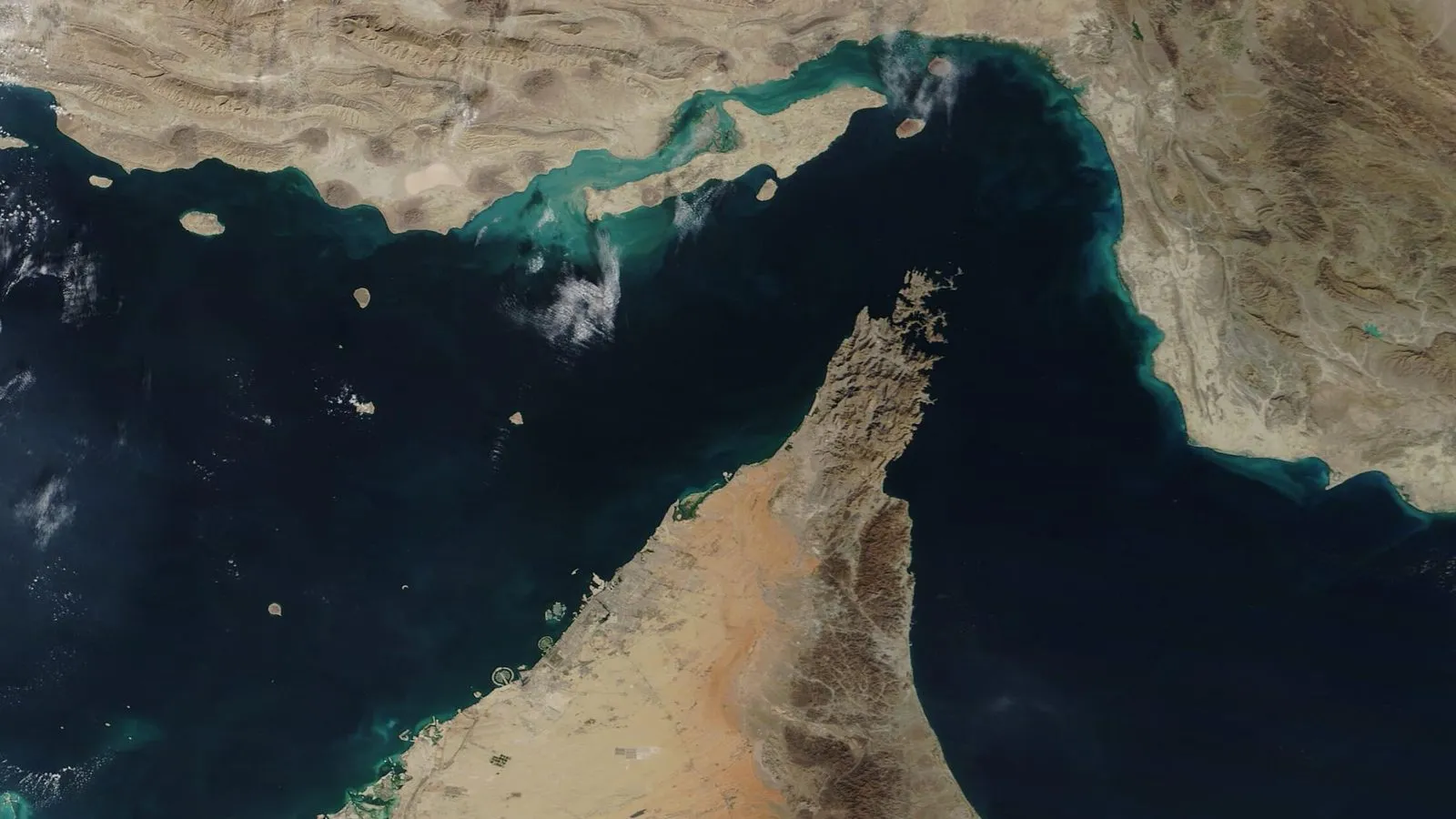
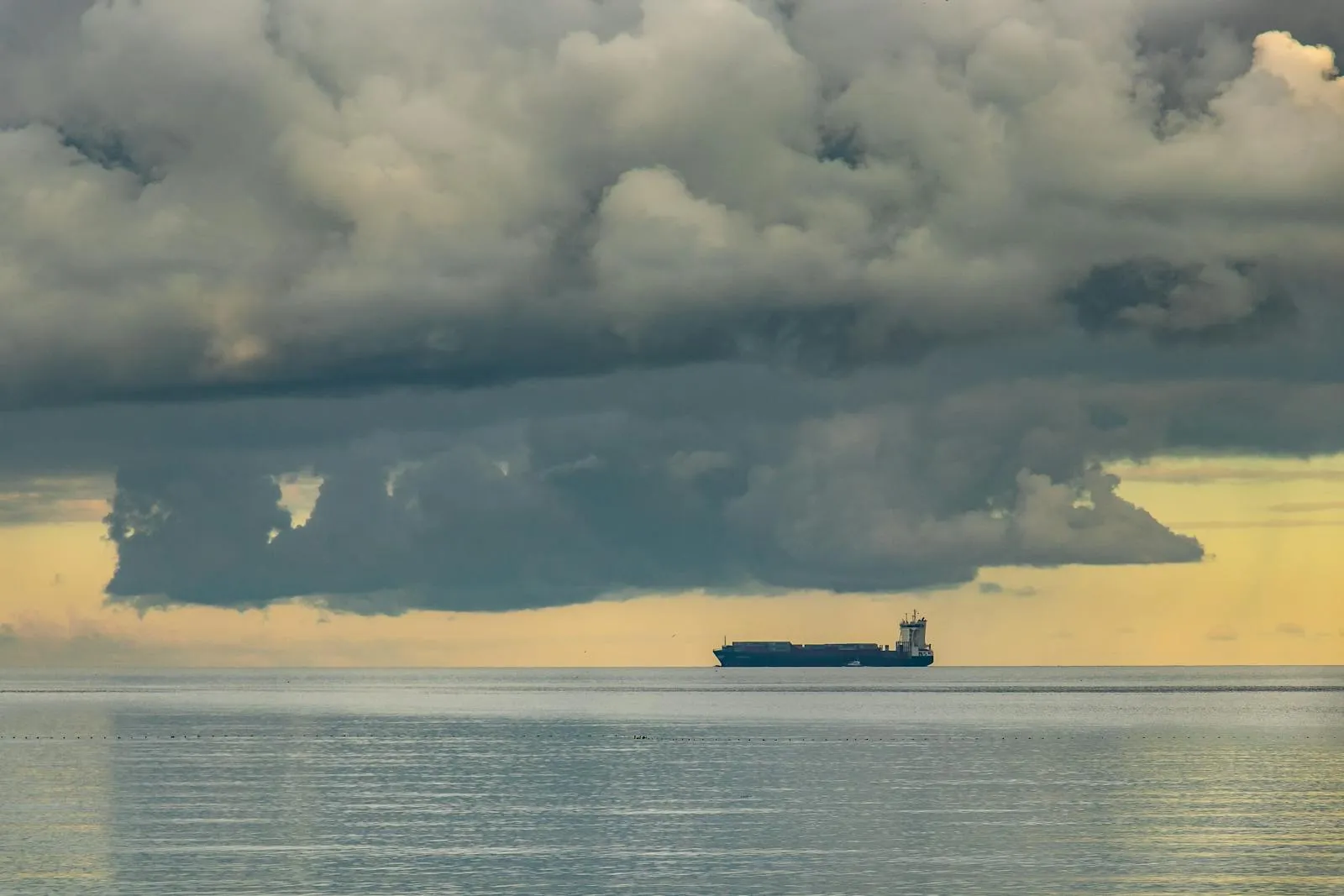
A simultaneous blockade of both the Strait of Hormuz and the Bab al-Mandab would represent an unprecedented disruption to global maritime trade. The Hormuz Strait, through which roughly 20 percent of the world’s oil passes under normal conditions, has already seen traffic collapse. The naval blockade that has stranded more than 1,550 commercial vessels in the region has reduced daily transits from 95 ships to fewer than four as of late May. Over 22,500 mariners remain effectively trapped. War-risk insurance for tankers is running at eight times its prewar level, with several major protection and indemnity clubs having withdrawn coverage entirely.
Iran’s Monday threat would turn that dire situation from a de facto closure — the result of danger and insurance withdrawal — into an active, enforced one. The practical difference is that any remaining trickle of traffic willing to accept extreme risk would be shut off.
The IRGC Strike on a U.S. Base
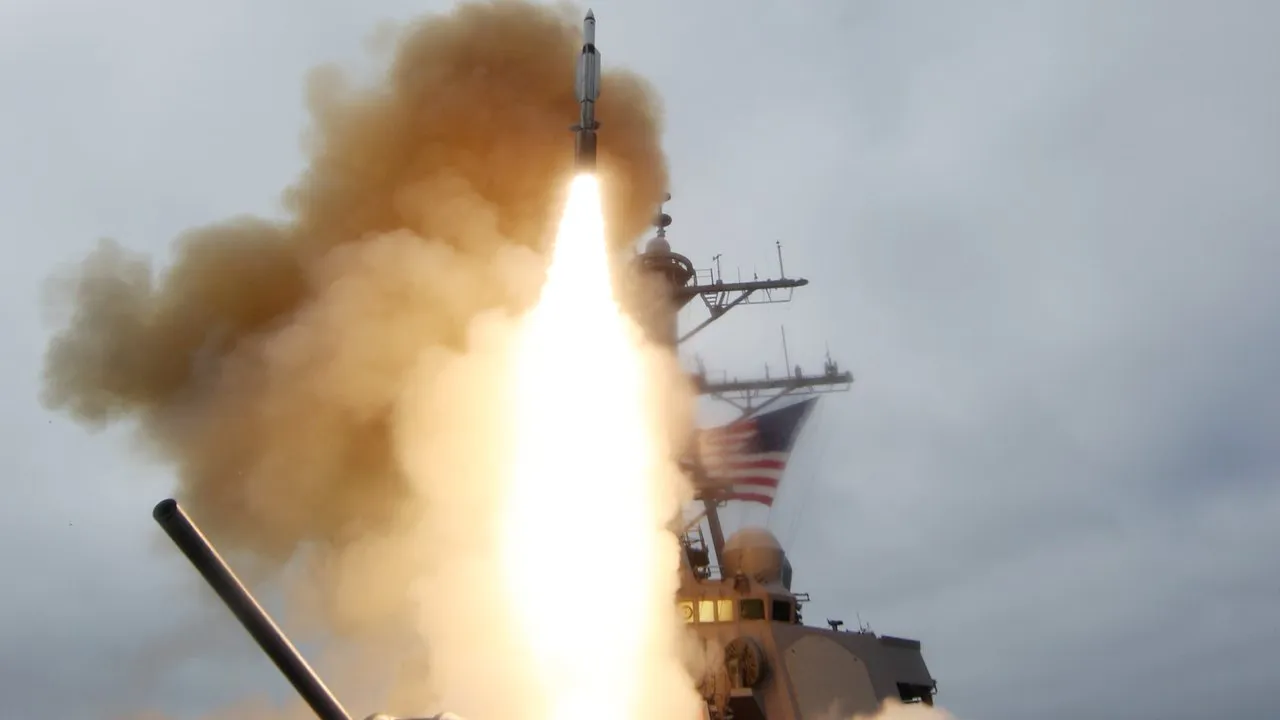
Alongside the diplomatic suspension, Iran’s Islamic Revolutionary Guard Corps launched a retaliatory military strike Monday. The IRGC Aerospace Force said it targeted a U.S. air base in Kuwait that it blamed for a recent American strike on a communications tower on Sirik Island, in Iran’s Hormozgan Province in the far south of the country.
Kuwaiti air defenses intercepted incoming missiles and drones as sirens sounded across the country. No immediate casualty reports emerged from Kuwait. The IRGC warned that “any future attacks would prompt more severe responses.”
The strike fits a pattern of tit-for-tat military exchanges that has continued even as diplomats worked on a memorandum of understanding through Qatari and other intermediaries. American Courant’s earlier reporting on U.S. strikes on Iranian radar and drone sites this week documented two American strike waves around the Strait of Hormuz between May 25 and May 31, targeting missile launch infrastructure and mine-laying boats. Monday’s IRGC response was the latest in that exchange.
Trump: ‘I Don’t Care’ — Then Contradicts Himself
President Trump’s response to news of Iran’s suspension was striking for its apparent indifference. In a live interview with CNBC Monday, Trump was told that Iranian negotiators were halting talks and moving to fully close the Strait of Hormuz over Israel’s Lebanon operations.
“I really don’t care. I couldn’t care less,” Trump said, adding that he thought the prolonged negotiations had “started to get very boring.” He dismissed concern about the oil price jump, predicting it would fall “like a rock in the very near distance.” He said he was going to speak with Netanyahu to ask “what’s going on with Lebanon.”
Within hours, Trump appeared to reverse course. He posted on Truth Social that he had spoken with Netanyahu and that any troops headed toward Beirut had been turned back — suggesting some form of diplomatic contact was underway. He then added that “talks are continuing, at a rapid pace, with the Islamic Republic of Iran” — a claim that directly contradicted Tehran’s suspension announcement and was unsupported by any Iranian statement.
The White House did not immediately offer clarification. The contradiction left markets and analysts uncertain about whether Trump had information that Iran had quietly agreed to continue talks through a backchannel, or whether the Truth Social post was aspirational rather than factual.
Why Lebanon Is the Hinge
Iran’s linkage of its nuclear talks to the Lebanon campaign is not a new position — Tehran has insisted for weeks that the ceasefire covers all active fronts. But Monday marked the first time Iran followed through on that position by formally suspending negotiations.
The logic from Iran’s perspective is straightforward. It agreed to a ceasefire partly on the understanding that pressure on its Hezbollah ally in Lebanon would ease. Instead, Israel has expanded its ground offensive significantly since the ceasefire was declared, crossing the Litani River — a line that had not been crossed since the 2006 Lebanon war — and capturing Beaufort Castle, a strategically dominant ridge overlooking a large portion of southern Lebanon.
Iran views the United States as either unable or unwilling to stop Israel. From Tehran’s vantage point, honoring the ceasefire while Israel expands its Lebanese campaign is a one-sided concession.
The leverage Tehran is deploying: threatening to make the Hormuz situation materially worse inflicts economic pain directly on the United States and its allies, even without a single additional military strike. Oil at $97 a barrel is already elevated; a complete Hormuz closure with Bab al-Mandab activation could push it far higher and revive the supply-chain disruptions that eased as investors priced in a deal.
Oil Market Reaction
Markets did not wait for diplomatic resolution. The jump in crude prices Monday afternoon — with WTI at $94.08 and Brent at $97.07 — reversed nearly all of the decline that had followed optimistic reporting on the Iran-U.S. memorandum of understanding that both sides appeared close to signing in late May.
As recently as May 29, oil had fallen nearly 20 percent from its 2026 peak as investors priced in a deal that would reopen the strait. In a single Monday afternoon news cycle, that optimism largely evaporated.
Euronews reported crude prices climbing specifically in response to Iran’s halt of talks and pledge to fully close the strait, with analysts citing investor fears that the conflict could escalate rather than move toward resolution. For American consumers, the market move portends higher gasoline prices in the near term if the situation does not stabilize quickly.
What Happens Next
Iran has set conditions it knows Israel is unlikely to meet in short order: a complete withdrawal from southern Lebanon and a halt to operations in Gaza. Israel shows no sign of reversing course — to the contrary, Netanyahu publicly ordered further expansion on Sunday.
Trump has signaled he is willing to wait. He said Monday he expected a deal eventually, but offered no timeline and did not indicate he would pressure Israel to change course in Lebanon as the price of restarting talks. His Truth Social claim that talks were continuing “at a rapid pace” was not corroborated by any other source.
The most immediate indicator of the breakdown’s duration will be the Strait of Hormuz itself. If Iran moves from rhetorical threat to active enforcement of a complete closure, the economic and diplomatic consequences would force a response from the United States, the Gulf states, and global oil consumers. If Monday’s announcement proves to be a negotiating tactic — pressure applied to extract concessions on Lebanon — the Strait’s traffic data would likely show no further deterioration.
No new talks are scheduled. Iran’s demands, and Israel’s trajectory, suggest the gap is not closing quickly.
Sources 6 cited · 1 primary
- Iran stops negotiations with U.S., vows to 'completely' block Strait of Hormuz: State media
- Trump tells CNBC: 'I don't care' if Iran negotiations are over
- Tehran suspends talks with U.S. over Israeli attacks in Lebanon
- Iran's IRGC launches retaliatory strike after US attacks
- Iran halts talks with US, says it will close Bab el-Mandeb Strait: Report
- Iran suspended negotiations via mediators with US, state media says
American Courant cites its sources and links to primary documents where they exist. How we report →