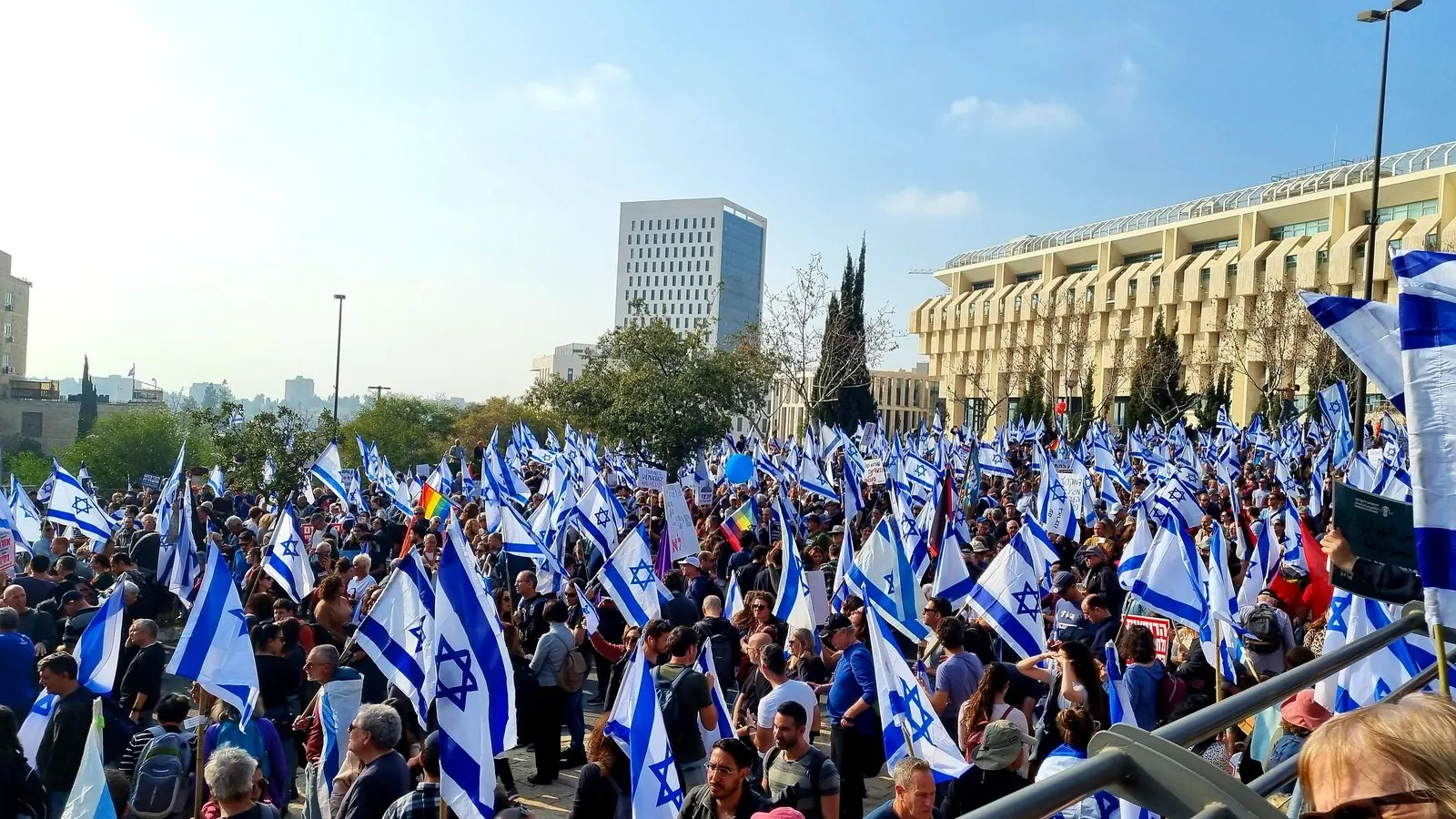
Israelis poured back into the streets this weekend, reviving a protest movement that has shadowed Benjamin Netanyahu’s government for years and that has found a sharp new grievance: the prime minister’s drive to fire the two officials whose job is to investigate his own office.
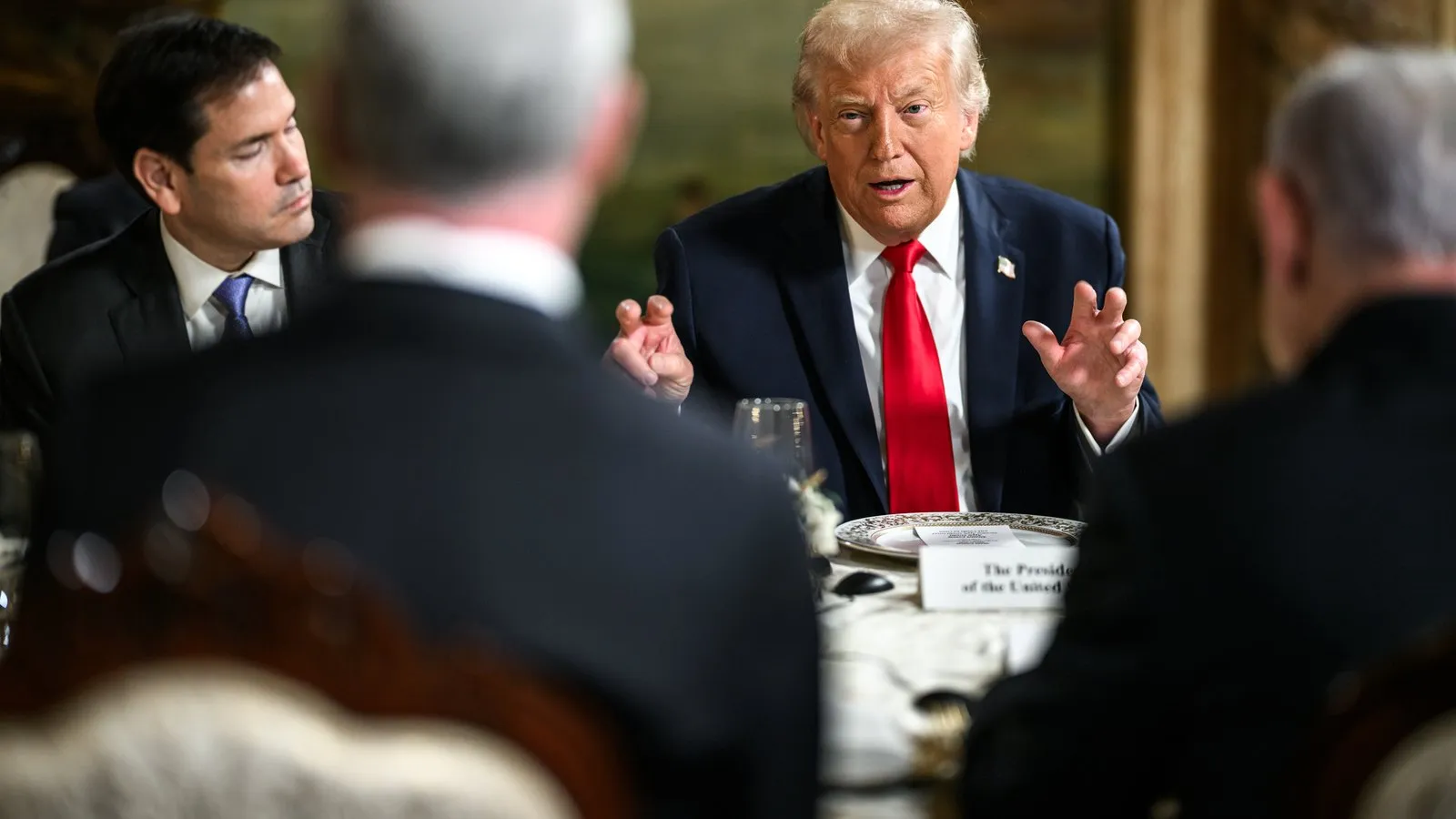
Demonstrators gathered Saturday in Tel Aviv’s Habima Square, in Jerusalem, and in cities across the country, part of the weekly anti-government rallies that have become a fixture of Israeli political life. Some carried posters denouncing settler violence in the West Bank. Others mocked Netanyahu over his confrontational phone call with President Trump, in which the U.S. president reportedly cursed at him over Israel’s operations in Lebanon. In Jerusalem, marchers carried banners reading “Voting for a liberal Israel” and chanted against far-right National Security Minister Itamar Ben Gvir.
Underneath the week-to-week specifics is a single, escalating fight over Israel’s institutions. Netanyahu has moved to remove Attorney General Gali Baharav-Miara and Shin Bet chief Ronen Bar — the country’s top legal officer and its domestic security director — and to a large share of the protesters, those two moves are the clearest sign yet of a government trying to put itself beyond the reach of the law.
The officials Netanyahu wants gone
The Shin Bet fight is the one that lit the current fuse. Netanyahu announced he would seek to fire Ronen Bar while the security service was investigating alleged ties between the prime minister’s close aides and the Gulf state of Qatar — the affair Israelis call “Qatargate.” To the government’s critics, the timing was the message: the man overseeing an investigation into Netanyahu’s inner circle was being pushed out by the subject of that investigation. The cabinet voted unanimously to dismiss Bar and moved up his last day in the post, prompting the first wave of mass protests, highway blockades, and clashes in which police used stun grenades and water cannons.
Attorney General Baharav-Miara has been the institutional check on that effort. She objected to the way the government tried to fire Bar, and in turn became a target herself: the cabinet voted to dismiss her too. Israel’s High Court froze that dismissal, and the Supreme Court ruled the attempt to oust Bar unlawful. The courts, in other words, have so far held the line — which is precisely why the protesters keep returning to the streets, and why the government’s allies keep pressing legislation to weaken judicial review.
That dynamic is the through-line of nearly everything driving the demonstrations. It began in 2023 with the judicial overhaul that first brought hundreds of thousands of Israelis out in a sea of national flags, and it has never fully receded. The fight over the attorney general and the Shin Bet chief is the same fight in a new form: how much power a sitting prime minister can take over the institutions meant to hold him accountable.
What the crowds are protesting
The protests are not about a single issue, and that is part of their durability. Saturday’s marchers were animated by an overlapping set of grievances that the government has managed to keep alive at once.
There is the war. Anger over the government’s handling of the conflict in Gaza and the fate of the remaining hostages has fed the protests for months, and the resumption of major Israeli military operations — including the ground offensive that pushed across southern Lebanon’s Litani River — has kept security policy at the center of the anger. So has the steady drumbeat of strikes and reprisals across the region, including the killing of Hamas’s military chief in Gaza.
There is the question of democratic guardrails — the AG, the Shin Bet, the courts, and what critics describe as a slate of anti-democratic legislation the coalition is advancing ahead of elections. And there is settler violence in the West Bank, which protesters have increasingly folded into the same indictment of a government they see as unaccountable at home and abroad.
The breadth is a strength and a weakness. It keeps the crowds large and recurring, but it also makes the movement hard to translate into a single demand. What unites the marchers is less a shared program than a shared verdict on the man at the top.
A country that has soured on its prime minister
That verdict shows up in the polling. A recent survey found that a clear majority of Israelis — 58% — believe someone other than Netanyahu should be prime minister after the next election, against just 32% who want him to stay. For a leader who has dominated Israeli politics for the better part of two decades, those are difficult numbers, and they help explain why the opposition and the protest organizers have begun to frame the demonstrations explicitly around the coming vote.
It also explains the government’s strategy. A prime minister with majority support does not need to weaken the courts or remove investigators; a prime minister facing investigations and sagging polls has every incentive to. The protesters’ core charge — that the institutional changes are about self-protection, not reform — is one the polling makes easier to land.
Netanyahu rejects that framing. He has described his distrust of Bar as personal and professional rather than political, and his allies cast the judicial fight as a long-overdue correction to an unelected legal establishment that thwarts the elected government. The courts, repeatedly, have sided against him.
What comes next
The immediate questions are procedural but consequential. The attorney general’s dismissal is frozen in court. The Shin Bet firing has been ruled unlawful. Whether the government complies, finds a workaround, or escalates the confrontation with the judiciary will shape the next phase — and almost certainly the size of the next protest.
The larger question is whether a protest movement this sustained can actually change an outcome. Israelis have marched in enormous numbers before, in 2023 and through the war, without forcing Netanyahu from office. What is different now is the calendar. Elections are on the horizon, the polling has turned against the prime minister, and the protesters have stopped treating the demonstrations as an end in themselves and started treating them as a campaign. The crowds in Habima Square on Saturday were not only protesting a firing. They were rehearsing for a vote.
Sources 5 cited · 1 primary
- Government approves firing of Shin Bet head Ronen Bar, moves up his last day to April 10
- Netanyahu sparks uproar in push to fire Israel's domestic security chief
- Israel court halts gov't firing of attorney general investigating Netanyahu
- Protests Against Netanyahu Government Took Place Across Israel
- Could the mass protests stop the firing of Shin Bet chief Ronen Bar?
American Courant cites its sources and links to primary documents where they exist. How we report →