Vice President JD Vance delivered a message to Israel this week that few American officials have ever said out loud: stop attacking the only powerful friend you have left. As the United States moved to lift its naval blockade of Iran and put a new agreement with Tehran into effect, Vance turned not on America’s adversary but on its closest Middle East ally — and warned it, in unusually blunt terms, to fall in line.
The remarks landed at a raw moment. Israel was not a party to the deal President Trump signed with Iran, and its government is furious about it. Into that anger, Vance offered not reassurance but a rebuke, casting Israel as a country that has isolated itself and the Trump administration as the last thing standing between it and total diplomatic abandonment. The result is one of the sharpest public ruptures between Washington and Jerusalem in years — between two governments that, until recently, billed themselves as the closest of partners.
What Vance Said
Vance’s central argument was that Israel cannot afford to alienate the United States, because it has almost no one else. “If I was in the cabinet of the Israeli government, I might not be attacking the only powerful ally that I have anywhere left in the entire world,” he said. He went further on Trump personally, calling the president “the only head of state in the entire world who is sympathetic to the nation of Israel at this moment in time.”
The vice president framed the warning around Israel’s continued military operations in Lebanon against the militant group Hezbollah, which the new U.S.-Iran understanding is meant to wind down, and around Israeli officials’ public criticism of the deal itself. He rebuked Israel for both. Pressed on whether the administration had heard Israel’s objections, Vance said the United States had been in contact with the Israeli government and Gulf states “pretty much every day,” and that he had not heard those concerns in his own conversations with senior Israeli officials — a pointed suggestion that Israel was airing grievances in public that it had not pressed in private.
It was a remarkable posture for a sitting vice president to take toward Israel, and it fit a broader pattern of strain. Vance’s handling of the Iran war has drawn fire before, including from the Vatican, after Pope Leo XIV rejected the vice president’s invocation of “just war” theology to defend the campaign against Tehran.
The Deal Israel Was Left Out Of
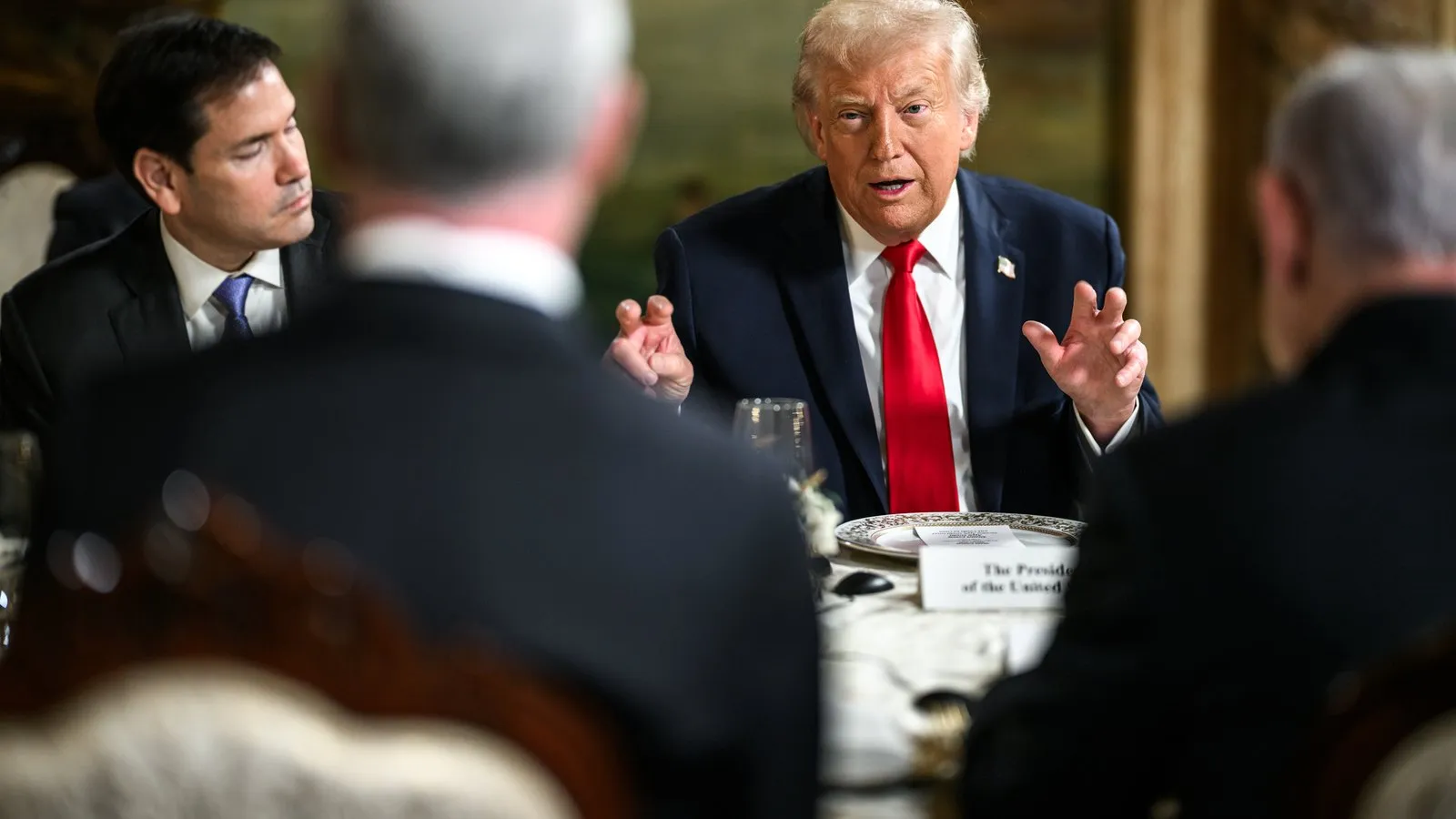
The agreement that triggered the confrontation is the memorandum of understanding Trump reached with Iran to wind down their war. Trump and Iranian President Masoud Pezeshkian signed the document digitally on June 17, and Iran’s supreme leader, Ayatollah Ali Khamenei, endorsed it in a written statement the next day — while pointedly adding that talks with the United States do “not mean accepting its views.”
The terms, as described by U.S. and Iranian officials, are sweeping. Iran agreed to reopen the Strait of Hormuz, the chokepoint it had effectively shut, and the United States moved to lift its blockade of Iran’s ports and ease oil sanctions; commercial traffic through the strait has since begun to recover. Iran committed not to build a nuclear weapon, with the hardest details left to follow-on talks, and agreed to halt missile attacks tied to the fighting in southern Lebanon. American Courant has tracked the deal’s turbulent path, from the disputed terms that surfaced as the two sides edged toward a signature to the profane phone call in which Trump pressed Netanyahu over Israel’s Lebanon operations.
Israel was not in the room for any of it. That exclusion — a deal that reshapes Israel’s security environment, negotiated over its objections and signed without its participation — is the grievance underneath everything that followed.
Israel’s Furious Pushback
Israel did not absorb the warning quietly. Its officials voiced “deep concern” about the agreement, and several rejected the idea that it binds them at all. National Security Minister Itamar Ben-Gvir, who leads a small ultranationalist party in Netanyahu’s coalition, declared that Israel is not “bound” by Trump’s agreement and would not cave to international pressure. A Netanyahu adviser said Israel does not consider itself bound by the Lebanon portion of the memorandum specifically — the very provision Vance was pressing it to honor.
On the ground, Netanyahu has signaled he intends to keep Israeli forces where they are, saying the military will remain in the zone it occupies in southern Lebanon “as long as Israel’s security needs require it” — a stance that, if it holds, cuts against the deal’s central bargain.
The prime minister himself has stayed conspicuously quiet in public since the signing, and his office declined to comment on Vance’s statement. But the anger has found other outlets. Israeli media aligned with Netanyahu have gone after Trump’s negotiators directly, accusing his envoys Steve Witkoff and Jared Kushner of selling out Israel for financial gain — an extraordinary charge to level at a U.S. administration that Israel’s government has spent years courting. Axios reported that the deal left Netanyahu “fuming” and his allies “raging.”
A Rift Between the Closest of Allies
What makes the episode striking is how recently the relationship looked unbreakable. For three years, Netanyahu and his allies positioned themselves as the Trump administration’s natural partners, and the administration returned the embrace. Vance’s comments invert that dynamic in public: rather than affirming an ironclad bond, he described an Israel that has burned through its friendships and now depends on American goodwill it is at risk of squandering.
The disagreement is not only about tone. It reflects a genuine divergence of interest. Trump’s deal is built on de-escalation with Iran — reopening Hormuz, reviving oil flows, ending the war — while Israel’s government sees the same agreement as rewarding an adversary and constraining its freedom to act in Lebanon. Vance’s framing asks Israel to subordinate that objection to the alliance. Israel’s response, so far, is that the alliance does not require it to accept a deal it had no hand in writing. The protest movement that has filled Israeli streets against Netanyahu is a reminder that his government is under pressure at home even as it absorbs pressure from Washington.
What Comes Next
The immediate test is Lebanon. The deal’s success depends on the fighting there subsiding, and that hinges on whether Israel actually pulls back or, as Netanyahu has suggested, keeps its forces in place. If Israel continues operations that the agreement was meant to end, it risks both unraveling the deal and confirming Vance’s warning that it is acting against its last powerful ally.
The longer arc is the alliance itself. A 60-day window of follow-on negotiations over Iran’s nuclear program lies ahead, and Israel will be watching — and lobbying — from outside the process. Whether this week’s public spat proves to be a passing flare-up or the start of a durable estrangement will depend on what Netanyahu does next, and on whether the Trump administration treats Israel’s defiance as a family argument or a breaking point. For now, the vice president has said the quiet part aloud: in his telling, Israel has one great-power friend left, and it is testing that friend’s patience.
Sources 6 cited
- Vance to Israel: Abide by Iran Deal or Lose Your Last Ally
- JD Vance slams Israeli officials who criticized Iran deal, deepening rift between allies
- Trump Iran deal leaves Israel's Netanyahu fuming, allies raging
- Vance slams Israeli reaction to Iran deal as U.S. military lifts blockade
- June 18: Khamenei okays MOU in written statement, says talks with US do 'not mean accepting its views'
- Vance warns Israel over Lebanon strikes as Iran endorses direct talks with U.S.
American Courant cites its sources and links to primary documents where they exist. How we report →