The United States, Lebanon, and Israel announced a conditional ceasefire on Wednesday after two days of talks at the State Department, the most concrete step toward halting the fighting in southern Lebanon since it erupted in March. By Thursday morning, it had not taken hold. Israeli airstrikes continued, Hezbollah kept firing, and a United Nations peacekeeper was killed by a mortar near the border.
The gap between the announcement and the ground is the story. The agreement is not a ceasefire that has started; it is a framework that will start only if Hezbollah meets a specific set of conditions — and Hezbollah, as of Thursday, had not agreed to anything.
Here is what the three governments actually signed, what still has to happen, and why the guns have not gone quiet.
What the Agreement Says
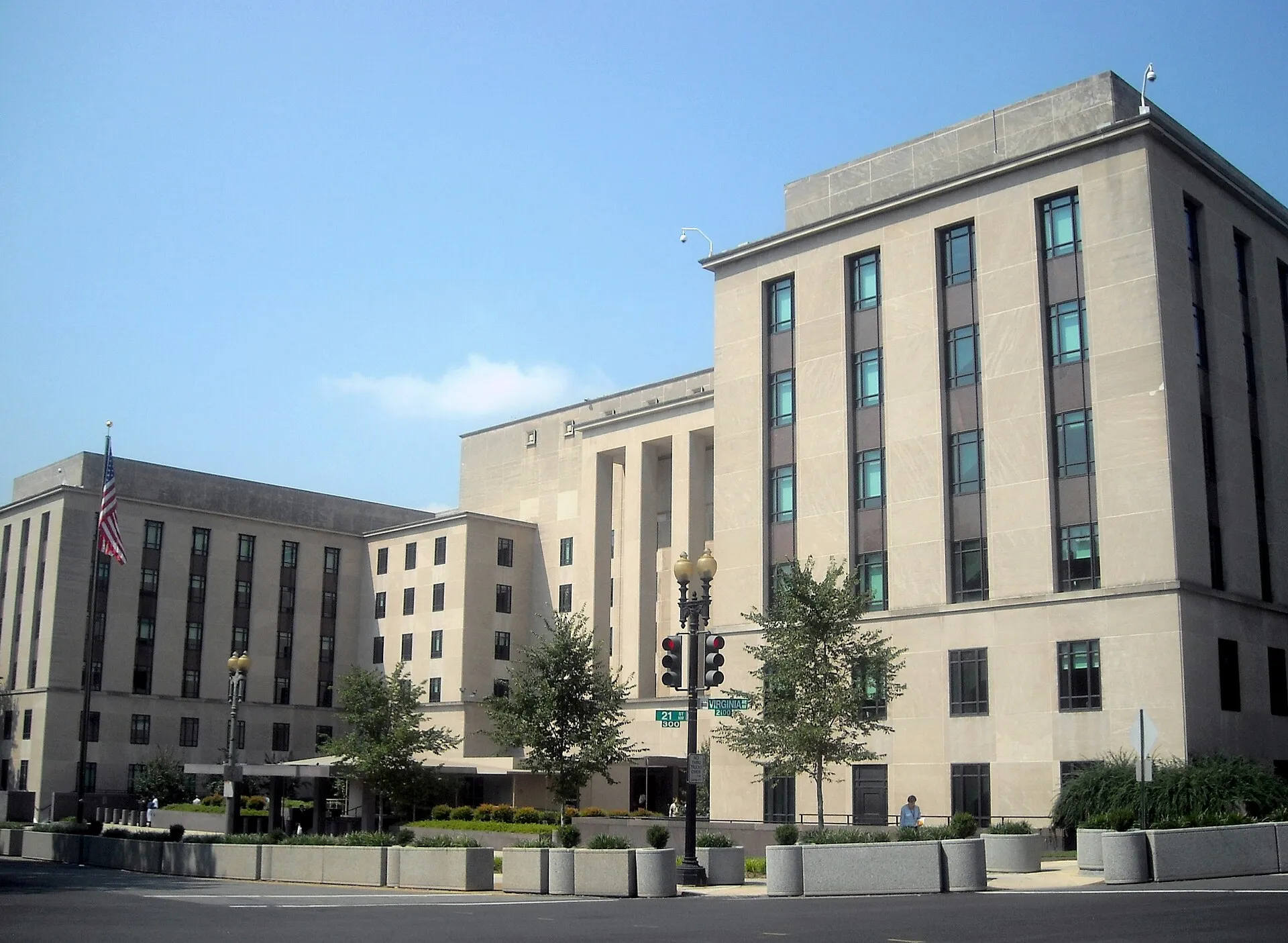
The deal came out of what the State Department called the fourth high-level trilateral meeting between Israeli and Lebanese representatives, held June 2 and 3 in Washington. Israeli Ambassador Yechiel Leiter and Lebanese Ambassador Nada Hamadeh attended, alongside State Department Chief of Staff Daniel Holler and U.S. Ambassador to Lebanon Michel Issa.
The joint statement issued by the State Department sets two conditions for the ceasefire to take effect: “a complete cessation of Hizbollah fire” and “the evacuation of all Hizbollah operatives from the South Litani Sector,” the strip of territory between the Litani River and the Israeli border.
The mechanism for enforcing that is the part both sides are calling new. The statement commits the parties to “swiftly advance the creation of pilot zones in which the Lebanese Armed Forces will take exclusive control of the territory to the exclusion of all non-state actors.” In plain terms: the Lebanese army, not Hezbollah, would hold defined areas of the south, and Israel would withdraw from them.
The statement frames this as a step toward a broader settlement, reaffirming that the future of Israel-Lebanon relations “must be decided by the two sovereign governments” and rejecting “any attempt, by any state or non-state actor, to hold Lebanon’s future hostage.” The reference to a “state actor” is widely read as aimed at Iran, Hezbollah’s patron.
The Ceasefire Is Already Being Tested
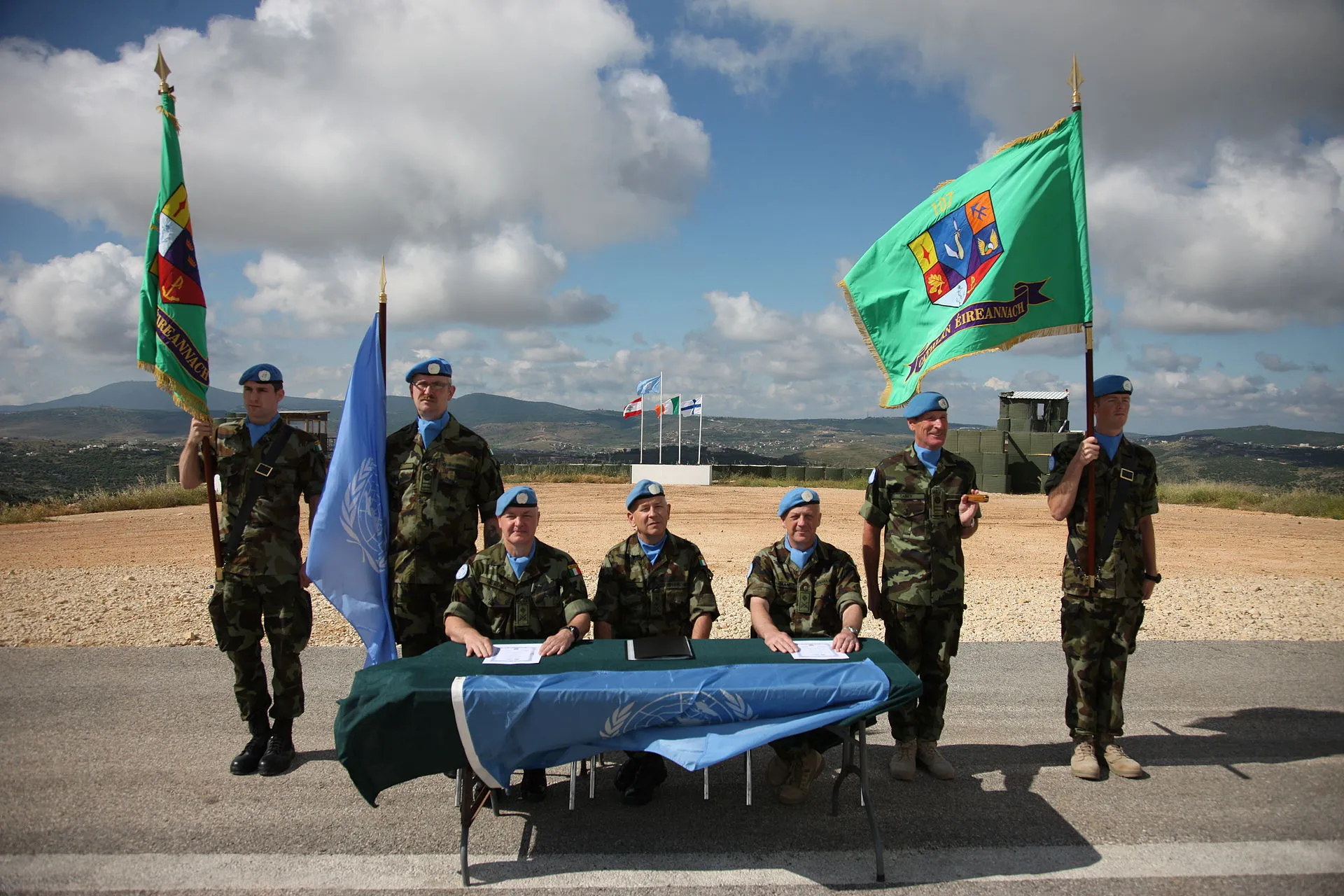
The fragility was visible within hours. Early Thursday, a UNIFIL peacekeeper — identified by the United Nations as Senior Sergeant Milovan Jovanovic, a Serbian national — died of wounds in a Beirut hospital after mortar shells struck his position near Marjayoun. Two other peacekeepers, from Spain and El Salvador, were injured. UN News said UNIFIL had opened an investigation and that the origin of the shelling was not immediately clear.
The Israel Defense Forces blamed Hezbollah, saying “the Hezbollah terrorist organization launched mortar shells that hit a UNIFIL position and killed a UN personnel member in southern Lebanon.” UNIFIL did not assign blame pending its inquiry. The United Nations framed it as another peacekeeper death in the recent fighting, which has repeatedly put the multinational observer force — roughly 10,000 troops patrolling the border region — in the line of fire.
Meanwhile the IDF said its operations were continuing. Spokesman Col. Avichay Adraee said the military was still striking Hezbollah targets in and near southern Lebanese villages, and Israeli strikes were reported across the region through Thursday. Hezbollah, which has not publicly commented on the Washington agreement, kept firing at Israeli troops. This is consistent with the pattern of Israel’s ground campaign in the South Litani Sector, which has pressed on through previous pauses.
What Has to Happen Next
The decisive variable is Hezbollah. Lebanese President Joseph Aoun said implementation could begin within 24 hours of final approval, but added that Lebanon would relay its position to Washington only “as soon as responses are received from the concerned internal parties, particularly Hezbollah.” The group’s sign-off — at least its compliance — is the hinge the whole framework turns on.
Aoun pitched the moment as decisive, calling it “the last chance to enter into a final, comprehensive ceasefire” and warning that “each party bears responsibility” if it fails to respond. Lebanon has proposed that the first pilot areas, from which Israel would withdraw and which the Lebanese army would control, be the Zoutar area in Nabatieh province and the site of Beaufort Castle.
None of that is self-executing. The pilot-zone concept requires the Lebanese Armed Forces to physically deploy into and hold territory where Hezbollah has operated for decades, and it requires Israel to pull back in step. The statement set no public deadline for either move, saying only that the parties would move “swiftly.”
How the War Got Here
The current fighting began on March 2, when a ceasefire that had held unevenly since November 2024 collapsed amid the outbreak of the wider war between Israel and Iran. That 2024 agreement had been signed by Israel, Lebanon, and five mediating countries, including the United States; over the following year it frayed under near-daily Israeli strikes aimed at stopping Hezbollah from rebuilding, before breaking down entirely as the regional conflict ignited.
The toll since has been severe. More than 3,000 people have been killed in Israeli strikes in Lebanon and over a million — more than a fifth of the country’s population — have been displaced since the fighting resumed, according to U.N. and Lebanese tallies. In a pointed move in March, the Lebanese government formally banned Hezbollah’s military activities — the most assertive such declaration any government in Beirut has made — signaling that the Lebanese state, not just Israel, wanted the group’s arsenal gone.
This is not the first attempt to stop the shooting. In April, the State Department announced a ten-day cessation of hostilities intended to open space for negotiations. It did not hold. The current framework is more detailed, but it inherits the same core problem: an agreement between governments that depends on the cooperation of an armed group that is not a party to it.
The Lebanon track is also entangled with the larger war. Iranian Foreign Minister Abbas Araghchi has insisted the conflict will end only “when it also ends in Lebanon,” tying Hezbollah’s fate to the stalled U.S.–Iran nuclear negotiations, where Iran this week said there had been “no tangible progress.” That linkage is why a border ceasefire in Lebanon carries weight far beyond the border — a dynamic American Courant examines in a separate analysis of how a settled Lebanese front could reshape the Iran talks.
The talks also unfolded against a sharp escalation elsewhere. As the envoys met on June 2 and 3, the United States and Iran traded strikes across the Gulf: U.S. forces hit Iran’s Qeshm Island, and Iran fired missiles and drones at Bahrain and Kuwait, where an attack on the main airport killed one person and wounded dozens, according to Kuwaiti authorities. The convergence — a diplomatic breakthrough in Washington alongside Iran’s strikes on Kuwait and Bahrain — captured the war’s split screen: progress on one front, widening violence on others.
For now, the sequence is clear and unfinished: three governments have agreed on terms, one armed group has not responded, and the fighting that the agreement is meant to end is still going on.
Sources 6 cited · 2 primary
- Joint Statement of the United States of America, Republic of Lebanon, and State of Israel on the Latest High-Level Trilateral Meeting
- Lebanon: Another peacekeeper dies in new attack
- Israel and Lebanon agree to conditional ceasefire
- Israel and Lebanon agree to renew fragile ceasefire, create Lebanese security zones
- Lebanese President says ceasefire may come into effect within a day of parties' approval
- Israel and Lebanon agree to full ceasefire, conditioned on steps by Hezbollah
American Courant cites its sources and links to primary documents where they exist. How we report →