Iran’s foreign minister warned Thursday that any Israeli strike on Beirut would trigger a “full-scale resumption of the war” — a stark escalation threat issued within hours of Hezbollah’s leader formally rejecting the U.S.-brokered Lebanon ceasefire that Washington and Beirut had spent days negotiating.
The twin developments — Hezbollah’s public repudiation of an agreement its government nominally accepted and Iran’s direct warning to Israel — collapsed whatever hope existed that Lebanon might achieve a separate resolution before the broader Iran conflict concluded. An Israeli soldier was killed in a Hezbollah anti-tank missile attack the same day, underscoring that the fighting on Lebanon’s southern front had not paused to accommodate diplomacy.
What the Ceasefire Proposed
The agreement announced Tuesday in Washington was framed as a phased confidence-building measure rather than a comprehensive settlement. U.S. envoy Amos Hochstein brokered a framework under which Lebanon and Israel agreed to establish “pilot zones” — designated areas in southern Lebanon where the Lebanese Armed Forces would take “exclusive control of the territory to the exclusion of all non-state actors.” Hezbollah fighters would withdraw from those zones. Israeli forces would pull back as the Lebanese army deployed.
American Courant covered the terms of the agreement in detail when they were announced, including the U.S.-led monitoring committee that would oversee the phased pullback. The framework stopped short of demanding Hezbollah’s full disarmament, a condition the group had categorically refused in earlier rounds of talks. But it did require the group to vacate military positions it has held since long before the current conflict — a demand its leadership said amounted to an unconditional surrender in all but name.
Lebanese President Joseph Aoun embraced the deal. “The results of the fourth round of negotiations, and the statement issued from it, which included very important points in Lebanon’s favor, represent the last chance to enter into a final, comprehensive ceasefire,” Aoun said Wednesday. “Each party bears responsibility” if it fails to respond positively, he added — a barely veiled appeal to Hezbollah to accept terms that Lebanon’s government had already signed.
Kassem’s Rejection
Hezbollah had not been party to the Washington talks. Its leader, Naim Kassem, made that distinction explicit in his public response Wednesday.
Kassem called the agreement “absurd, humiliating, and insulting” — language that signaled not a negotiating posture but a categorical refusal. He characterized the pilot-zone framework as “surrender, defeat and achieving the enemy’s goals,” arguing that requiring Hezbollah fighters to leave their positions while Israeli forces remained in Lebanese territory was not a ceasefire but a capitulation.
A Hezbollah official told NPR that the group had formally notified President Aoun it would not accept any ceasefire arrangement that did not begin with the full withdrawal of Israeli forces from southern Lebanon. That position is structurally incompatible with the pilot-zone model, which is designed to create the conditions for an Israeli withdrawal incrementally — not as a precondition to it.
The position is not new. Hezbollah has maintained throughout the conflict that it will fight as long as Israeli forces remain on Lebanese soil, a formulation that places the opening condition entirely on Israel. Israel has said it will not withdraw while Hezbollah holds military positions in the border zone. The ceasefire framework was intended to break that deadlock by sequencing the moves. Hezbollah’s rejection indicated the sequencing itself was unacceptable.
Iran’s Warning
In Tehran, Foreign Minister Abbas Araghchi framed the Lebanon conflict in terms that made clear Iran views Hezbollah’s fate as inseparable from its own strategic position.
“Any attack on Beirut will have grave consequences and will lead to a full-scale resumption of the war,” Araghchi said Thursday. He added: “Our armed forces are ready to strike Israel if it attacks Beirut.”
That statement was directed at Israel, but its implications extend to the U.S.-Iran diplomacy that has occupied the region’s attention for months. Araghchi told reporters Thursday that “no tangible progress” had been made in nuclear and ceasefire negotiations, though he confirmed communications remained open. He said Iran’s position was that the war with the United States and Israel would only end “when it also ends in Lebanon” — an explicit linkage that ties the larger Iran ceasefire to Hezbollah’s terms.
The Beirut warning carries specific weight because of Israel’s recent targeting patterns. American Courant has reported on the U.S.-Iran diplomatic framework, which has been strained by the Lebanon dimension from the start. Both Washington and Tehran have struggled to compartmentalize the Lebanese front from the bilateral talks over Iran’s nuclear program and Strait of Hormuz access. Iran’s warning Thursday formalized what has been an operating assumption: that an Israeli strike deep into Lebanon, particularly one targeting Beirut neighborhoods where Hezbollah’s political and logistical infrastructure is concentrated, would trigger a direct Iranian military response.
A Soldier Killed
While diplomats exchanged warnings, Hezbollah continued its operations on the ground.
Captain Eitan Shmuel Lemberg, 21, from Mishmar HaShiv’a, was killed Wednesday afternoon when a Hezbollah operative fired an anti-tank missile at his armored vehicle operating north of the Litani River. Lemberg was an officer in the 7th Armored Brigade’s 75th Battalion. The Israel Defense Forces struck Hezbollah positions by air and artillery following the attack.
His death came within hours of Kassem’s rejection of the ceasefire. It illustrated the contradiction at the heart of the situation: the Lebanese government had agreed to a framework aimed at stopping this kind of fighting, and the armed group conducting the fighting had declined to be bound by it.
Trump’s Contrary Reading
In Washington, the White House offered a notably different interpretation of Hezbollah’s statement.
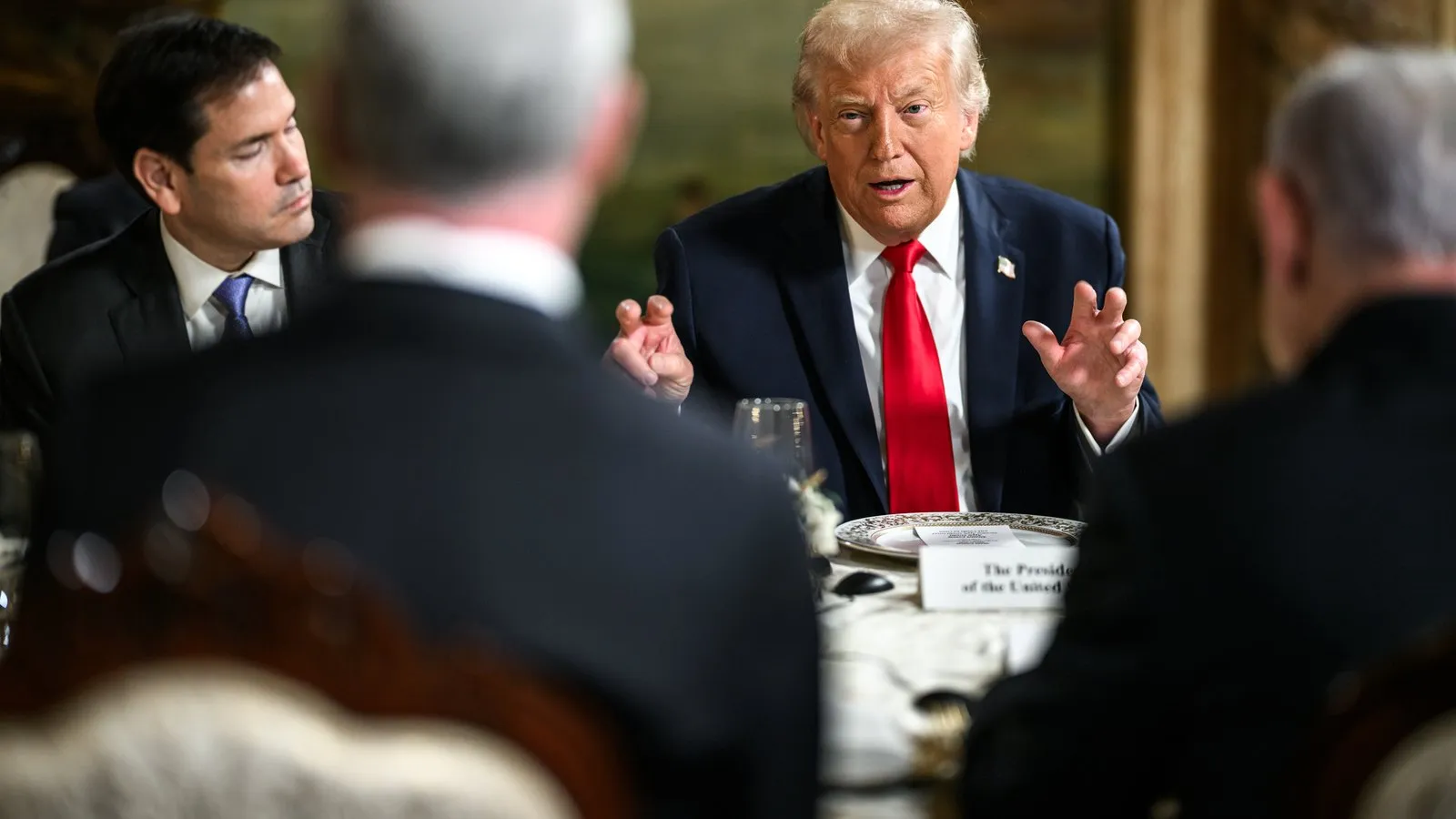
President Trump told reporters Wednesday that “progress is being made” on a Lebanon ceasefire and disputed that Hezbollah had outright rejected the offer. He did not elaborate on what progress he was referencing, and his characterization ran directly against the substance of Kassem’s public statement and the Hezbollah official’s communication to the Lebanese presidency.
The White House’s reluctance to acknowledge the rejection reflects a broader pattern: the administration has been invested in showing that its regional diplomacy is producing results, and a formal Hezbollah veto of a deal Lebanon’s government accepted is a difficult outcome to frame as forward progress. Trump’s friction with Israeli Prime Minister Benjamin Netanyahu over the Lebanon dimension of the conflict has made the Lebanon track particularly sensitive politically. An Israeli military escalation against Beirut — now explicitly threatened by Iran if it occurs — would unravel the broader diplomatic framework the administration has built.
What the Rejection Means for the Broader Conflict
Hezbollah’s veto of the pilot-zone framework does not foreclose future negotiations, but it does clarify the group’s minimum position in a way that makes near-term agreement considerably harder.
The Lebanese government is in an exposed position. Aoun’s government accepted terms that Hezbollah rejected, publicly framing the deal as Lebanon’s “last chance” — language that assigned responsibility to whoever refused. That responsibility now belongs visibly to Hezbollah, but the practical consequence is that Lebanon continues to bear the costs of a war it cannot stop.
The conclusion of the U.S. Iran strikes in the Gulf has not, as some hoped, accelerated an end to the Lebanon front. If anything, Hezbollah’s leaders appear to view the Iran ceasefire talks as leverage rather than a reason to stand down — holding their military position as a chip in negotiations over the final terms of a broader regional settlement.
The coming days will test whether Israel responds to the continuing Hezbollah attacks with strikes limited to southern Lebanon or escalates toward Beirut. Araghchi’s statement Thursday was designed to raise the cost of the latter option. Whether it succeeds in deterring Israeli action or simply raises the stakes for everyone involved will shape the trajectory of the conflict in a region that has been trying, and failing, to engineer its own offramp for months.
What Comes Next
The next U.S.-Iran diplomatic session has not been publicly scheduled. Araghchi’s “no tangible progress” assessment does not mean talks have collapsed — his ministry confirmed Thursday that communications remain open. But the combination of Hezbollah’s veto, Iran’s Beirut warning, and the death of an Israeli officer Wednesday creates a set of conditions that is more conducive to escalation than diplomacy.
Lebanon’s government is expected to press for a response from Hezbollah to the ceasefire framework. Whether Kassem leaves any room for modification of his position — or whether the pilot-zone model is simply a nonstarter for Hezbollah regardless of sequencing — is the central question that diplomatic efforts over the next several days will try to answer.
Sources 6 cited · 1 primary
- Israel, Lebanon agree to full ceasefire, but Hezbollah rejects it
- Hezbollah rejects ceasefire deal agreed on by Israel and Lebanon
- Soldier killed in anti-tank missile attack as Hezbollah rejects Lebanon ceasefire proposal
- Iran FM warns any attack on Beirut will trigger 'full-scale resumption of war'
- Iran says 'no tangible progress' made in talks as Hezbollah rejects Israel-Lebanon ceasefire agreement
- June 4: Trump says progress being made on Lebanon ceasefire, claims Hezbollah did not reject offer
American Courant cites its sources and links to primary documents where they exist. How we report →