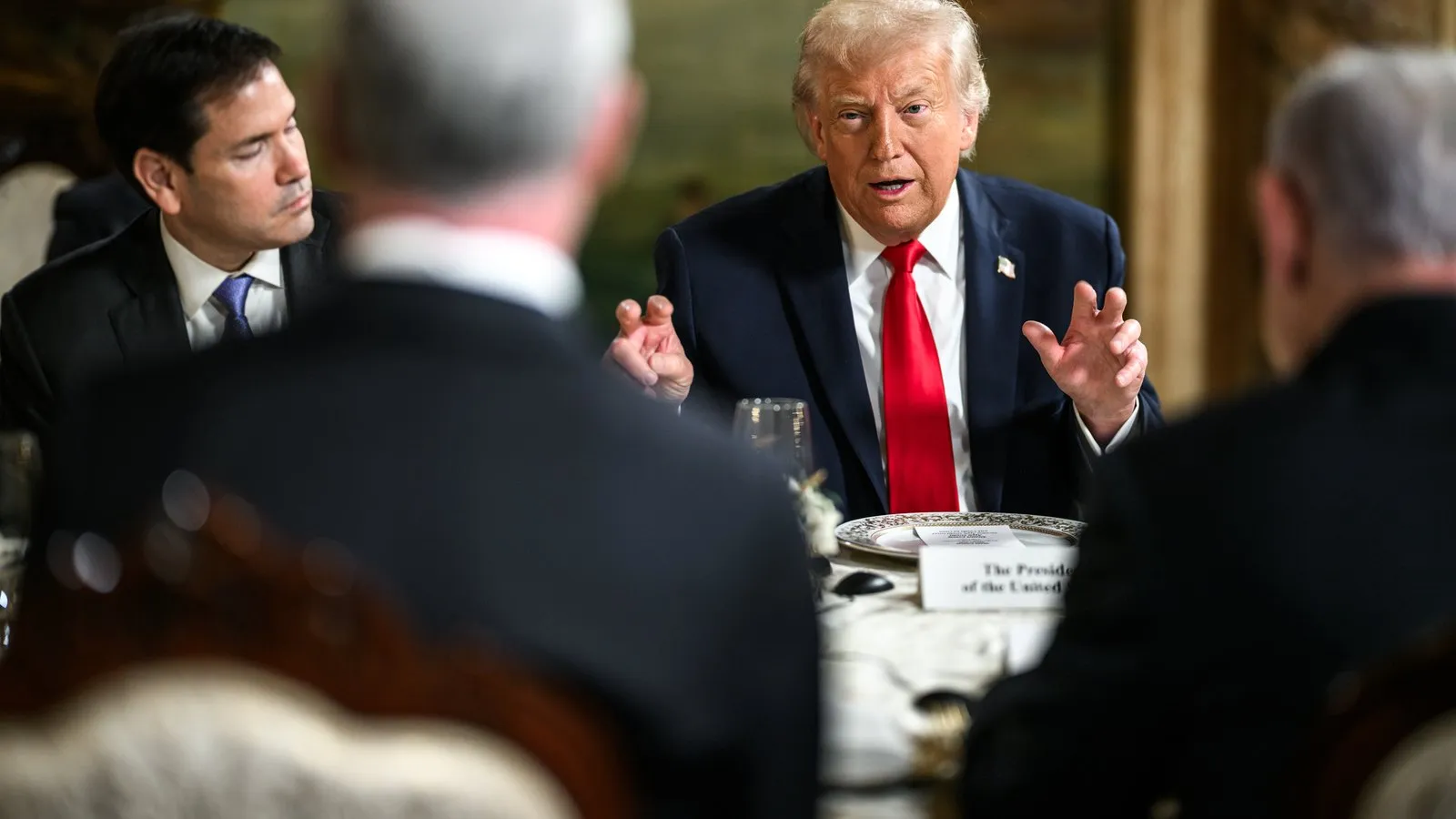
The U.S. and Iranian negotiating teams said the deal was done on Wednesday. The 60-day memorandum of understanding that would formally extend the ceasefire, begin the reopening of the Strait of Hormuz, and launch a new round of nuclear talks was agreed at the working level, according to officials briefed on the negotiations. When the American side brought the final package to President Trump, he told mediators he wanted a couple of days to think about it.
That gap — between “agreed” and “approved” — is where the deal sits as of Friday evening. Understanding why it exists requires looking at three things: what the MOU actually commits each side to do, what Israeli Prime Minister Benjamin Netanyahu said to Trump in a phone call about the Lebanon clause buried in the agreement, and what Iran publicly claims the document does not cover at all.
Background: Three Months of War and a Slow Convergence
Operation Epic Fury, the U.S.-Israeli air campaign that began on February 28 and targeted Iran’s nuclear infrastructure, military command nodes, and IRGC leadership, produced a ceasefire within weeks but not a peace agreement. Tehran and Washington have been in indirect negotiations through Pakistani and Qatari mediators ever since, with the Strait of Hormuz — closed to commercial traffic since the IRGC mined the waterway and declared it off-limits to vessels bound for U.S. and Israeli ports — as the primary economic lever Iran holds.
Talks in Doha produced partial agreements on ceasefire terms but stalled repeatedly on the core questions: sovereignty over the Strait, the future of Iran’s enriched uranium stockpile, and the scope of sanctions relief. As recently as May 25, both sides characterized a deal as days away, not hours. By May 28, Axios reported that negotiators on both sides believed the working text was final and ready for signature.
What the MOU Would Commit Each Side To
The 60-day memorandum is a mutual drawdown with synchronized steps, not a permanent peace agreement. Its key provisions, as reported by Axios from officials familiar with the text, are:
On Iran’s side: The Islamic Republic would declare shipping through the Strait of Hormuz “unrestricted” — no tolls, no harassment of commercial vessels. Iran’s Revolutionary Guard Corps would remove the naval mines it deployed in the waterway within 30 days of the MOU taking effect. Iran would also commit in writing that it will never pursue a nuclear weapon, with the first substantive negotiating items during the 60-day window being how to dispose of its stockpile of highly enriched uranium and whether enrichment activities would be suspended.
On the U.S. side: The naval blockade enforced since March — which has effectively quarantined the Persian Gulf for commercial shipping — would be lifted proportionally, in steps synchronized with Iran’s mine removal and Hormuz reopening. The United States would issue sanctions waivers allowing Iran to sell oil on international markets. The scope and timeline of those waivers, like the enrichment questions, would be negotiated during the 60-day window rather than settled in the MOU itself.
The document would also contain a clause — separate from the bilateral military terms — stating that the conflict between Israel and Hezbollah in Lebanon would end as part of the broader agreement. Reports indicate that any resulting ceasefire would permit Israel to respond militarily if Hezbollah initiates or carries out attacks. Whether that carve-out resolves Netanyahu’s objections is the central open question.
The Lebanon Problem
That Lebanon clause is what Netanyahu raised with Trump in a phone call that, according to reporting from multiple outlets, preceded Trump’s decision to ask for more time. Netanyahu expressed concern about committing Israel to a Hezbollah ceasefire through an Iran-U.S. memorandum rather than through a separately negotiated Israeli-Lebanese track.
Israel has been conducting airstrikes in Lebanon throughout the Iran war’s ceasefire period, including strikes near Beirut in the days before the MOU was presented for Trump’s signature. Hezbollah has resisted international calls to disarm and has continued to maintain operational positions along the Israeli border. Netanyahu faces far-right coalition members — including National Security Minister Itamar Ben-Gvir — who have pushed for more aggressive military action in Lebanon rather than a negotiated end to the hostilities.
In a separate call, Trump told Netanyahu he would stand firm on demanding Iran’s nuclear program be dismantled and all enriched uranium removed from the country. That reassurance is also a constraint: the MOU does not deliver those outcomes. It creates a 60-day window to negotiate toward them. The gap between what the document actually commits to and how it would need to be marketed in Israel and Washington is itself a source of friction. Senate Republicans have already warned that any agreement they consider weaker than full dismantlement would face their opposition when the INARA review clock begins.
Where Iran and the U.S. Disagree on Nuclear Terms
The Iranian and American descriptions of what the MOU covers on nuclear issues are not consistent with each other.
U.S. officials have described the document as including commitments from Iran on how to address its stockpile of highly enriched uranium — language that implies Iran agreed to discuss the material’s removal or disposal as the first order of business in the 60-day negotiating period. A senior Iranian official told Reuters that Tehran had not agreed to hand over its highly enriched uranium stockpile and that Iran’s nuclear issue was not part of the preliminary agreement. Iranian Supreme Leader Khamenei’s advisor, Ali Shamkhani, separately called Trump’s desired level of control over the Iranian nuclear program a “fantasy.”
These descriptions are difficult to reconcile, but they are characteristic of how parallel announcements work in negotiations at this stage. Iran cannot publicly acknowledge agreeing to surrender nuclear material before a deal is signed — the domestic political cost would be severe. The United States cannot characterize an agreement as leaving enrichment in place without political cost in Washington. What matters operationally is what the written text says, and that text has not been released. The 60-day negotiating window is specifically designed to resolve what each side says is already resolved.
The pattern echoes what happened in late May when Trump described the deal as “largely negotiated” before walking back that characterization the following day after Senate Armed Services Chair Roger Wicker warned the framework would make Operation Epic Fury’s gains “for naught.”
The Mine-Clearing Gap
There is an engineering problem embedded in the MOU’s 30-day mine removal deadline. Pentagon officials testified to the House Armed Services Committee that fully clearing the Strait of Hormuz of naval mines could take six months — and that the mine-clearing operation was unlikely to begin until the war formally ended. The proposed MOU commits Iran to completing the removal in one month.
Those timelines do not align. The 30-day commitment is almost certainly a political deadline, not an engineering one. Actual demining would require a coordinated multinational operation. France pre-positioned the aircraft carrier Charles de Gaulle in the Red Sea in early May to support a potential Hormuz maritime security mission as part of a broader coalition framework — but the coalition has been waiting for a ceasefire to formally exist before deploying into the strait.
The practical consequence is that even if the MOU is signed and Iran begins mine removal on schedule, commercial shipping through the Strait will not resume at pre-war volumes for weeks or months after that. Insurers and shipping companies have said they will require verified mine clearance before resuming normal traffic, regardless of what any agreement states. Oil prices, which touched $100 a barrel in the days following CENTCOM’s late-May strikes on IRGC mine-laying boats, have remained elevated on that uncertainty.
What Comes Next
If Trump approves the MOU, the 60-day clock on negotiating a permanent settlement begins immediately. The key items in that window — Iran’s highly enriched uranium stockpile, the future of the enrichment program, the timetable for Hormuz sovereignty transfer, and the status of frozen Iranian assets — are the same questions that rounds of Doha talks failed to resolve on the accelerated schedule Washington had initially hoped for.
The INARA question remains open. Whether the administration submits any resulting executive agreement to Congress under the Iran Nuclear Agreement Review Act, or characterizes the MOU as an executive action that does not require the 60-day review process, has not been publicly resolved. Congress has not been formally notified of any submission.
For now, Trump has publicly maintained that time is on his side — a posture that could reflect genuine leverage or the need for more days to resolve the Lebanon clause to Netanyahu’s satisfaction. What he has not said is when he intends to decide. The war’s ceasefire, fragile since its first days, continues in the meantime.
Sources 6 cited · 2 primary
- Scoop: U.S. and Iran reach deal but need Trump's final approval, officials say
- Exclusive: What's inside the Iran deal Trump is close to signing
- Trump said to assure Netanyahu he will thwart Iran nuke program as Israel fears 'very bad' deal
- Will the U.S. and Iran Finally Reach a Deal?
- Is Israel collapsing a US-Iran deal over Lebanon?
- Why the Strait of Hormuz will take a long time to reboot
American Courant cites its sources and links to primary documents where they exist. How we report →