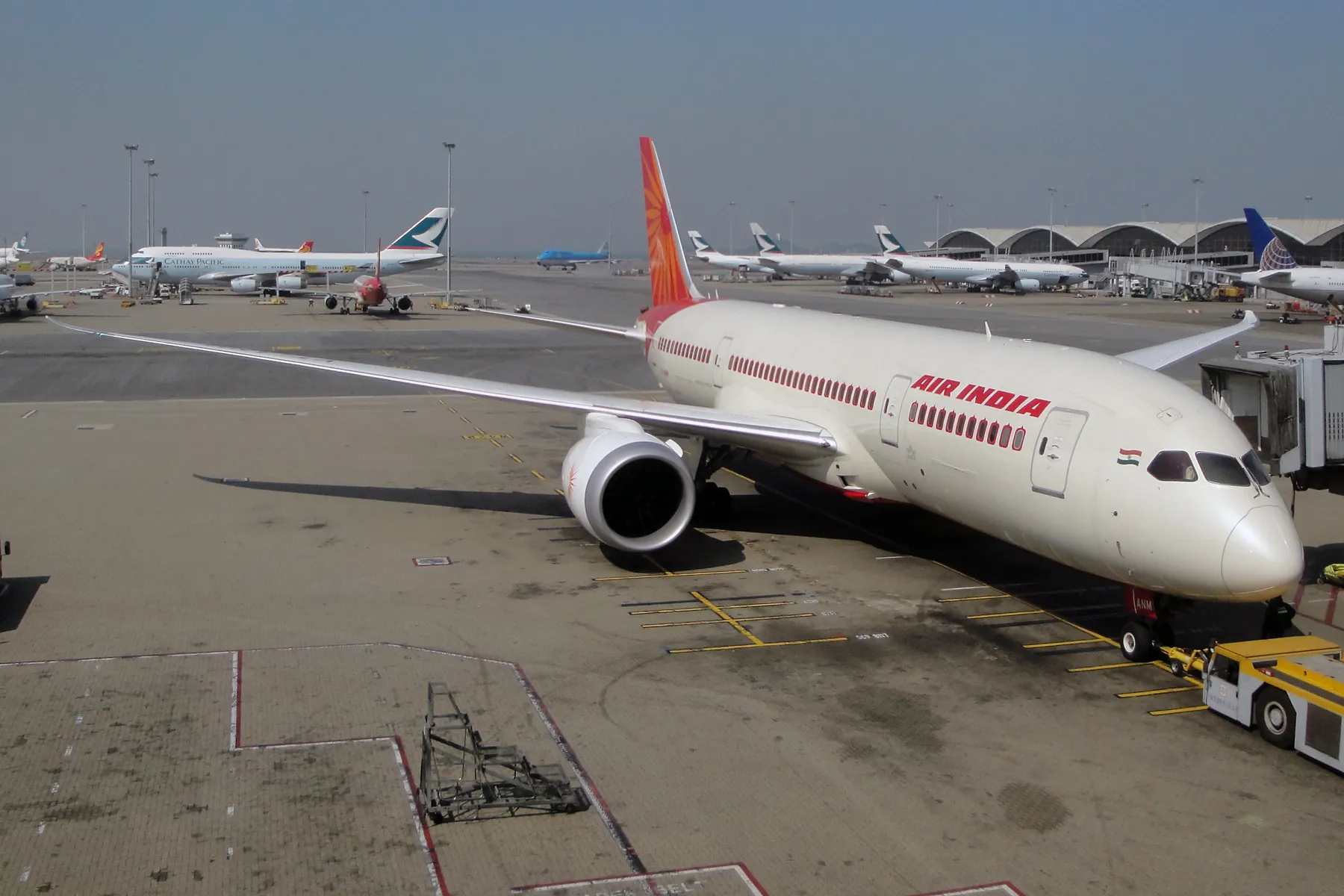
One year ago today, an Air India Boeing 787-8 bound for London lifted off from Ahmedabad, climbed for a few seconds, and fell out of the sky. Flight AI171 crashed into a medical-college hostel roughly a mile and a half from the runway about 32 seconds after takeoff, killing 241 of the 242 people aboard and 19 more on the ground — 260 deaths in all, and the first fatal loss of a Boeing 787 since the aircraft entered service in 2011. Twelve months later, investigators have established a great deal about what happened in those 32 seconds. They have not established why.
The central fact is not in dispute. India’s Aircraft Accident Investigation Bureau, the AAIB, confirmed in its July 2025 preliminary report that both of the aircraft’s fuel-control switches moved from “RUN” to “CUTOFF” within seconds of liftoff, one switch about a second after the other, cutting fuel to both engines. What the report did not say — and what the bureau has repeatedly cautioned it has not yet determined — is how or why those switches moved. As of the first anniversary, the AAIB is preparing an interim update rather than a final report, with the conclusive findings now expected to slip by roughly three months. That gap, between a confirmed sequence and an unconfirmed cause, is the open question this piece examines.
This is an Open Questions article. It sets out what the official investigation has confirmed, what competing accounts have been advanced and by whom, and what genuinely remains unknown. It does not assign blame, it does not adopt any party’s characterization as fact, and it does not assert that any individual deliberately or mistakenly did anything. Those are precisely the questions the investigation has left open.
What Is Confirmed
The basic record is well documented. AI171 departed Sardar Vallabhbhai Patel International Airport in Ahmedabad on June 12, 2025, at 13:39 local time, operating a Boeing 787-8 Dreamliner registered VT-ANB and powered by GE Aerospace engines. The aircraft reached a maximum recorded airspeed of about 180 knots, then lost thrust and descended into the hostel of B.J. Medical College. A single passenger, British national Viswash Kumar Ramesh, survived; 67 people on the ground were seriously injured. It remains the deadliest aviation accident of the decade.
The AAIB released a 15-page preliminary report on July 11, 2025, drawing on the flight recorders. According to that report, as summarized by India’s public broadcaster and by international outlets including Al Jazeera, both engine fuel-control switches transitioned from RUN to CUTOFF about three seconds after liftoff, one second apart, and both engines began to spool down. The switches were subsequently returned to RUN; one engine began to recover, but there was not enough altitude or time to arrest the descent.
The preliminary report also documented an exchange on the cockpit voice recorder. As the report described it, one pilot is heard asking the other why he had cut off the fuel, and the other replies that he had not. The AAIB did not attribute the switch movements to either crew member, did not characterize the cause as deliberate or accidental, and explicitly stated that the investigation was continuing. In a February 2026 update, the bureau reiterated that “no final conclusions have been reached.”
Where the Accounts Diverge
The disagreement is not over the switch movements, which the recorders captured, but over what caused them — and here the public accounts pull in different directions, each traceable to an identifiable source.
Some Western reporting pointed toward the cockpit. In July 2025, The Wall Street Journal reported, citing people it described as familiar with the U.S. side of the inquiry, that the recorded exchange and the sequence of switch movements had focused investigators’ attention on the actions of the flight’s captain. The Journal’s account stopped short of a definitive conclusion, and the AAIB has not endorsed it.
Indian pilot associations rejected that framing. The Federation of Indian Pilots and the Airline Pilots’ Association of India (ALPA-I) publicly pushed back, arguing that the preliminary report did not allege pilot error and urging the media to stop circulating what ALPA-I called “unverified and speculative theories.” Federation president Captain C.S. Randhawa told the news agency ANI that “neither the report nor the Civil Aviation Minister has said that it was pilot error.” The pilots’ bodies have since renewed a demand for an independent judicial probe and have opposed the release of an interim report they fear could be read as assigning blame before the analysis is complete.
A separate line of inquiry points at the hardware. Some pilots, engineers and independent analysts have argued that the near-simultaneous transition of two switches is consistent with an electrical or software fault rather than a hand on the controls, and reporting around the crash drew renewed attention to a 2018 U.S. Federal Aviation Administration advisory concerning the locking feature on fuel-control switches of the kind used on the 787. That hypothesis, too, is unproven; no official finding has confirmed a system malfunction, and the preliminary report noted that no immediate evidence of a fault in the aircraft or its engines had been identified at that stage.
The AAIB’s own position is that it is too early to say. The bureau has cautioned against drawing conclusions from the preliminary findings and has tied the delay in its final report to unfinished work — in particular, analysis of the GE Aerospace engines and the engine-management electronics. The competing narratives, in other words, are not the investigation’s conclusions; they are the hypotheses the investigation has not yet resolved.
The pattern is not unique to AI171. American Courant has reported on a 2022 China Eastern crash whose investigators have still not issued a public final report years later, a reminder that even thoroughly instrumented modern accidents can resist a settled official account for a long time.
The Timeline
- June 12, 2025 — AI171 crashes about 32 seconds after takeoff from Ahmedabad; 260 people are killed, one passenger survives.
- July 11, 2025 — The AAIB publishes its preliminary report, confirming the RUN-to-CUTOFF switch movements and the cockpit-voice-recorder exchange, without assigning a cause.
- July 2025 — The Wall Street Journal reports that attention has turned to the captain’s actions; the Federation of Indian Pilots and ALPA-I reject the framing and call for restraint.
- February 2026 — Amid a public-interest petition before the Supreme Court of India seeking an independent probe, the AAIB states that no final conclusions have been reached; the court accepts the government’s request for more time.
- June 11, 2026 — Reuters reports that the AAIB is preparing an interim update rather than a final report, with conclusive findings expected to be delayed by roughly three months pending analysis of the engines and their electronics.
- June 12, 2026 — On the first anniversary, victims’ families say they are still waiting for answers and press for the release of flight-recorder data and a judicial inquiry.
What Remains Unknown
- How and why the fuel-control switches moved. This is the core unresolved question. The recorders show the movements; nothing in the public record establishes whether they resulted from crew action — deliberate or inadvertent — or from an electrical or software fault.
- What the cockpit exchange means. The preliminary report records one pilot asking why the fuel was cut off and the other denying he had done it. The official documents do not interpret that exchange or attribute the switch movements to either pilot.
- Whether the switch design or its locking feature was a factor. The hypothesis drawing on the 2018 FAA advisory has not been confirmed or ruled out in any official finding.
- What the engine and electronics analysis will show. The AAIB has linked the delay to this work; its outcome has not been made public.
- Why the final report has slipped. Officials cite the unfinished technical analysis, but the bureau has not released a detailed account of what remains outstanding.
What Comes Next
The next concrete marker is the AAIB’s interim update, which the bureau signaled would land around the anniversary. A final report is now expected roughly three months later, though the investigation has already missed earlier timelines, including one contemplated in the Supreme Court proceedings. Under the international framework governing such inquiries, the United States — as the state where the aircraft and engines were designed and built — and the United Kingdom, whose citizens were aboard, participate as accredited representatives, and GE Aerospace’s engine analysis is part of the work the AAIB says is still pending. Boeing, the Dreamliner’s manufacturer, is a party to the inquiry through the U.S. delegation; the company’s commercial-jet business has spent the past year as a barometer of U.S.–China trade tensions, though it has publicly tied none of that to the AI171 investigation.
Two other tracks could shape what the public ultimately learns. The petition before the Supreme Court of India seeking an independent or judicial probe remains live, and the pilots’ associations and several victims’ families are pressing for the release of the underlying flight-recorder data rather than only the investigators’ summaries. How much of that material becomes public — and whether the final report squarely answers the question the preliminary one left open — will determine whether the anniversary marks a year of waiting or the start of an answer.
What is confirmed is that both fuel-control switches on AI171 moved to cutoff seconds after takeoff, that both engines lost thrust, and that 260 people died. What is not confirmed — a year on, and by the investigators’ own account — is the single fact that matters most to the families still waiting: why.
Sources 11 cited · 2 primary
- Preliminary report of investigation into Air India plane crash reveals fuel supply to both engines was cut off soon after takeoff
- Updates on AI171
- No final conclusions have been reached: AAIB on AI171 crash probe
- Air India AI171 crash anniversary: families await AAIB report
- Pilot error or electronic failure? A year later, the biggest unanswered question in the Ahmedabad Air India AI171 crash
- What happened to the fuel-control switches on doomed Air India flight 171?
- Indian pilots' bodies reject WSJ report suggesting senior pilot's error in Air India crash
- Pilot Federation President says AI-171 crash report omits pilot error
- Pilots' body renews demand for judicial probe into AI171 crash, opposes interim report release
- Air India 787 crash report delayed; fuel cutoff questions remain
- Air India Flight 171
American Courant cites its sources and links to primary documents where they exist. How we report →