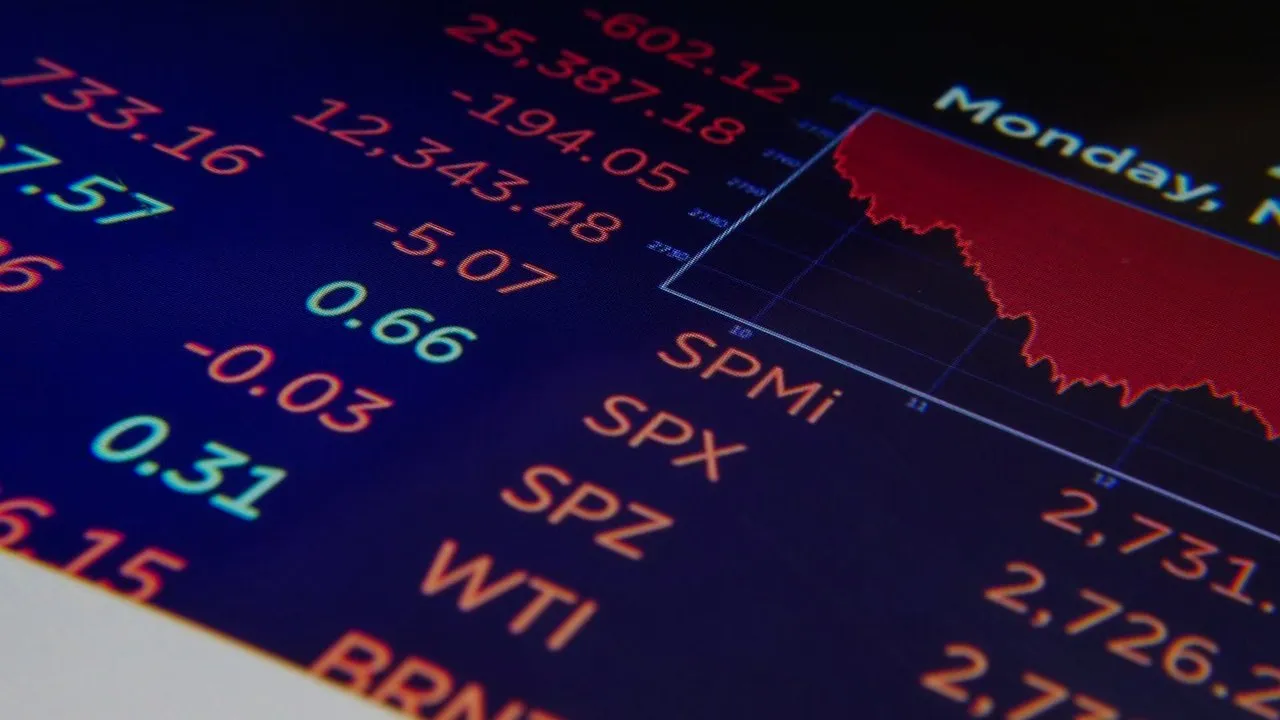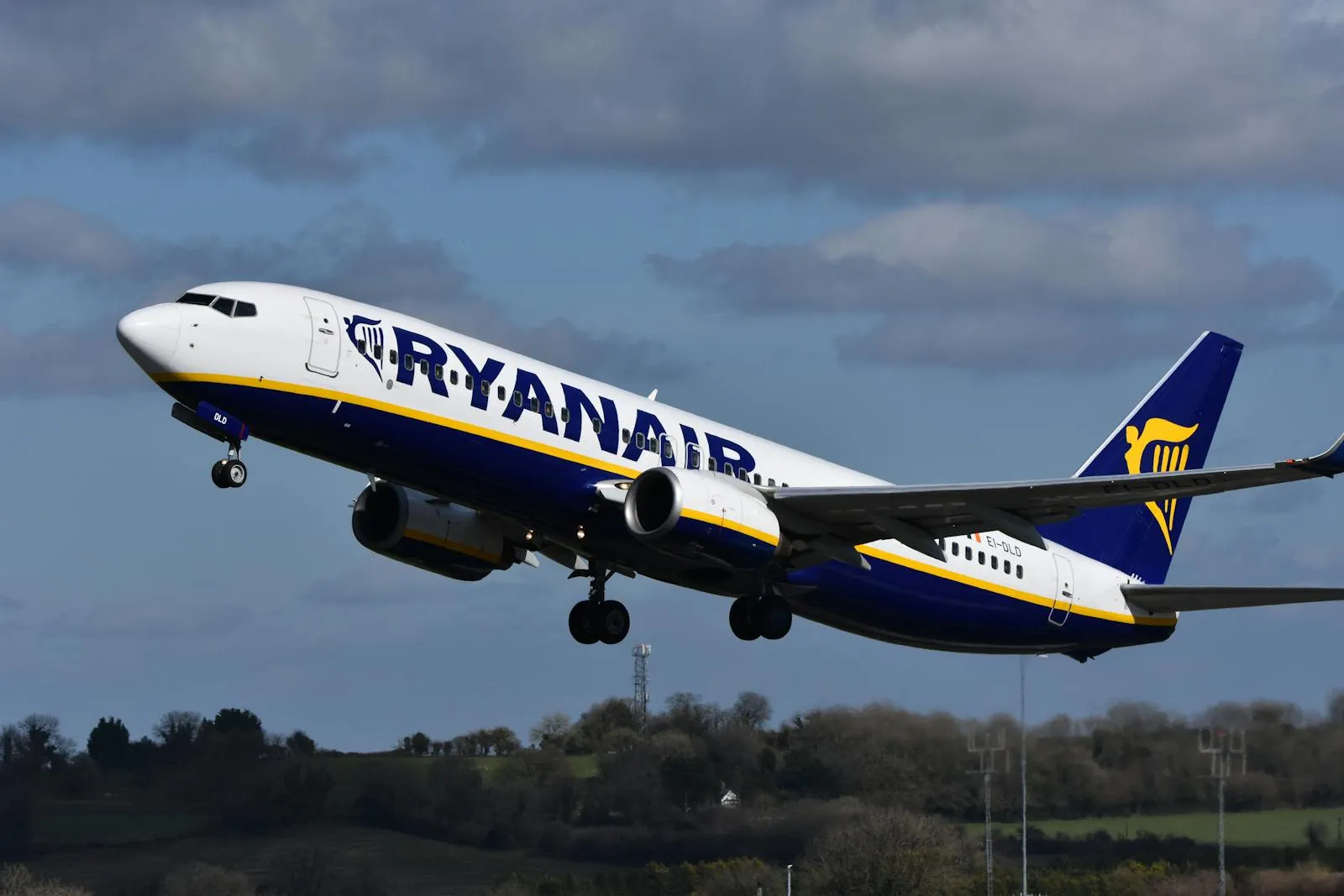
Boeing stock surged more than 9 percent Thursday as the Beijing summit’s joint communiqué confirmed the largest commercial aircraft order China has placed with an American manufacturer in eleven years — a deal for 130 737 MAX 10 aircraft with options for 75 more, at an estimated list-price value of $44 billion. The Dow Jones Industrial Average closed up 458 points, its best single-day gain since March, while the S&P 500 rose 1.1 percent to a 52-week high.
The summit’s trade outcomes — a tariff framework extended through November 2027, agricultural purchasing commitments restored to 80 percent of pre-trade-war levels, and a 12-month semiconductor end-use verification pilot — removed several near-term pressure points that had been suppressing investor sentiment ahead of the bilateral. But the absence of any Chinese commitment to pressure Iran on the Strait of Hormuz, combined with April’s record wholesale price data, kept Thursday’s gains from extending further into the closing bell.
Boeing’s Day
The specifics of the 737 MAX order mattered as much as its headline number. The 737 MAX 10 is Boeing’s largest-capacity MAX variant, designed for high-density domestic routes, and it sits at the center of the company’s recovery from the door-plug blowout grounding of late 2023 and the certification work that consumed most of 2024. First deliveries under the Beijing agreement are scheduled for the third quarter of 2027, contingent on FAA certification milestones already underway — a timeline that gives Boeing 14 months before the order converts into delivered aircraft and recognized revenue.
Actual transaction prices on bulk commercial orders are typically discounted 30 to 40 percent from list, putting the effective value somewhere between $26 billion and $31 billion. The announced order — structured through China’s three major state-owned carriers — is nevertheless real backlog, real demand, and a real political signal. The fact that a deal this large appeared in the formal joint communiqué, rather than in a side letter or a framework agreement, is what distinguishes it from the aspirational purchase announcements that have appeared and disappeared in prior rounds of U.S.-China trade negotiations.
Boeing shares closed at $197.43, up 9.2 percent, on volume roughly three times the 90-day daily average. The move brought Boeing back above its pre-Iran-war closing level for the first time since February and reversed losses that had accumulated since the Strait of Hormuz attacks began driving jet fuel costs higher in March.
The Tariff Extension and Broad Market Relief
Beyond Boeing, Thursday’s most consequential market signal was the tariff framework extension. The existing reduced-tariff architecture, originally due to expire this fall, now runs through November 2027. A formal renegotiation process begins in the first quarter of next year. The language stops short of permanent normalization but removes the cliff-edge expiration risk that had been pricing into import-dependent manufacturers and retailers since spring.
Supply chain managers at major consumer goods and electronics companies have been holding back capital expenditure decisions and sourcing diversification plans while the tariff timeline remained uncertain. Thursday’s extension converts an uncertain ceiling into a known floor. That’s not a resolution of the underlying trade architecture, but it is a planning horizon — and markets treat planning horizons as a form of value.
The broader index reaction reflected that context. The April producer price index published Thursday morning showed wholesale prices up 1.4 percent — the largest monthly increase since 2022 — driven predominantly by energy. The tariff extension doesn’t change the energy component directly, but it reduces tariff-driven cost pressure on manufactured goods that had been feeding into downstream CPI. Markets read the combination as net positive, if not unambiguously so.
Agricultural stocks caught a specific bid. Bunge Global gained 4.3 percent and Archer-Daniels-Midland rose 3.8 percent after the communiqué confirmed soybean purchasing commitments that restore roughly 80 percent of pre-tariff-war levels with China through 2028. Rare earth and critical mineral processors — MP Materials and Energy Fuels both added more than 5 percent — extended gains on China’s agreement to maintain general export licenses for gallium, germanium, and rare earth materials through December 2026.
The Half-Win on AI Chips
The technology sector’s reaction was more muted than the broader market, reflecting a communiqué that gave the semiconductor story structure without resolution. The CEO delegation that accompanied Trump to Beijing included Nvidia’s Jensen Huang, whose last-minute addition to the trip signaled that the H200 export authorization question was a central summit objective. Nvidia’s H200 had been authorized for sale to China since late last year, but not a single unit has shipped.
What emerged Thursday is a 12-month joint end-use verification pilot: a framework for building the oversight architecture that would enable specific H200 shipment authorizations to proceed. The pilot is the predicate for a shipment authorization, not the authorization itself. Jensen Huang’s statement Thursday evening described it as “a concrete path forward.” China’s Ministry of Industry and Information Technology called it “a constructive starting point.”
Nvidia closed up 3.1 percent — a meaningful gain, but not the scale of reaction investors would expect from an outright H200 authorization. The chip market read Huang’s statement as accurate but incomplete. Apple, represented at the summit by CEO Tim Cook, closed up 1.8 percent after the communiqué addressed supply chain stabilization language relevant to the company’s Chinese manufacturing base. Tesla gained 2.4 percent on improved expectations for its Shanghai factory’s operating environment.
Oil, Iran, and the Limit of Thursday’s Good News
The summit’s most consequential absence registered in the energy market. WTI crude oil closed at $91.14 Thursday, up 1.9 percent, after the joint communiqué confirmed that Beijing made no commitment to pressure Tehran on the Strait of Hormuz.
The U.S. negotiating team had sought Chinese leverage through oil purchases: Beijing imports a significant share of its crude through Hormuz, and a signal from China that continued Iranian disruption of the strait would carry bilateral consequences was the specific tool American officials had hoped to activate at the summit table. That tool did not appear in the communiqué. The relevant security section called for “freedom of navigation and maritime security in accordance with international law” — language that binds Beijing to nothing operationally.
Saudi Aramco has warned that oil markets may not normalize until mid-2027 if Hormuz disruption continues at current levels. Without Chinese pressure on Tehran, that timeline effectively stands. The summit setup piece published Wednesday evening noted that Beijing’s leverage over Tehran through energy purchasing was the specific mechanism the U.S. team was seeking to activate. Thursday’s communiqué left it unused.
The gap between Thursday’s trade-driven equity gains and the oil market’s flat-to-up close tells you something about what investors think the communiqué’s actual geopolitical weight is: transformative on trade, inert on security.
Warsh’s First Market Test and What Comes Next
Thursday was technically Kevin Warsh’s last full day as chair-designate. The Senate confirmed him 54-45 on a party-line vote Wednesday — the narrowest margin in the position’s history. Jerome Powell’s term expires Friday. Saturday is Warsh’s first day in the chair.
His inheritance is precise. Thursday’s session handed him a market that moved up on summit news while sitting on top of April producer price data that showed a 1.4 percent monthly increase. In any other week, that PPI print would have sent Treasuries sharply lower and equity markets into retreat. The 10-year Treasury yield closed Thursday at 4.78 percent, up 6 basis points, despite the equity rally — a signal that bond markets haven’t fully reconciled the tariff-extension’s disinflationary read with the energy market’s assessment that oil prices aren’t coming down soon.
Warsh’s position on interest rates has been publicly hawkish: during his confirmation hearings, he described inflation expectations as “inadequately anchored” and declined to commit to the rate-cut path that markets had priced in for 2027. The summit’s tariff extension is, on one interpretation, disinflationary — fewer tariff-driven cost pass-throughs for manufacturers. On another, China’s lack of movement on Iran preserves the energy cost pressure that produced April’s PPI surge to begin with.
His first FOMC meeting is in six weeks. He will have this summit’s trade wins and this PPI data as his starting baseline — a combination that doesn’t obviously resolve in either direction. The 10-year yield’s 6-basis-point move Thursday, even against an equity rally, is how bond markets are expressing that ambiguity. The Federal Reserve made no public statement Thursday, which is standard practice during market-sensitive announcements. Powell is managing a handoff conducted by institutional convention in silence. Investors watching the yield curve are reading their own inference into what that silence means.
Day 2 of the summit — working-level sessions on investment, aviation certification, financial market access, and energy — begins Friday at the Diaoyutai State Guesthouse. Those sessions are expected to produce operational annexes that give Thursday’s communiqué binding structure: delivery schedules for the Boeing order, licensing procedures for the rare-earth extension, and the technical design of the semiconductor verification pilot. No new headline commitments are expected. The trade architecture is in place. Now it has to become implementation.
Sources 6 cited · 4 primary
- Fact Sheet: U.S.-China Boeing Commercial Aviation Agreement — 130 737 MAX 10 Aircraft
- Boeing Statement on Commercial Aircraft Agreement with China's State-Owned Carriers
- Fact Sheet: U.S.-China Beijing Summit Joint Communiqué — Trade and Technology Framework
- Markets Rally on Beijing Summit Trade Deals; Boeing Surges on China 737 Order
- Producer Price Index News Release — 2026 M04 Results
- WTI crude holds above $91 as Beijing summit fails to produce China-Iran commitment
American Courant cites its sources and links to primary documents where they exist. How we report →