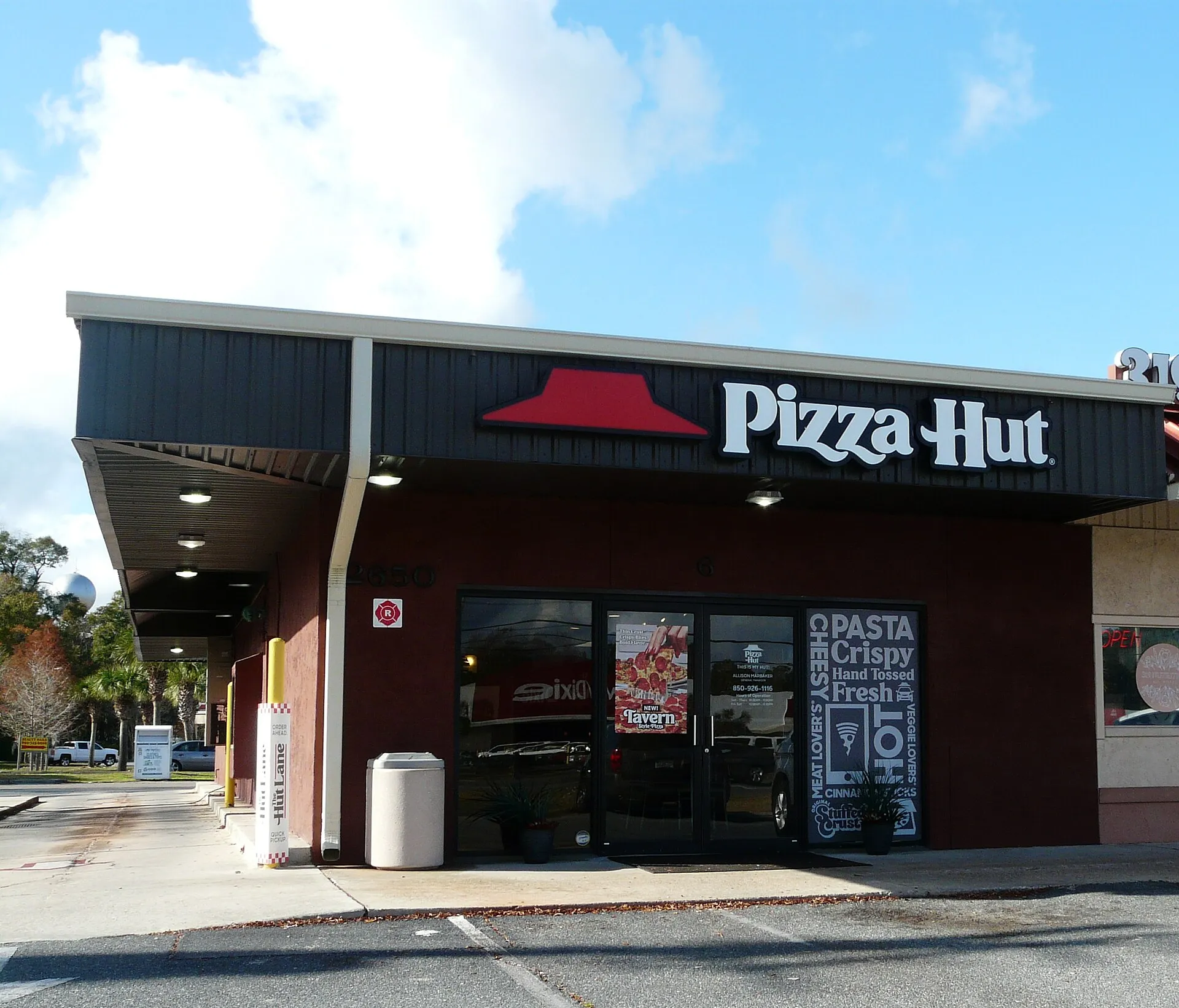
Pizza Hut, the chain that taught a generation of American families what a pizza dinner out looked like, is being sold off. Yum Brands said Tuesday it has agreed to part with the brand in a pair of deals worth about $2.7 billion, ending a six-decade ownership run and handing the once-dominant pizza company to new owners on two continents.
The split is the headline: the private-equity firm LongRange Capital will buy Pizza Hut everywhere outside mainland China for roughly $1.5 billion, while Yum China Holdings will take the mainland China business for about $1.2 billion. For Yum, the move closes a strategic review the company opened in November 2025 and clears the way for it to concentrate on the two brands doing the heavy lifting for its bottom line — KFC and Taco Bell. For everyone else, it is a blunt verdict on how far a household name can fall when the way people order dinner changes underneath it.
What’s in the Deal
The transaction is structured as two simultaneous sales. LongRange Capital, a relatively young private-equity shop, gets the international Pizza Hut franchise and the U.S. business; Yum China, already Pizza Hut’s operator on the mainland, absorbs that market outright. Together the deals are valued at roughly $2.7 billion.
Yum expects to net about $2.3 billion after taxes, fees and closing adjustments, with the possibility of an additional earn-out of up to $75 million by 2030 if the business hits certain marks. The company also flagged roughly $85 million in one-time separation costs through the rest of 2026 as it untangles Pizza Hut from its corporate structure. Both transactions are expected to close in the third quarter of 2026, subject to regulatory approvals.
Chief Executive Chris Turner, who took over the top job at Yum in October 2025 after years as the company’s finance chief, framed the sale as addition by subtraction. The deal, he told CNBC, “positions Pizza Hut for even greater growth going forward, and for Yum, it allows us to focus even more on those three brands” — KFC, Taco Bell and the smaller Habit Burger & Grill chain Yum is keeping.
Why Pizza Hut Fell Behind
The price tag tells its own story. Pizza Hut was once the largest pizza chain on earth and the cultural default for sit-down pizza in the United States, with its red-roofed dine-in restaurants and book-it reading rewards woven into American childhoods. The $2.7 billion it is fetching now is modest for a brand with that kind of recognition — a sign of how much ground it has lost.
The culprit is the way pizza gets ordered in 2026. Pizza Hut built its empire on dine-in. The market moved to delivery and digital ordering, and rivals built for that world ate its lunch. Domino’s reorganized itself around carryout and a slick ordering app years ago and pulled ahead. Third-party delivery platforms turned every independent pizzeria into a national competitor reachable in two taps. Pizza Hut, saddled with an aging fleet of dine-in locations and a slower digital pivot, kept slipping in a category it used to own.
That decline is not unique to pizza. The broader restaurant industry is being reshaped by delivery economics and by a cost squeeze on operators, and even healthy chains are feeling the financing climate. With the Federal Reserve holding interest rates high and signaling possible increases, the cheap capital that fueled restaurant expansion and private-equity dealmaking has gotten expensive — which makes a turnaround bet on a fading brand a harder, costlier wager than it would have been a few years ago.
What Yum Keeps — and Why
Yum’s logic is portfolio math. KFC and Taco Bell are its growth engines: Taco Bell in particular has been a standout performer in the United States, and KFC drives enormous volume abroad. Pizza Hut had become the laggard dragging on a portfolio Yum would rather present to investors as lean and fast-growing.
By cutting Pizza Hut loose, Yum can pour management attention, marketing dollars and technology investment into the brands it believes can compound for years — and it can hand investors a cleaner growth story. The roughly $2.3 billion in net proceeds gives the company flexibility to return cash to shareholders, pay down debt or reinvest, all while shedding the brand that had become its problem child. The retained Habit Burger & Grill rounds out a slimmer three-and-a-half-brand lineup.
It is the same instinct driving a wave of corporate housecleaning across consumer and media businesses this year, as parent companies break themselves into focused pieces rather than sprawling conglomerates — the logic behind deals like Fox’s $22 billion move to absorb Roku. Conglomerate discounts are out of fashion; focus is the pitch executives are making to markets.
What It Means for Customers and Franchisees
For the millions of people who still order from Pizza Hut, little changes overnight. The chain keeps operating, the menu stays, and stores stay open through the transition. The real questions are longer-term: a private-equity owner like LongRange typically buys to fix and eventually flip, which can mean fresh capital and a remodel push — or cost-cutting and a sharper focus on the franchise economics, depending on the playbook.
For Pizza Hut’s franchisees, who own and run most of the locations, the change at the top introduces uncertainty about strategy, marketing support and the pace of required store upgrades. New ownership often arrives with new demands. And in China, the brand passes fully to Yum China, a company that already knows how to run it in that market and has kept it growing where the U.S. business stalled — a quiet contrast in the same brand’s fortunes on opposite sides of the world.
What Comes Next
The deals still need regulatory sign-off and are slated to close in the third quarter. After that, Pizza Hut will be owned by LongRange and Yum China rather than the company that built it into a global name, and Yum Brands will go to investors as a tighter KFC-and-Taco-Bell story.
The larger signal is the one the industry is already reading. When a brand this recognizable changes hands at this price, it tells every legacy restaurant chain the same thing: name recognition built in the dine-in era is not worth much if the company never fully made the jump to how people actually order food now. Pizza Hut spent decades as the category’s giant. Its sale is the bill for falling behind the apps.
Sources 7 cited · 2 primary
- Yum! Brands, Inc. Enters into Agreements to Sell Pizza Hut for $2.7 Billion
- Yum! Brands, Inc. Form 8-K, Exhibit 99.1
- Yum Brands sells Pizza Hut to private equity firm LongRange Capital for $2.7 billion
- Yum Brands CEO lays out the benefits of selling Pizza Hut
- Yum! Brands sells struggling Pizza Hut in $2.7 billion deal
- Yum Brands to sell Pizza Hut for $2.7B as company sharpens focus on Taco Bell, KFC growth
- Upstart PE firm wagers $1.5B+ on a Pizza Hut turnaround
American Courant cites its sources and links to primary documents where they exist. How we report →