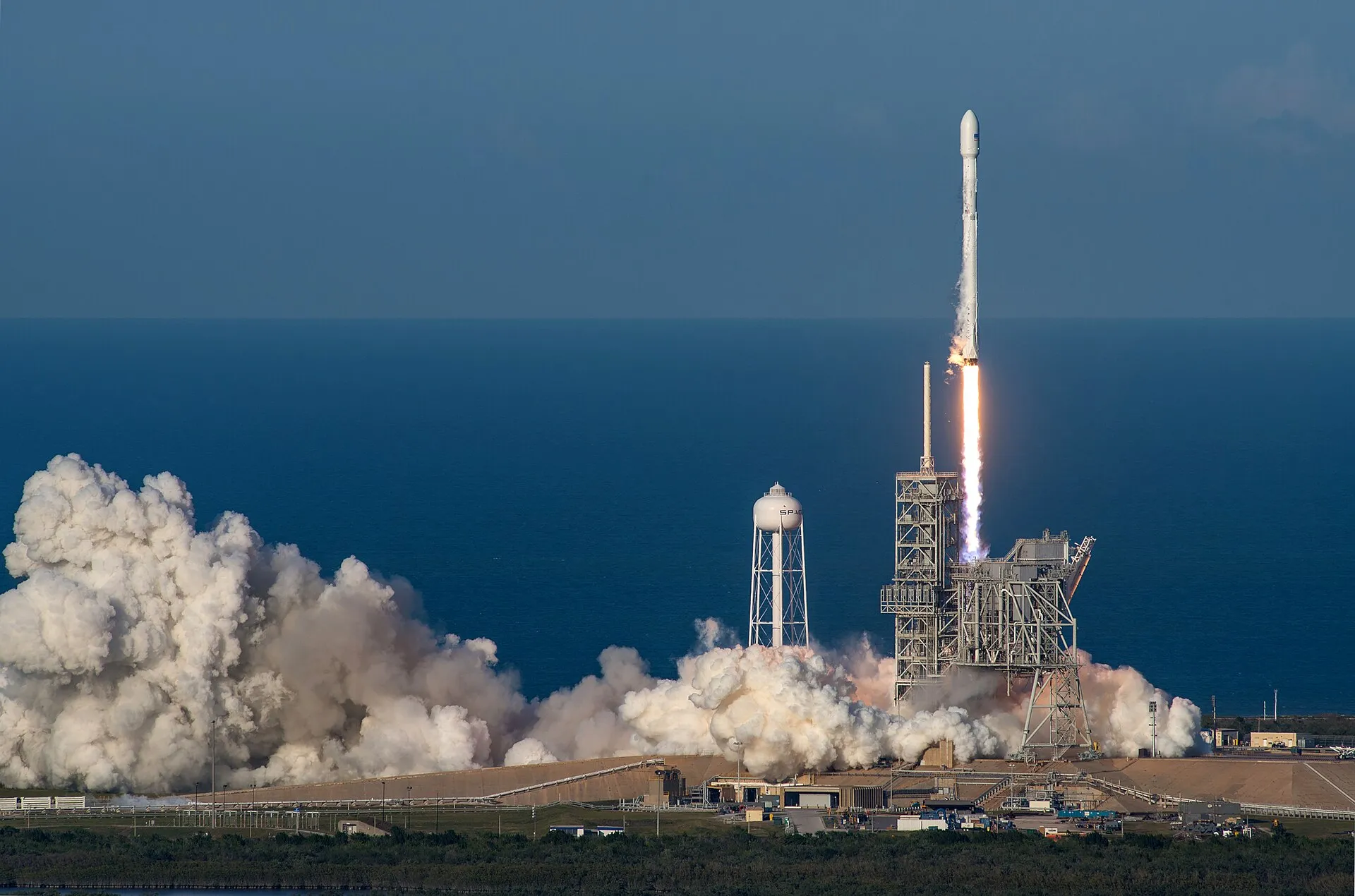
SpaceX pulled off the largest initial public offering in history last week — and then did the one thing its loudest skeptic warned against. It went straight up.
Elon Musk’s rocket and satellite company priced its IPO at $135 a share on June 11, debuted on the Nasdaq the next morning under the ticker SPCX, and immediately blew past the offer price. The stock opened around $150, spiked more than 30% in the first frenzy of trading, and closed its first session at $160.95 — up 19.2% on the day. It has kept climbing since, trading near $178 by June 15. At that level, SpaceX is worth roughly $2.3 trillion, which is not just above its $1.77 trillion IPO valuation. It is nearly three times the figure one of Wall Street’s most respected research firms said the company was actually worth.
That gap — between what the market is paying and what the analysts said it was worth — is now the story. The debut was a triumph for SpaceX and a rebuke, at least for now, to the case for caution.
The Warning the Market Ignored
Ahead of the listing, Morningstar initiated coverage of SpaceX with a fair-value estimate of $780 billion — less than half the IPO target. The note, written by analyst Nicolas Owens, did not dispute that SpaceX is a dominant operator. It disputed the price.
Owens’s discounted-cash-flow model valued SpaceX’s core launch business and its Starlink satellite-internet arm at about $611 billion in enterprise value, then added roughly $170 billion in probability-weighted scenarios for the company’s artificial-intelligence ambitions. Even crediting the AI upside, the math landed nowhere near $1.77 trillion. “We think the company has been significantly overvalued and investors will have opportunities to buy the stock at more attractive levels after the IPO,” Owens wrote, according to CNBC.
So far, the opposite has happened. Rather than drifting toward Morningstar’s estimate, SPCX has pulled away from it — and away from Wall Street’s own consensus. The average 12-month analyst price target on the stock sits around $164, with a high estimate of $227 and a low of $63. At $178, SpaceX is already trading above the average target the day-one buyers were supposedly anchoring to. The pullback Morningstar told investors to wait for has not arrived.
Morningstar’s central caution was about the AI piece. Owens described the AI bet as a “material threat of value destruction,” arguing its competitive position against rivals such as OpenAI and Anthropic left its “economic moat indeterminate.” In Morningstar’s reading of SpaceX’s financials, the connectivity business is the only consistently profitable part of the company: Starlink generated $3.26 billion in revenue in the most recent quarter — about 69% of the total — while the space operations lost $619 million on an operating basis and the AI unit lost $2.5 billion.
A Great Company, or a $2.3 Trillion One?
None of the skepticism erased the operational case, and the market clearly bought it. By Morningstar’s own accounting, SpaceX launched 83% of all the mass sent to orbit from Earth in 2025 and has cut the cost of reaching orbit by more than 95%. The bull case is straightforward: SpaceX dominates global launch, Starlink is a fast-growing subscription business with recurring revenue, and Starship, if it works, could open markets that do not yet exist.
The disagreement was never about whether SpaceX is a great company. It is about whether a great company that is not yet reliably profitable is worth $1.77 trillion — and now, after the pop, more than $2.3 trillion. The debut answered the first-day question and sharpened the longer one. Investors who bought at the open are sitting on a quick gain. Whether they are holding a durable valuation or an opening-week scarcity premium is the question Morningstar’s math still hangs over the stock.
The size of the float is part of why the price ran. SpaceX sold about 555.6 million shares — a sliver of the company — raising roughly $75 billion, a fundraise more than three times the size of Alibaba’s 2014 listing, the previous record. A float that small can let demand overwhelm supply at the open and push the price well above where fundamentals would settle it, exactly the dynamic the most hyped IPOs tend to show before lock-up periods expire and more stock reaches the market.
The Governance Catch
The valuation debate rests on a governance question that predates the price talk. As we noted when SpaceX’s record filing first drew scrutiny over Musk’s lock on control, the company went public with a dual-class share structure that concentrates voting power in its founder. Buyers of SPCX are purchasing economic exposure to the business without a proportional say in how it is run — a structure investors have accepted at other Musk and founder-led companies, but one that adds risk at this price. Musk retains a commanding ownership and voting position, meaning public shareholders are buying into a company that will continue to be run, in every meaningful sense, the way its founder wants.
What the Debut Means for the Market
A blockbuster SpaceX listing does more than mint a multitrillion-dollar stock. It reopens a U.S. IPO market that had been cautious, and it sets a benchmark for the other giant private companies waiting in the wings. When the company moved to file what it billed as the largest IPO in history, it effectively dared the public markets to price a business whose value rests heavily on projects that are still maturing — Starship among them, after a test flight three weeks before the listing ended with a lost booster.
The reception is striking given the backdrop. The listing arrived into a jittery market that had absorbed a sharp sell-off in early June, with investors already nervous about stretched technology and AI valuations. That SPCX still jumped 19% on debut — pricing a barely-profitable company above Tesla, Musk’s other public company at roughly $1.6 trillion — says the appetite for the most speculative corner of the market has not gone away. For more on the forces moving stocks this year, see our Business & Economy coverage.
What Comes Next
The first-day pop is settled; the durability question is not. Three things will decide whether SpaceX holds its trillions or gives some back.
The first is the lock-up. Insiders and early backers are typically barred from selling for a set period after an IPO; when that window expires, a wave of new supply can pressure the price — the moment Morningstar is implicitly betting on. The second is profitability: the bull case needs the space and AI units to stop bleeding cash, and Starship to keep progressing, before the recurring strength of Starlink has to carry the entire valuation. The third is the read-through for everyone behind SpaceX in the IPO pipeline, all of whom will treat this reception as a verdict on whether investors are ready to pay up again.
For now, the scoreboard favors the believers. SpaceX asked for a record price, the market paid more, and the analyst who said to wait is still waiting. Whether that looks like vindication or a warning depends entirely on where SPCX is trading a few months from now — once the scarcity fades and the lock-up clock runs out.
Sources 6 cited · 1 primary
- SpaceX IPO takeaways: SPCX closes at $161, jumping 19% after record debut
- SpaceX stock jumps nearly 20% following largest IPO ever
- Space Exploration Technologies Corp. — SEC filings (Form S-1)
- SpaceX is worth less than half of its $1.75 trillion IPO target, Morningstar says
- SpaceX Stock: IPO Date, Share Price & News
- SpaceX may be the biggest IPO ever, but Morningstar says it is overvalued by half
American Courant cites its sources and links to primary documents where they exist. How we report →