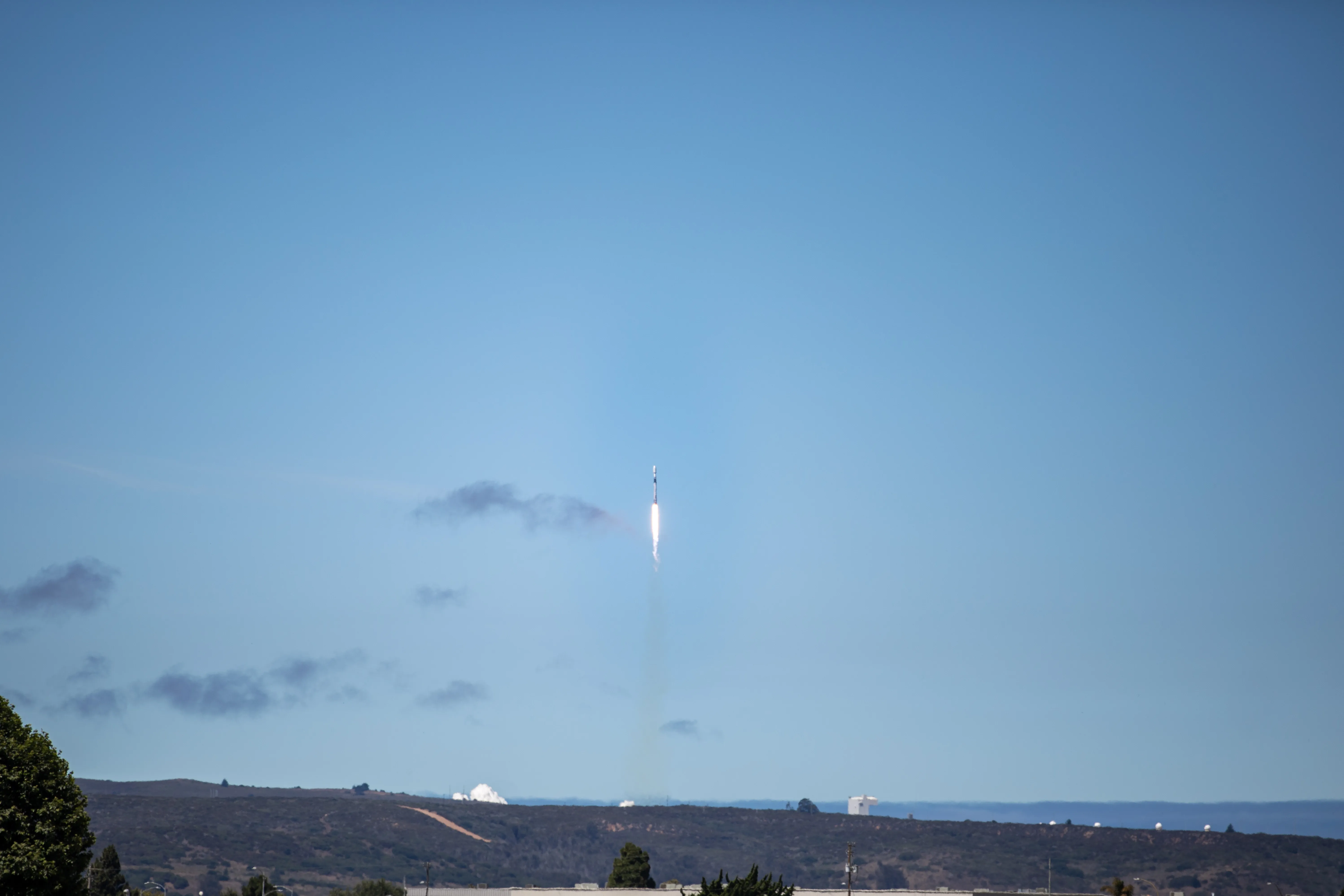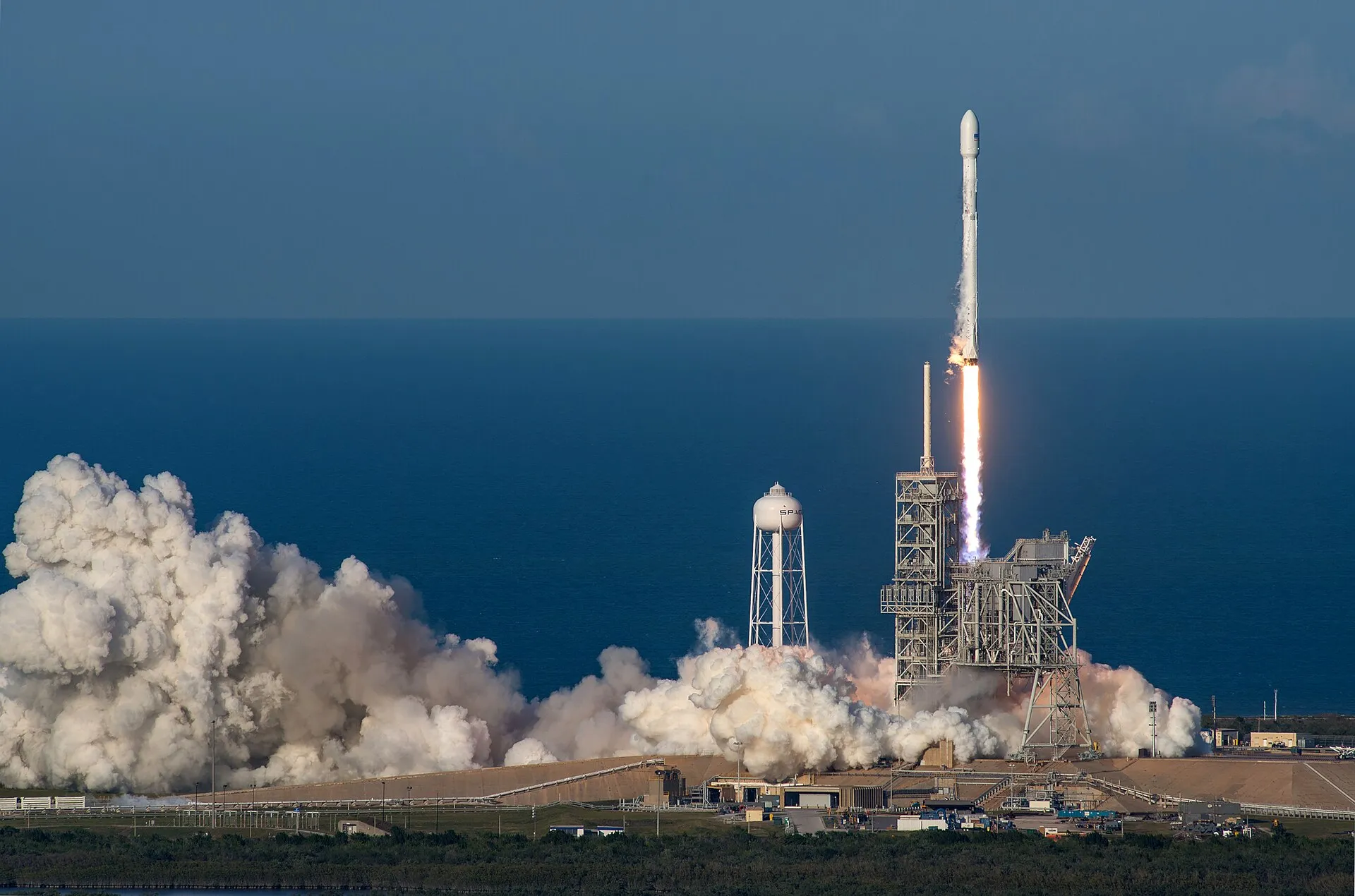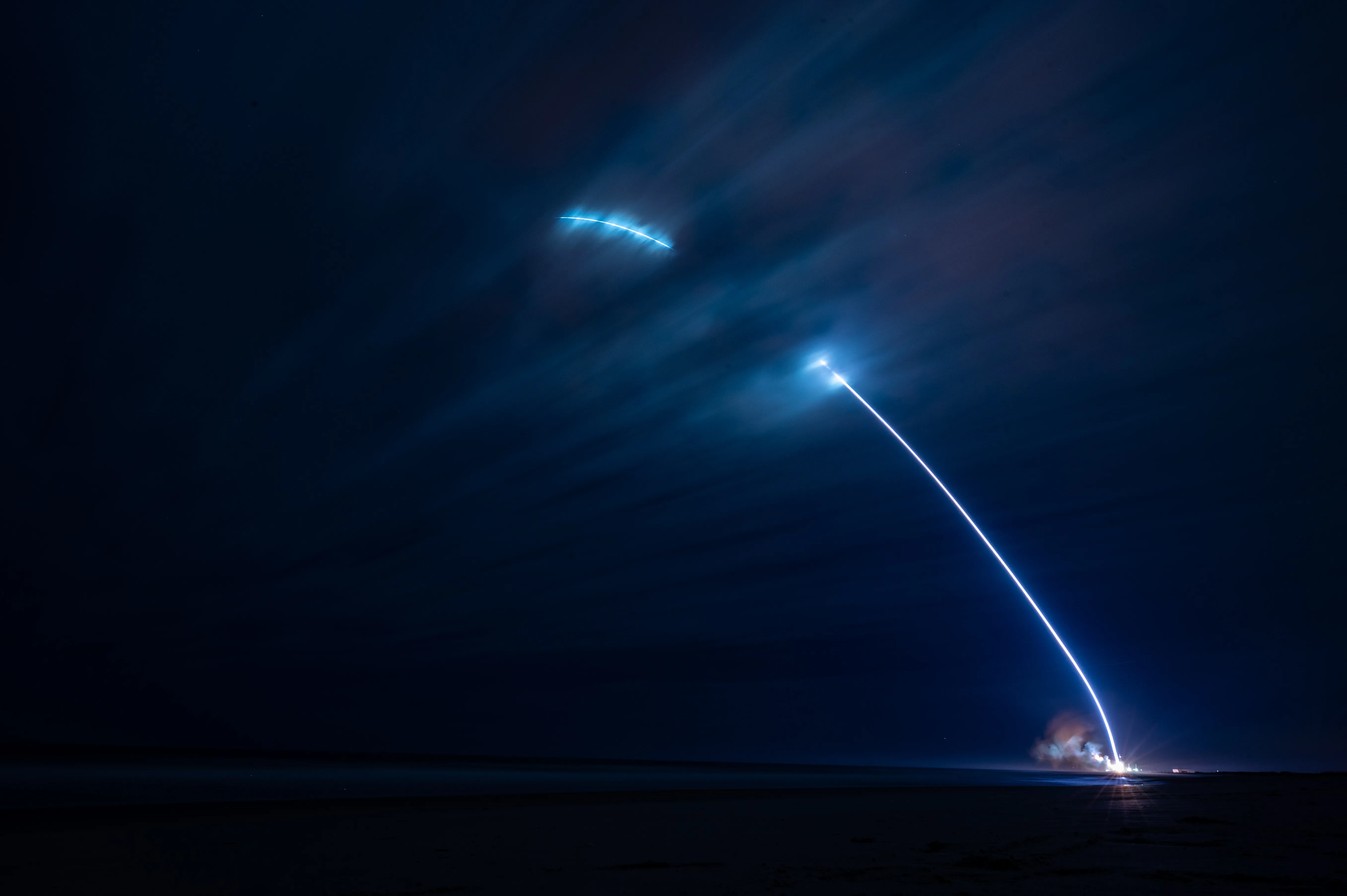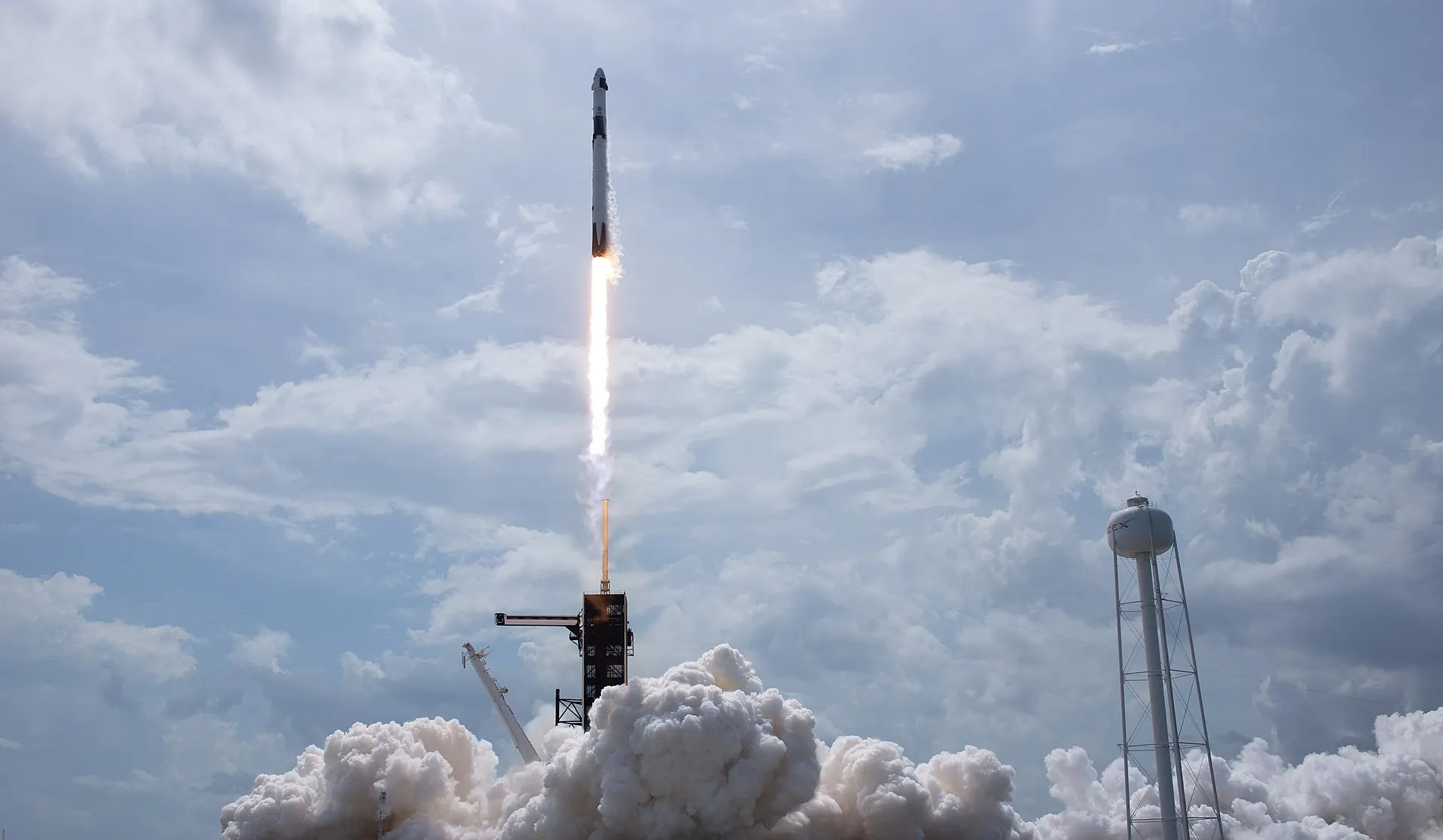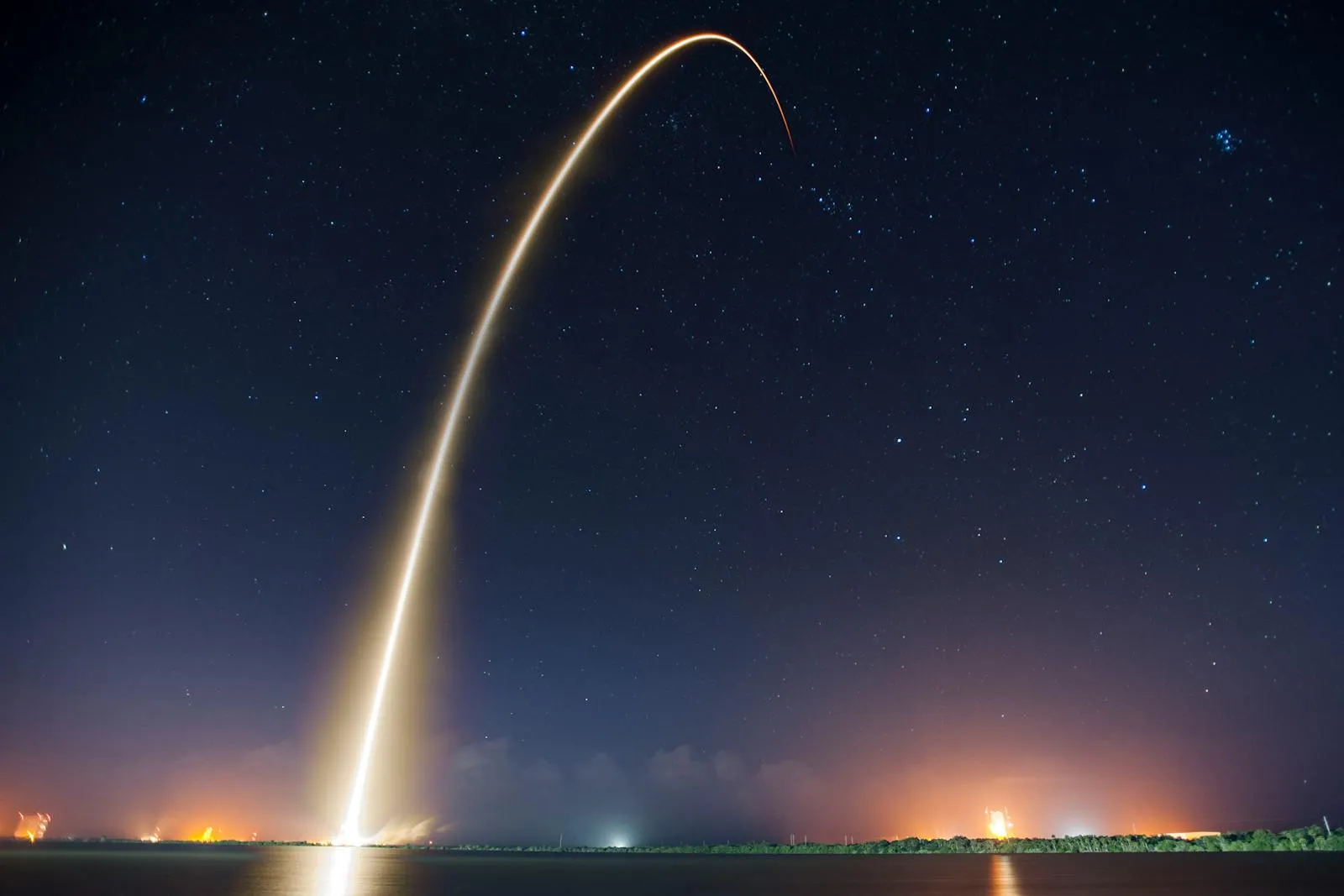
At 6:30 p.m. Eastern time on Thursday, SpaceX launched Starship Flight 12 from Pad 2, a newly constructed launch complex at the company’s Starbase facility near Boca Chica Beach, Texas. The vehicle that lifted off was the first third-generation Starship stack ever flown — Booster 19, the first Super Heavy built to V3 specifications, and a matching V3 Ship. Sixty-six minutes later, the Ship splashed down in the Indian Ocean as planned. The booster was not recovered; it disintegrated over the Gulf of Mexico roughly ten minutes after launch.
The result was neither a failure nor a clean success. SpaceX achieved all of its upper-stage objectives and demonstrated that the V3 Ship can fly a complete suborbital trajectory, deploy payloads, execute precision maneuvering, and survive atmospheric reentry without the heat shield failures that plagued earlier test flights. The booster failure was the primary technical setback, though SpaceX had not planned to attempt a booster catch on this flight. The company did not classify the mission as a failure.
The timing matters beyond the technical result: SpaceX’s initial public offering is scheduled for June 12, three weeks away. The S-1 prospectus filed with the Securities and Exchange Commission on May 20 centers Starship as the company’s most important long-term asset. A test flight that demonstrated upper-stage reliability while losing a booster is, from an investor communication standpoint, a complicated data point.
What Happened on Flight 12
Booster 19 performed nominally through first-stage burn and stage separation, delivering the Ship to its intended trajectory. The problems began during the boost-back burn — the sustained engine firing that decelerates the booster and sends it back toward the launch site. Multiple Raptor 3 engines, the new generation of SpaceX’s main engine deployed on V3, failed to re-ignite or maintain thrust during the boost-back sequence. Without the necessary deceleration, Booster 19 tumbled and broke apart over the Gulf of Mexico.
SpaceX engineers had not planned to attempt a booster catch on Flight 12. The company’s Mechazilla arm system, which caught Booster 12 and Booster 14 on prior flights, was not configured for a catch at Pad 2, the new launch complex. The booster was expected at best to make a controlled splashdown. The engine failures prevented even that outcome.
The Ship’s performance was substantially cleaner. After stage separation, the upper stage lost one of its six Raptor engines — a less severe anomaly — but continued to its planned suborbital trajectory. Approximately 20 minutes after liftoff, it deployed 22 Starlink simulator satellites. Two of those simulators carry cameras and imaging sensors to photograph and assess Starship’s heat shield during flight — a data-collection objective that has become a priority after heat shield tile losses in prior flights. The Ship then executed a banking maneuver designed to mimic the approach profile it will use when landing at Starbase on future operational flights, before achieving a planned splashdown in the Indian Ocean at approximately 7:36 p.m. Eastern.
Aviation Week, which reviewed SpaceX’s post-flight data release, reported that the Ship completed its full planned duration flight, satisfying the mission’s primary objectives despite the booster loss and the single-engine anomaly on the upper stage.
Why V3 and Why Now
The Starship V3 designation marks a substantial engineering revision from the V2 stack that SpaceX has been flying since Flight 7 in January 2025. The 408-foot-tall V3 vehicle incorporates the upgraded Raptor 3 engine on both stages, producing meaningfully higher thrust per engine than its predecessors. The V3 Ship carries an enlarged payload bay and a redesigned heat shield mounting system intended to address the tile loss problems that produced reentry anomalies on earlier flights. Pad 2, the launch complex used for Flight 12, is itself a new construction designed to support higher launch cadence than the original Pad A.
SpaceX’s S-1 filing, which became public on May 20, describes Starship as the centerpiece of the company’s long-term value proposition. The document identifies Starship as essential to reducing the cost of delivering mass to orbit by 99 percent compared to historical averages — a claim that, if achieved, would fundamentally reshape the economics of satellite deployment, space station construction, lunar operations, and the crewed Mars missions that remain Musk’s stated ultimate objective. The S-1 also discloses that SpaceX spent $3 billion in research and development on Starship in 2025 and $930 million in the first quarter of 2026 alone.
That level of investment requires a revenue base capable of supporting it. Starlink, SpaceX’s satellite broadband service, is providing it. The S-1’s financial disclosures show that SpaceX generated $18.7 billion in total revenue in fiscal 2025, with Starlink accounting for $11.4 billion — 61 percent of the total. Overall operating losses were $2.59 billion for 2025, with adjusted EBITDA of $6.58 billion — a figure that reflects the cash generated by the satellite internet business before accounting for the heavy capital expenditure and R&D spending on Starship and xAI. For Q1 2026, SpaceX reported $4.7 billion in revenue.
The IPO, being underwritten by 21 banks with Goldman Sachs leading the transaction, is targeting a valuation of $1.75 trillion to $2 trillion, which would make it the largest public offering in history by a substantial margin. The roadshow is scheduled for the week of June 8. Pricing is expected June 11. SpaceX shares will trade on the Nasdaq exchange under the ticker SPCX, with first-day trading on June 12.
The NASA Complication
Starship is not only a SpaceX business asset. It is also the Human Landing System that NASA has contracted SpaceX to deliver for the Artemis program’s lunar return missions. That contractual relationship adds a layer of complexity to what would otherwise be a straightforward investor-technology narrative.
NASA’s Artemis IV mission, currently targeted for 2028, calls for the Starship HLS to land astronauts on the lunar surface for the first time since 1972. To do that, SpaceX must demonstrate that a Starship variant — the HLS, which has additional propellant depots and docking systems grafted onto the Ship design — can operate reliably in cislunar space. Artemis III, now revised to a 2027 mission following schedule adjustments announced in February, will test the HLS in low Earth orbit rather than conducting an actual lunar landing; the landing has been pushed to Artemis IV.
What that means in practice is that the SpaceX Starship vehicle needs to be operationally reliable within approximately 18 to 24 months if NASA’s Artemis schedule is to hold. Flight 12’s upper-stage results are encouraging for that timeline — the Ship flew its full mission profile and returned controlled reentry data. The booster result is a separate subsystem issue and is less directly relevant to the HLS configuration, which does not include the Super Heavy first stage.
Scientific American and other outlets have reported separately on the tension between SpaceX’s growing AI ambitions — Musk merged the company with xAI in a transaction valued at $1.25 trillion in February 2026 — and the execution demands of the Artemis contract. In its S-1, SpaceX describes the combined entity’s space-based AI data center ambitions as a major growth vector. Musk was in Beijing with President Trump’s CEO delegation last week, discussing AI chip access and commercial deals. The concern raised by some Artemis observers is whether SpaceX’s attention and capital allocation remain sufficiently concentrated on the moon program to meet its contracted timeline.
SpaceX has not publicly acknowledged any tension between its AI build-out and the Artemis timeline. The company’s public statements have consistently described the two as complementary: Starship is the transport layer for both the lunar HLS and the orbital data centers, and progress on Starship capability serves both programs simultaneously.
What Investors Are Actually Buying
The S-1’s financial picture makes the investment thesis reasonably clear: buyers are purchasing Starlink’s current cash flow and betting on Starship’s future economics. Starlink’s $11.4 billion in 2025 revenue, against a growing subscriber base, is a real and profitable business. The operating losses reflect the R&D spend required to build the next-generation system that the company believes will make the Starlink business dramatically more valuable over time.
The xAI acquisition adds a third component — a large-language-model AI company that Musk has described as the intelligence layer for SpaceX’s space-based computing infrastructure. xAI’s financial contribution to the combined entity is more speculative than Starlink’s.
Flight 12’s booster loss does not materially change the investor calculus in any of these three areas. The Raptor 3 engine issues that caused the boost-back failure are a manufacturing and systems-integration problem of the kind SpaceX has historically resolved between test flights. The company flew its first fully successful Falcon 9 booster recovery in December 2015 after several booster losses in the preceding years; that capability subsequently became routine enough to support a business model built on reusability. The question for Starship’s investors is whether the V3 Ship’s demonstrated reliability — landing intact with one engine out and deploying payloads — is a sufficient indicator that the vehicle is on the same trajectory Falcon 9 followed, a decade later and at ten times the scale.
The roadshow will answer that question in market terms. The booster will need to be answered in test terms on Flight 13.
Sources 6 cited · 1 primary
- SpaceX IPO Filing S-1: SpaceX S-1 Registration Statement (as analyzed by TechCrunch)
- Starship V3 Completes Full Duration Flight Despite Booster Loss
- SpaceX launches Starship V3 for the first time, but loses booster on return
- SpaceX's third-generation Starship makes debut in test flight ahead of blockbuster IPO
- SpaceX Launches Starship Rocket in Test Critical to Musk's IPO Ambitions
- Why NASA's Artemis moon program could fall victim to SpaceX's AI ambitions
American Courant cites its sources and links to primary documents where they exist. How we report →