Wall Street got the kind of jobs report it usually celebrates on Friday. It sold off anyway — hard.
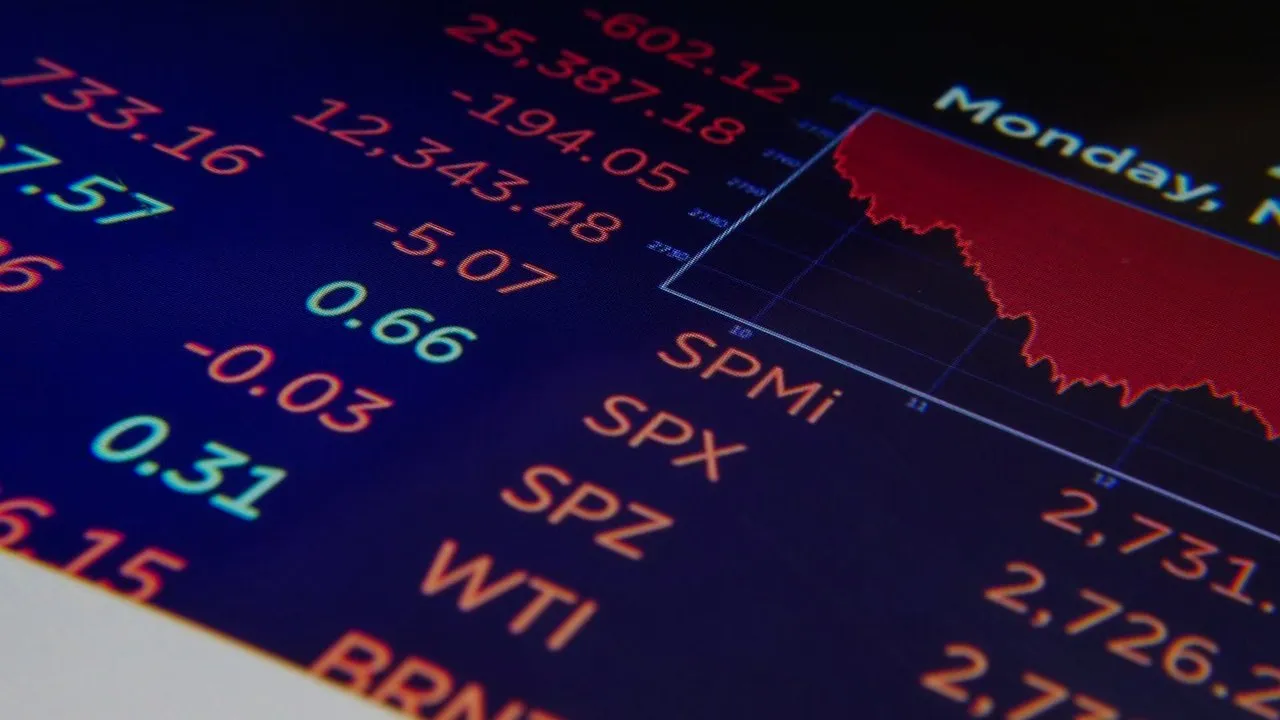
The Nasdaq Composite fell 4.18% to close at 25,709.43, its worst single day since April 2025. The S&P 500 dropped 2.64% to 7,383.74, and the Dow Jones Industrial Average lost 695.15 points, or 1.35%, to 50,866.78. By TheStreet’s tally, the rout erased roughly $1 trillion in market value, and it was concentrated in exactly the stocks that have carried the market all year: the chipmakers at the heart of the artificial-intelligence boom.
The trigger was a number that, in an ordinary year, would have been good news. The Labor Department reported that the U.S. economy added 172,000 jobs in May — more than double the roughly 85,000 economists had expected — while the unemployment rate held at 4.3%. A hot labor market means a resilient economy. It also means the Federal Reserve has less reason to cut interest rates, and possibly a reason to raise them. That is the math that turned a strong report into a market problem.
Why good news was bad news
The logic running through trading desks Friday was almost mechanical. A stronger-than-expected jobs report tells the Fed the economy doesn’t need help. Rate cuts that investors had been counting on suddenly look less likely, and the odds of a hike before year-end — recently close to zero — ticked up. Bond yields jumped in response: the 2-year Treasury note, the maturity most sensitive to Fed policy, hit 4.147%, its highest in 15 months.
Rising yields are poison for the most expensive corner of the stock market. Technology and AI stocks are valued on profits expected years in the future, and higher yields make those distant profits worth less today. When the discount rate goes up, the richest valuations fall the furthest.
“It might even increase the chances — although we’re still not forecasting that yet — of a rate hike by the Fed before the end of the year,” said Gary Schlossberg of the Wells Fargo Investment Institute. That single sentence captures the shift: the conversation has moved from how soon the Fed will ease to whether it might tighten. It is the scenario the central bank’s own minutes flagged earlier this spring, when several Fed officials warned that a too-strong economy could force a rate hike rather than the cuts markets were pricing in.
The chips that led the fall
The selloff had a second engine, and it was already running before the jobs data hit. Chip stocks led the decline — Nvidia fell about 6.2%, and Broadcom dropped nearly 8%. AMD and Micron were close behind.
The proximate cause was Broadcom. The company reported record results on Wednesday night but declined to raise its forecast for AI chip revenue, and on a market priced for perfection, a merely-very-good outlook read as a disappointment. That set the tone for the whole semiconductor group heading into Thursday and Friday.
It also exposed how narrow the market’s 2026 gains have really been. Even after Friday’s drubbing, Nvidia is still up roughly 10% for the year and Broadcom more than 11% — meaning a huge share of the market’s advance has rested on a handful of chip names. When those names wobble, the indexes they dominate wobble with them. The “AI capex paradox” that analysts have been warning about is exactly this: the same strong economy that justifies enormous AI spending also keeps rates high enough to punish the stocks doing the spending.
Where the money went
A selloff this sharp does not mean investors fled the market entirely. They rotated. Money moved out of high-growth technology and into the defensive, dividend-paying corners that hold up when rates rise and growth fears creep in. Johnson & Johnson rose about 2%. Colgate-Palmolive and Coca-Cola each gained around 3%. Health care and consumer staples — the sectors people buy when they want safety, not upside — were the day’s quiet winners.
The breadth told the story. The deepest losses landed in the technology and communication-services groups that house the AI leaders, while the defensive sectors investors favor in a higher-for-longer rate environment finished in the green. It was not a market fleeing stocks; it was a market reweighting away from the trade that had defined the year.
That rotation is its own kind of signal. It says the market’s problem Friday was not a collapse in confidence about the economy. It was a repricing of what a strong economy means for Fed policy, and a recognition that the most crowded trade of the year — long AI, long chips — had been leaning on the assumption of cheaper money that the jobs report just undercut. The same dynamic has whipsawed the chip group all spring: blockbuster earnings lift the stocks, then a hot data point or a hawkish Fed comment knocks them back down, because their valuations leave no room for the rates that a strong economy implies.
What it means going forward
One bad session does not break a bull market, and the indexes remain far above where they started the year. But Friday was a stress test of the market’s central bet, and the bet did not pass cleanly.
The next data points now carry outsized weight. The Fed’s coming meetings, the next inflation reading, and the next round of chip earnings will each be read for whether Friday was a one-day repricing or the start of a broader reassessment of AI valuations. For most of 2026, the story has been that a strong economy and the AI boom could rise together. Friday was the day the market remembered they can also pull in opposite directions — and that when they do, the stocks that led the way up tend to lead the way down.
Sources 5 cited · 1 primary
- The Employment Situation — May 2026
- Nasdaq falls 4% and suffers worst day since April 2025 as traders flee chip stocks
- Stock market today: S&P 500, Nasdaq slide as jobs report fuels Fed rate-hike bets
- Nasdaq falls 4% as semiconductor slide wipes $1T from markets
- Live Nasdaq Composite: Chip Selloff and Rising Yields Weigh on Nasdaq After Jobs Report Stuns
American Courant cites its sources and links to primary documents where they exist. How we report →