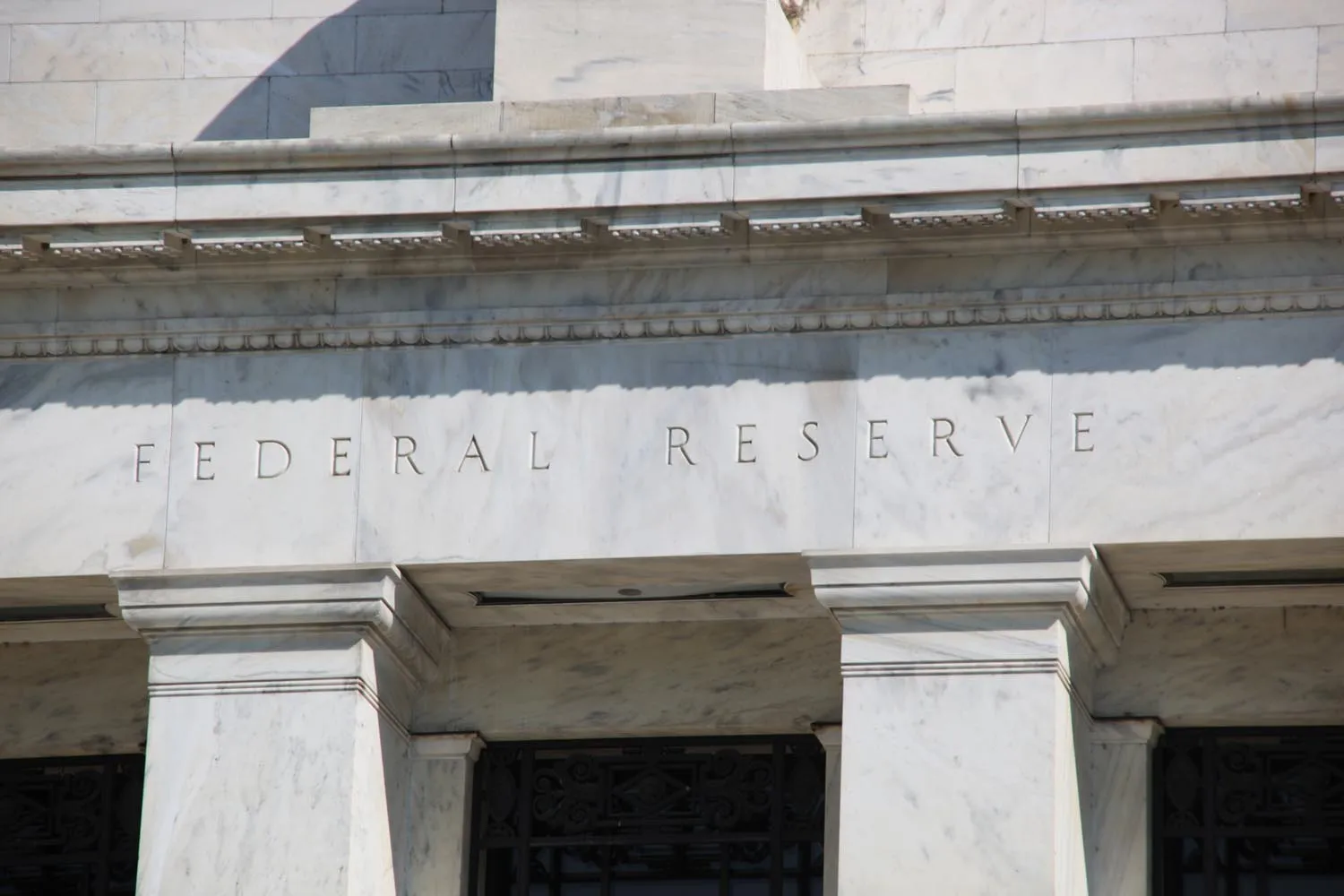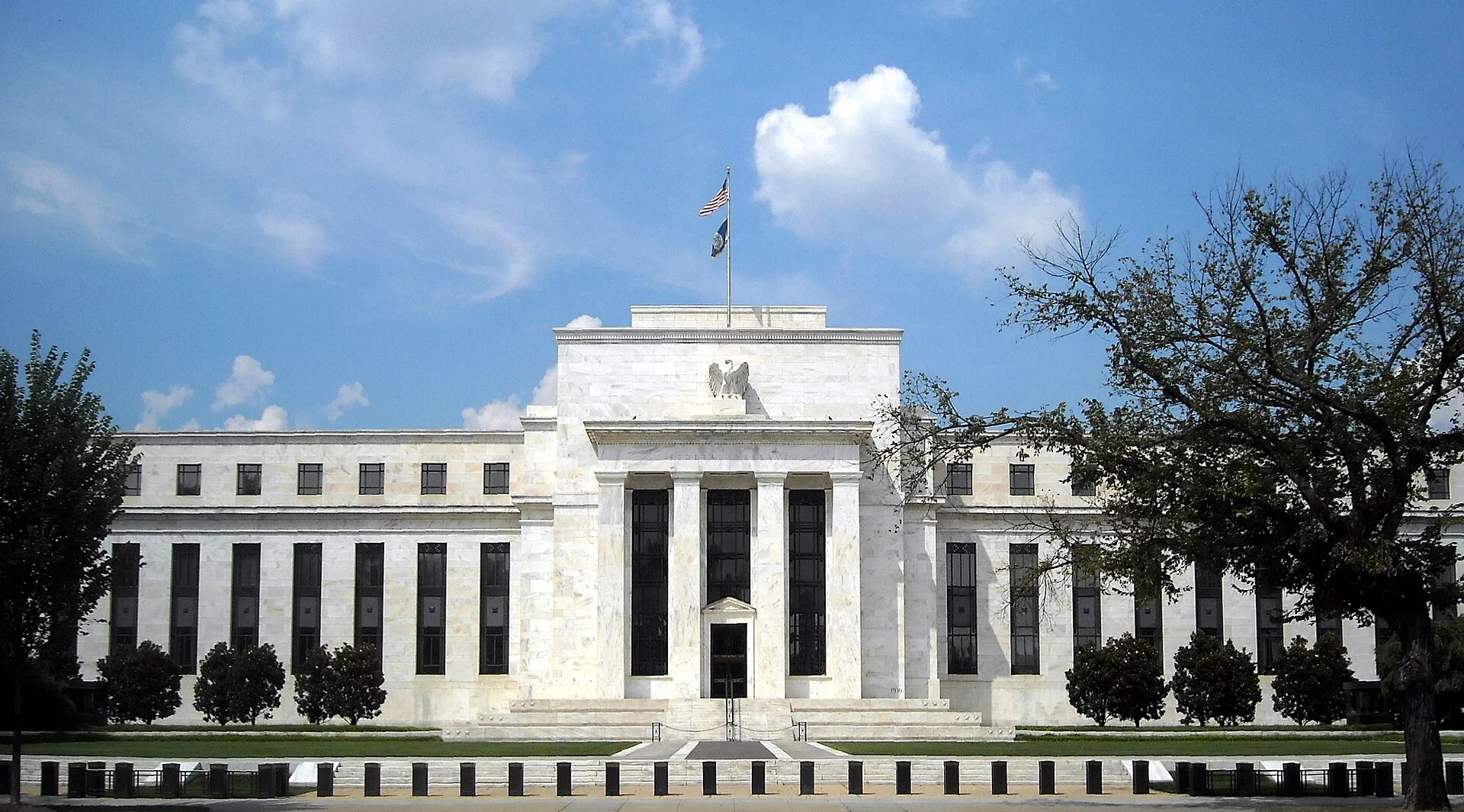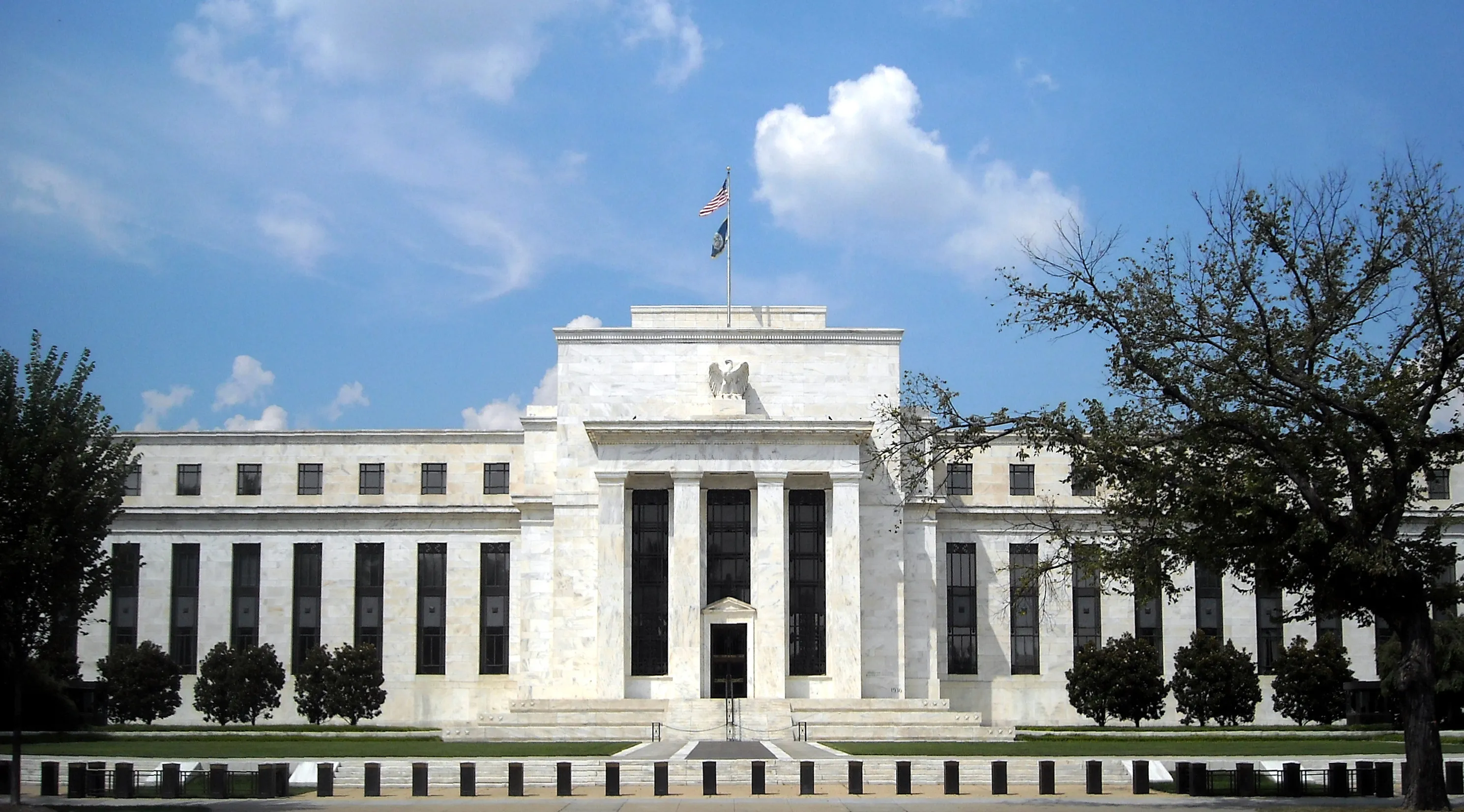
The Federal Reserve on Wednesday released the minutes from its April 28-29 meeting, showing that a majority of officials had formally raised the prospect of lifting interest rates if inflation continued running persistently above 2 percent — the first time such language has appeared in the committee’s formal records since the central bank began cutting rates in late 2024.
The document covers the last full deliberative session before Kevin Warsh took over as Federal Reserve chairman. It was published on the same day the House passed the One Big Beautiful Bill by a single vote, a tax and spending package the Congressional Budget Office estimates will add $3.8 trillion to the federal deficit over ten years — a fiscal backdrop that gives the rate-hike debate its sharpest edge since the post-pandemic tightening cycle ended.
What the Minutes Said
The operative passage reads: “A majority of participants highlighted that some policy firming would likely become appropriate if inflation were to continue to run persistently above 2 percent.”
That sentence does not announce a rate hike. It says officials are prepared to discuss one. For investors and mortgage holders, the distinction matters, but the direction of the shift matters more. For roughly two years, the question inside the Federal Open Market Committee was not whether to raise rates but how quickly to cut them. The April minutes mark the first formal record of the committee’s calculus moving the other direction.
The accompanying data made the concern tangible. Core Personal Consumption Expenditures inflation — the Fed’s preferred measure — had risen to 3.2 percent in March against a 2 percent target. Total PCE stood at 3.5 percent. At the wholesale level, the April Producer Price Index came in 6 percent above a year earlier, the fastest rate since 2022 and a forward signal for consumer prices in the coming months.
The minutes also noted that “almost all participants” saw the risk that Middle East conflict could keep energy prices elevated “for an extended period or that, even after the conflict ended, the prices of oil and other commodities could remain elevated for longer than expected.” The Iran war, which disrupted Strait of Hormuz shipping and regional oil production through March and April, is the primary engine driving the current inflation overshoot.
The Four Dissents
The April vote was 8-4 to hold the federal funds rate at its current target range of 3.5 to 3.75 percent, generating the most dissent from a single FOMC decision since October 1992.
The internal fracture runs in two directions. Three regional Federal Reserve presidents — Beth Hammack of the Cleveland Fed, Neel Kashkari of the Minneapolis Fed, and Lorie Logan of the Dallas Fed — voted with the majority to hold rates, but formally opposed a different element of the decision: a sentence in the post-meeting statement that implies the committee’s next move is more likely to be a rate cut than a hike. They wanted that language removed.
Governor Stephen Miran, the newest member of the Board of Governors, dissented in the opposite direction. He also wanted the easing language gone, but for a different reason: he argued for a 25-basis-point cut immediately, citing the economic drag from the Iran war as more pressing than the inflation risk.
The minutes noted that “many participants indicated that they would have preferred removing the language from the post-meeting statement that suggested an easing bias regarding the likely direction of the Committee’s future interest rate decisions.” In Fed language, “many” is a threshold below “most” and below a majority, which is why the language survived. But the four formal dissents made the committee’s internal disagreements unusually visible.
The last time four FOMC members dissented in a single meeting was more than three decades ago, during a dispute over the pace of rate cuts in a slowing economy. The parallel is imprecise but the structural situation has echoes: a committee split between an economic slowdown argument and an inflation persistence argument, with neither side able to claim the data unambiguously.
Why Inflation Is Holding
The short answer is Iran. The 39-day U.S.-led campaign against Iran in March and April disrupted oil production, offshore storage, and shipping flows through the Strait of Hormuz, producing a surge in global energy prices that feeds through to gasoline, home heating, airfare, and freight. An earlier breakdown of the April inflation numbers documented which household spending categories absorbed the biggest increases — gasoline and heating fuel led, followed by air travel tied to fuel surcharges, followed by food through supply-chain freight costs.
The energy-price component of this inflation is structurally different from the 2021 supply-chain episode. That wave came from a one-time disruption in goods supply and resolved as production and shipping normalized. This wave is geopolitically anchored: oil and gas prices price the risk of continued Strait disruption for as long as the underlying dispute over navigation rights remains unresolved. The FOMC’s language about risks persisting “even after the conflict ended” reflects that distinction.
Core PCE at 3.2 percent is also not purely an energy story. Shelter and service sector costs — the stickiest components — have remained elevated. The concern embedded in the “persistently above 2 percent” language is that high inflation has now been present long enough that it may begin shaping wage- and price-setting behavior in ways that are harder to reverse.
What Changes Now
The most consequential near-term implication is a fiscal-monetary collision that is harder to ignore on Thursday than it was at the time of the April meeting.
Moody’s stripped the United States of its final AAA credit rating earlier this year, citing the accelerating trajectory of federal borrowing costs. The fiscal picture since that downgrade has not improved: the One Big Beautiful Bill passed the House this morning with a CBO score showing $3.8 trillion in new deficit spending over ten years. The Senate has promised substantial revisions, but the direction of the fiscal trajectory — more debt, more deficits, more Treasury issuance — is not in dispute.
The interaction between monetary and fiscal policy is direct and arithmetic. If the Fed raises the short-term rate — even by 25 basis points — the yield on every dollar of new Treasury issuance rises, increasing the interest cost on the federal debt. With total federal debt already above $36 trillion, a sustained increase in short-term rates produces a compounding effect on the government’s annual interest payments that becomes visible in CBO projections within two to three years.
For households, the transmission happens faster. Thirty-year fixed mortgage rates, which price off the 10-year Treasury, have already risen since the Moody’s downgrade. Auto loans, home equity lines, and credit card rates all follow the short end of the curve. Any rate hike in this cycle, unlike the 2022-2023 cycle, would be starting from a position where consumers are already paying materially more to borrow than they were two years ago.
The market registered Thursday’s combination of signals directly. The S&P 500 fell 0.45 percent, the Nasdaq declined 0.50 percent, and the 10-year Treasury yield moved higher as investors priced a higher-for-longer rate path against the backdrop of the day’s fiscal news.
What Comes Next
The next FOMC meeting is scheduled for June 17-18. It will be Kevin Warsh’s first meeting as chair.
Warsh was confirmed 54-45 in May — the slimmest margin in the history of the position. His public record suggests he is more alert than his predecessor to the fiscal risks embedded in loose monetary policy. Earlier this month he warned at a prominent economics forum that the fiscal trajectory of the United States “has real monetary consequences,” a formulation that stops short of endorsing a rate hike but makes clear the direction of his concern.
Two high-frequency data points land before the June meeting and will determine whether “may be appropriate” in the April minutes becomes something more active. The April Personal Consumption Expenditures report is due May 30. The May jobs report arrives June 6. If PCE holds near 3.5 percent and the labor market remains steady, the case for a hike at the June meeting becomes substantially more concrete.
The May Consumer Price Index is due June 11, one week before the meeting opens. Those three data points — PCE, jobs, CPI — form the decisional window. If all three come in on the high side, the conversation at the June meeting will almost certainly shift from “should we discuss a hike” to “how strongly do we signal one.”
The FOMC does not pre-announce rate decisions. But the April minutes establish something important: a majority of the committee is no longer treating a rate hike as outside the range of plausible outcomes. That is a materially different posture than anything the committee communicated in the preceding eighteen months, and the fiscal backdrop makes the case for action — or at minimum, explicit optionality — more urgent, not less.
Sources 6 cited · 2 primary
- FOMC Minutes, April 28–29, 2026
- Federal Reserve Issues FOMC Statement, April 29, 2026
- Fed officials see rate hike ahead if inflation stays elevated, minutes show
- Fed interest rate decision April 2026: Fed holds rates steady amid dissent
- Fed Minutes Flip The Script: Officials Open Door To Rate Hike
- Fed minutes show officials open to rate hikes amid Iran war inflation
American Courant cites its sources and links to primary documents where they exist. How we report →