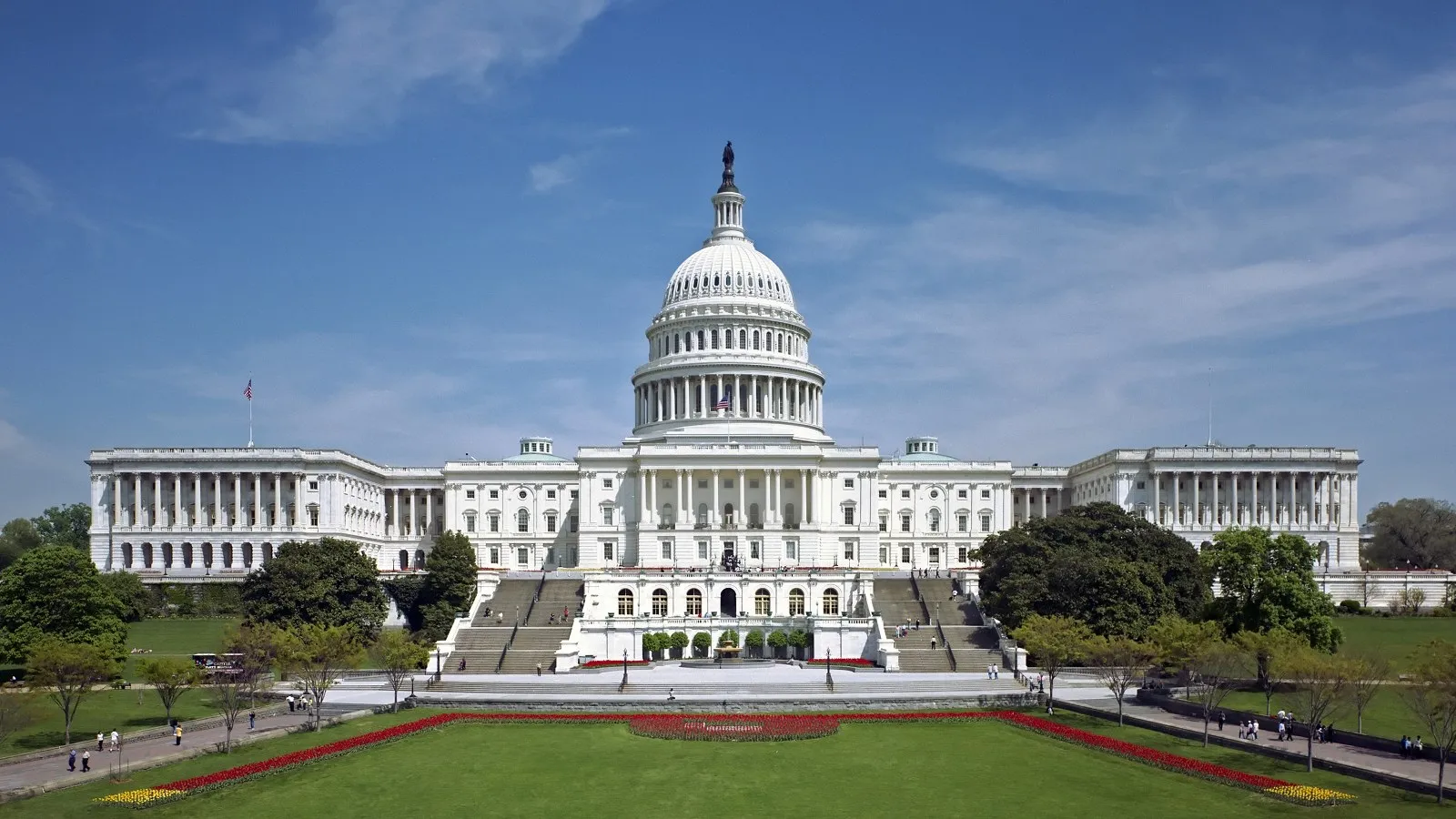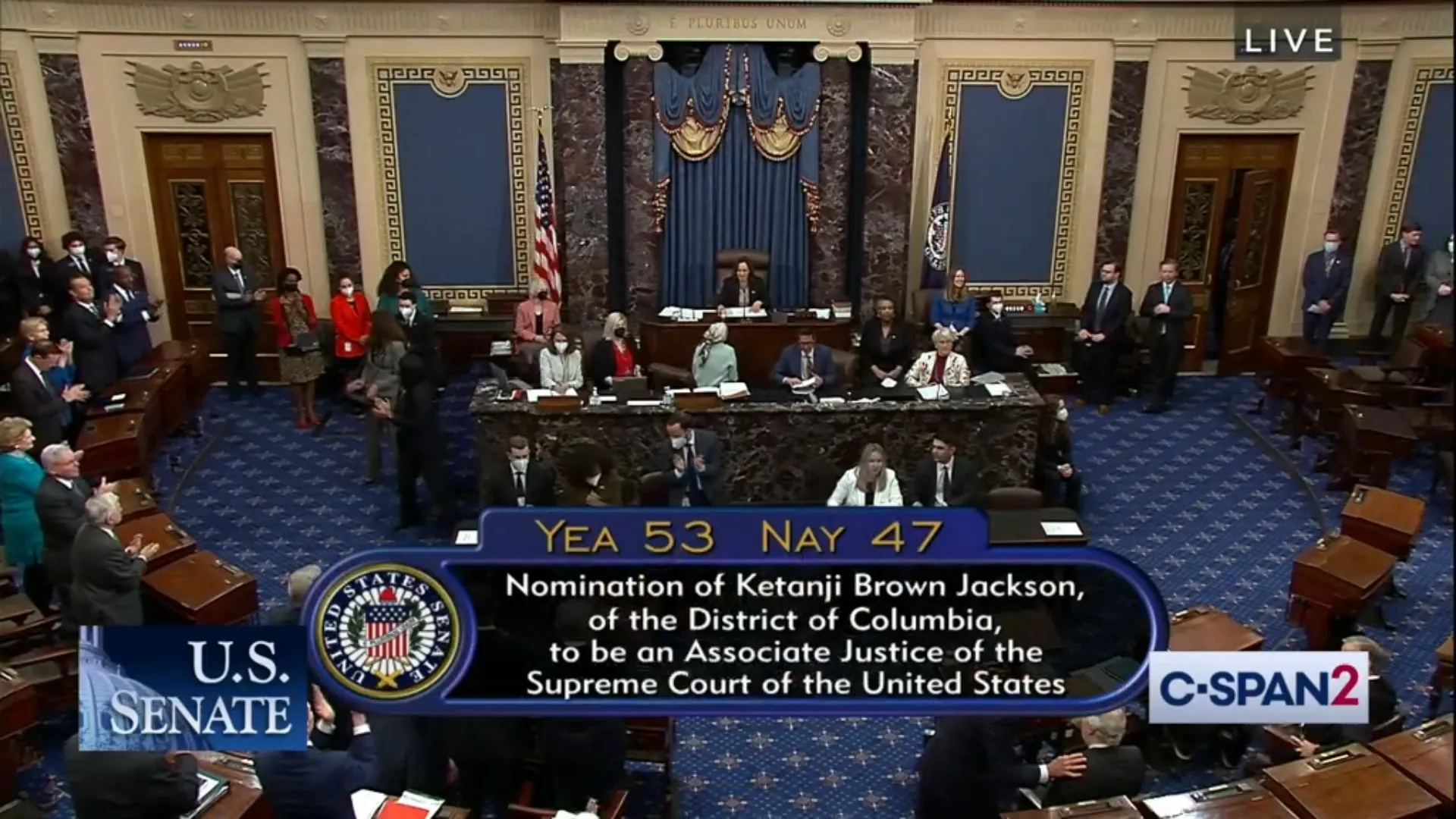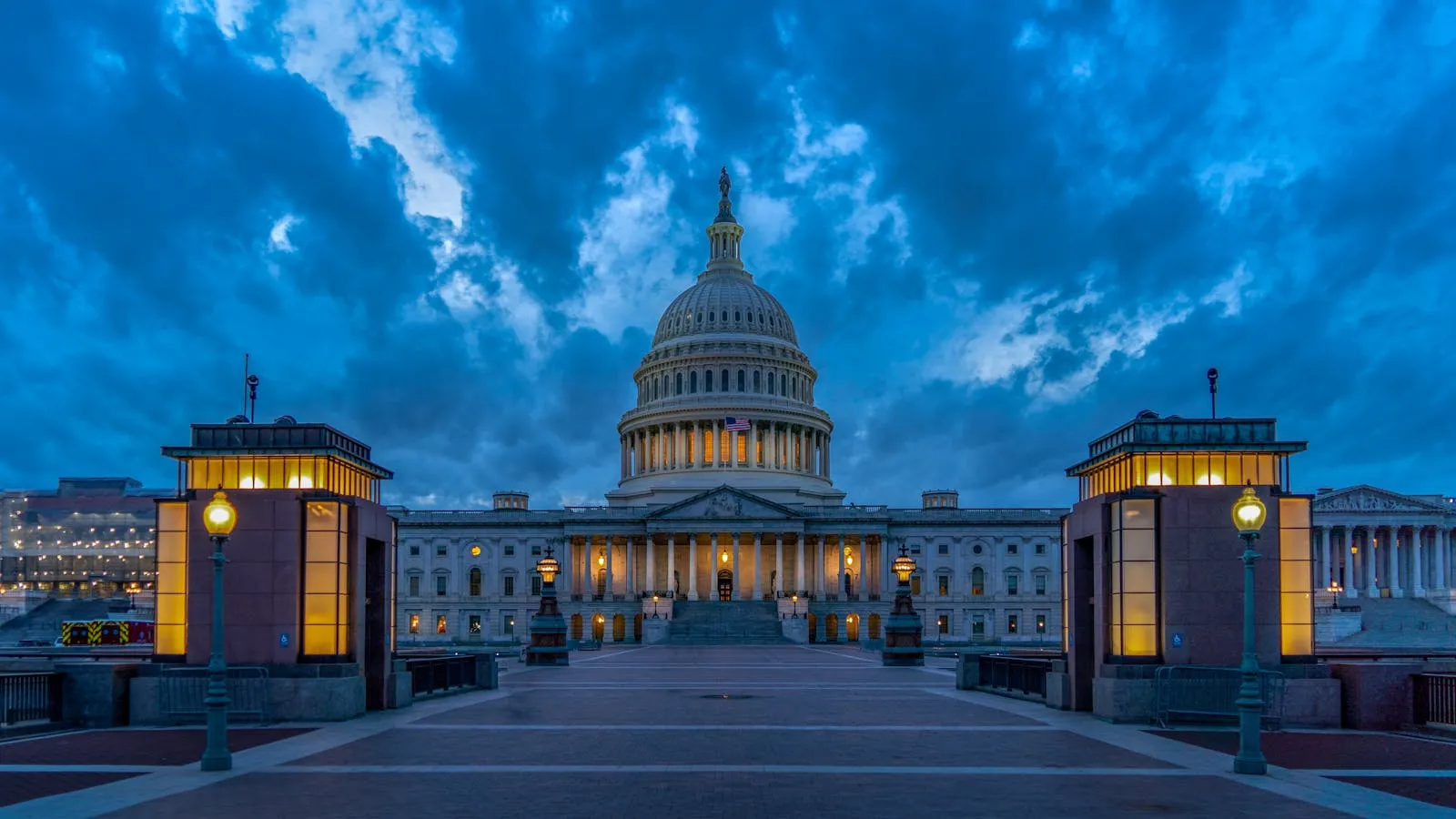
The House passed President Trump’s One Big Beautiful Bill Act by a single vote early Thursday morning, capping an all-night session that tested the limits of Speaker Mike Johnson’s slim majority and sending the most sweeping fiscal legislation of Trump’s second term to a Senate that has already promised to rewrite significant parts of it.
The final tally: 215–214, with Rep. Andy Harris of Maryland, the Freedom Caucus chairman, voting present and two Republicans — Reps. Thomas Massie of Kentucky and Warren Davidson of Ohio — voting no alongside every Democrat in the chamber. Without those two defections, the bill dies on passage. Without Harris abstaining instead of voting no, it dies even with Massie and Davidson on the floor.
Johnson told reporters after the vote that the outcome came through persistence and something less tangible. “There’s a lot of prayer that brought this together,” he said. “There were a few moments over the last week when it looked like the thing might fall apart. And I went to the little chapel over here and got on my knees and prayed that these guys would have wisdom and stamina and discernment.” He called the bill “the most consequential legislation that any party has passed, certainly under a majority this thin.”
Two Republicans Voted No — and Why It Matters
Massie had been the most consistent Republican critic of the bill throughout the markup process, and he did not change his position on the floor. “This bill dramatically increases deficits in the near term, but promises our government will be fiscally responsible five years from now,” he said in a floor statement. “This bill is a debt bomb ticking.”
The vote will do nothing to ease the political pressure on Massie back home. Trump backed a primary challenger — Mike Gallrein — specifically because of Massie’s resistance to the administration’s agenda, and the Kentucky primary race has drawn national attention as a test of how far the president’s influence over House Republicans extends. Even after the bill passed without him, the White House made clear his no vote had consequences.
Warren Davidson, a fiscal conservative from Ohio, reached the same conclusion. “While I love many things in the bill, promising someone else will cut spending in the future does not cut spending,” he said in a statement. “Deficits do matter and this bill grows them now. I cannot support this big deficit plan.”
Harris presented a different problem for leadership. He spent days publicly criticizing both the House bill and the Senate version that Republicans were previewing, saying neither did enough to cut Medicaid waste or reverse clean energy subsidies. In the end, he cast a “present” vote — technically not a no, but not a yes. The maneuver let him avoid explicitly endorsing legislation he’d condemned while not single-handedly preventing its passage.
Reps. Andrew Garbarino of New York and David Schweikert of Arizona did not vote on the measure.
What the Bill Does
The One Big Beautiful Bill Act is a broad piece of legislation that touches tax policy, healthcare, food assistance, defense, and energy. Its most significant provisions:
Tax cuts. The bill permanently extends the individual income tax rates established by the 2017 Tax Cuts and Jobs Act, which were scheduled to expire at the end of 2025. Without action, rates would have risen for most households. The bill also raises the state and local tax deduction cap from $10,000 to $40,000 for households earning under $500,000 — a concession to members from high-tax states who had refused to support the original House draft without it. The SALT cap increases 1 percent annually through 2029, then reverts to $10,000 in 2030.
Medicaid work requirements. The bill requires states to implement work requirements for able-bodied adults between the ages of 19 and 64 who have no dependents. Those adults must work, study, volunteer, or perform community service for at least 80 hours a month to maintain Medicaid coverage. The original House draft set a 2029 start date for states to comply. Fiscal conservatives demanded that timeline move up, and it did: the final House version requires compliance by December 31 of this year. Pregnant women, people with serious medical conditions, and tribal members are exempt.
SNAP changes. The bill revises food stamp eligibility by raising the dependent age threshold that exempts a parent or caretaker from SNAP work requirements and codifies other existing exemptions. It also shifts a portion of SNAP administrative costs from the federal government to states, which advocates say will pressure states to tighten enrollment.
Other provisions. The bill raises the federal debt ceiling, increases defense spending, and rolls back provisions of the 2022 Inflation Reduction Act affecting energy production incentives.
The Price Tag
The Congressional Budget Office, whose preliminary estimate was released before the floor vote, projects the House-passed version of the bill would add approximately $3.8 trillion to the federal deficit over the next decade. That figure encompasses both the cost of extending the tax cuts and the savings from Medicaid and SNAP reductions — net, the bill substantially increases the deficit.
That number is what drove both Massie and Davidson to vote no, and it drew fresh attention after Moody’s stripped the United States of its final triple-A credit rating last week, citing the trajectory of federal debt as the primary reason. Republicans largely dismissed the downgrade as a political act; the bill they passed Thursday does nothing to reduce it.
CBO also estimated that the bill’s health provisions would result in 11.8 million Americans losing Medicaid or marketplace coverage by 2034. That projection is driving Democratic opposition and is the single most contested number in the debate over the bill’s future — Republicans dispute the methodology, Democrats cite it in nearly every floor statement.
What the Senate Will Do With It
The bill now goes to the Senate, where Republican members have already made their demands clear. Sen. Susan Collins of Maine has raised concerns about the Medicaid provisions eliminating coverage for low-income adults. Sen. Lisa Murkowski of Alaska has asked for rural hospital protections that the House version doesn’t include. Sen. Josh Hawley of Missouri objects to provisions reducing federal matching funds for states that expanded Medicaid under the Affordable Care Act. Sen. Thom Tillis of North Carolina has said he cannot vote for the House version as written.
Beyond the individual objections, the Senate faces a structural constraint: the Byrd Rule, which governs what can be included in budget reconciliation legislation, will strip out any provision that the Senate parliamentarian finds lacks a direct budgetary effect. Several House-passed provisions have already been flagged as likely violations. Whatever survives the Byrd bath may look significantly different from what the House sent over.
The Senate can pass a reconciliation bill with a simple majority — 51 votes, bypassing the filibuster. With 53 Republicans in the Senate, Majority Leader John Thune can absorb three defections and still pass the bill with Vice President Vance breaking a tie. But the combination of the Byrd Rule and the four or more senators who have publicly named objections means the Senate version will not be identical to the House version.
That creates a second problem for Johnson. If the Senate passes a significantly rewritten bill, the House will have to either accept the changes and pass the Senate version as-is, or the two chambers will go to conference to resolve the differences. The House passed Thursday’s version with exactly one vote to spare — a margin that leaves virtually no room to lose any member on a subsequent vote.
Johnson pledged Thursday that the House was ready to move quickly once the Senate acts. “We look forward to the Senate’s timely consideration of this once-in-a-generation legislation,” he said. Senate leaders have not named a floor date.
For now, the House has done what it was asked to do. The Senate has inherited the harder problem.
Sources 6 cited · 3 primary
- Roll Call 145 — Final Passage Vote, H.R. 1, One Big Beautiful Bill Act, 119th Congress
- H.R. 1 — One Big Beautiful Bill Act, 119th Congress (Text)
- Preliminary Estimate of the Budgetary Effects of H.R. 1, the One Big Beautiful Bill Act
- House passes One Big Beautiful Bill Act budget reconciliation bill 215-214
- House passes Trump's 'big, beautiful bill' in razor-thin vote after dramatic all-night session
- Republican-led House passes Trump agenda bill by a single vote
American Courant cites its sources and links to primary documents where they exist. How we report →