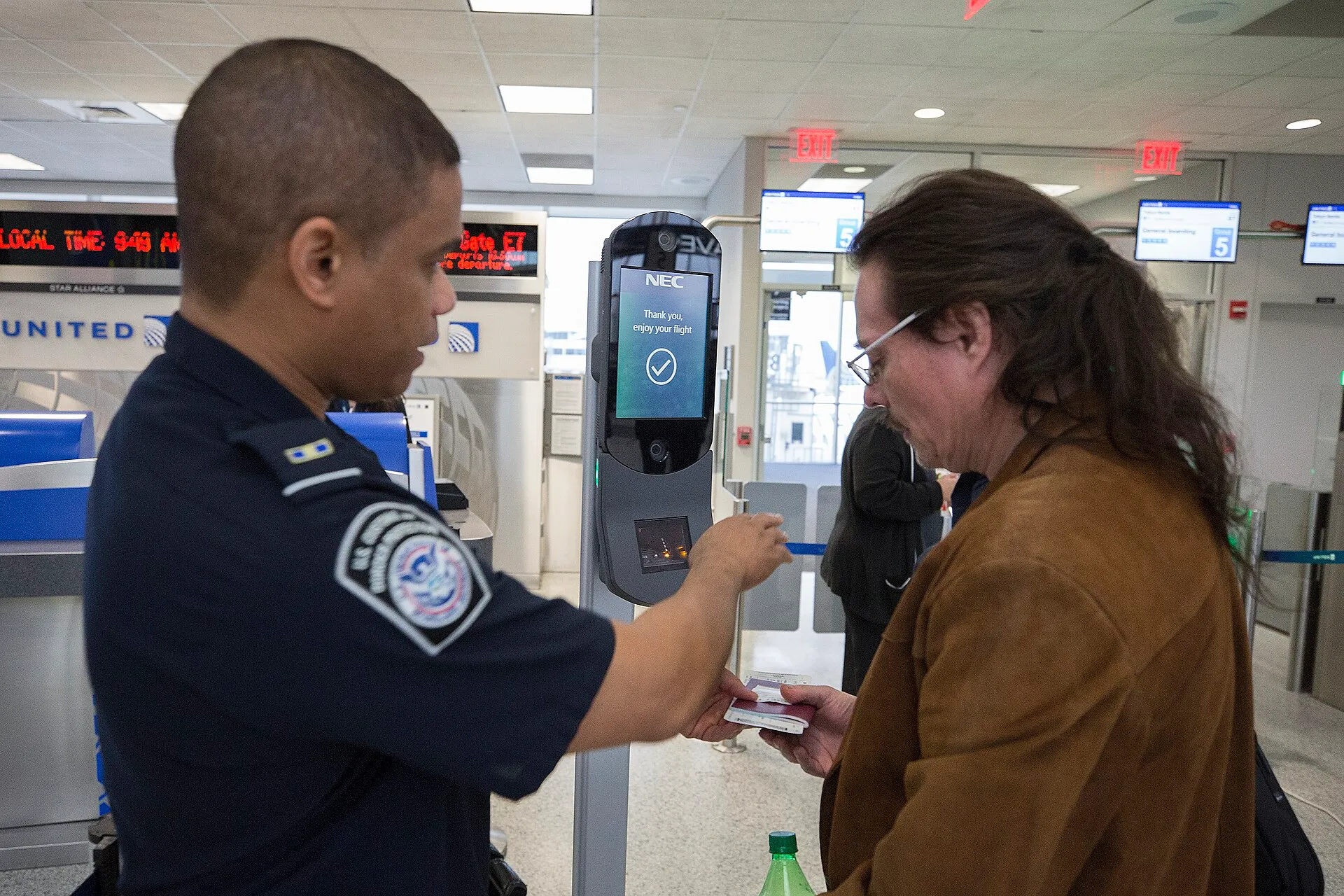
A federal document obtained by reporters shows that the Department of Homeland Security has quietly put a face-scanning app once reserved for immigration agents into the hands of local police — and that the tool runs the faces it captures against more than 250 million government records.
The app is called the ICE Task Force Module. According to the document, first reported by the technology outlet 404 Media and confirmed by NPR this week, it lets participating local officers point a phone at someone they stop, photograph their face, and compare it instantly against a vast federal pool that includes State Department visa files and the Traveler Verification Service that the Transportation Security Administration uses to check travelers on international flights. The photos police capture are then stored in an internal DHS system for 15 years.
The document — a Privacy Threshold Analysis, the federal government’s own first-step assessment of whether a tool’s privacy implications warrant deeper review — indicates the app launched last September. That timing matters: it means the technology has not been sitting on a shelf as a proposal. It is already in the field.
What the Document Shows
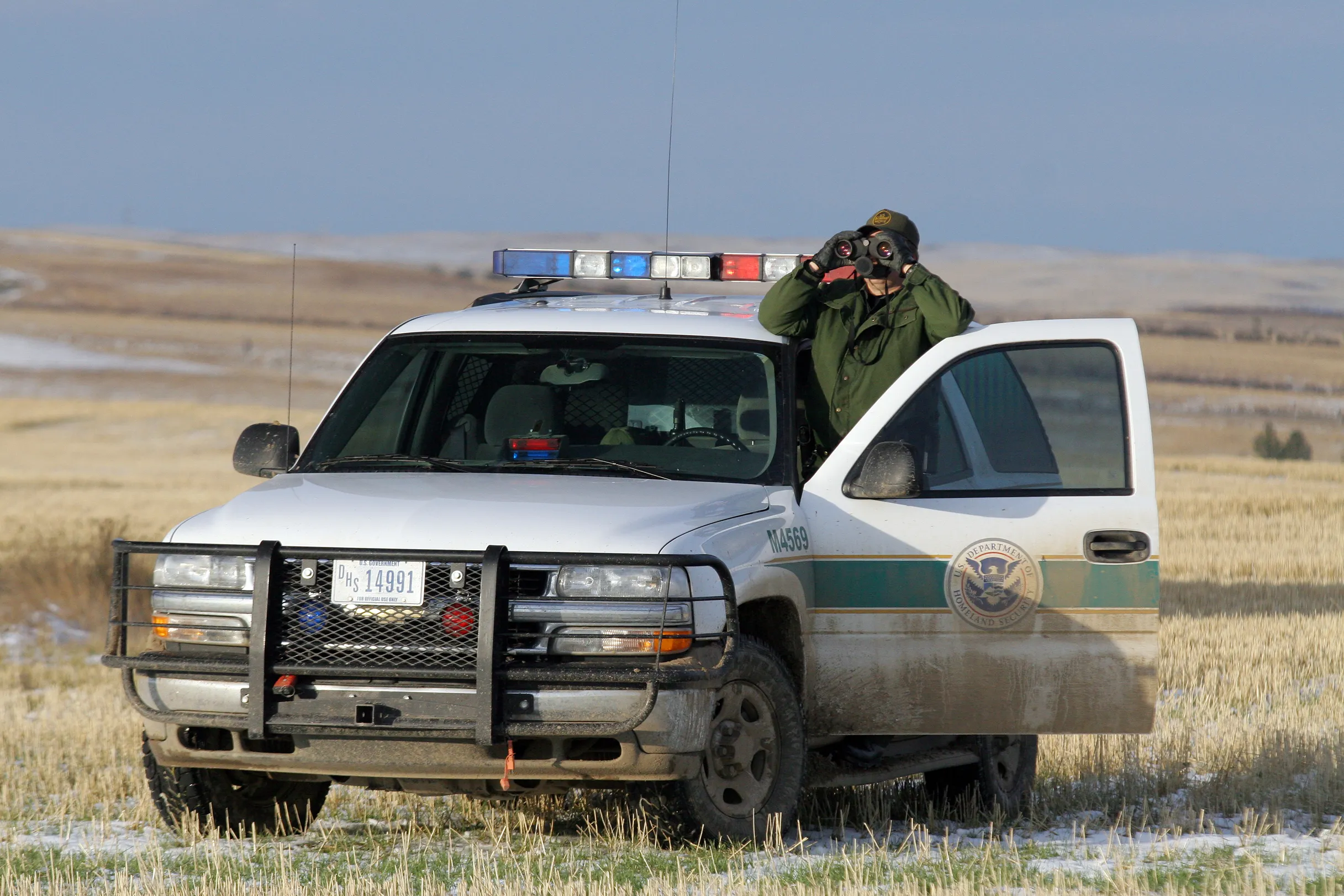
A Privacy Threshold Analysis is a routine internal record, not a public announcement, which is part of why the program drew so little notice. But its contents are concrete. The Task Force Module functions much like Mobile Fortify, the handheld facial-recognition app that Immigration and Customs Enforcement and Customs and Border Protection officers already use to identify people on the street. With Mobile Fortify, an agent can aim a phone at a person in public and pull up a name, date of birth and immigration status drawn from databases holding roughly 200 million images. The new module extends a similar capability — and an even larger record set — to local departments.
The 250-million-plus records the app searches are not a single immigration database. They pull together State Department visa records and the TSA’s traveler-verification data, among other sources — information collected for reasons that had nothing to do with street-level policing. The reach is what privacy researchers have long warned about: systems built for one purpose, such as boarding a plane, repurposed to identify anyone an officer chooses to scan.
The document’s status is itself part of the story. A Privacy Threshold Analysis is only the screening step in the federal privacy process — the point at which the government decides whether a tool warrants a fuller Privacy Impact Assessment, the more detailed public document that normally spells out what data a system collects, who can see it and what limits apply. No such assessment for the Task Force Module has surfaced publicly. In practice, that means a face-scanning capability already operating in the field has skipped the stage at which the public would ordinarily learn the rules governing it.
DHS did not dispute the program’s existence. In a statement to NPR, ICE said it is committed to making sure the local police who partner with the agency have the tools they need to support its deportation mission. But the department declined to provide further detail about how the app works or how often it is used.
How Local Police Got the Keys
The officers able to use the module are not ICE employees. The document refers to them as “ICE non-federal law enforcement officers” — local police who participate in a federal partnership program known as 287(g), named for the section of immigration law that authorizes it.
A specific branch of that program, the Task Force Model, gives local officers authority to arrest people on ICE’s behalf during their ordinary police work — a traffic stop, a call for service, a routine encounter. Roughly 1,300 police agencies now participate in the Task Force Model nationwide, a figure that has climbed sharply as the administration has pressed local departments to sign on. Each of those agencies represents a potential new set of hands on a tool that, until recently, was the province of federal immigration officers.
That expansion fits a broader pattern in which federal immigration enforcement increasingly runs through state and local channels. American Courant’s earlier report on the IRS–ICE data-sharing fight traced a parallel effort to route taxpayer information to deportation agents, a deal a federal judge and an internal watchdog have both questioned. The facial-recognition rollout follows the $70 billion ICE expansion the House sent to the president’s desk this month, which locked in years of funding for the agency’s enforcement buildout.
The Accuracy and Rights Questions
The civil-liberties objections fall into two buckets: whether the technology is reliable, and what happens when it isn’t.
On reliability, the National Institute of Standards and Technology — the federal government’s own standards body — has found that most facial-recognition algorithms show statistically significant differences in accuracy across demographic groups, with higher error rates for women and people of color. NIST has also documented that the most accurate commercial systems make more mistakes in outdoor light and on people who are moving — precisely the conditions in which a street stop happens.
On the stakes of an error, Representative Bennie Thompson of Mississippi, the ranking Democrat on the House Homeland Security Committee, has said ICE indicated it treats the underlying technology as a “definitive” determination of a person’s status — meaning an officer could disregard evidence of U.S. citizenship, including a birth certificate, when the app flags someone as undocumented. In January, Thompson introduced legislation to rein in DHS’s use of what his office called “unproven” mobile biometric surveillance and to add protections for citizens caught up in it.
The American Civil Liberties Union has argued that the harms are not hypothetical. The group says that in Minneapolis and Chicago, related face-scanning tools were used not only on immigrants but on legal observers, peaceful protesters and U.S. citizens. Privacy experts told NPR that handing the same capability to local police could create a chilling effect on speech — discouraging people from attending a protest, or from lawfully filming ICE activity in their neighborhoods, out of fear that their faces will be logged and stored.
The surveillance-creep concern echoes a fight Congress had earlier this year over warrantless monitoring. American Courant covered the lapse and quiet revival of the Section 702 surveillance law, another case in which a powerful federal capability outlasted the political debate over its limits.
What Comes Next
For now, the program operates without the public framework that usually accompanies a surveillance tool of this scale. There has been no congressional authorization specific to local police use of the module, no published rules governing when an officer may scan someone, and — based on the document — a 15-year retention window for images of people who may never be charged with anything.
Thompson’s bill would force more of that into the open, but it faces long odds in a Congress that just voted to pour tens of billions of dollars into immigration enforcement. The more immediate test will play out in the roughly 1,300 departments already enrolled in the Task Force Model, where local police chiefs and city councils now have to decide whether to use a capability most of their residents did not know existed. Several cities that limit or bar facial recognition for their own officers have not said whether those rules reach a federal app accessed through a federal partnership — a gap the document leaves unresolved.
What the leaked analysis makes clear is that the decision is no longer abstract. The technology is built, deployed and searching a quarter-billion records. The open question is who gets scanned next, and whether anyone outside DHS will be able to see it happen.
Sources 6 cited · 2 primary
- DHS document shares plan to give local police departments facial recognition tech
- Some local police have access to an ICE facial recognition app
- DHS Gives Local Cops a Facial Recognition App To Find Immigrants
- Ranking Member Thompson Introduces Legislation to Curb Unchecked DHS Mobile Biometric Surveillance
- Mobile Fortify Fact Sheet
- Face Recognition and the 'Trump Terror': A Marriage Made in Hell
American Courant cites its sources and links to primary documents where they exist. How we report →