President Trump has handed France an ultimatum dressed as a tariff: abolish the tax it levies on American technology companies, or watch the United States double the price of its wine. He said he would “charge a 100% tariff on all champagnes and all wines coming out of France” unless Paris drops the levy — a threat aimed at one of France’s most prized export industries to win a fight over a different one entirely.
The dispute lands days before the leaders of the world’s wealthiest democracies gather, and it tangles two unrelated grievances into a single escalation. The tax Trump wants gone has nothing to do with wine. It is France’s digital services tax, a 3% charge on the revenue large technology firms generate inside the country — a measure that falls squarely on Apple, Amazon, Meta and Google’s parent, Alphabet. Trump’s answer is to threaten the wine instead.
A 3% tax, a 100% answer
France enacted its digital services tax in 2019, arguing that multinational tech platforms book enormous revenue from French users while paying little tax in France. The 3% rate applies to in-country digital revenue above set thresholds, which in practice means the largest American platforms. Washington has objected since the tax was first proposed, treating it as discriminatory against U.S. firms.
The asymmetry between the grievance and the threatened punishment is the striking part. A 3% tax on digital revenue would be met with a 100% tariff — a doubling of the import price — on a product category that has nothing to do with software. That is by design. Tariffs are taxes paid at the U.S. border, and the administration is wielding them as general-purpose leverage rather than as a narrow trade remedy, picking the pressure point most likely to be felt in French politics.
French wine and spirits are already feeling Washington’s hand. European wines exported to the United States currently face a 15% tariff, up from 10% earlier, and French wine and spirits exports to the U.S. fell 21% last year, according to the French exporters’ federation that tracks the trade. A jump to 100% would not trim that business at the margins; it would close much of it.
Why the target is wine
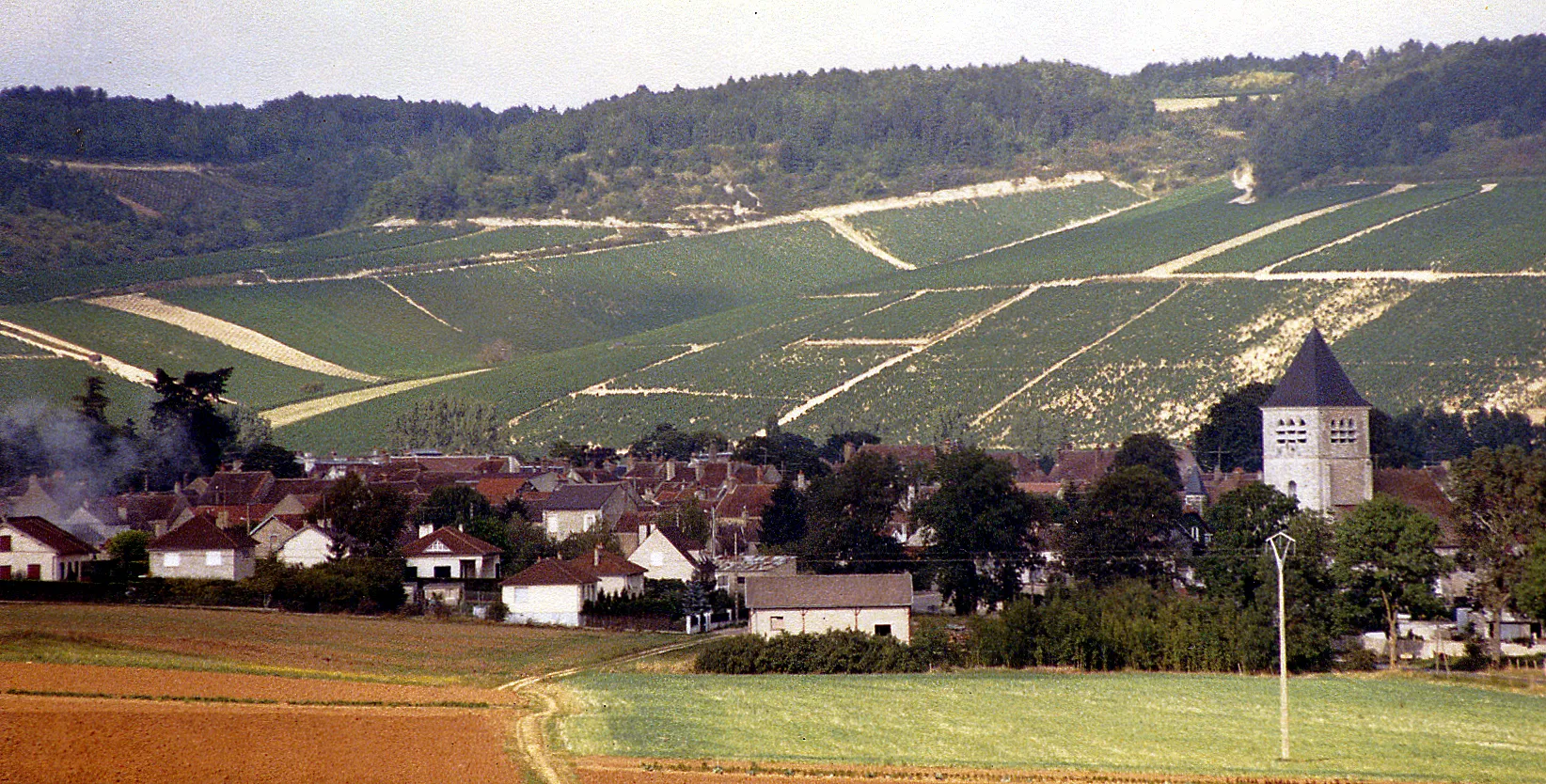
The choice of wine is a calculation about leverage, not trade balances. The United States is the single largest export market for the French wine and spirits industry, and the numbers are large enough to sting. France shipped about 2.9 billion euros — roughly $3.4 billion — of wines and spirits to the U.S. between May 2025 and April 2026, accounting for roughly 18% of the industry’s total exports. Champagne and cognac alone made up around 40% of that value. By the industry’s own reckoning, sales to America are worth close to a fifth of French wine’s global business.
That concentration makes wine an efficient weapon. A tariff on French aircraft parts or luxury goods would diffuse across many producers and markets; a tariff on wine and champagne hits a politically organized, geographically rooted sector that French governments have long felt obligated to protect. It is the same logic that made wine and spirits a recurring target in earlier U.S.-Europe trade fights, including the tariff disputes that have run through Trump’s second-term trade agenda.
President Emmanuel Macron, who is hosting Trump and the other leaders, signaled he would not fold. “We will have a respectful but firm discussion,” he told French broadcaster TF1, adding that “tariffs don’t do anyone any good, especially tariffs between G7 countries.” Macron has staked his summit on keeping the group’s members aligned; a public capitulation to a tariff threat over a French tax law would undercut that.
A fight that predates this summit
The confrontation is a sequel, not a new quarrel. When France first enacted the digital tax in 2019, the United States opened a formal trade investigation, concluded the measure discriminated against American firms, and threatened tariffs on French goods then, too. Around the same period a separate, long-running dispute over aircraft subsidies led Washington to slap 25% tariffs on certain European products, French wine among them — the precedent the wine industry remembers when it hears a new tariff number.
Those earlier threats were ultimately suspended while governments tried to settle the underlying question through the Organization for Economic Cooperation and Development, where dozens of countries negotiated a framework meant to tax large multinationals more uniformly and retire national digital taxes in the bargain. That global deal has stalled in implementation, leaving France’s 3% levy in place and the American objection unresolved. Trump’s threat picks the fight back up where it was paused, with a far larger tariff number attached and the leverage applied directly rather than through trade-court machinery.
What has changed is the willingness to escalate. In the earlier round, the tariffs were threatened and held in reserve; the administration is now stating a specific rate — 100% — and tying it to a specific demand to scrap the tax outright. Whether that is an opening position or a firm line is exactly what Macron’s “respectful but firm” discussion is meant to test.
What’s at stake before the G7
The timing sharpens everything. The threat arrives as Macron prepares to welcome Trump ahead of the G7 summit in Évian-les-Bains, on the French shore of Lake Geneva, where the alliance is already straining over trade, the Middle East war and critical minerals. A bilateral fight over wine and a digital tax now sits on top of that agenda, giving the host a confrontation with his most important guest before the formal sessions begin.
This is not the first time Trump has aimed at French wine to move Macron. Earlier this year he floated a 200% tariff on French wines and champagne after Macron declined to join his proposed “Board of Peace” for postwar Gaza — a separate dispute in which the same export was again cast as the pressure point. The recurrence underscores how the administration has come to treat tariffs less as a tool of trade policy than as an all-purpose instrument of foreign policy, deployable against whatever a partner values most.
For American consumers, the immediate stakes are concrete. A 100% tariff would raise the shelf price of French wine and champagne, with importers and buyers absorbing the cost — the practical reality behind a measure pitched as pressure on Paris. For France, the threat puts a flagship industry on the table to settle a tax fight its government considers a matter of sovereignty. And for the broader question hanging over the summit — whether the United States and its closest allies still resolve disagreements as partners — the wine ultimatum is one more test, arriving before the leaders have even sat down.
Sources 5 cited · 1 primary
- Trump threatens 100% tariff on French wine over tax on US tech giants Apple, Amazon, Facebook
- Trump threatens 100% tariff on French wine and champagne over digital tax
- Trump says France must scrap tech 'sales tax' or face 100% wine tariffs
- Trump threatens 100% tariff on French wines over digital services tax before G7 summit
- 2026 G7 Summit of Évian — official site
American Courant cites its sources and links to primary documents where they exist. How we report →