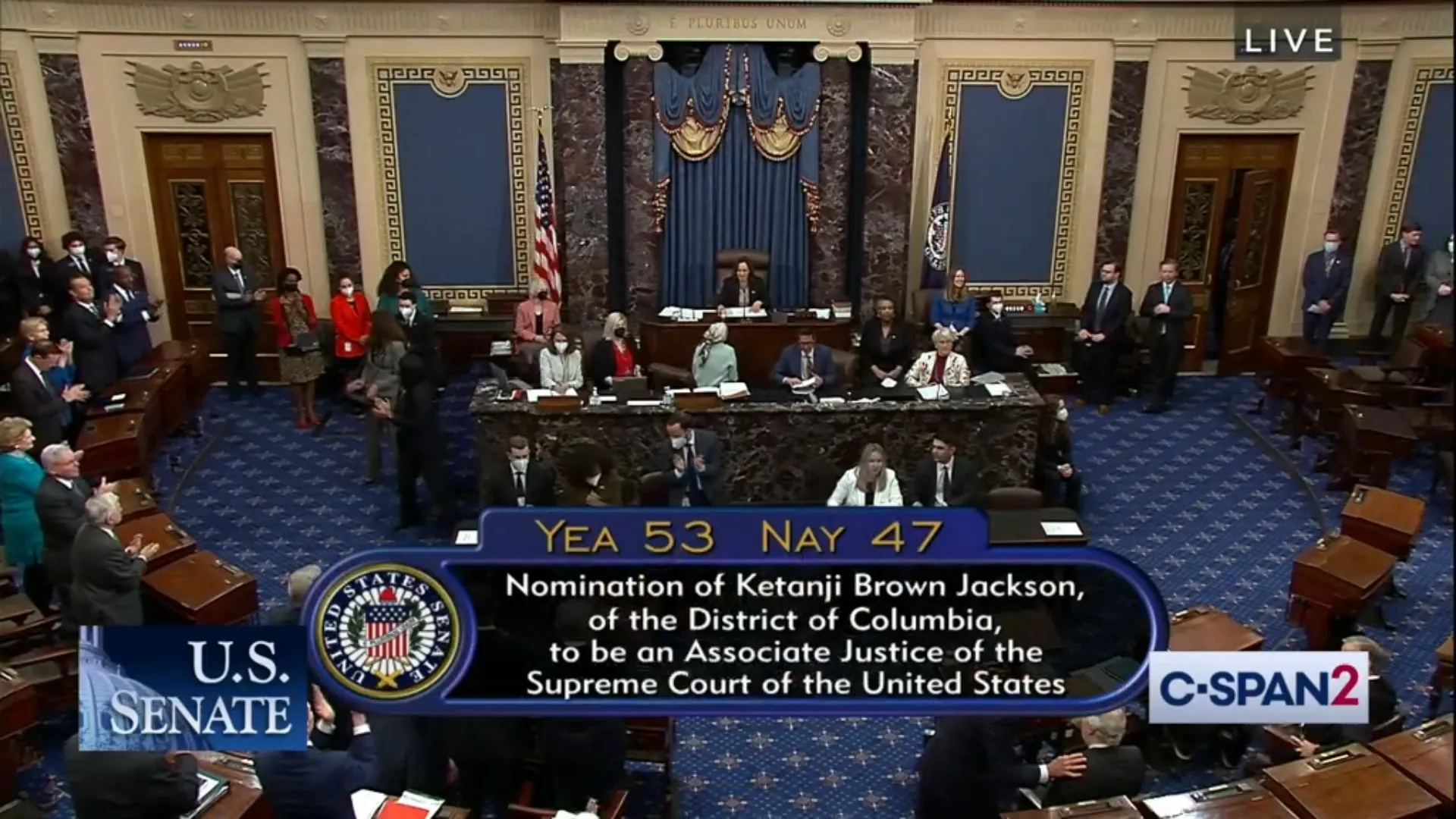
The House passed the One Big Beautiful Bill 215-214, ten days ago. President Trump has signed nothing, because the Senate has not voted. Majority Leader John Thune wants a floor vote before the July 4 recess — which gives the Senate roughly five weeks to accomplish something that looks increasingly difficult.
The math is punishing. Senate Republicans hold 53 seats. Budget reconciliation requires 51 votes — or 50, with Vice President JD Vance casting a tiebreaker. That means Thune can afford to lose, at most, three of his members. Four have already put conditions on their votes, and their conditions point in opposite directions.
Susan Collins of Maine and Lisa Murkowski of Alaska want the Medicaid title softened. Josh Hawley of Missouri wants the bill to do more for working-class families and less for wealthy ones. Rand Paul of Kentucky says he cannot vote for any legislation that adds $3.8 trillion to the national debt without structural spending reform. None of the four has said yes.
The Senate Finance Committee is still in markup. The vote-a-rama is weeks away. And the window for getting all four to yes is narrow.
The Arithmetic
Senate reconciliation works differently than most legislation. A committee writes instructions, the full chamber debates, and the session ends with vote-a-rama — an extended period of open amendments where any senator can force a vote on anything. After that comes final passage by simple majority. No filibuster. No 60-vote threshold.
But simple majority still means 51, and Thune has exactly three votes to spare. Collins, Murkowski, Paul, and Hawley represent exactly the threshold of unaffordable defections. If all four vote no, the bill fails 49-51 even with Vance’s tiebreaker. If any three vote no and one comes around, the bill passes on the tie.
What makes the current situation especially difficult is that the holdouts are not aligned ideologically. Satisfying Collins and Murkowski means preserving or modifying Medicaid programs. Satisfying Paul means cutting them further. Satisfying Hawley means spending more on working families — which is fiscally at odds with what Paul is demanding and structurally complicated by what Collins and Murkowski are protecting.
Thune’s team is not looking for a single deal that satisfies all four simultaneously. They’re looking for three separate deals, sequenced so that giving ground in one direction doesn’t collapse support in another.
Collins and Murkowski: The Medicaid Fight
The House version of the Big Beautiful Bill transforms Medicaid financing in ways that Susan Collins and Lisa Murkowski have described as unacceptable without modification.
The central change is a shift from an open-ended federal matching formula — the current system, in which Washington covers a fixed percentage of whatever states spend — to a per-capita cap, under which states receive a fixed annual payment per enrollee. The Congressional Budget Office has projected this would reduce federal Medicaid spending substantially over ten years, with enrollment declining by millions as states tighten eligibility to stay within the caps.
For Collins, the immediate concern is Critical Access Hospitals — the small, federally designated rural facilities that operate in communities without alternative providers. These hospitals depend on Medicaid reimbursement for a significant share of their patient revenue. Collins has told reporters that per-capita caps, if implemented on the House timeline, could trigger facility closures in rural Maine within two to three years.
Collins’s specific demands include a carve-out for Critical Access Hospitals, a longer phase-in period before caps take effect, and additional federal support for rural hospitals that lose Medicaid revenue. She has not demanded that the per-capita cap structure be abandoned — she’s asked that it be designed in a way that Maine’s rural healthcare infrastructure can survive.
Murkowski faces a related but distinct problem. Alaska Native health programs receive federal funding partly through Medicaid’s Indian Health Service provisions, and Alaska’s Medicaid enrollment as a share of total population is among the highest in the country. Alaska lacks the urban safety net infrastructure that exists in most states, making Medicaid the primary — and in some regions the only — coverage option for large portions of the population. Murkowski has raised concerns specific to Alaska Native communities and has asked for provisions that acknowledge the state’s unusual demographic and geographic situation.
Both senators have indicated flexibility on structure. Neither is demanding the Medicaid title be dropped. But their conditions are specific enough that generic language about “protecting vulnerable populations” will not close the deal.
Hawley’s Very Different Problem
Josh Hawley’s concerns have nothing to do with softening the Medicaid cuts. His complaint is that the bill is not doing enough for the working-class voters who delivered Republican majorities — and that it is doing too much for the wealthy constituencies whose priorities have historically dominated the party’s economic agenda.
Hawley has been particularly focused on the SNAP provisions. The House version expands work requirements for Supplemental Nutrition Assistance Program recipients, shifting cost exposure to states when enrollees don’t comply. Hawley has argued that the SNAP changes hit working families — including veterans, caregivers, and people in part-time work — who are employed but don’t meet the federal definition of work activity under the bill’s terms.
On the tax side, Hawley has pushed for a larger child tax credit, arguing that the House version’s benefit structure disproportionately flows to upper-income households. He has also challenged the SALT cap restoration: the House bill raises the cap on state and local tax deductions from $10,000 to $40,000 for joint filers, a provision that primarily benefits high-earners in expensive states. Hawley has argued this is the wrong priority for a Republican bill.
His framing has been consistently populist: the bill in its current form rewards the party’s donor coalition rather than its voter coalition. That framing puts him in rhetorical opposition to the House bill but doesn’t, by itself, define a clear path to yes. His specific asks — preserve SNAP benefits for working families, increase the child tax credit, restructure SALT to target middle-income earners — require the Senate Finance Committee to write a substantially different tax title than the House produced.
Paul and the $3.8 Trillion Problem
Rand Paul is pulling in the opposite direction from the other three.
The Congressional Budget Office projected that the bill would add $3.8 trillion to the national deficit over ten years — a figure that American Courant reported in detail when the full score dropped, and that Paul has cited repeatedly as grounds for opposition. His position is that the Republican Party cannot call itself fiscally conservative while legislating more than three trillion dollars in new deficits.
Paul’s specific demands are harder to satisfy than Collins’s. He wants real spending cuts — not reductions in the rate of spending growth, but absolute cuts large enough to offset the tax extensions in the bill. He has also objected to the debt ceiling increase included in the House version, arguing that raising the ceiling without attaching structural spending reform merely defers the problem without addressing it.
Paul has voted against Republican budget legislation before. He was one of a small number of Republicans who voted against the Tax Cuts and Jobs Act of 2017’s final procedural steps, and he has a consistent record of opposing legislation that adds to the deficit regardless of whose priorities it serves. His office has not signaled any flexibility since the House passed the bill.
The problem for Thune is that satisfying Paul would require cutting programs that Collins and Murkowski are protecting. There is no version of the bill that simultaneously addresses Paul’s fiscal objections and the moderates’ Medicaid concerns. Thune’s calculation may simply be that Paul is not persuadable, and the path to 51 runs through the other three.
What the Byrd Rule Will Strip
Before any floor vote, the Senate Parliamentarian will review the entire House-passed bill for compliance with the Byrd Rule — the provision of federal budget law that restricts extraneous matter in reconciliation legislation. Provisions that are not germane to the budget, don’t produce substantial budgetary effects, or exist primarily for non-budgetary policy reasons can be struck.
The House version includes immigration enforcement provisions, regulatory rollback language, and social policy riders that will almost certainly face Byrd Rule challenges. The Parliamentarian’s rulings are not negotiable — a stripped provision cannot be restored by Senate vote during reconciliation.
The Byrd Rule cuts in both directions. Some of the provisions most important to conservatives — immigration enforcement funding, certain energy and permitting changes — are at risk of being struck. Their removal would cost the bill support from members who aren’t currently in the holdout group. At the same time, removing some of the more controversial social policy riders could make the bill more palatable to Collins and Murkowski.
The net effect of the Byrd Bath — Capitol Hill shorthand for the Parliamentarian’s review — will reshape the bill’s contents before the Senate Finance Committee substitute is even finalized.
Where the Finance Committee Stands
The Senate Finance Committee, chaired by Idaho’s Mike Crapo, has been in markup during the week of May 26, working through the bill’s tax title. The key issues in play include the SALT cap structure, the child tax credit benefit design, the treatment of business expensing under the extended TCJA provisions, and the Medicaid per-capita cap structure that Collins and Murkowski have challenged.
Senate leadership is working on a manager’s amendment — a substitute that would modify the Medicaid title to address some of the moderate concerns while preserving the underlying structural reform. American Courant’s earlier reporting on the Senate’s procedural calendar laid out the timeline: the Finance Committee must complete its work before the full Senate can schedule floor time, and floor time must include both a debate period and the vote-a-rama.
Thune’s July 4 target requires the Finance Committee to finish this week or early next, the Parliamentarian to complete Byrd Rule review quickly, and negotiations with all four holdouts to conclude simultaneously. That is an extremely compressed timeline given the four different directions in which the holdouts are pulling.
Federal Reserve Chair Kevin Warsh has already signaled that the bill’s fiscal trajectory has direct monetary consequences — that the central bank would not lower rates to accommodate the additional spending, and that higher long-term rates would follow if the deficit score worsens. That warning has been heard on Capitol Hill. Whether it changes the Senate’s calculus on the deficit question is less clear.
What to Watch This Week
Three signals will indicate whether Thune is making real progress:
The Finance Committee substitute’s Medicaid language. If the substitute includes specific Critical Access Hospital reimbursement protections and a phase-in period longer than the House version — language clearly drafted for Collins and Murkowski — that is evidence of active negotiation, not just rhetoric. If the substitute leaves the Medicaid title largely unchanged, the moderate holdouts remain unresolved.
SNAP movement in Hawley’s direction. Any modification to the SNAP work requirement provisions that preserves benefits for caregivers and veterans, or any expansion of the child tax credit benefit floor, would indicate that Hawley is being taken seriously rather than managed. Direct public engagement between Senate leadership and Hawley’s office on SNAP specifics is the signal to watch.
Paul’s floor amendment strategy. Paul is most likely to use vote-a-rama to force senators on record regarding spending caps and debt triggers. If Thune’s office signals willingness to bring some version of those amendments to a floor vote — even as part of a managed defeat — that is sometimes how Republican leaders secure reluctant members’ final yes vote without giving away the legislative substance. Paul voting no on final passage would be entirely consistent with his stated position. Thune voting yes on a Paul spending-cap amendment is how you sometimes get Paul to change his.
If none of these signals appears before the week of June 9, the July 4 target will be in serious jeopardy. At that point, the question is no longer about timeline — it is about whether the bill can pass at all before the fall.
Sources 6 cited · 3 primary
- Preliminary Estimate of the Budgetary Effects of H.R. 1, the One Big Beautiful Bill Act
- Congressional Budget Act of 1974, Section 313 — Limitations on Extraneous Matter in Reconciliation Legislation (the Byrd Rule)
- Collins statement on One Big Beautiful Bill: rural hospitals, Medicaid timeline, and vote conditions
- Hawley statement on working-class priorities in Senate reconciliation: SNAP, child tax credit, and SALT
- Paul: I cannot support a bill that adds $3.8 trillion to the national debt without structural reform
- Senate Finance Committee Big Beautiful Bill markup — week of May 26, 2026
American Courant cites its sources and links to primary documents where they exist. How we report →