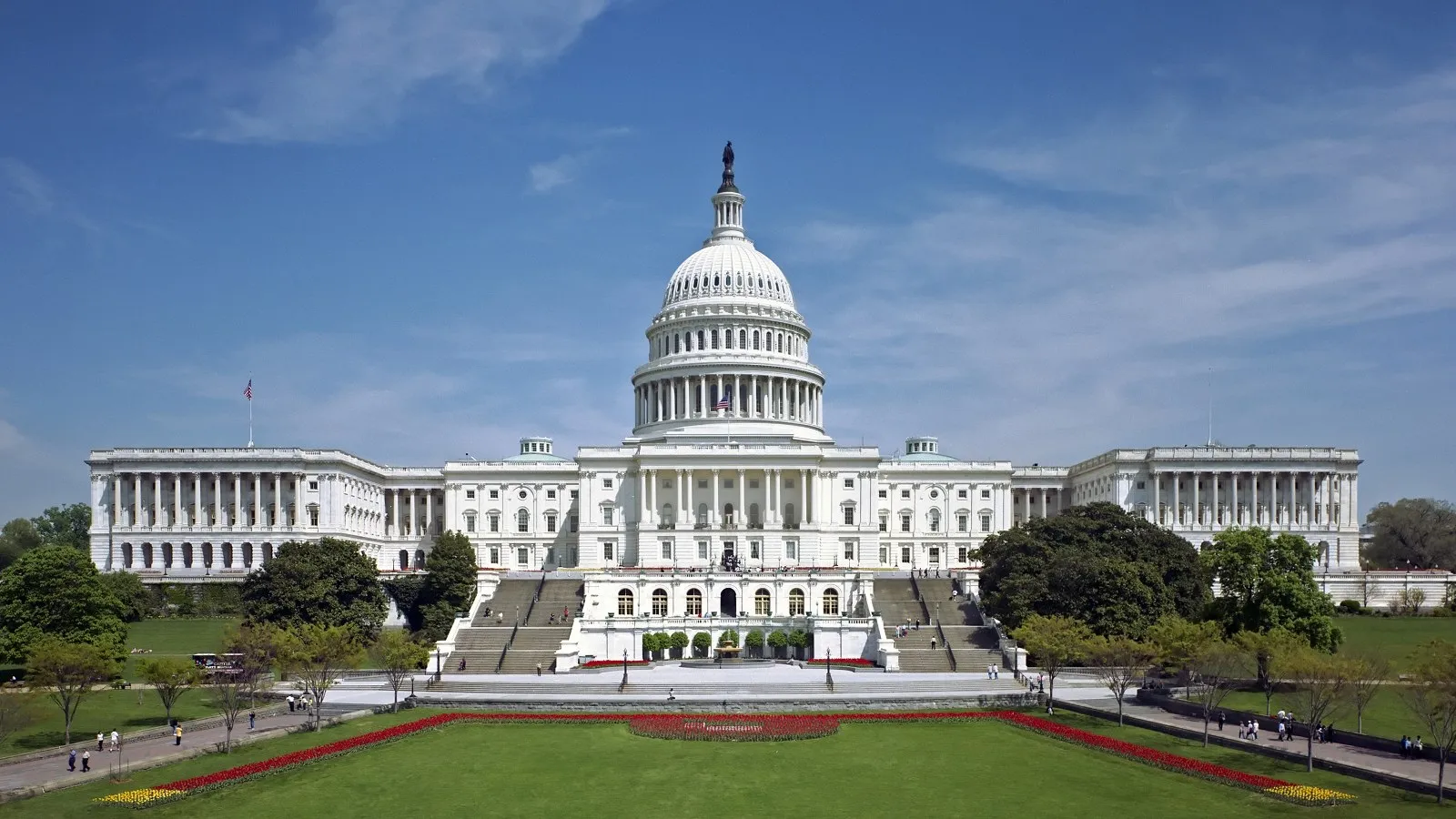
The House Rules Committee cleared the One Big Beautiful Bill Act for floor consideration Monday evening, setting up a Thursday vote that House Republican leadership is treating as a firm deadline. Hours before that procedural vote, the Congressional Budget Office released its preliminary score of the reconciliation package — confirming it would add approximately $3.8 trillion to the federal deficit over the next ten years.
The convergence of those two events places Congress at a precise inflection point: three days after the Moody’s downgrade that stripped the United States of its last perfect credit rating, the House is moving toward a vote on legislation that the government’s own nonpartisan fiscal scorekeeper says will accelerate the trajectory Moody’s described.
What the CBO Found
The CBO’s preliminary score is the definitive fiscal accounting of the bill as it stands after the Budget Committee’s Sunday night vote. The number — $3.8 trillion in added deficits over ten years — is the net result of provisions moving in opposite directions.
The bill’s largest single element is the extension of the 2017 Tax Cuts and Jobs Act, which expires at the end of 2026. Making those provisions permanent costs approximately $4.0 trillion over the scoring window. Added to that are new tax provisions not in the 2017 law — a temporary deduction for tips and overtime, an expanded child tax credit, and a series of adjustments to the state and local tax deduction — that collectively cost another $800 billion.
On the offset side, the bill reduces Medicaid expenditures by roughly $800 billion through a combination of work requirements, reduced eligibility periods, and slower federal matching rate growth for states that expanded coverage under the Affordable Care Act. It also rolls back most of the energy production tax credits enacted in the 2022 Inflation Reduction Act, reducing projected federal spending on clean energy incentives by approximately $500 billion over the decade. SNAP benefit reductions and changes to other mandatory programs add smaller offsets.
The net result: $3.8 trillion more in cumulative federal deficits by 2036, on top of a baseline that already showed the national debt rising from 98 percent to approximately 117 percent of GDP over that period. The CBO estimates the bill pushes that 2036 projection to roughly 128 percent of GDP.
Moody’s, in its Friday downgrade, projected federal debt reaching 134 percent of GDP by 2035 under existing trends. The CBO score suggests the legislation does not alter that trajectory and may modestly accelerate it — depending on whether the growth assumptions embedded in the administration’s analysis hold.
The Committee for a Responsible Federal Budget, which has tracked versions of this bill for months, noted Monday that the CBO’s number landed at the lower end of its own range of $3.2 trillion to $5.2 trillion, partly because the bill’s Medicaid work requirement implementation dates were moved earlier in the weekend negotiations. The CRFB noted that the score landed at the lower end of its own projected range, and that Senate amendments would almost certainly produce a different final number.
The Conservative Holdout Math
Speaker Mike Johnson, speaking at a Capitol press conference Monday afternoon before the Rules Committee vote, said he expected to pass the bill by Thursday and deliver it to the Senate, declining to specify what margin he expected.
The margin he can afford is narrow. Republicans hold a 220-213 majority in the House, meaning Johnson can lose no more than three Republican votes on a party-line bill. Four members — Representatives Chip Roy of Texas, Ralph Norman of South Carolina, Andrew Clyde of Georgia, and Josh Brecheen of Oklahoma — voted against the bill in the Budget Committee on Friday before switching to “present” on Sunday to allow the committee to advance it. Their switch was secured by concessions on Medicaid work requirement start dates and acceleration of clean energy credit phaseouts, but not by the level of overall spending reduction the four had originally demanded.
Roy’s office released a statement Monday making clear that Sunday’s procedural move was not the same as a yes vote on the floor. Roy said he wanted to see language that fully eliminated the enhanced federal matching rate for Medicaid expansion — a provision the Senate would almost certainly strip out under budget reconciliation rules — and that he remained opposed to any increase in the state and local tax deduction cap, which is included in the current bill at $30,000 for joint filers.
The SALT provision is itself the source of a second, separate tension. A bloc of Republicans from high-tax states — including members from New York, New Jersey, and California — have pushed for a higher SALT cap and have threatened to vote against a bill that doesn’t include it. Johnson is attempting to satisfy two groups with diametrically opposed positions on the same provision, a familiar configuration that the House has navigated before only by keeping final text ambiguous until the floor vote.
A Senate Rewrite Is Already Taking Shape
Even if the House passes the bill Thursday, the legislative path to enactment runs through a Senate that operates under different constraints and different political arithmetic.
Republicans hold a 53-47 majority in the Senate — enough to pass a reconciliation bill without Democratic votes — but the Byrd Rule, which governs what provisions can survive in a reconciliation package, will force changes to several House provisions that parliamentarians may rule as insufficiently fiscal in nature. The Senate Parliamentarian’s review of the bill has not yet begun, but senior Republican aides have already flagged immigration-related provisions as likely targets.
Beyond the procedural constraints, several Republican senators have been explicit about the House bill’s shortcomings from their perspective.
Senator Susan Collins of Maine, whose state has a disproportionately high share of Medicaid enrollees relative to its population, has repeatedly said the Medicaid cuts in their current form are too severe. Collins said Monday that the accelerated work requirement implementation timeline — the very change that brought along the House holdouts — risked disrupting rural hospital systems that depend on Medicaid reimbursement for financial stability. Collins has not said she would vote against the bill, but she has made clear she expects significant changes.
Senator Lisa Murkowski of Alaska has raised similar concerns about SNAP reductions and their effect on Alaska Native communities in remote areas where food costs are already high. Murkowski’s votes on reconciliation matters have been swing votes in previous budget fights and are expected to be again.
The Senate Finance Committee, which has jurisdiction over the bill’s tax and Medicaid provisions, has not yet scheduled a markup. Senate Majority Leader John Thune has indicated he expects Finance to act in June, with a Senate floor vote possible in late June or July. That timeline leaves open the possibility of a merged House-Senate version reaching the President’s desk by August — or it leaves open the possibility of a protracted negotiation that drags into the fall.
For Federal Reserve Chair Kevin Warsh, confirmed by the narrowest margin in Fed history less than a week ago, the legislative timeline adds to the uncertainty backdrop he is navigating. The Fed does not control the fiscal path — that is for Congress — but the bond market’s reading of how that path develops shapes the rate environment the Fed operates in. Monday’s 10-year Treasury yield settled at 4.52 percent at market close, four basis points below the morning high, a partial unwinding of the spike that followed the Moody’s downgrade.
What Comes Next
The House floor vote is currently scheduled for Thursday, May 22. Leadership has reserved up to twelve hours of debate under the rule, with amendments limited to those approved by the Rules Committee. If the bill passes, it goes to the Senate, where the Finance Committee markup is the next substantive step.
If it fails — if the holdout bloc decides “present” in committee was as far as it would go — Johnson faces a choice between reopening negotiations with the right flank, making concessions to the SALT bloc, or acknowledging that the bill will need to be restructured before it can pass the House. Any of those paths extends the legislative timeline and keeps fiscal uncertainty in the bond market elevated.
The more immediate question for the holdouts is whether they believe the Senate will ultimately deliver what the House cannot. The provisions Roy and others want — full elimination of Medicaid expansion federal matching rates, for example — almost certainly cannot survive the Byrd Rule in the Senate. Voting yes on a House bill knowing the Senate will strip out the provisions that justified the yes vote is a calculation each holdout member will have to make for themselves before Thursday.
Whether the Thursday vote happens — and what the margin looks like if it does — will be the first test of whether the combination of rising energy costs from the Strait of Hormuz conflict, elevated Treasury yields, and a freshly downgraded credit rating changes the legislative calculus for members currently in the undecided column.
Sources 6 cited · 2 primary
- Preliminary Estimate of the Budgetary Effects of H.R. 1, the One Big Beautiful Bill Act
- H.Res. 476 — Rule for consideration of H.R. 1, the One Big Beautiful Bill Act
- Speaker Johnson on floor vote timeline: 'We will pass this bill this week'
- Rep. Chip Roy statement: remaining Medicaid demands and SALT cap opposition
- Sen. Collins statement on Medicaid work requirements: 'The phase-in timeline matters enormously'
- CBO's Reconciliation Score and the Senate Arithmetic: What Changes to Make It Work
American Courant cites its sources and links to primary documents where they exist. How we report →