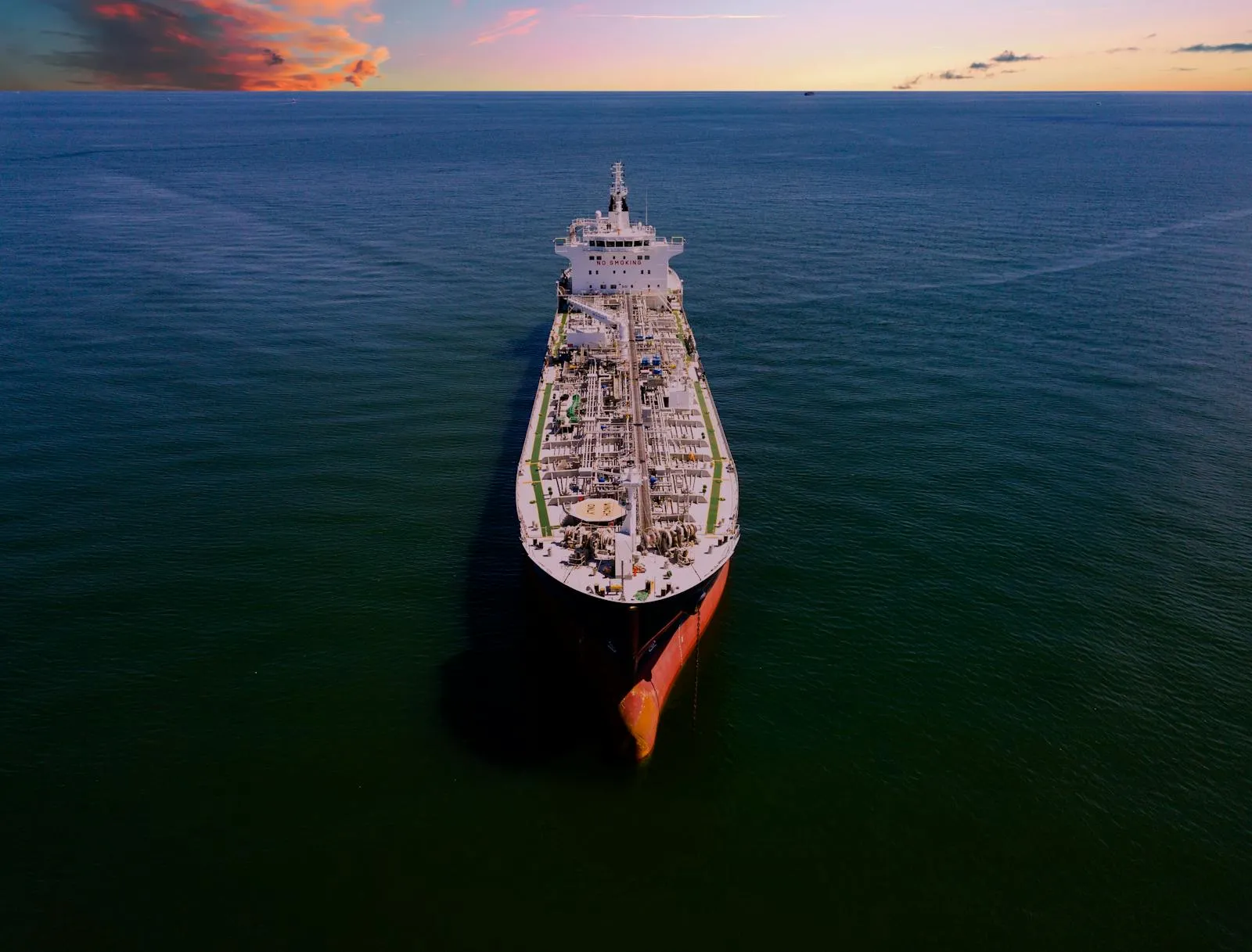
The Lloyd’s Market Association confirmed last week that war-risk insurance remains technically available for vessels transiting the Strait of Hormuz. Available and affordable are different things, and after Iran’s Islamic Revolutionary Guard Corps placed its Hormuz naval forces on full combat alert Friday morning and the United States vetoed a United Nations ceasefire resolution the same day, the gap between those two concepts widened to a point that most tanker operators are now routing around the problem entirely.
At current rates — ranging from 1 to 5 percent of insured hull value per transit, with pricing at the higher end following Friday’s escalation — war-risk coverage for a Very Large Crude Carrier valued at $200 million costs between $2 million and $10 million for a single pass through the strait. The Cape of Good Hope alternative adds 14 to 20 days of voyage time and between $400,000 and $800,000 in additional bunker fuel and operating costs per leg. For most operators now facing transit-endorsement quotes above 2 to 3 percent, the detour pencils out. Most operators are now above that threshold.
That arithmetic explains what market data has been showing since March: VLCC freight rates hit an all-time record of $423,736 per day on the benchmark Middle East-to-China route, not because demand surged but because the pool of vessels available for non-Hormuz routes tightened dramatically. Every ship adding 20 days per round trip is, in effect, removing two ships’ worth of capacity from the market for the duration.
What the Insurance Market Is Actually Doing
The LMA’s published position is nuanced in a way that can be misread. The association’s survey found that 88 percent of its market members retained appetite for hull war-risk underwriting in the strait, with 90 percent willing to write cargo cover. Coverage exists. The market is technically open.
What the LMA statement does not address is the price at which that appetite is maintained. The Joint War Committee — a standing body that sets the Listed Areas triggering enhanced war-risk underwriting requirements — has designated the Strait of Hormuz as a Listed Area continuously since late February. That designation does not prevent coverage; it requires vessel owners to notify the underwriter, pay an additional premium, and obtain a specific voyage endorsement for each transit. The endorsement price is set by the open market, not the committee.
Tracking data across the marine insurance market shows that Hormuz transit endorsements ran at roughly 0.3 percent of hull value in early March, crossed 1 percent through April during the height of the U.S.-Iranian naval standoff, and approached 3 to 5 percent for operators still attempting crossings in May. Friday’s escalation — Iran’s IRGC placing Hormuz forces on full combat alert after the U.S. vetoed a U.N. ceasefire resolution was precisely the type of event that moves pricing upward along those curves. An insurer willing to write a $200 million VLCC through Hormuz at 2 percent last Thursday may be quoting 3.5 percent on Sunday.
The LMA’s framing — that safety concerns rather than insurance availability are driving reduced traffic — is accurate as far as it goes. The safety concerns are what drive the price, and the price is what drives the routing decision. For most commercial operators, those mechanisms are the same thing expressed at different steps in the calculation.
The Cape of Good Hope Numbers
The Hormuz-to-Rotterdam route for a VLCC carrying approximately 2 million barrels of Saudi crude runs roughly 8,700 nautical miles via the Strait, the Arabian Sea, the Red Sea, and the Suez Canal. The Cape of Good Hope alternative — through the Arabian Sea, south along Africa’s eastern coast, around the Cape, and north through the Atlantic — covers approximately 13,200 nautical miles. The additional 4,500 nautical miles at a VLCC’s typical 14-knot service speed adds 14 to 20 extra days depending on weather routing and port calls.
At current spot-market time-charter rates — elevated substantially above the pre-crisis baseline by the sustained compression of available vessel supply — the daily time cost of the Cape route adds between $2 million and $4 million per voyage before accounting for insurance or fuel. Bunker costs at current fuel prices add another $400,000 to $800,000 depending on the vessel’s fuel type and speed profile. Against those numbers, an insurance endorsement priced above 2 percent of a $200 million hull costs more than the entire detour.
Kpler’s analysis of tanker chartering patterns during the crisis, published in March, found that the break-even insurance rate at which the Cape route became the rational economic choice was somewhere between 1.5 and 2.5 percent of hull value for a median VLCC. That threshold was crossed industry-wide during April. The question since May has been how much higher rates need to go before the remaining Hormuz traffic — state-linked carriers, time-sensitive cargoes, operators with cost structures that can absorb the premium — recalculates.
Friday’s combat alert moved that calculus further in one direction.
Who Is Still Crossing, and Why
Not all Hormuz traffic has ceased. Iranian and Chinese state-linked tankers continue to operate in the strait under different insurance and indemnity arrangements, largely insulated from the Lloyd’s and JWC pricing mechanism. Some Indian state refiners have maintained limited flows. Vessels carrying time-sensitive or contractually constrained cargoes that cannot absorb a 20-day schedule disruption are making the transit at elevated insurance cost — a rational choice for operators whose revenue loss from a delayed delivery exceeds the insurance endorsement.
The U.S. Energy Information Administration identifies the Strait of Hormuz as the world’s most critical oil transit chokepoint. In the last full pre-crisis year, the strait carried approximately 20 million barrels per day — roughly 20 percent of total global petroleum consumption, and approximately 34 percent of seaborne crude trade. That baseline is no longer operative. The EIA’s Weekly Petroleum Status Report, released each Wednesday, has shown Hormuz throughput well below normal levels since March. Wednesday’s release — covering the week ended May 15, the day of the Abadan strike and the IRGC alert — will be the first to capture the full impact of Friday’s escalation on physical flows.
The Inventory Consequence
The Cape detour does not destroy cargo. It delays it. A VLCC that would have delivered Saudi crude to a Dutch refinery in 28 days is now delivering the same cargo in 44 to 48 days. That two-week difference represents inventory in transit rather than in tank — a category of oil that exists but cannot be refined, sold at retail, or drawn on during a supply disruption.
For European refiners dependent on Middle Eastern crude, the practical consequence has been a sustained drawdown of strategic reserves and a pivot toward alternative crude sources: North Sea grades, West African cargoes, and U.S. Gulf Coast exports that reach European ports without requiring Hormuz passage. Those alternatives are priced at a premium to displaced Gulf crudes, and the premium is now embedded in European wholesale fuel prices — a secondary transmission channel operating in parallel with the direct crude price spike that drove WTI to $100 a barrel on Friday after the Abadan refinery strike. The consumer does not see the freight rate or the war-risk endorsement on the pump display. The pump price reflects them anyway.
The annualized cost to the shipping industry of avoiding Hormuz has been estimated at roughly $8 billion per month, based on aggregated freight cost differentials across the vessel types normally transiting the strait. That figure was calculated in March, before Friday’s escalation raised the freight and insurance variables further. Saudi Aramco’s chief executive warned last week that oil markets would not normalize until 2027 if the Hormuz situation persisted past mid-June. The combat alert has moved that timeline’s underlying assumptions in the wrong direction.
What Would Restore Normal Traffic
The London insurance market’s Listed Area designation, the JWC pricing structure, and ultimately tanker operators’ routing decisions will all respond to a genuine improvement in the Hormuz security environment. A verified ceasefire, a confirmed reduction in IRGC readiness postures, or a broader diplomatic framework that removes the immediate threat of Iranian interdiction would lower transit-endorsement pricing and restore the Hormuz route as the rational economic choice. The insurance market does not need certainty. It needs an updated risk distribution that shifts expected loss substantially downward.
That shift requires a diplomatic settlement. A diplomatic settlement requires negotiating positions that are currently not close to each other. The U.S. vetoed the UN ceasefire resolution Friday on grounds that it did not adequately address Iranian military activity. Iran placed its forces on combat alert the same day. Those positions describe a situation in which the insurance market — and the operators running the Cape math on Sunday — are responding rationally to inputs that the parties generating those inputs have not yet resolved.
The next concrete data point comes Wednesday, when the EIA releases the Weekly Petroleum Status Report covering the week ended May 15. That release will show the first official read on how Friday’s escalation affected physical crude flows through the world’s most important oil chokepoint. Whatever it shows, the market will have already priced it — the tankers that would have carried that crude are either in the Red Sea or on their way around Africa.
Sources 5 cited · 2 primary
- Safety concerns, not insurance availability, driving reduced vessel traffic in the Strait of Hormuz
- Amid regional conflict, the Strait of Hormuz remains critical oil chokepoint
- When the strait closes: How tanker charterers navigate the Hormuz crisis
- VLCC Rates Shatter All-Time Records as Hormuz Blockade Splits Freight Markets in Two
- Shipping Companies Reroute Around Africa: The $8 Billion Monthly Cost of Avoiding Hormuz
American Courant cites its sources and links to primary documents where they exist. How we report →