U.S. stocks suffered their worst session since the Iran war began Friday, with the Dow Jones Industrial Average closing down 722 points and oil futures spiking more than 10 percent after an Israeli airstrike on Iran’s Abadan refinery shattered what was left of the ceasefire that had been on “life support” since Monday. The single-day reversal erased Thursday’s Boeing-driven rally and then some, ending what had briefly been a 52-week high for the S&P 500 with a return to levels last seen in mid-March.
West Texas Intermediate crude settled at $100.47 a barrel on the New York Mercantile Exchange, up $9.33 or 10.2 percent — the largest single-session gain in the contract since the U.S.-Iran conflict began on February 28. Brent settled at $103.18 on the ICE in London, up 10.6 percent. Wholesale gasoline futures jumped 13.4 percent to $3.27 a gallon, a move that retail analysts said would translate into roughly 25 to 35 cents at the pump within two to three weeks if oil prices hold. AAA reported the national average for regular at $4.56 last week. Memorial Day is ten days away.
The Strike at Abadan
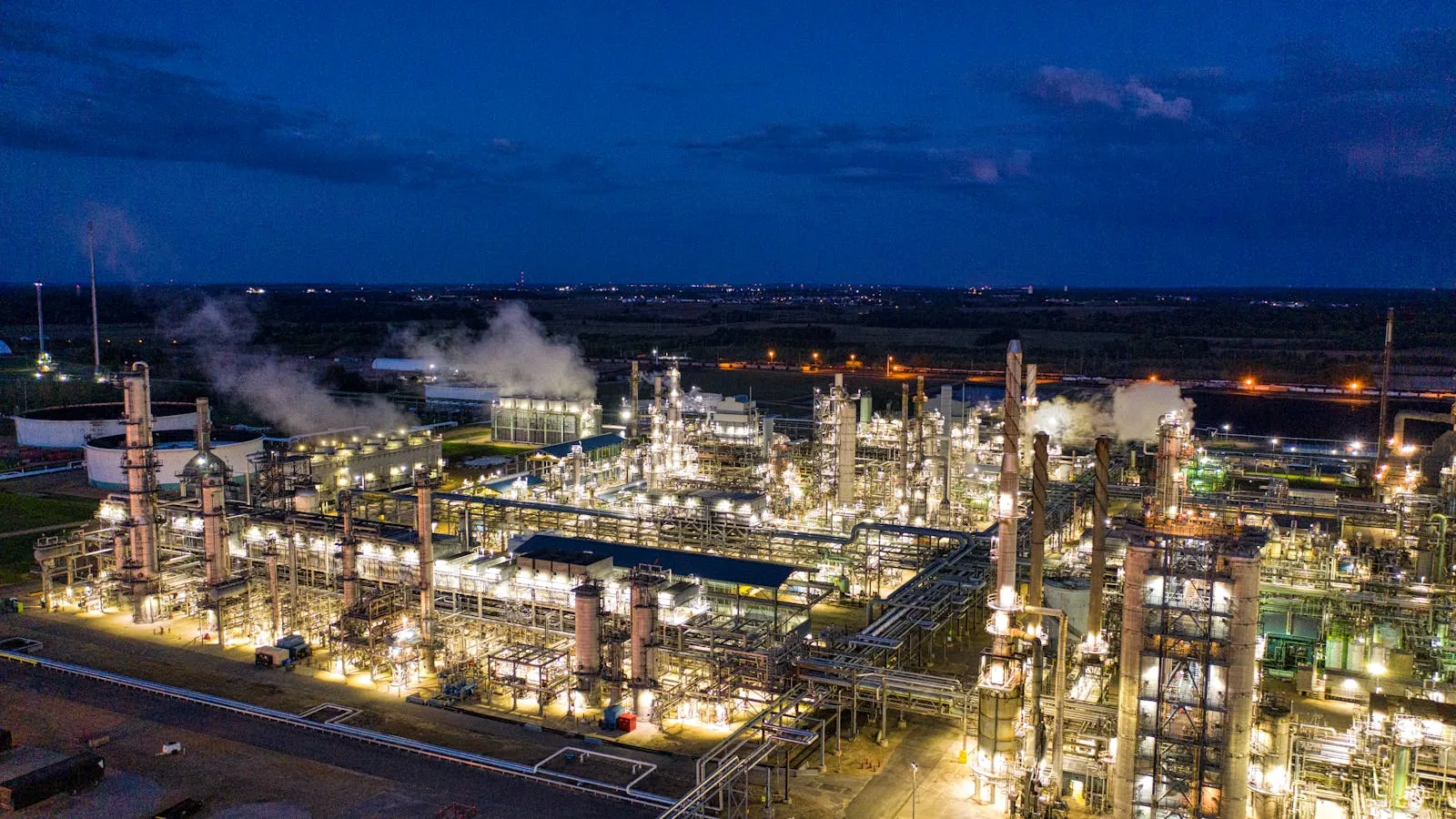
Israel’s military confirmed Friday morning that it had carried out a strike on the Abadan refinery complex in southwestern Iran in the predawn hours local time. The Israel Defense Forces’ English-language statement called the operation a “precision strike on infrastructure directly funding Iranian regime aggression” and said Israel had “delivered prior notification to the United States.” It did not specify what units within Abadan had been targeted.
Iran’s National Iranian Oil Refining and Distribution Company confirmed by midmorning Tehran time that at least two production units at the refinery were offline. Abadan, located on the western bank of the Arvand River near the Iraqi border, is Iran’s largest refinery complex by both throughput and history — the original facility dates to 1912 and the complex now handles roughly 400,000 barrels per day at full capacity. NIORDC did not disclose what fraction of capacity remained operational, but Iranian state television showed daytime footage of damage to fractional-distillation infrastructure at the southern end of the site.
Iran’s Foreign Ministry called the strike “an act of war that nullifies all standing diplomatic channels” and said it had requested an emergency session of the United Nations Security Council. Tehran did not specify how it would respond. The Strait of Hormuz remained open to the limited transit it has allowed since the Qatari tanker resumed crossings last week, but markets priced in a high probability that Iran would either close the strait further or strike at Saudi or UAE infrastructure in retaliation — the variable that ultimately drove the day’s commodity move.
The strike arrived 96 hours after President Trump publicly described the U.S.-Iran ceasefire as on “massive life support” with a “1 percent chance of living”. The White House National Security Council issued a Friday morning statement that condemned Iran’s earlier attacks on UAE oil zones and reaffirmed U.S. support for Israel’s right to self-defense, but stopped short of explicitly endorsing the Abadan operation. It also did not condemn it.
Where the Selling Hit
The market reaction was textbook for an oil supply shock layered onto an already-tight global energy picture. The Dow closed at 41,634, down 722 points or 1.7 percent. The S&P 500 fell 2.3 percent. The Nasdaq Composite gave back 2.8 percent. The CBOE Volatility Index jumped to 24.6 from 16.2, its largest single-day move since the war began.
Energy producers were the day’s only meaningful winners. Exxon Mobil closed up 4.1 percent. Chevron added 3.8 percent. Occidental Petroleum, whose Permian Basin production benefits directly from higher WTI realizations, jumped 6.2 percent. Refining-margin names ran in front: Valero gained 5.4 percent, Marathon Petroleum added 4.7 percent, and Phillips 66 closed up 4.3 percent.
The carnage was concentrated in two places. Airlines, where jet fuel is roughly 25 percent of operating cost and pass-through to fares lags by a quarter, were the day’s worst sector. United Airlines closed down 8.7 percent, Delta lost 7.9 percent, American fell 9.2 percent, and Southwest dropped 6.4 percent. The NYSE Arca Airline Index closed at a six-month low. The Dow Jones Transportation Average fell 4.6 percent — FedEx down 3.8 percent, UPS off 3.2 percent, J.B. Hunt down 4.1 percent, Old Dominion Freight Line down 4.9 percent.
Boeing — Thursday’s hero, after the Beijing summit confirmed a $44 billion 737 MAX 10 order from China — gave back 4.3 percent, surrendering about half of Thursday’s gain. The reversal had two drivers: higher jet fuel costs hit aircraft demand projections, and the same Iran escalation that triggered Friday’s selloff also reopened the question of whether Chinese carriers would prioritize execution on a deal predicated on U.S.-China alignment that markets just watched fracture along an Israeli vector.
Retail and consumer cyclicals took the second-order hit. Target closed down 5.1 percent. Walmart, normally a defensive holding, fell 2.8 percent. Home Depot lost 3.4 percent. The read was straightforward: higher gasoline prices compress discretionary household budgets in the same quarter retailers had been hoping the Beijing summit’s tariff extension would clear margin space.
Treasuries, Dollar, Gold
The bond market told the day’s most complicated story. The 10-year Treasury yield closed at 4.71 percent, down 7 basis points — flight to safety on a session this ugly is normal — but the move was much sharper at the front end of the curve. The 2-year yield fell 12 basis points to 4.42 percent, its largest single-day move since January, as fed funds futures repriced expectations for a September rate cut. The implied probability of a September cut jumped from 38 percent at Thursday’s close to 67 percent by Friday afternoon, according to the CME Group’s FedWatch tool.
The 30-year yield, however, rose 2 basis points to 5.02 percent. The curve steepened. That is the bond market’s way of saying the inflation premium is back: oil at $100 reignites the same energy-driven goods inflation that the April Producer Price Index already showed running at a 1.4 percent monthly rate. The 2s/30s spread widened to 60 basis points, its widest level of 2026.
The dollar index added 0.4 percent on safe-haven flows. Gold closed at $2,580 an ounce on the COMEX, up 2.1 percent — a fresh record. Silver added 3.4 percent. Bitcoin, which has spent recent months trading on liquidity and rate-cut expectations rather than as an energy hedge, was caught in the equity-down move and lost 4.8 percent.
A Welcome Note Warsh Did Not Write
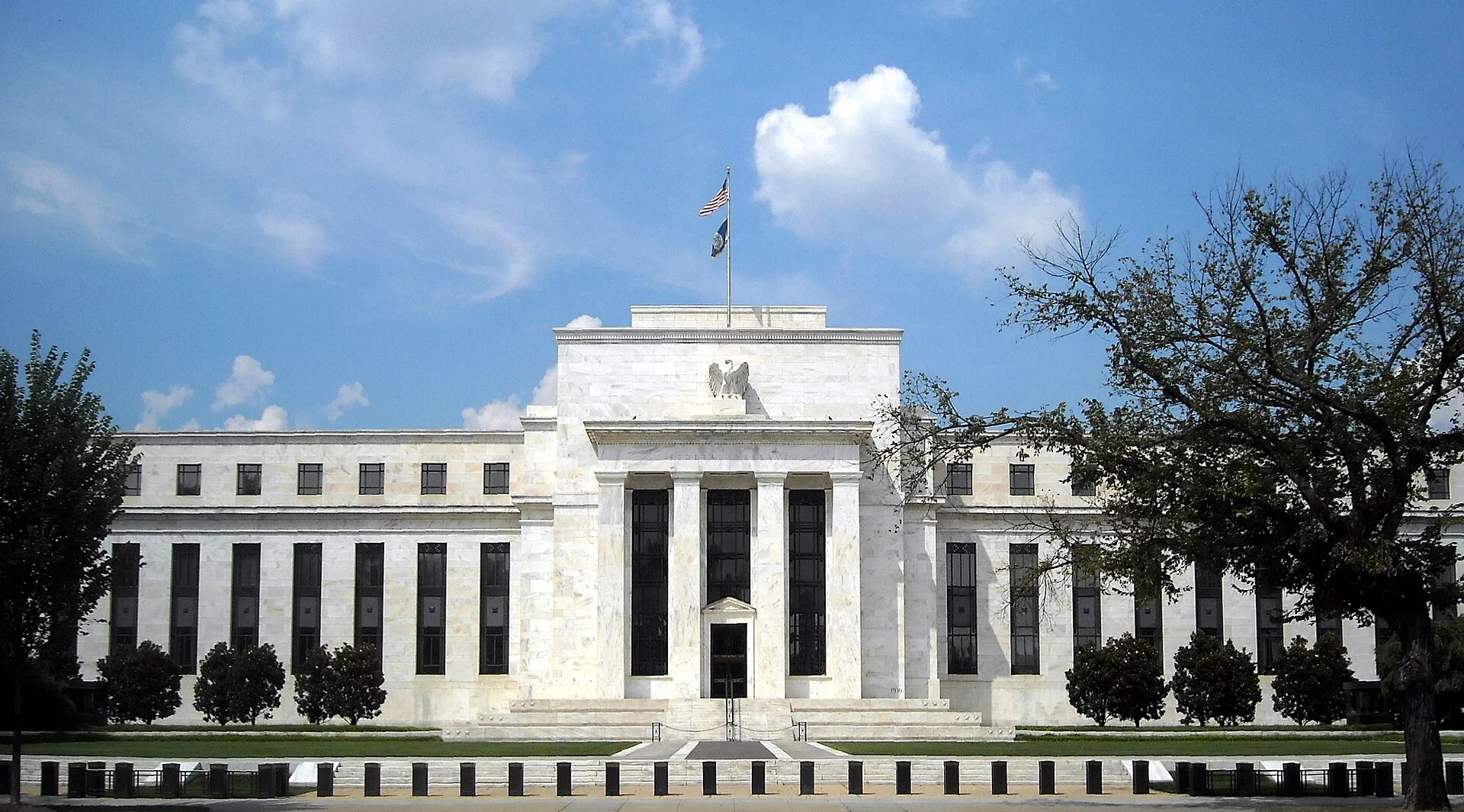
Kevin Warsh was confirmed Wednesday on a 54-45 vote, the narrowest margin in the Fed chair’s history. Jerome Powell’s term expires at midnight tonight. Warsh’s first morning as chair is Saturday. The first market summary on his desk will describe Friday’s session.
Warsh’s confirmation testimony was unambiguous. He told the Senate Banking Committee that inflation expectations were “inadequately anchored” and declined to commit to any specific path on 2027 rate cuts, language that markets read as a hawkish signal. Friday’s price action complicates that posture in both directions at once. Higher oil prices push the inflation case Warsh has been making and arguably validate his concern. The same higher oil prices also slow growth — the airlines and transports moves are the demand-destruction signal — and that pulls the rate-cut probability back into the picture from the demand-stagnation side. The curve steepening is how the bond market expressed both forces simultaneously.
The Federal Reserve made no public statement Friday, consistent with institutional practice during chair transitions and active geopolitical events. Warsh’s first FOMC meeting is July 1 and 2, six weeks away. He will have the May employment situation, the May CPI print, and whatever Iran-related supply data the EIA collects between now and then. That meeting is now meaningfully different than the one Warsh seemed to be preparing for during his confirmation hearings two weeks ago.
What Comes Next
The single most important variable for next week is Iranian retaliation: what form, against what target, and on what timeline. The 2019 Abqaiq attack on Saudi Aramco infrastructure remains the closest historical analogue, and it knocked roughly 5 percent of global oil supply offline for several weeks. Friday’s price move embeds a probability — but not a certainty — that something in that vicinity is coming. If Iran strikes Saudi or UAE infrastructure in the next 72 hours, $110 Brent and $107 WTI are realistic levels by early next week. If Iran limits its response to a UN-track diplomatic offensive and tightens but does not fully close Hormuz, prices could give back a portion of Friday’s spike.
The next scheduled data point is the EIA’s Weekly Petroleum Status Report on Wednesday morning. That release will not capture the post-strike inventory picture — the strike happened well after the survey week ended — but markets will read the data for any pre-strike crude-stock drawdown that signals tighter supply going into the Memorial Day driving period. The American Petroleum Institute’s parallel survey lands Tuesday after the close. Both releases now matter more than they did 24 hours ago.
For consumers, the immediate consequence is at the pump. Wholesale gasoline at $3.27 a gallon implies a retail national average in the $4.85 to $4.90 range by Memorial Day weekend if futures hold. A Senate analysis published last week projected that the average two-car U.S. household was already paying $1,753 extra annually at the pump under prior price levels. Friday’s spike, if sustained, pushes that annualized figure past $2,300 — within range of the $2,600 projection the same analysis identified as the threshold if pump prices reached $5.00.
Saudi Aramco’s chief executive warned Monday that the global oil market would not normalize until 2027 if the Hormuz closure persisted past mid-June. As of Friday afternoon, the closure is still in place, the ceasefire is no longer on life support — it is functionally over — and the variable that controls how the next 30 days unfold is no longer in Washington’s or Beijing’s hands. It is in Tehran’s.
Sources 6 cited · 2 primary
- Weekly Petroleum Status Report
- Daily Treasury Par Yield Curve Rates
- Oil jumps over 10% after Israel strikes Iran's Abadan refinery
- Dow plunges 720 points, Brent above $103 as Mideast escalation reignites
- Crude surges, airline stocks crater as Israeli strike on Iran refinery jolts markets
- Israel strikes major Iranian oil refinery; markets plunge, gas prices set to spike
American Courant cites its sources and links to primary documents where they exist. How we report →