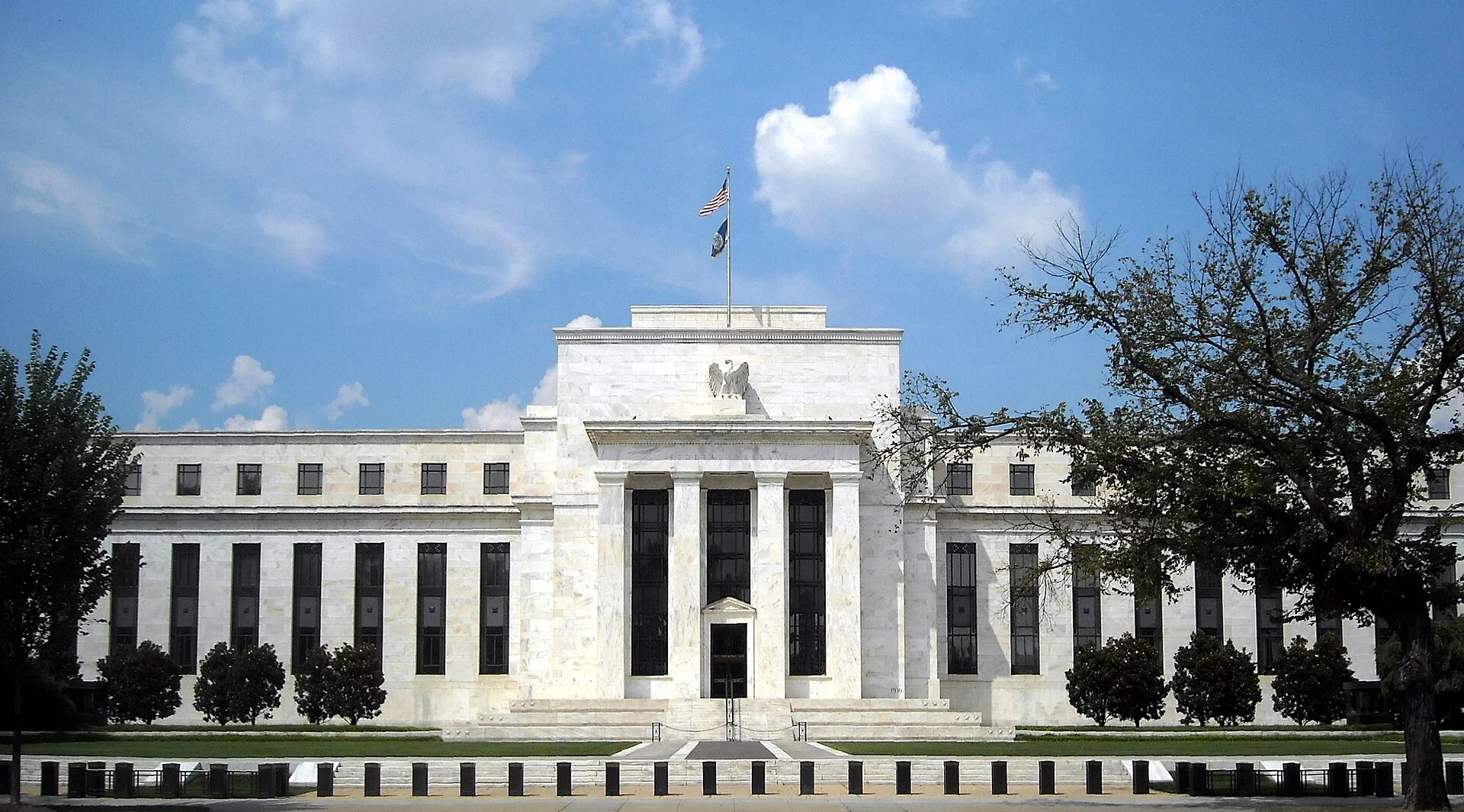
The Senate confirmed Kevin Warsh as the next chair of the Federal Reserve at 54-45 on Wednesday afternoon — the narrowest margin in the position’s history, and the first time in the modern era that a Fed chair was confirmed on a vote that split essentially along party lines.
Only one Democrat, Pennsylvania Senator John Fetterman, voted with all 53 Republicans to confirm Warsh. The 44 remaining Democrats and one independent voted no. The vote came two days before Jerome Powell’s term as chair expires Friday, ending an eight-year tenure that began with a 84-13 confirmation in 2018 and is closing with one of the most contested chairmanship handoffs in the central bank’s 111-year history.
The historical narrowness of Wednesday’s vote is not just a procedural detail. The Federal Reserve’s principal tool for managing inflation has never been the federal funds rate alone — it has been the credibility of the institution that sets it. When markets believe the Fed will use whatever rate is required to meet its 2 percent inflation target, inflation expectations stay anchored and the actual rate needed to hold inflation down is lower. When that belief weakens, expected inflation drifts up, and the Fed has to raise nominal rates further — or hold them higher for longer — to deliver the same real outcome.
A 54-45 vote is itself information about that belief. By Friday morning, Warsh will be chair of a central bank whose institutional credibility has been publicly contested by 45 senators on the floor of the Senate. Markets do not need to take a position on whether Warsh will actually be independent. They need to take a position on whether anyone else will believe him.
How Narrow Is Narrow
Every Federal Reserve chair confirmed since the position required Senate approval in 1977 has been confirmed by an overwhelming margin. Paul Volcker was reconfirmed 84-16 in 1983, in the middle of the most painful disinflation in modern American history. Alan Greenspan was confirmed by voice vote in 1987 and reconfirmed without controversy through three additional terms. Ben Bernanke was confirmed unanimously in 2006 and again — albeit in a contested 70-30 vote — in 2010 at the depths of the financial crisis. Janet Yellen’s 56-26 confirmation in 2014 was, at the time, the narrowest in the position’s history.
Powell, whose nomination came up in the wake of the Tillis blockade story we covered last month, was confirmed in 2018 by 84-13 and reconfirmed in 2022 by 80-19. Warsh’s 54-45 sets a new floor — by nine votes — for a position that has, until now, been treated by the Senate as a technocratic appointment rather than a partisan one.
That treatment had a practical purpose. Bipartisan confirmation signaled to markets that the Fed chair was not the political instrument of either party. Investors, who have to plan inflation hedges and bond portfolios over years and decades, could rely on the institution’s continuity across administrations. The historic vote pattern was the institutional embodiment of an unwritten agreement: presidents nominate, both parties confirm, and the central bank stays out of electoral politics in exchange for the broad legitimacy that bipartisan support confers.
That agreement broke on Wednesday. It is not clear that it can be quickly repaired.
What the Margin Means for Inflation Expectations
The economic literature on Fed credibility is long and uncontested. When a central bank’s independence is doubted, two things tend to happen. First, market-derived inflation expectations rise — the gap between yields on regular Treasuries and Treasury Inflation-Protected Securities widens. Second, the term premium on long-dated bonds increases, because investors demand additional compensation for holding instruments whose real value depends on the central bank’s willingness to act decisively against inflation.
Neither effect needs to be large to be costly. A 25-basis-point increase in 10-year inflation expectations, sustained over time, requires the Fed to keep nominal rates roughly that much higher to deliver the same real outcome. For mortgage borrowers, business investors, and the federal government refinancing trillions in debt each year, that gap is real money.
Warsh has been careful in his public statements. At his April 21 confirmation hearing he told Senator John Kennedy of Louisiana he would not be the president’s “human sock puppet,” and he stated explicitly: “The president never asked me to predetermine, commit, fix, decide on any interest rate decision in any of our discussions, nor would I ever agree to do so.” Those were the right words. They were also said before the 54-45 vote made the credibility question a structural one rather than a personal one.
The question Warsh now inherits is not whether he intends to be independent. It is whether markets will treat his intentions as predictive when half the Senate’s confirmation vote was a statement that they don’t.
The Inflation Backdrop Warsh Walks Into
The economy Warsh inherits Friday is not the abstract one of an undergraduate macroeconomics textbook. It is the specific one of May 2026, with oil prices structurally elevated by the closure of the Strait of Hormuz and the Iran war. Aramco’s chief executive warned this week that oil markets may not normalize until 2027 if the Hormuz disruption persists. U.S. retail gas prices are above $4.50 per gallon, and Congress is now actively considering a federal gas tax suspension precisely because energy-cost passthrough is reaching households at a scale the political system cannot ignore.
That is the inflation profile Warsh has to navigate. Energy-driven supply-side inflation is the textbook hard case for a central bank: cutting rates does nothing to bring more oil to market, and holding them firm imposes pain on demand that has nothing to do with the supply shock that started the problem. The Federal Reserve’s March economic projections, finalized under Powell, signaled exactly one rate cut for 2026 with significant uncertainty on timing. Futures markets are currently pricing slightly less — perhaps no cut at all in the first half of the year.
President Trump has been demanding rate cuts publicly for more than a year. The political pressure on Warsh, from the day he takes office, will be to deliver the cut. The economic case argues against it. The bipartisan support that would have given a Fed chair some political cover to make the hard call no longer exists.
Warsh’s first Federal Open Market Committee meeting as chair is scheduled for June 16-17. The decision that meeting produces will be parsed not only for its monetary content but for what it reveals about how the chairman handles his first concrete test of independence. A cut will be characterized as accommodating Trump. A hold will be characterized as defying him. The only escape from that frame is for the decision to be so transparently grounded in incoming data that the political read becomes harder to sustain.
The Fetterman Vote and What It Signals
Senator Fetterman’s decision to break with his caucus is, on one reading, idiosyncratic. He has spent the past two years describing himself as increasingly out of step with the Democratic Party — most recently in a Bill Maher appearance last week where he called himself “lonely” in the caucus and described a Democratic shift on Israel, border security, and government shutdown brinksmanship that he no longer aligns with.
On a deeper reading, his crossover vote illuminates the constraint the Fed now operates under. Fetterman’s stated rationale — that he met Warsh, that he found him transparent, that he believed the independence commitment — is exactly the analysis bipartisan confirmation has historically rested on. Forty-four other Democrats made the same evaluation and reached the opposite conclusion. The split is not about Warsh’s record at the Fed from 2006 to 2011, his Hoover Institution writing, or his April 21 testimony. It is about whether any nominee chosen by Trump, regardless of substance, can be confirmed by Democrats while Trump is publicly demanding rate cuts.
That structural condition does not disappear when Warsh takes office. Senator Elizabeth Warren and other Democrats noted in floor speeches that a separate Justice Department investigation of Fed Governor Lisa Cook remains open, even after the DOJ’s probe of Powell was closed in April. The threat that Tillis cited when he blocked Warsh in February — that the executive branch could weaponize federal prosecutors against Fed officials — has not been fully resolved. It has only been resolved with respect to one particular case.
Friday and June
Powell’s chairmanship ends Friday. Warsh’s begins. Between then and the June 16-17 FOMC meeting, the Fed will issue several speeches and minor procedural communications — none of them market-moving on their own, all of them watched closely for tonal shifts.
The actual price discovery will start Friday morning. Bond markets will price what they think the new equilibrium of Fed credibility looks like. Equity markets will price the rate path that comes with it. The dollar will price the international read on whether the U.S. central bank has become structurally more political.
None of those prices need to move dramatically for the 54-45 vote to matter. They only need to move enough to register that something about the institution has changed.
Sources 6 cited · 2 primary
- Senate Confirms Kevin Warsh as Fed Chair, 54-45
- Fetterman Statement on Vote to Confirm Kevin Warsh as Federal Reserve Chair
- Kevin Warsh wins Senate confirmation as the next Federal Reserve chair
- Senate confirms Kevin Warsh as next chair of the Federal Reserve
- Senate Confirms Warsh to Lead Fed in Narrowest-Ever Vote
- Warsh confirmed as Fed chair as Trump allies warn on rate cuts
American Courant cites its sources and links to primary documents where they exist. How we report →