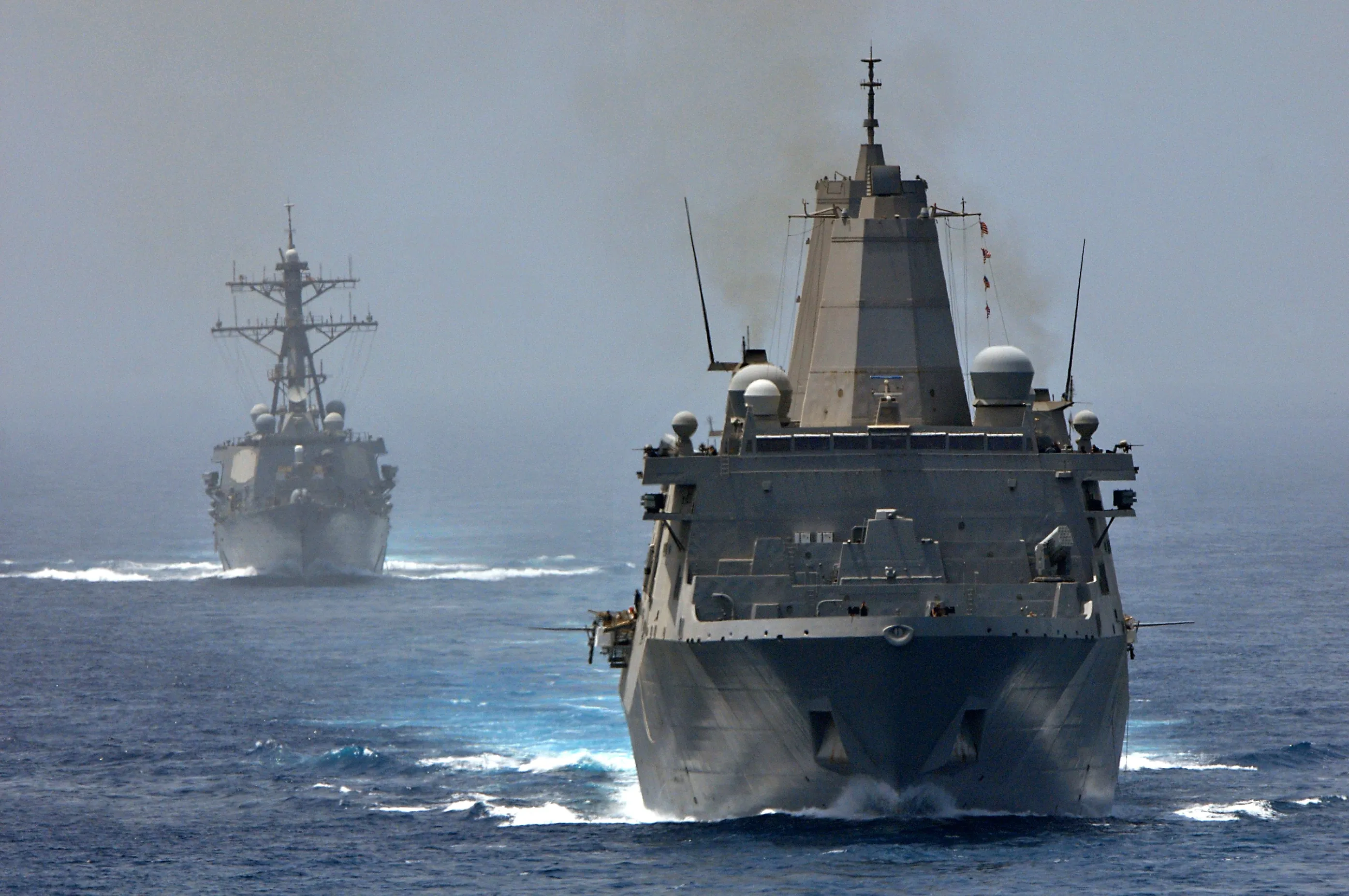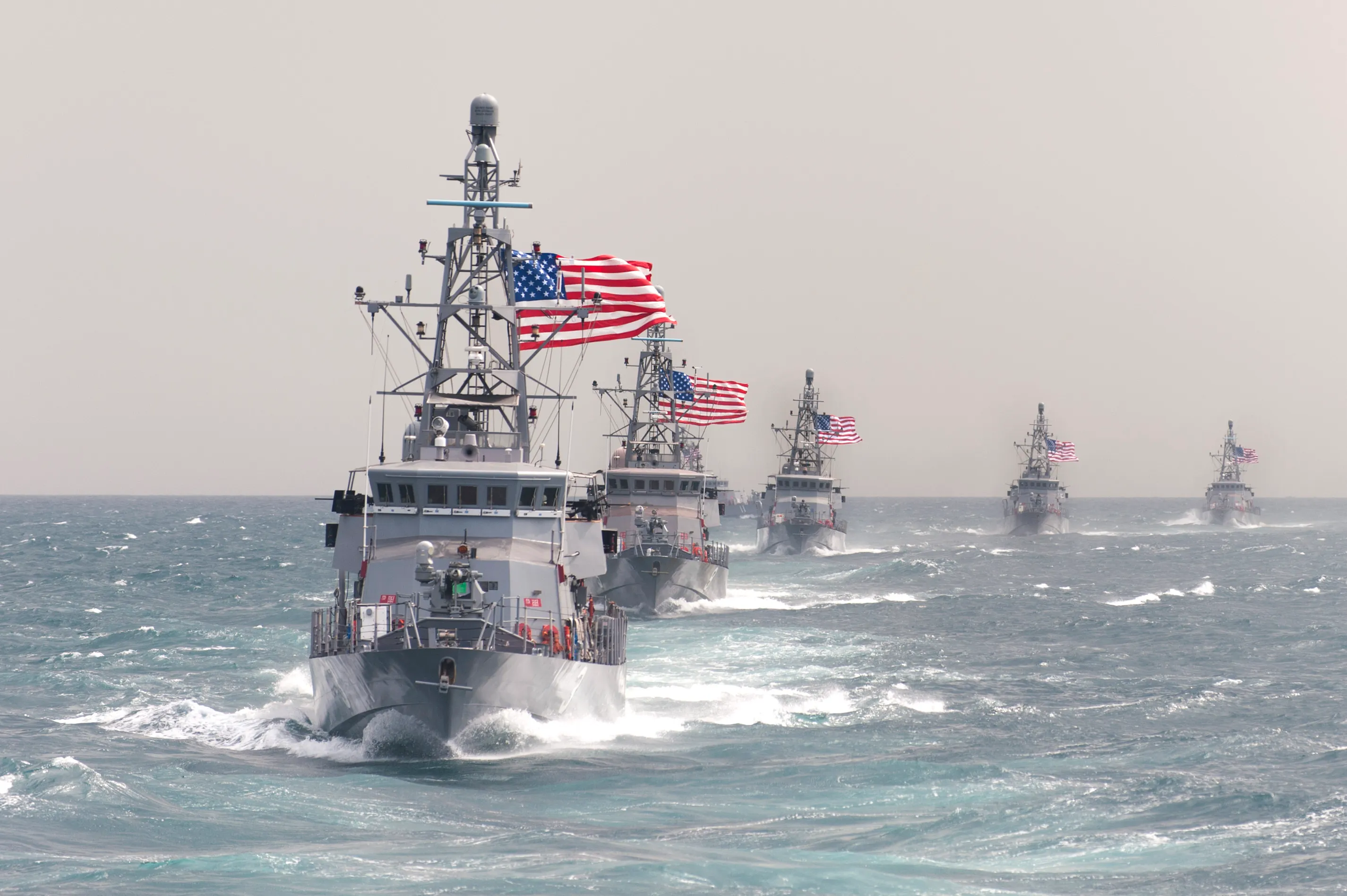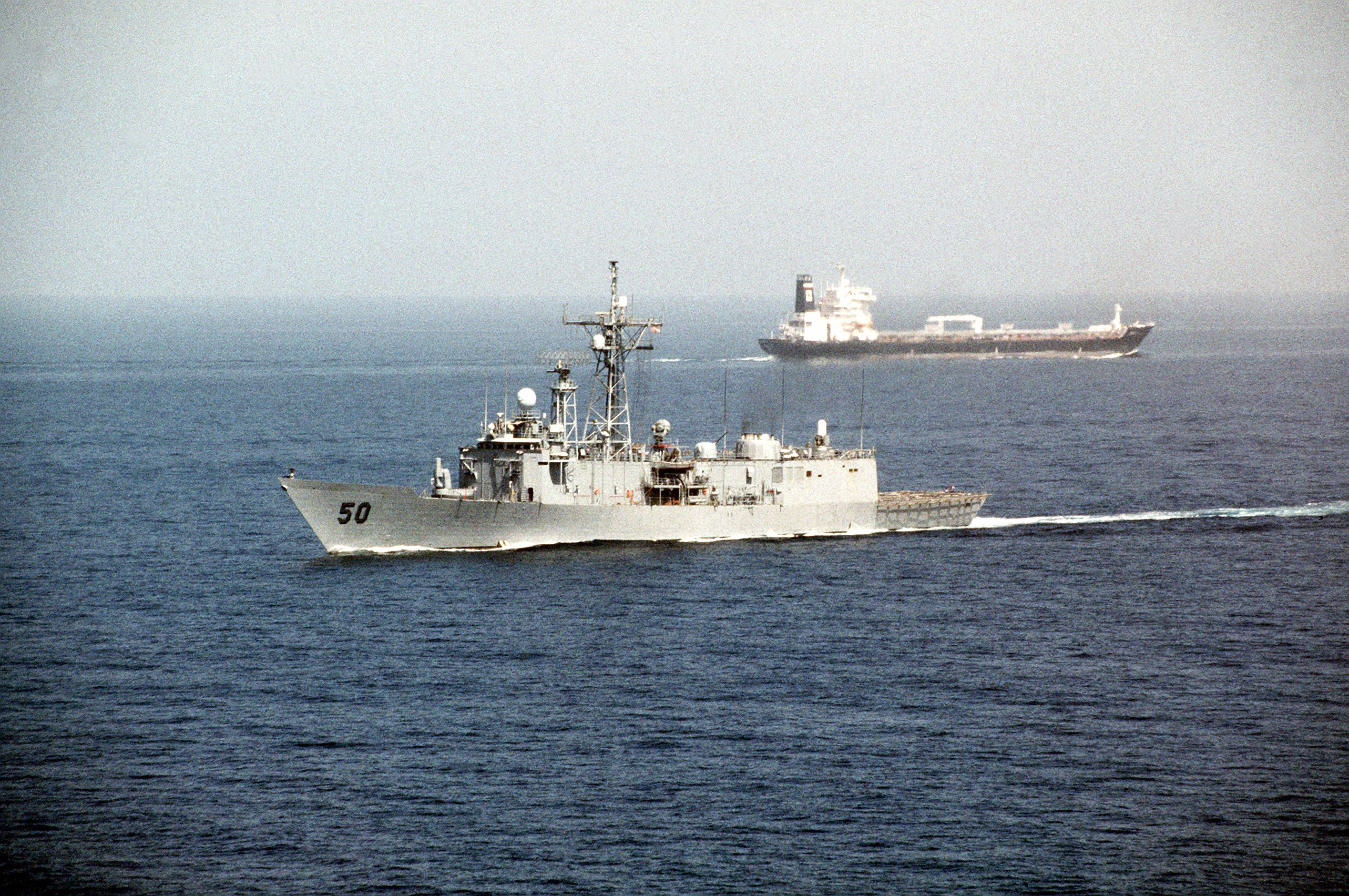
Iran’s Islamic Revolutionary Guard Corps Navy placed forces guarding the Strait of Hormuz on “maximum combat readiness” Friday afternoon, hours after the United States cast the sole veto on a United Nations Security Council resolution calling for an immediate ceasefire and de-escalation following Israel’s predawn airstrike on Iran’s Abadan refinery.
The parallel announcements — the IRGC statement arriving at 3:47 p.m. New York time, the Security Council vote finishing just over two hours earlier — marked the sharpest single-day escalation since the Israeli strike on Abadan triggered a 10-percent WTI oil spike and a 722-point Dow drop earlier on Friday. The Qatari LNG tanker that had made the Strait’s first commercial crossing since the war began last week reversed course before nightfall, according to two shipping industry officials with knowledge of its position.
The IRGC statement was read on Iranian state television by Rear Admiral Ali Reza Tangsiri, the IRGC Navy commander. Tangsiri said naval units across the Persian Gulf, the Strait of Hormuz, and the Gulf of Oman had been placed at their highest operational level — “code red, consistent with active defense of territorial waters and national sovereignty.” He did not announce specific military actions but said Iran would “choose its own time and method” in responding to the Abadan strike, language Tehran uses to signal that a response is coming while leaving the timing and form unspecified.
The U.N. Security Council Session
The Security Council convened at 2:00 p.m. Eastern time at Iran’s request, the sixth emergency session called in connection with the Iran conflict since February 28. Britain, France, and Germany jointly sponsored a draft resolution calling for “an immediate and unconditional cessation of all hostilities between Israel and the Islamic Republic of Iran,” the resumption of commercial shipping through the Strait of Hormuz under a U.N.-monitored protocol, and a return to diplomatic talks within 15 days.
The draft drew 12 votes in favor. Russia and China, which in April had vetoed a U.S.-backed Hormuz shipping resolution, voted for the European text on Friday — a reversal that analysts attributed to the opportunity to isolate the United States diplomatically in the same session where Washington would have to stand alone against a broadly supported measure. The United States cast the sole negative vote.
U.S. Ambassador Linda Thomas-Greenfield delivered Washington’s explanation of vote before the final tally. The resolution, she said, “conflates a precision military operation by a treaty ally with Iran’s sustained campaign of aggression against regional shipping and civilian infrastructure.” She argued that a ceasefire framework not conditioned on Iran halting its uranium enrichment and curtailing its support for Houthi operations in Yemen would lock the region into an arrangement that served Tehran’s interests rather than the international community’s. “This is a resolution that invites Iran to continue its nuclear ambitions while demanding Israel stop defending itself,” Thomas-Greenfield said.
Iran’s U.N. Ambassador Saeid Iravani called the veto “an act of complicity in war crimes” and said the United States had chosen “the side of burning oil refineries over international law.” Russia’s Ambassador Vasily Nebenzya said the outcome had “confirmed that one permanent member has reduced the Security Council to an instrument of its own alliance.”
Why the U.S. Is Also Drafting Its Own Resolution
The American position in New York is more layered than a flat veto. State Department officials, speaking on background Friday evening, said the United States has spent the past week circulating a competing draft resolution that would create a U.N.-monitored humanitarian corridor through the Strait while requiring Iran to halt enrichment activities as a precondition for full commercial transit restoration. Secretary of State Marco Rubio said this week that such a resolution would be a test of the United Nations’ “utility” in managing the crisis.
The Abadan strike complicated that timeline. Rubio told reporters Friday that the United States would not advance its own resolution while simultaneously asking allies to absorb an Israeli action Washington had declined to explicitly endorse or condemn. “We are not in a position to set the agenda at the council this week,” Rubio said, “but we will be.”
French Foreign Minister Jean-Noël Barrot said in a statement Friday evening that Europe was “urgently consulting allies on a revised text” and expected to circulate new language within 48 hours. Germany’s foreign ministry confirmed its involvement in those consultations. Whether a revised European draft can attract sufficient council support — and survive a U.S. veto over the enrichment precondition language — remains the key diplomatic variable heading into the weekend.
U.S. Military Repositioning
U.S. Central Command confirmed Friday afternoon that the USS Abraham Lincoln carrier strike group, operating in the central Arabian Sea since mid-April, was repositioning toward the entrance of the Persian Gulf “consistent with enhanced freedom-of-navigation operations.” CENTCOM’s statement did not disclose the carrier group’s coordinates or timeline but said U.S. forces remained “ready to respond to any attempt to close or further restrict” the Strait.
The move mirrors the pattern following Iran’s April missile-and-drone attack on the UAE’s Fujairah oil zone, when the carrier group moved within approximately 150 nautical miles of the Strait entrance for 72 hours before returning to open ocean after the ceasefire announcement. Whether Friday’s repositioning represents deterrence, contingency staging, or the precursor to a direct military operation is not indicated in publicly available information. The CENTCOM statement used the phrase “freedom-of-navigation operations,” which in U.S. military doctrine typically refers to transit rights rather than combat posture.
Tanker Insurance and Shipping
The commercial impact of the IRGC alert was immediate. Lloyd’s Market Association’s Joint War Committee had added the Persian Gulf and Gulf of Oman to its Hull War Listed Areas on Thursday following the Abadan strike; Friday’s IRGC announcement drove Hormuz war-risk premiums to approximately double their Thursday-close level, according to two marine insurance brokers who spoke with Bloomberg. At Friday’s rates, the additional daily insurance cost for a very large crude carrier transiting the Strait has risen to roughly $350,000, translating to approximately $1.25 per barrel in effective added cost for Gulf-sourced crude before any physical hazard to the vessel is factored.
Four LNG carriers that had been routing toward the Strait reversed course and anchored off Oman following the IRGC statement, according to vessel-tracking data cited by Reuters. The Qatari tanker’s reversal was confirmed separately by the two shipping officials. QatarEnergy did not respond to a request for comment on the vessel’s status.
Oil futures in after-hours trading showed a modest extension of Friday’s gains: WTI edged to $101.15 a barrel, Brent to $103.90. The day’s principal move had already happened during exchange hours, when WTI closed up 10.2 percent — its largest single-session gain since the war began. The Aramco CEO’s late-April warning that oil markets face irreversible supply disruption if the Strait closes for an extended period looks considerably less theoretical on Friday night.
Trump’s Response from Beijing
Trump, speaking briefly with reporters in Beijing before his second scheduled session with President Xi Jinping on Saturday, called the Security Council outcome “unfortunate” and said the United States expected “all parties to exercise maximum restraint.” He did not address the American veto directly, comment on the IRGC naval alert, or indicate whether the Beijing summit agenda would shift to address the Abadan fallout.
The question of whether Trump will use the summit’s second day to press Xi for Chinese involvement in de-escalating Iran — a scenario the White House has discussed privately, according to administration officials — has now become the most closely watched diplomatic variable of the weekend. China imports roughly 40 percent of its oil through the Strait. Its interests in keeping it open are substantial, even as its decision to vote for the European ceasefire resolution on Friday suggests it is willing to use the crisis to complicate U.S. standing at the U.N.
Iran has not announced any specific military action since the IRGC alert. The maximum-readiness designation gives Tehran the domestic political cover and operational positioning to escalate — another infrastructure strike in the Gulf, a partial Strait closure, a drone campaign against tanker traffic — without binding itself to a particular move or timeline. Whether that posture shifts into action, and when, is the central question the weekend will not answer.
Sources 6 cited · 2 primary
- U.S. CENTCOM Statement on USS Abraham Lincoln Carrier Strike Group Operations, May 15, 2026
- Security Council Press Release SC/16438 — Emergency Session, Situation in the Middle East, 15 May 2026
- Explanation of Vote on a U.N. Security Council Resolution on the Situation in the Middle East — May 15, 2026
- Iran's IRGC places Strait of Hormuz forces on maximum combat readiness after Abadan strike
- Hormuz war-risk premiums double as Iran alerts naval forces after Abadan refinery strike
- U.S. vetoes U.N. ceasefire resolution as Iran warns of Hormuz response
American Courant cites its sources and links to primary documents where they exist. How we report →