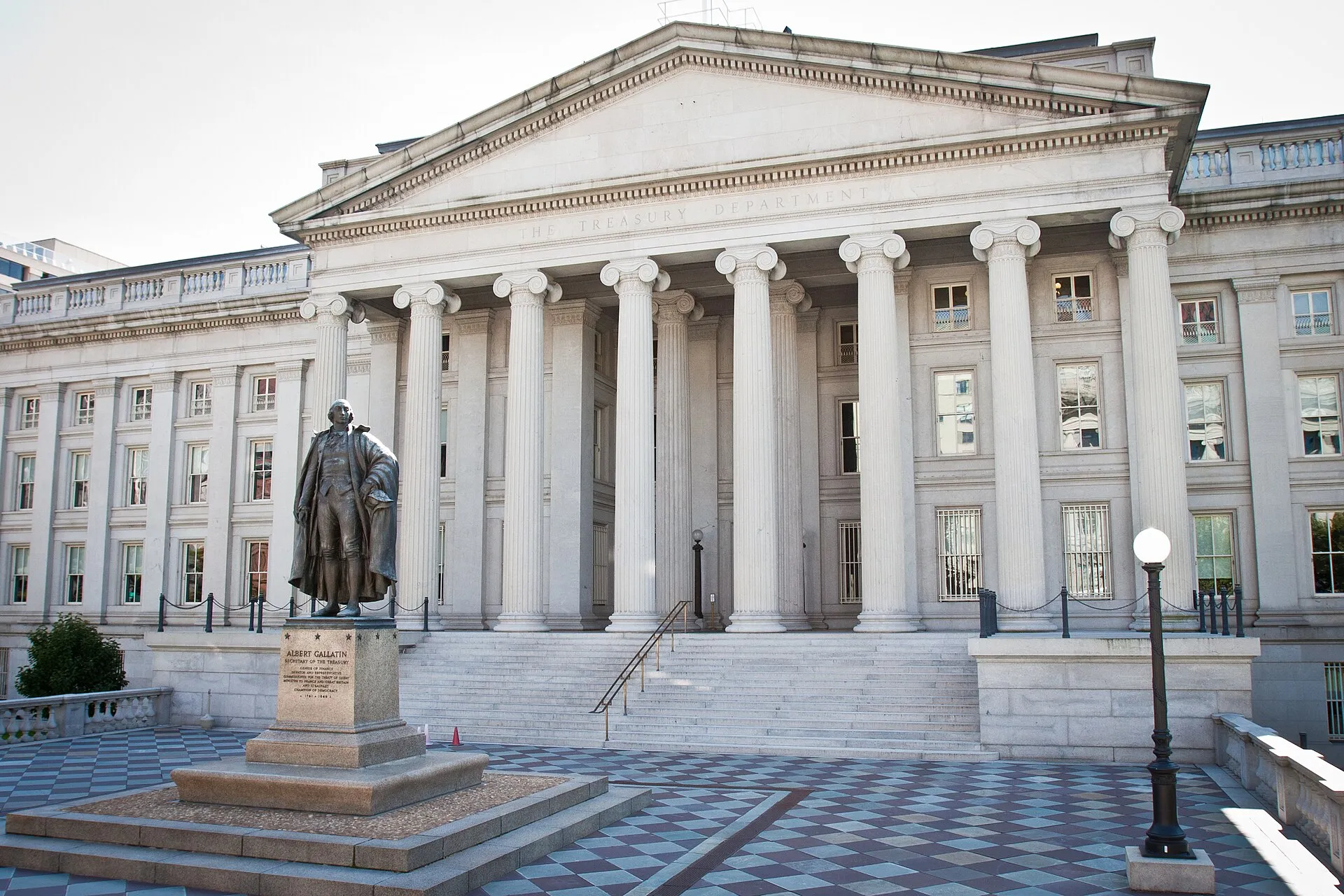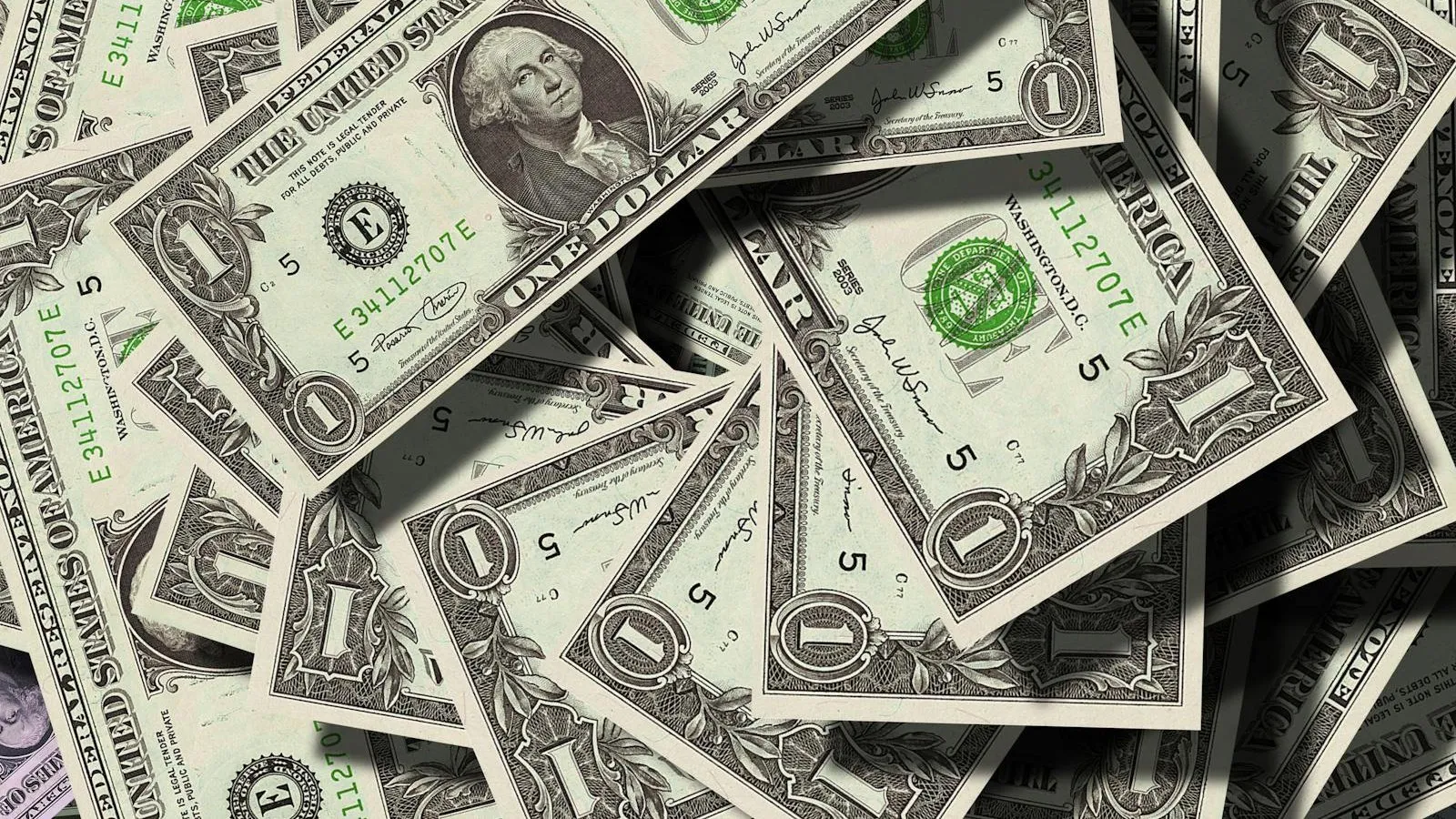
The Treasury Department is preparing to print a $250 bill bearing President Trump’s face and is waiting only for Congress to authorize it, Treasury Secretary Scott Bessent confirmed Thursday — an extraordinary acknowledgment that the federal government’s currency printer has been laying the groundwork to put a sitting president on American money for the first time in the nation’s history.
The disclosure followed a Washington Post investigation, published Thursday, reporting that political appointees at the Treasury had been driving an effort to produce a commemorative $250 note tied to the country’s 250th anniversary. Pressed on the report at the White House daily briefing, Bessent did not deny it. He said there was “nothing untoward” about putting the president on a bill marking the semiquincentennial.
The plan runs directly into a law that has governed U.S. currency for more than a century and a half — one that bars any living person from appearing on it. Whether the bill is ever printed now depends on whether Congress is willing to carve out an exception for Donald Trump.
The bill that would make it legal
The legislative vehicle already exists. In February 2025, Rep. Joe Wilson (R-S.C.) introduced the Donald J. Trump $250 Bill Act, which would direct the Bureau of Engraving and Printing to design and print a $250 bill of legal U.S. tender bearing Trump’s image. The measure would also create an exemption to the 19th-century prohibition on living figures, allowing anyone who has served as president to appear on currency.
The bill was referred to the House Committee on Financial Services when it was introduced and has sat there without action since. In other words, the authorizing legislation that the Treasury says it is waiting for has shown no movement in more than a year, even with Republicans controlling the chamber.
An 1860s rule — and a missing denomination
The central obstacle is statutory. Federal law, codified at 31 U.S.C. § 5114, states plainly: “Only the portrait of a deceased individual may appear on United States currency and securities.” That is why every face on circulating American money — George Washington on the $1, Abraham Lincoln on the $5, Benjamin Franklin on the $100 — belongs to someone long dead.
The restriction dates to the 1860s. Spencer Clark, the first superintendent of what became the Bureau of Engraving and Printing, placed his own likeness on a five-cent fractional note and put Treasurer Francis E. Spinner on the fifty-cent note. The self-dealing prompted Congress to write the living-person ban into law, a prohibition that has stood ever since.
There is a second legal problem, separate from whose face goes on the bill: the denomination itself. As Axios noted, the authorized denominations of U.S. paper currency — $1, $2, $5, $10, $20, $50 and $100 — do not include a $250 note. Creating one would require Congress to amend the law a second time. To print the bill as envisioned, lawmakers would have to clear both hurdles at once: legalize a living president on currency and authorize an entirely new denomination.
What the Bureau has already done
What makes the episode unusual is not that a member of Congress filed a flattering bill — those are common — but that the executive branch appears to have begun preparing to execute it before any such bill became law.
In a statement, the Treasury said: “Should this legislative mandate be signed into law, the BEP is moving proactively to produce a $250 commemorative note which will appropriately recognize the 250th Anniversary of our great nation.” According to ABC News, the push inside the department was led by U.S. Treasurer Brandon Beach and senior adviser Mike Brown, who began advancing the idea last year.
The preparations were not frictionless. According to the Washington Post and ABC News, Patricia Solimene, the director of the Bureau of Engraving and Printing, was reassigned on April 27 after raising concerns about the project. Solimene said her departure was not voluntary. The reporting cited an internal email in which she wrote that “the buck stopped here.” The Treasury characterized the Bureau’s work to date as “appropriate planning and due diligence.”
Neither the Post nor the broadcast reports described finished designs or a printed prototype $250 note entering circulation; the reporting describes planning and internal preparation, contingent on a law that does not yet exist.
‘Nothing untoward’: the briefing-room defense
Bessent’s public defense came at the White House podium on Thursday. CNN’s Kaitlan Collins pressed him on whether spending public resources to put the president’s face on new money was appropriate at a time of cost-of-living strain. Bessent held up the Washington Post article during the exchange and rejected the premise, saying he did not believe there was “anything untoward about having the president of the United States” on a bill commemorating the country’s 250th anniversary.
Democrats reacted sharply to the reporting, casting the proposal as a vanity project. The dispute over the bill is, for now, as much about optics as legality: supporters frame it as a one-time commemorative gesture for a national milestone, while critics see a sitting president steering the machinery of government toward his own image.
Part of a wider 250th-anniversary push
The $250 bill is not the administration’s first move to attach Trump’s name and likeness to the semiquincentennial. In March 2026, the Treasury said it would add Trump’s signature to commemorative banknotes honoring the anniversary — itself a first for a sitting president. ABC News reported that the U.S. Mint has been cleared to produce 24-karat gold commemorative coins, and that the State Department created limited-edition passports carrying Trump’s image.
Viewed together, the currency signature, the gold coins, the special passports and now the proposed $250 note form a pattern of official commemorations built around the current president rather than the historical figures the 250th anniversary nominally honors. That is the through-line critics point to, and the one the administration disputes.
Why it matters
The fight lands against a strained fiscal backdrop that critics say makes the optics worse. Net interest on the national debt has climbed past what the United States spends on defense, and Moody’s stripped the federal government of its last AAA credit rating earlier this year, citing the trajectory of federal borrowing. A high-denomination commemorative bill would do nothing material to the debt, but it sharpens a political contrast the administration’s opponents are eager to draw.
There is also a practical dimension. A $250 note, if it ever circulated, would be the largest-denomination bill the United States has issued for general use since the $500, $1,000, $5,000 and $10,000 notes were discontinued and pulled from circulation decades ago — a history that complicates any claim the new note is merely ceremonial. For broader coverage of the administration’s legislative agenda, see our Politics topic page.
What happens next
Nothing can be printed without Congress. The Donald J. Trump $250 Bill Act would have to clear the House Financial Services Committee, pass both chambers, and be signed into law — and it would need to resolve both the living-person ban and the missing denomination. As of Thursday, the measure had not advanced out of committee since its introduction more than a year earlier.
Until then, the Bureau of Engraving and Printing’s preparations remain exactly that: preparations for a bill that, under current law, it cannot legally produce. The Treasury says it is ready to move the moment Congress acts. Congress, so far, has not.
Sources 6 cited · 2 primary
- Wilson Introduces Legislation to Print President Trump on New $250 Bill
- 31 U.S. Code § 5114 — Engraving and printing currency and security documents
- Trump $250 bill pushed by Treasury appointees
- Trump officials push for $250 bill featuring president's face
- Scott Bessent defends Donald Trump's face on $250 bill, pans Washington Post report
- Why $250 bills bearing Trump's face are a tough legal sell
American Courant cites its sources and links to primary documents where they exist. How we report →