The U.S. private sector added 122,000 jobs in May, payroll services firm ADP reported Wednesday, the strongest single-month total since January 2025 and a result that came in ahead of analyst expectations. The gain was also unusually broad — spreading across nearly every sector and company size in a way that has been rare since tariff uncertainty clouded the hiring outlook earlier this year.
The number lands one day before the Bureau of Labor Statistics releases the government’s official May employment count on Friday morning. That report will carry more statistical weight, but the ADP release offers the clearest early read on whether the labor market held steady as businesses absorbed the accumulated pressure of tariffs on imported goods and rising energy costs tied to the ongoing conflict in the Middle East.
What the ADP Report Found
The 122,000 figure exceeded a Wall Street consensus estimate of around 110,000 to 115,000 and came in sharply above April’s downwardly revised 105,000, itself a disappointment at the time. May’s result pushed the five-month total for 2026 private-sector hiring to roughly 548,000 — an average of about 110,000 per month, a pace consistent with a slowly cooling but stable labor market.
Nela Richardson, chief economist at ADP, called the breadth of the gains unusual. “Hiring was more broad-based in May than we’ve seen in the last few years,” she said in the release. “The labor market continues to show sustained momentum going into the summer hiring season.”
Education and health services led all sectors with 57,000 new positions — a pattern that has persisted throughout 2026 as demand for healthcare workers outpaces the broader economy. Trade, transportation, and utilities, the sector most exposed to tariff pressure on imported goods and global shipping, still added 36,000 jobs, a sign that logistics companies have not yet pulled back sharply on staffing despite supply-chain headwinds.
Professional and business services added 11,000 positions. Construction and leisure and hospitality each gained 8,000. Financial activities grew by 7,000, and manufacturing added a modest 3,000.
The lone sector contraction was in information services, which shed 9,000 positions — a decline economists have noted in recent months as companies in software, media, and communications continue reducing staff, in part because automation and artificial intelligence tools are absorbing tasks that previously required additional hires.
Small Businesses Drove the Gain
The May report was notable not just for the headline number but for where the hiring came from. Companies with fewer than 50 employees accounted for 67,000 of the 122,000 positions added — a disproportionately large share that suggests small-business owners, who often delay hiring decisions when the economic outlook is uncertain, grew more confident during May.
Large employers with 500 or more workers added 40,000 jobs. Mid-size companies contributed 17,000.
Small-business hiring has been a closely watched indicator because it reflects conditions on Main Street rather than in corporate headquarters. Small employers typically have less pricing power and less access to capital, meaning they feel tariff-related cost increases more acutely. Their willingness to add workers in May signals that the immediate shock of new trade barriers has not yet translated into broad layoffs or hiring freezes at the smallest businesses.
Pay Growth Held Steady
Annual pay growth for employees who stayed in their jobs came in at 4.4% in May — unchanged from April and from prior months. For workers who switched jobs, pay growth edged up slightly to 6.5%, a figure that remains elevated but has been trending down from a peak of nearly 8% in late 2022.
The 4.4% pace of pay growth for job-stayers is above the Federal Reserve’s preferred rate of wage inflation but well below the 6% to 7% levels that were causing concern about a price-wage spiral in 2022 and 2023. The figure will matter at the Fed’s next meeting, where officials will weigh whether the labor market is loose enough to begin cutting interest rates or tight enough to argue for keeping them on hold.
For now, the labor market’s persistence — adding jobs at a slower but steady pace even amid major geopolitical uncertainty — has reduced the urgency of rate relief. Markets have been pricing in no more than one or two rate cuts from the Fed for the remainder of 2026, depending on how inflation data evolves.
The Tariff Test
May’s result was the clearest evidence yet that the U.S. labor market has weathered the first major wave of tariff increases without the kind of immediate disruption some economists warned about in early 2026. The proposed tariffs on 60 economies over forced labor trade practices announced last week represent another layer of potential cost pressure, but the effects of trade barriers on employment tend to be delayed — businesses typically absorb higher input costs for months before cutting workers.
The Middle East conflict has complicated the energy picture: higher oil prices have raised transport costs and affected business confidence. But the ADP report found that these pressures had not slowed hiring materially through May. The trade, transportation, and utilities sector gain of 36,000 is particularly notable given that shipping costs have risen.
The April BLS report that counted 115,000 jobs added remained the official baseline entering Friday’s release. ADP and BLS often diverge — sometimes by as much as 50,000 in a given month — because they measure different populations and use different methodologies. ADP counts private payrolls processed through its own systems; BLS conducts a separate survey of employers and a household survey of workers.
What to Watch Friday
The May Employment Situation report from the Bureau of Labor Statistics is scheduled for release at 8:30 a.m. Eastern on Friday, June 5. Beyond the headline payroll number — where the consensus expectation was around 95,000 ahead of ADP’s release Wednesday — there are three figures worth watching closely.
The first is the unemployment rate. April’s rate of 4.3% was the highest in two years. Any move higher would shift the narrative from “soft landing” to “labor market deteriorating,” which would push rate-cut expectations forward and put downward pressure on stocks.
The second is labor force participation. If participation drops, a stable unemployment rate becomes less meaningful — it would mean people are dropping out of the workforce rather than finding jobs. Immigration restrictions implemented earlier this year have already begun to slow labor force growth in certain regions and industries.
The third is average hourly earnings growth. At 4.4% year-over-year in April, wage growth is uncomfortably above the pace consistent with 2% inflation. Any acceleration would strengthen the case for the Fed to keep rates higher for longer.
Background: Where the Economy Stands
The U.S. economy entered June in a position that defies easy summary. Growth slowed in the first quarter, inflation has ticked back up partially because of tariff-related price increases, and the ongoing conflict in the Gulf has pushed energy prices higher than they were a year ago. At the same time, the job market has proved more durable than many forecasters expected.
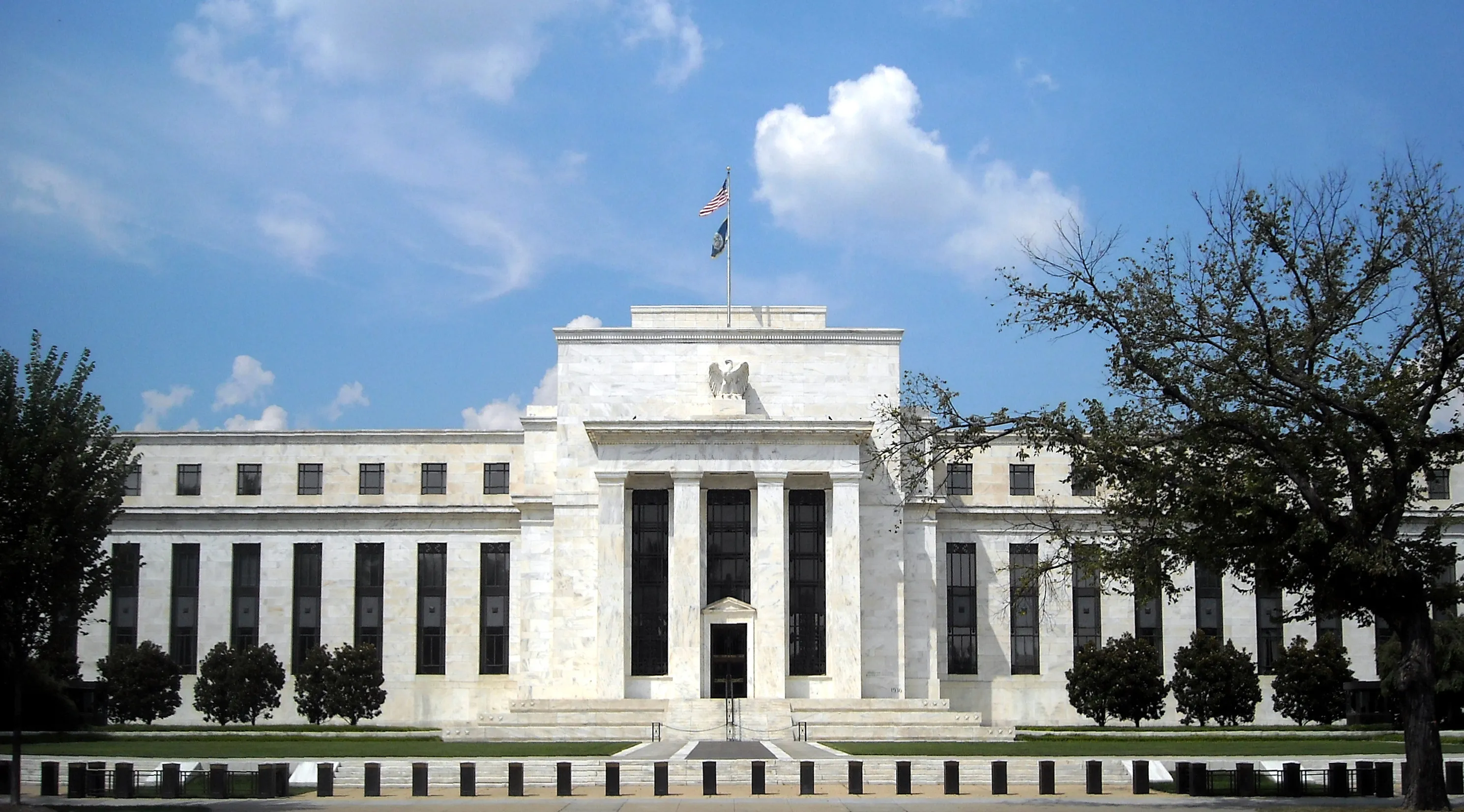
Newly confirmed Fed Chair Kevin Warsh — confirmed 54-45 in the narrowest Fed chair vote in modern history — has signaled he will keep a close eye on labor market conditions before adjusting policy. A strong May jobs report from BLS on Friday would likely push any rate cut into late 2026 at the earliest. A weaker-than-expected report could accelerate the timeline.
ADP’s 122,000 for May suggests the labor market remains resilient enough to argue against an immediate rate cut — but not so overheated that the Fed needs to tighten further. For now, the economy appears to be holding the line.
What Comes Next
The June jobs report, covering June employment conditions, will be released in early July. Between now and then, several other data points will give economists more texture: the weekly initial jobless claims reports, the Job Openings and Labor Turnover Survey (JOLTS), and readings on inflation from the Consumer Price Index and Personal Consumption Expenditures index.
The bigger question heading into summer is whether May’s relative resilience holds through the second half of 2026. New tariff rounds, if implemented at the levels proposed, will add cost pressure to retailers and manufacturers in the fall. The labor market’s response to that pressure — and whether it shows up in hiring decisions in July, August, and September — will determine whether the Fed has room to act before year-end.
Sources 5 cited · 3 primary
- ADP National Employment Report: Private Sector Employment Increased by 122,000 Jobs in May; Annual Pay was Up 4.4%
- ADP National Employment Report: Private Sector Employment Increased by 109,000 Jobs in April
- Employment Situation Summary — April 2026
- Private payrolls grew by 122,000 in May, stronger than expected, ADP reports
- Top Economic Data to Watch Week of June 1, 2026
American Courant cites its sources and links to primary documents where they exist. How we report →