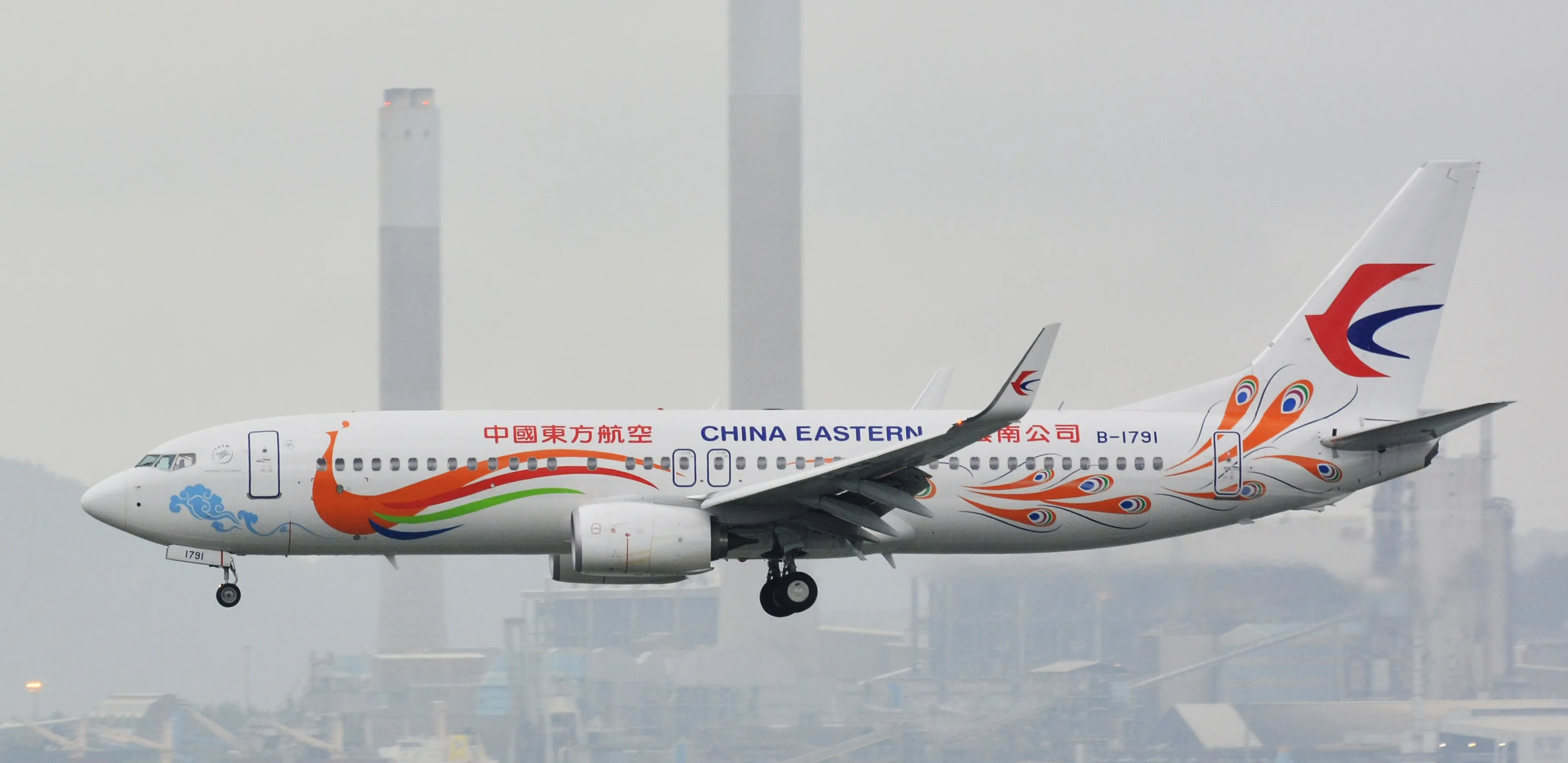
On April 29, 2026, the U.S. National Transportation Safety Board released technical documentation from the investigation of China Eastern Airlines Flight MU5735 — the Boeing 737-800 that dove from cruise altitude and struck a mountain in Guangxi Province on March 21, 2022, killing all 132 people aboard. The materials, posted publicly on May 1, include a combined cockpit voice and flight data recorder download report, email correspondence between the NTSB and China’s Civil Aviation Administration of China, and a July 2022 data-download report.
They represent the most substantive technical account of the crash made available to the public. They were released not at China’s initiative, but in response to a Freedom of Information Act request filed in January 2026 by a private Chinese citizen.
More than four years after the deadliest aviation accident in China in two decades, the CAAC has not published a final investigation report.
Confirmed Facts
The NTSB released the documents under investigation docket DCA22WA102. The combined recorder report was prepared by a team of four NTSB engineers led by Charles Cates, working alongside six CAAC officials. The joint preparation of the report confirms ongoing technical cooperation between the two agencies during the early phase of the investigation. The release includes NTSB–CAAC email correspondence; the contents of that correspondence have not been separately summarized by either agency.
The flight data recorder — recovered from the debris field in the days after the crash — captured the following sequence at approximately 29,000 feet during cruise:
- The fuel control switches on both engines moved from the “run” position to “cutoff” within approximately one second.
- The autopilot disengaged at essentially the same moment.
- Approximately three seconds later, the flight controls were pushed forward, applying nose-down pitch input described in reporting as “violent.”
These are the documented contents of the FDR as reported by CNN, FlightGlobal, AeroTime, and AVweb, each of which reviewed the NTSB materials after they circulated publicly in late April and were formally posted in early May.
The CAAC’s April 2022 preliminary report — the agency’s most detailed public accounting of the investigation — found no faults or abnormalities in the aircraft’s systems, structures, or engines before takeoff. It found no abnormalities in radio communications or control commands prior to the crash. The crew held valid licenses, had adequate rest, and passed health checks. That preliminary report has not been superseded by a final one.
What Aviation Analysts and Outlets Concluded
The May 2026 coverage drew a consistent analytical conclusion: the sequence documented in the FDR data — fuel switches on both engines cutting simultaneously, followed by sustained nose-down control input — is not consistent with a mechanical failure or an accident in the ordinary sense.
CNN’s May 4 headline stated the data “bolsters claim China Eastern plane was deliberately crashed.” FlightGlobal and AeroTime reported that aviation safety analysts they consulted described Boeing 737 fuel control switches as requiring a deliberate physical action — they “cannot move accidentally,” as one analyst put it.
Other outlets, including SimpleFlying, applied caution. The FOIA materials are not a final accident report, they noted, and do not by themselves establish intent or identify who operated the controls. The NTSB’s role in the investigation was as an accredited representative under ICAO Annex 13 protocols — assisting the Chinese-led inquiry by virtue of Boeing’s status as the aircraft’s manufacturer. The determination of cause belongs formally to the CAAC.
The NTSB has not publicly characterized the significance of the data.
Four Years Without a Final Report
Under Article 26 of the Chicago Convention on International Civil Aviation and ICAO Annex 13, the investigating state is required to publish a final accident report within 12 months. When that deadline cannot be met, annual interim progress reports are required. The CAAC has met neither obligation.
On March 21, 2025 — the three-year anniversary of the crash — the CAAC did not publish a report or a public update. When a member of the public submitted an open-government-information request asking why, the CAAC responded in May 2025 that releasing an interim investigation report could “endanger national security and societal stability.” No elaboration was provided.
Following the NTSB FOIA release, Reuters requested comment from both the CAAC and China Eastern Airlines. Neither responded. At a regular press briefing in May 2026, a spokesperson for China’s Ministry of Foreign Affairs declined to answer a question about the U.S. documents and their implications for the investigation.
The missed deadlines are not unusual in global aviation investigation practice — complex crashes routinely exceed the 12-month target. The Air France Flight 447 investigation, which involved an Airbus A330 lost in the South Atlantic in 2009 under circumstances that were initially baffling, took four years to produce a final accident analysis. What is unusual in the MU5735 case is the combination of the exceeded timeline, the absence of any public interim reports, and the explicit statement from the investigating authority that it will not publish because of national security and social stability considerations.
Background: The Flight and the Aircraft
Flight MU5735 departed Kunming Changshui International Airport on the morning of March 21, 2022, bound for Guangzhou Baiyun International Airport. It carried 123 passengers and 9 crew members. The aircraft was a Boeing 737-89P, registration B-1791, delivered to China Eastern Yunnan Airlines in June 2015 following its first flight that same month. The jet had accumulated more than 8,900 flight hours across more than 5,000 cycles.
China’s commercial aviation fleet depends heavily on Boeing’s 737 family, a commercial and geopolitical reality that has shaped how both governments have navigated the investigation. China Eastern’s parent company is state-owned.
The aircraft reached its cruising altitude normally after departure. At approximately 2:21 p.m. local time, radar contact was lost over Teng County in Guangxi Province. The plane struck a mountainside in a near-vertical trajectory. Both flight recorders were eventually recovered; the cockpit voice recorder sustained damage that limited the usable audio it yielded. The flight data recorder provided the technical data now at the center of the 2026 discussion.
It was China’s deadliest commercial aviation accident since a 1994 China Northwest Airlines crash that killed 160.
What Remains Unresolved
The NTSB FOIA release does not resolve the central questions of the MU5735 investigation. Who operated the controls in the sequence the FDR recorded — and whether those inputs were deliberate — remains officially undetermined. The CAAC holds the complete data set, including the CVR audio, and has conducted four years of investigation. Its findings have not been published.
For the families of the 132 people killed, the FOIA release produced answers to what the aircraft did in its final seconds, and deepened the question of why a sovereign aviation authority with an active investigation and a legal obligation to report has not explained it.
International aviation investigations depend on a framework of mutual disclosure and cooperation — the same framework that gave the NTSB its accredited-representative standing in this inquiry and that required CAAC officials to work alongside NTSB engineers on the joint recorder report now public via FOIA. Whether that framework has the tools to compel a state investigating authority to publish its findings is a question the MU5735 case has made newly relevant for the global aviation safety system.
Sources 7 cited · 3 primary
- NTSB FOIA Response — China Eastern Airlines Flight MU5735 (DCA22WA102): Combined CVR/FDR Download Report
- ICAO Annex 13 — Aircraft Accident and Incident Investigation, 12th Edition
- China Eastern Airlines Flight MU5735 — Wikipedia (crash background and preliminary CAAC findings)
- Flight data bolsters claim China Eastern plane was deliberately crashed in 2022
- NTSB data points to deliberate act in China Eastern crash
- China Eastern MU5735: NTSB FOIA Cracks Beijing's Silence
- 3 years on: no final report and no answers to China Eastern plane disaster
American Courant cites its sources and links to primary documents where they exist. How we report →