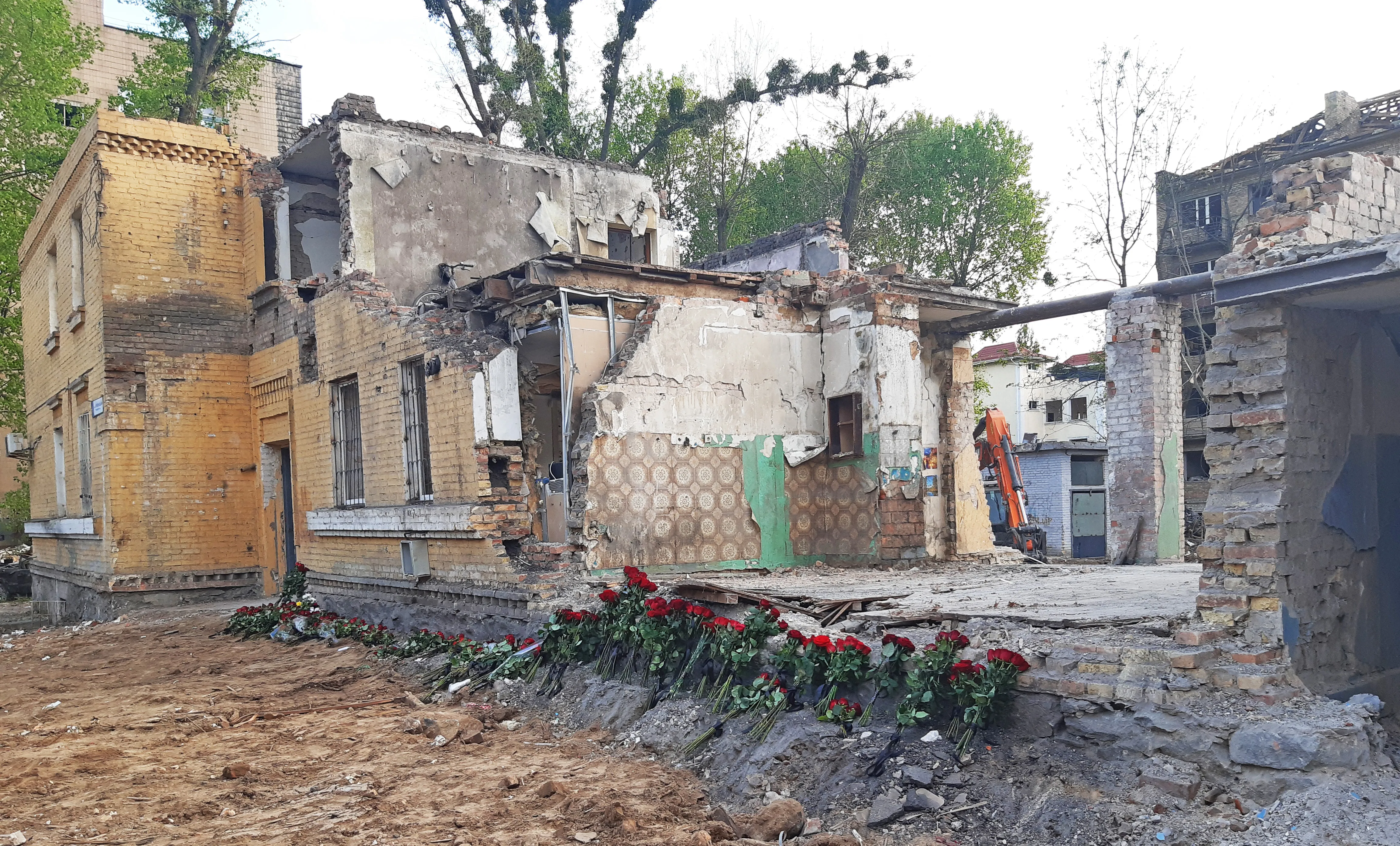
Russia’s largest aerial attack of 2026 — 600 drones, 90 cruise and ballistic missiles, and one Oreshnik hypersonic ballistic missile — struck Kyiv and the city of Bila Tserkva before dawn Saturday. The Oreshnik hit a city of roughly 200,000 people located 50 miles south of the capital, the weapon’s first confirmed use against the Kyiv metropolitan area.
European officials delivered the response the situation has produced before: condemnation, solidarity, and renewed pledges of air defense support. EU foreign policy chief Kaja Kallas described the Oreshnik’s deployment as “a political scare tactic.” French President Emmanuel Macron condemned the strike. NATO allies convened urgent consultations over the weekend.
The political framing is not wrong. Russia chose to use its most advanced conventional weapon against a population center, and the message — that no part of Ukraine is beyond reach — was deliberate. But the “political scare tactic” characterization obscures a harder military question: what, exactly, is Europe prepared to do about a weapon that NATO’s deployed interceptors were not designed to stop?
The answer, as of Monday, is less than the public statements suggest.
What the Oreshnik Is
Russia first acknowledged combat use of the Oreshnik on November 21, 2024, when it struck Dnipro in central Ukraine. President Vladimir Putin announced the weapon publicly the same day, describing it as a medium-range hypersonic ballistic missile capable of carrying multiple independently targetable warheads at speeds exceeding Mach 10 in the terminal phase of flight.
Western analysts subsequently identified the Oreshnik as a derivative of the RS-26 Rubezh — a weapon that was classified as an intercontinental ballistic missile under Cold War-era treaty counting rules, exempting it from the INF Treaty restrictions that prohibited shorter-range ground-launched ballistic missiles. When the United States withdrew from the INF Treaty in 2019, citing Russian violations, the legal basis for those restrictions evaporated. Russia converted the RS-26 airframe to carry conventional warheads and designated the result a medium-range system, a characterization Western governments dispute.
The terminal velocity claim — above Mach 10, roughly 3.4 kilometers per second — is consistent with what analysts have inferred from the weapon’s limited combat use and with the performance characteristics of the RS-26 family. The Oreshnik can also be flown on a depressed trajectory, reducing the arc of its flight path and compressing the warning time and engagement window available to defending systems. Both factors matter for air defense planning.
Saturday’s Bila Tserkva strike was the second combat use in 18 months. The first, in Dnipro, drew international condemnation and produced formal requests from Ukraine for more capable air defense. Those requests were not satisfied before the weapon appeared over the Kyiv region.
The Engagement Problem Facing NATO’s Deployed Systems
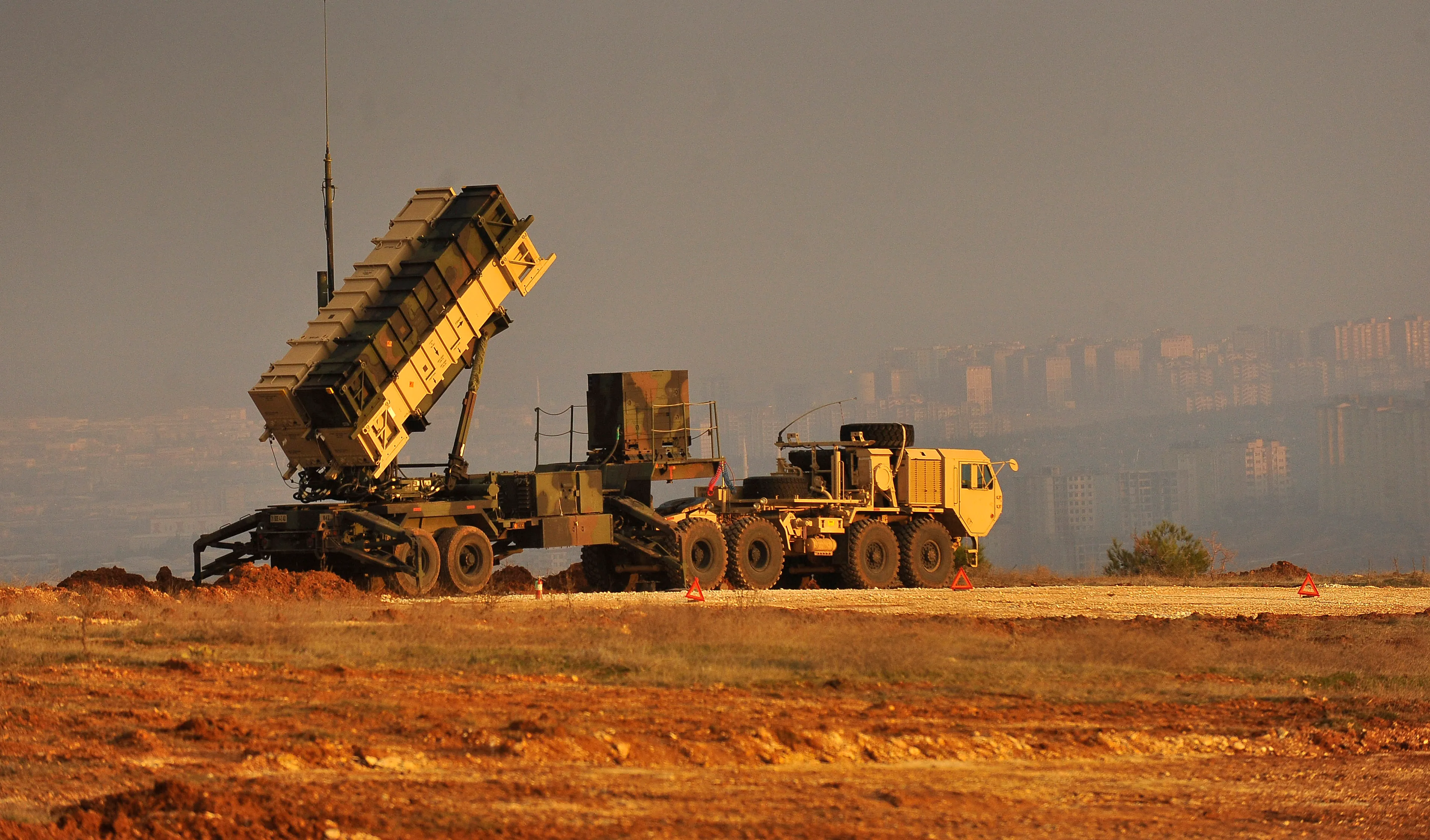
The Patriot system — specifically the PAC-3 MSE (Missile Segment Enhancement) variant that the United States, Germany, and the Netherlands have delivered to Ukraine — is the most capable air defense system NATO has provided Kyiv. PAC-3 MSE interceptors use a hit-to-kill mechanism, destroying incoming ballistic missiles through direct kinetic collision rather than proximity detonation. The variant substantially extends the original Patriot’s engagement envelope and is rated against ballistic missiles in the medium-range category.
The difficulty with the Oreshnik is geometric. A PAC-3 MSE interceptor must close with its target in time to achieve the kinetic kill. At the terminal velocities Russia claims for the Oreshnik — and at the depressed trajectory angles observed in both combat uses — the engagement window shrinks and the intercept geometry worsens. Patriot was optimized for the threat environment of the 1990s and 2000s: Scud-class missiles and their regional derivatives, flying higher arcs and at lower speeds. The PAC-3 MSE improvements addressed much of that gap, but the Oreshnik appears to represent the outer edge of what the system was configured to handle.
Ukrainian air defense commanders acknowledged this constraint explicitly after the Dnipro strike. Their subsequent requests to NATO focused not only on additional Patriot batteries — partially delivered but still short of stated Ukrainian requirements — but on systems designed for higher-altitude, higher-velocity intercepts. NATO allies responded to Russia’s May 16 Kyiv barrage with new Patriot commitments that remain months from delivery. The Oreshnik has been used twice in the interval between those pledges and the actual transfer of hardware.
None of this means Patriot is irrelevant to Ukrainian air defense. The layered system Ukraine operates — Patriot for upper-tier ballistic threats, NASAMS and IRIS-T for cruise missile and aircraft threats, legacy S-300 where still operational — has performed significantly better than Russian planners expected in 2022. But a system operating at or near its design limits against a specific weapon class is not the same as a system designed for that weapon class. The Oreshnik represents a different category of threat.
What THAAD Could Do — and Where the Batteries Are
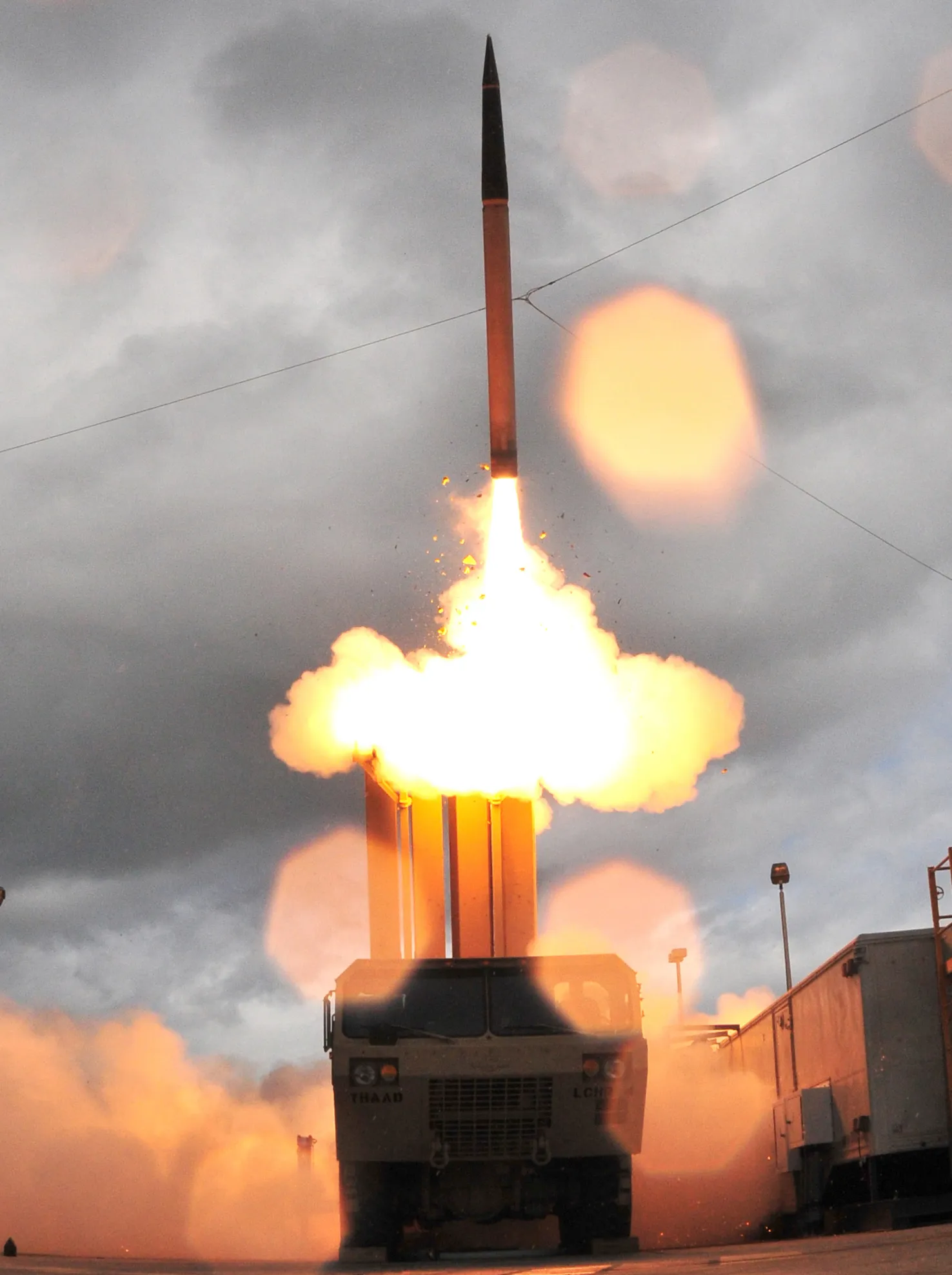
The Terminal High Altitude Area Defense system is the United States’ mid-tier ballistic missile defense architecture, designed to fill the gap between Patriot and national-level ground-based interceptors. THAAD interceptors engage ballistic missiles in the terminal phase of flight at altitudes between roughly 40 and 150 kilometers, at closing velocities that exceed PAC-3 MSE’s optimal engagement window. The system’s design specifications make it substantially better suited to the Oreshnik threat class than any currently deployed NATO system in Ukraine.
The United States Army operates seven operational THAAD batteries. One is permanently assigned to Guam. A second has been in South Korea since 2017. When Operation Epic Fury — the 66-day U.S. air campaign against Iranian nuclear and military infrastructure — required defending allied assets in the Middle East against Iranian ballistic missiles, THAAD capability was repositioned to the region. Iran’s ballistic missile inventory is the threat class THAAD was designed to counter; the Oreshnik belongs to the same category.
Ukraine has formally requested THAAD deployment repeatedly since 2024. Both the Biden and Trump administrations declined, citing the same constraint: the United States does not have batteries available for Ukraine without withdrawing coverage from a theater where those systems are already committed. After Operation Epic Fury further strained advanced weapon inventories — a depletion the Pentagon and independent analysts have disputed in detail but both acknowledge at some level — the flexibility to redeploy THAAD has not improved.
THAAD interceptors are also produced in limited quantities annually, with delivery schedules extending years for replacement stocks. The supply constraint compounds the strategic one.
Europe’s Own Programs and Their Timelines
European NATO members do not operate THAAD. Their most relevant alternative for upper-tier ballistic missile defense is Arrow 3 — the Israeli-American interceptor jointly developed by Rafael Advanced Defense Systems and Boeing — designed to engage ballistic missiles at exo-atmospheric altitudes well above Patriot’s ceiling. Arrow 3’s engagement geometry is substantially better suited to the Oreshnik class than PAC-3 MSE.
Germany signed a contract in September 2023 to acquire Arrow 3, specifically to address the gap in European ballistic missile defense identified after Russia’s February 2022 invasion demonstrated the scale of the threat. German officials described the purchase as a response to the changed threat environment on the continent’s eastern border.
Arrow 3 delivery to Germany was originally projected for 2025. Supply chain pressures following the October 2023 Hamas attack — which accelerated Israeli Defense Forces’ consumption of their own Arrow 3 interceptor inventory — and competing production demands have pushed the German operational timeline back. Germany does not have a deployed Arrow 3 battery as of this writing. No other European NATO member has contracted for the system at scale.
The practical consequence: Europe currently has no deployed, independent upper-tier ballistic missile defense system designed for the Oreshnik’s flight envelope. The capabilities that could change that picture are either American and committed elsewhere, or European and not yet delivered.
What Changes Now
Ukraine will renew its formal THAAD request in the diplomatic consultations that follow this weekend’s attack. NATO will produce statements of condemnation and commitments to accelerate existing Patriot delivery schedules where allied inventories allow. The near-term response toolkit is the same set of tools it was before Saturday.
The gap between those tools and the specific threat the Oreshnik represents is structural and will not close on any timeline measured in months. Arrow 3 deliveries to Germany could begin shifting the European picture, but operational capability is at minimum two to three years away at current schedules. THAAD redeployment to Ukraine would require a decision to withdraw coverage from another theater — a decision neither administration has been willing to make and one that the post-Epic Fury munitions situation makes harder, not easier, to justify to military planners.
Russia has now demonstrated that the Oreshnik can reach the Kyiv metropolitan area. The diplomatic and rhetorical responses to that demonstration will be substantial. The military response — meaningful upper-tier ballistic missile defense for Ukraine — requires decisions NATO has not made and capabilities it does not have available to deliver. The pattern established after the May 16 barrage, the pattern Kallas’s framing implicitly acknowledges, is condemnation followed by commitments that arrive on a timeline measured in seasons, not weeks. That pattern has not changed. The weapon has changed.
Sources 6 cited · 2 primary
- Russia announces Oreshnik strike on Kyiv region following mass drone and missile barrage
- Terminal High Altitude Area Defense (THAAD) — Missile Defense Agency Overview
- Hypersonic Weapons: Background and Issues for Congress (R45811)
- 'Damage in every district of Kyiv' — Massive Russian ballistic missile and drone attack kills 4, injures 100
- EU's chief diplomat: Russia's use of Oreshnik missiles is a political scare tactic
- Russian offensive campaign assessment, May 25, 2026
American Courant cites its sources and links to primary documents where they exist. How we report →