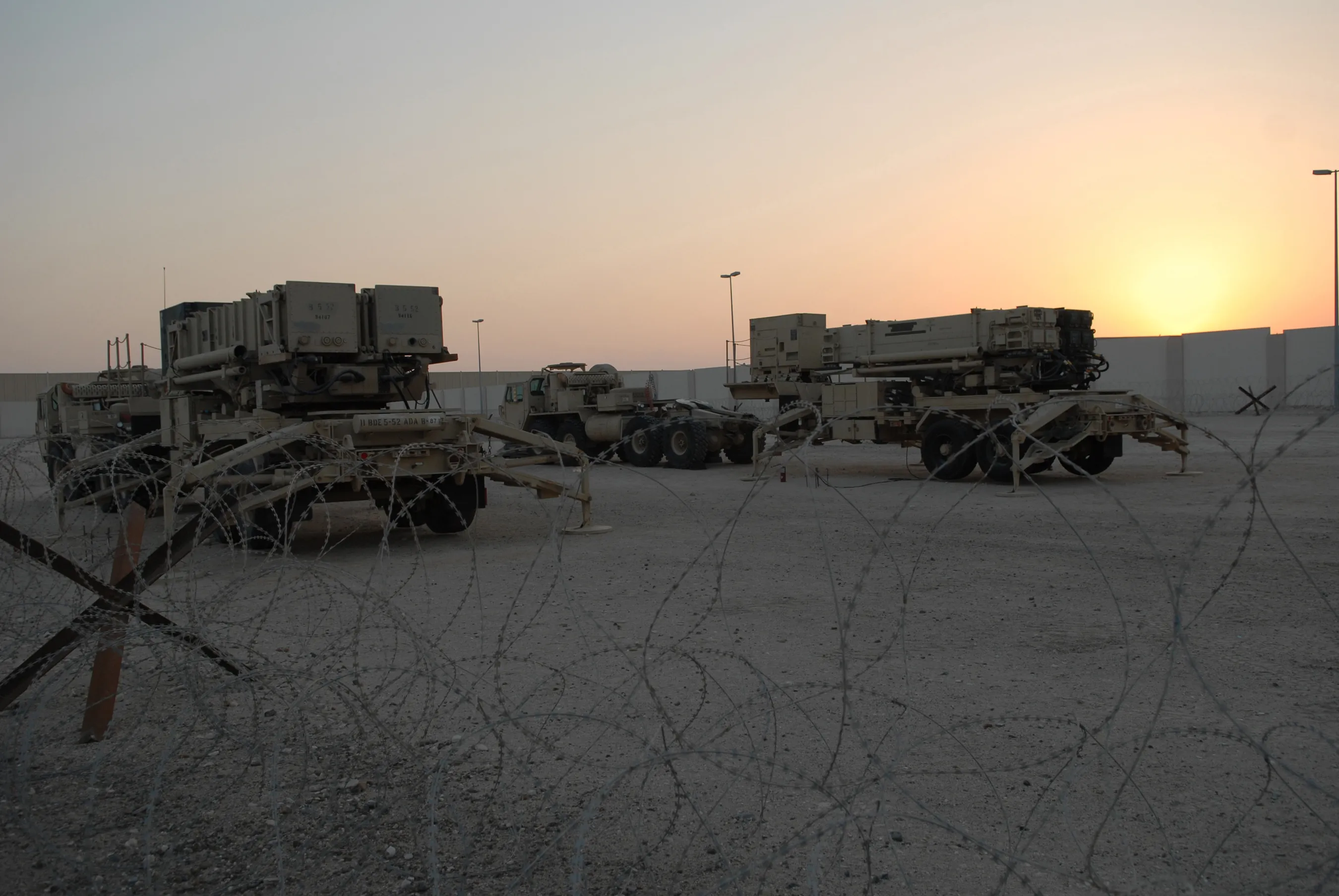
The 39-day war with Iran ended in a ceasefire, but a sharply contested question has now moved from the battlefield to the Senate: how many of the advanced air-defense and precision-strike weapons the United States used are gone, and when — if ever — will the inventory be back to where it started? The answer from the Pentagon and the answer from independent analysts and senior lawmakers on both sides of the aisle are, at present, irreconcilable.
This is an Open Questions piece. It does not allege wrongdoing. It records what each side has said, what evidence is in the public domain, what named analysts have argued, and what remains genuinely unknown.
What Happened
Following the ceasefire that ended the 39-day U.S.-Iran war, the Center for Strategic and International Studies published a report on April 24, 2026, titled “Last Rounds? Status of Key Munitions at the Iran War Ceasefire.” Its authors — Mark F. Cancian, a senior adviser at CSIS and retired Colonel in the U.S. Marine Corps Reserve, and one co-author — analyzed open-source production data and inferred inventory levels to estimate how much of the U.S. military’s prewar stockpile of seven heavily-used munition types had been expended.
Their findings were specific. The report estimated that U.S. forces had expended at least 45 percent of the prewar inventory of Precision Strike Missiles, approximately 50 percent of THAAD interceptors, nearly 50 percent of Patriot PAC-3 interceptors, roughly 30 percent of Tomahawk cruise missiles, and approximately 20 percent of SM-3 and SM-6 naval missiles. For four of the seven munition categories examined, the authors concluded that more than half of the prewar inventory had potentially been consumed. Rebuilding to prewar levels, Cancian and his co-author wrote, would take between one and four years depending on the system.
The question of cost added another dimension. Pentagon Comptroller Jay Hurst and Gen. Dan Caine told congressional appropriations subcommittees on May 12, 2026, that the Iran war cost $29 billion. Separate reporting by Responsible Statecraft cited an expert analysis placing the two-month figure at $71.8 billion — a discrepancy that has not been reconciled in public.
What Officials Say
Defense Secretary Pete Hegseth appeared before the Senate Armed Services Committee on May 12, 2026, and addressed the stockpile question directly. “The munitions issue has been foolishly, and unhelpfully overstated,” Hegseth said. “We have all the munitions needed to execute what we need to execute.”
He did not provide a counter-estimate or specify which figures he regarded as overstated.
Hegseth’s dismissal followed remarks he made at a separate hearing in April 2026, at which he acknowledged that rebuilding some munitions stockpiles would take “years.” That statement — made by Hegseth himself in public congressional testimony — became central to the subsequent dispute.
On May 10, 2026, Hegseth called for a Pentagon investigation into Sen. Mark Kelly of Arizona, alleging that Kelly had disclosed classified information during public remarks about stockpile depletion. Kelly responded the following day in a written statement: “We had this conversation in a public hearing a week ago and you said it would take ‘years’ to replenish some of these stockpiles. That’s not classified, it’s a quote from you.”
Hegseth did not publicly address that specific point.
Evidence Available
The CSIS report is the most detailed public-domain accounting of the question. Cancian’s methodology used open-source production rates — drawn from public Pentagon budget requests, defense contractor earnings calls, and Congressional Budget Office analyses — to reconstruct approximate prewar inventory levels and then apply publicly reported usage figures from the campaign.
The approach has inherent uncertainty. CSIS is working from the outside in; the actual classified Pentagon ledger figures are not public. The report’s authors acknowledge this limitation explicitly. But the production-rate methodology is the same one used in academic defense economics, and Cancian, a former Marine colonel who has spent decades at CSIS studying defense acquisition, is among the most frequently cited analysts in this field.
On May 10, 2026, Kelly spoke on CBS’s “Face the Nation.” He called the situation “shocking how deep we have gone into these magazines, because this president got our country into this without a strategic goal, without a plan, without a timeline.” Kelly — a former Navy combat pilot and current member of the Senate Armed Services Committee — added that the United States is “less prepared for a major military conflict” after the Iran war.
Kelly’s committee role gives him access to classified briefings that go beyond what the CSIS report can access. His public characterization — “shocking” — is consistent with the CSIS numbers, though he did not cite specific percentages in his public remarks.
At the May 12 SASC hearing, Senate Armed Services Committee Chairman Roger Wicker, Republican of Mississippi, said that Army “munitions stockpiles… all are under extreme strain.” Wicker chairs the committee — he schedules the hearings, sets the agenda, and is routinely briefed at the classified level. His language was unambiguous and, critically, was directed at the same hearing at which Hegseth offered his reassurances.
The bipartisan character of the pushback is load-bearing here. Wicker and Kelly are not political allies. Wicker is a Republican who has generally supported the administration; his statement cannot be read as partisan opposition. Sen. Jeanne Shaheen of New Hampshire, a Democrat, was asked directly at a Senate hearing on May 12 whether Hegseth had convinced her that stockpiles were adequate. Her answer was one word: “No.” Sen. Richard Blumenthal of Connecticut said at a hearing on May 13: “Absolutely ludicrous, given everything that we’ve heard from various sources, including public statements from military leaders themselves.”
The Pentagon’s own cost accounting adds one more data point to the public record. The $29 billion official figure is well below what independent analysts have estimated the campaign cost; the Pentagon has not explained the difference in accounting scope.
What Critics Question
Cancian argued in the CSIS report that the United States entered the Iran conflict without adequate reserve stocks for a multi-theater scenario. The specific concern: in a simultaneously occurring large-scale conflict in the Indo-Pacific, some of the munition categories consumed in the Iran campaign would have been among the most critical.
Stacie Pettyjohn, a senior fellow and director of the Defense Program at the Center for a New American Security, made that concern concrete in a commentary she co-authored with Philip Sheers. She wrote that “in four critical munitions categories, the Iran campaign is drawing down stockpiles that would be indispensable in the Pacific.” She added that in a large-scale Pacific confrontation, the United States could “use up a year’s supply of a critical munition in one or two days.”
Pettyjohn holds a Ph.D. and has spent years studying military logistics and munitions sufficiency. Her warning is not about the Iran campaign in isolation — it is about what the Iran campaign has cost in terms of preparedness for a different, potentially larger contingency.
Kelly’s publicly stated concern runs along the same lines. The Strait of Hormuz was the operational heart of the Iran campaign; a Pacific contingency would demand the same classes of air-defense interceptors and precision-strike weapons. The worry is not that the United States is undefended today — it is that the cushion for absorbing a second, concurrent crisis has narrowed.
The senators who have pushed back on Hegseth are not, for the most part, arguing that he is lying. The implicit argument is subtler: that “we have all the munitions needed to execute what we need to execute” is a statement about present-tense missions against a specified threat set, not about the full range of scenarios that defense planners are supposed to hold in reserve.
Competing Theories
There are two coherent accounts of the stockpile situation, each with named advocates.
The administration’s account (Hegseth, May 12, 2026): Stockpile concerns have been overstated. The United States has sufficient munitions for its current operational requirements. The CSIS methodology — working from production rates rather than actual classified inventory — is inherently imprecise, and the public figures do not accurately reflect the true state of U.S. readiness.
The CSIS/CNAS/bipartisan-Senate account (Cancian, April 24, 2026; Pettyjohn, 2026; Kelly, May 10, 2026; Wicker, May 12, 2026; Shaheen, May 12, 2026; Blumenthal, May 13, 2026): Open-source production-rate analysis — the same methodology used in government accountability offices — shows that four of seven heavily-used munitions are at or below 50 percent of prewar inventory. The rebuild timeline is measured in years. The specific risk is a reduced margin for a simultaneous or subsequent Pacific contingency.
The two accounts are not reconcilable on the present public record. Hegseth offered reassurance without offering a counter-estimate. His critics offered specific percentages with a specific methodological basis — and, in the case of Wicker, Kelly, and Shaheen, with access to classified information that Cancian and Pettyjohn do not have.
One further complication: Hegseth’s own April 2026 congressional testimony acknowledged that rebuild would take “years” — which is logically in tension with his May 12 characterization of stockpile concerns as “foolishly overstated.” Kelly cited that discrepancy back at Hegseth publicly on May 11, 2026. Hegseth’s office did not reconcile the two statements.
What Remains Unknown
Several questions are not answerable from the public record:
-
Actual classified stockpile levels. The Pentagon’s internal accounting of current Patriot PAC-3, THAAD, SM-3, SM-6, Tomahawk, PrSM, and JASSM inventories as of mid-May 2026 has not been made public. The CSIS figures are derived from production rates; they are the best available public-domain estimate, not confirmed figures.
-
Whether the CSIS percentages are accurate — and in which direction they err. Cancian explicitly acknowledges the uncertainty of his methodology. He may have overestimated depletion. He may have underestimated it. The direction of the error matters as much as the magnitude.
-
Specific per-category rebuild timelines. CSIS gives a range of one to four years across the seven munition categories. Hegseth’s April testimony acknowledged “years” without a category-by-category breakdown. Neither the CSIS report nor public congressional testimony has provided the category-level detail needed to assess which systems are most constrained and which have the most production capacity.
-
The basis for the cost discrepancy. The Iran ceasefire aftermath left open the question of whether the Pentagon’s $29 billion and the external estimate of $71.8 billion use different accounting scopes — whether, for example, the Pentagon figure excludes munition replacement costs, sunk costs in deployed assets, or allied-nation resupply arrangements.
-
What “adequate” means operationally. Hegseth’s statement that the U.S. has “all the munitions needed to execute what we need to execute” is a reference to some specified set of operational requirements. What that requirement set includes — and whether it accounts for a simultaneous contingency elsewhere — has not been explained.
The Bottom Line
What is confirmed: the United States used large quantities of advanced air-defense and precision-strike munitions during a 39-day war. The CSIS report, authored by a named retired military officer and defense economist with a detailed methodology, places four of seven munition categories at or below 50 percent of prewar inventory, with rebuild times of one to four years. The Senate Armed Services Committee chairman, a Republican, called stockpiles “under extreme strain” at the same hearing at which the Defense Secretary called concerns “foolishly overstated.” A former Navy combat pilot with classified briefing access called the depletion “shocking.” Three additional senators — two Democrats, and the Republican chair — expressed explicit disbelief when asked whether Hegseth’s reassurances were credible.
What is not confirmed: the actual classified figures. Hegseth may be correct that the CSIS methodology overstates depletion. There is no way to evaluate that claim without access to the same classified inventory data that senators like Kelly and Wicker have reviewed.
What the public record does establish, without ambiguity, is this: the Defense Secretary has not offered a counter-estimate, has not reconciled his May 12 reassurances with his own April statement that rebuild would take “years,” and has responded to the most credible Senate questioner by calling for an investigation rather than by providing numbers. Whether that reflects a genuine classified picture that makes the CSIS estimates irrelevant — or an unwillingness to quantify a problem in public — is precisely the question that remains open.
Sources for this article are listed below. Primary sources are marked. All quotes attributed to named individuals were made in public forums — Senate hearings, television broadcasts, or official press releases — on the record.
Sources 10 cited · 4 primary
- Last Rounds? Status of Key Munitions at the Iran War Ceasefire
- Chairman Wicker Leads SASC Hearing on U.S. Army Posture for Fiscal Year 2027
- Lawmakers question Pete Hegseth's claims about US stockpiles, Iran firepower
- Hegseth dismisses 'foolish' US stockpile concerns as Iran conflict tests munitions
- Hegseth calls for Sen. Mark Kelly to be investigated by Pentagon for second time
- Sen. Mark Kelly: 'Shocking How Deep We've Gone' Into Munitions Stockpiles For Iran War
- Cost of Iran war up to $29B as lawmakers push for details
- Expert: Iran war cost $72 billion over first two months
- Insights: Sustaining War in Iran
- The U.S. is Facing an Ammunition Shortage Due to the Iran War. Here's What That Means.
American Courant cites its sources and links to primary documents where they exist. How we report →