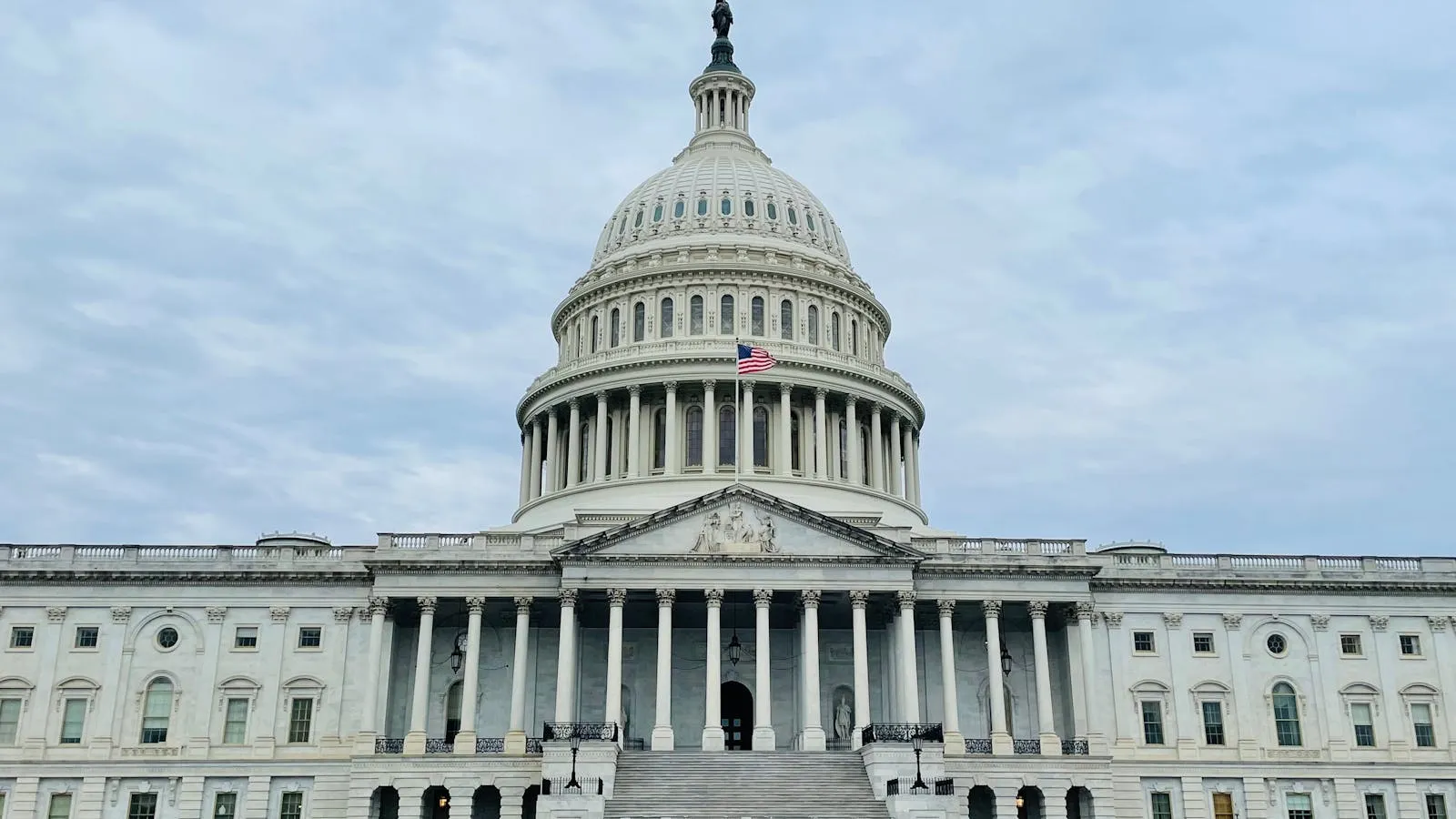
The War Powers Resolution’s 60-day deadline expired Friday with Congress having never authorized U.S. military operations against Iran — and the Trump administration arguing the law simply doesn’t apply anymore.
The statute, enacted in 1973 to prevent presidents from waging open-ended conflicts without congressional approval, requires either an authorization from Congress or a withdrawal order within 60 days of formal notification. The White House notified Congress on March 2, four days after Operation Epic Fury began. The clock ran out Friday.
Senate Votes for the Sixth Time, Fails Again
The Senate voted 47–50 on Thursday to block a Democratic-led War Powers Resolution — the sixth such attempt since U.S. and Israeli forces struck Iran on February 28. The measure failed.
For the first time across all six votes, Sen. Susan Collins of Maine voted with Democrats. Rand Paul of Kentucky, the consistent Republican dissenter, also voted yes. Sen. John Fetterman of Pennsylvania was again the lone Democrat to vote no.
“The War Powers Act establishes a clear 60-day deadline for Congress to either authorize or end U.S. involvement in foreign hostilities,” Collins said after the vote. “That deadline is not a suggestion; it is a requirement.”
She added that further military action must have “a clear mission, achievable goals, and a defined strategy for bringing the conflict to a close.”
The White House’s Counterargument
Hours before the deadline arrived, Trump sent formal letters to both chambers declaring the matter settled. “The hostilities that began on February 28, 2026, have terminated,” he wrote, pointing to the ceasefire he ordered on April 7. He told reporters Friday that seeking congressional authorization under the War Powers Act is “unconstitutional.”
Vice President JD Vance went further, calling it “fundamentally a fake and unconstitutional law.” House Speaker Mike Johnson said there was no need for Congress to weigh in because the U.S. is “not at war” with Iran.
At a Senate hearing Thursday, Defense Secretary Pete Hegseth offered a legal theory to match the political argument: “We are in a ceasefire right now, which in our understanding means the 60-day clock pauses, or stops, in a ceasefire.” Hegseth made the same argument the next day at the House Armed Services Committee budget hearing where the Pentagon disclosed the Iran war’s $25 billion price tag.
Legal Scholars Say the Text Doesn’t Support It
Constitutional lawyers are not buying it.
“To be very, very clear and unambiguous, nothing in the text or design of the War Powers Resolution suggests that the 60-day clock can be paused or terminated,” said Katherine Yon Ebright, counsel at the Brennan Center for Justice’s Liberty and National Security Program.
She described the claim as “a sizeable extension of previous legal gamesmanship” and said the situation is without precedent in scale: “We’ve never seen the kind of bold abuse that we’re seeing now, where the president is trying to stop the 60-day clock for a major conflict that is unambiguously war.”
Bruce Fein, a constitutional lawyer and former associate deputy attorney general, told Al Jazeera that the statute “never says anywhere” that the deadline stops during a ceasefire, and that such a reading would “turn the resolution into simply a paper tiger.”
Democrats and legal experts also argue the war hasn’t actually ended. The U.S. is still maintaining a naval blockade of Iranian ports — itself an act of war under international law — regardless of whether bombs have stopped falling.
A 50-Year Law That Has Never Been Enforced
The War Powers Resolution has never been successfully used to halt a military operation. No court has ruled on whether presidents must comply. The closest historical parallel is Libya in 2011, when President Obama overruled his own Justice Department lawyers to keep U.S. forces in a NATO bombing campaign beyond the 60-day limit — arguing at the time that the U.S. role wasn’t “sustained fighting” that triggered the statute.
The Trump administration’s ceasefire argument follows Obama’s Libya logic and then extends it: not merely a narrow reading of what counts as hostilities, but a claim that the president can declare the conflict over and reset the legal framework entirely.
Sen. Adam Schiff of California, who co-sponsored the resolution, said the pattern of failed votes had become its own story.
“After two months of war, thirteen service members’ lives lost, and billions of dollars squandered, it is time we recognized that the price we have paid is already too high,” Schiff said Friday. “My colleagues on the other side of the aisle are not only abdicating their most solemn constitutional responsibility to decide whether to send our nation’s sons and daughters into war, but they are also backtracking on what they’ve told their own constituents.”
Operation Epic Fury began February 28 with nearly 900 strikes in 12 hours targeting Iranian military infrastructure, killing Supreme Leader Ali Khamenei and destroying Iran’s ballistic missile and air defense systems. The Pentagon has confirmed 13 U.S. troops killed and 381 wounded. The conflict has cost approximately $25 billion.
Whether Congress will attempt a seventh war powers vote or whether any court will take up the constitutional question is unclear. What is settled: the deadline is gone, the authorization never came, and the administration has decided that’s not its problem.
Sources 7 cited · 1 primary
- NEWS: At 60 Days of Iran War, Sen. Schiff, Leader Schumer to Force Vote on War Powers Resolution to Block Trump's Illegal Iran War
- Senate Rejects Measure to Restrict Iran War Hours Before Key Legal Deadline
- Senate rejects Democrats' 6th Iran war powers resolution ahead of 60-day deadline
- Trump is supposed to get Congress' approval when the Iran war hits 60 days. Lawmakers can't agree when that is
- A deadline for the Iran war is here. What does the War Powers Act say?
- Hegseth says clock paused ahead of key date in Iran conflict
- Has the US-Iran ceasefire reset the clock on War Powers Act deadline?
American Courant cites its sources and links to primary documents where they exist. How we report →