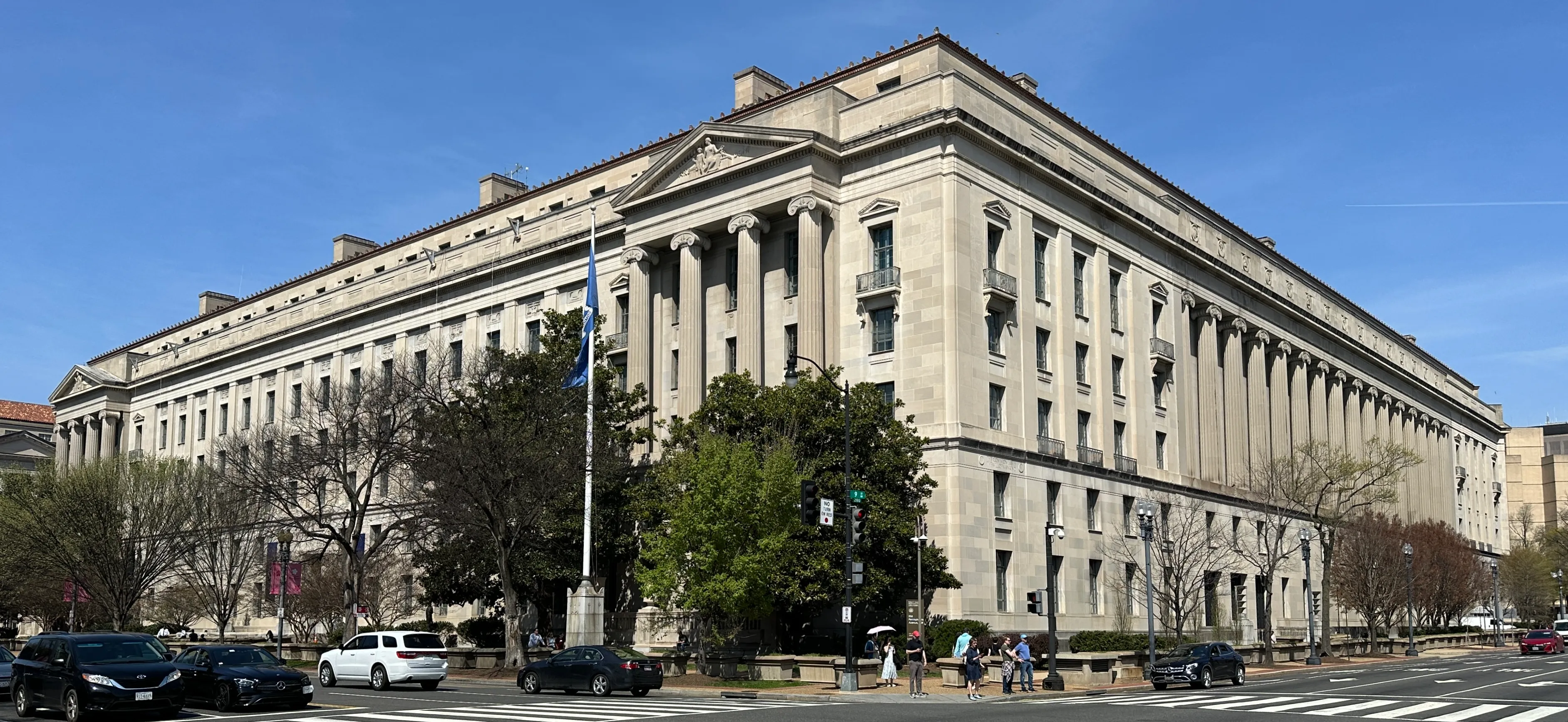
Acting Attorney General Todd Blanche told a House Appropriations subcommittee on Monday that the Department of Justice’s proposed $1.776 billion anti-weaponization fund is finished — dead completely, with no path to revival. His testimony came after a federal judge had blocked the fund the previous Thursday, after Republican senators had torpedoed a Homeland Security spending bill over it, and after both parties had spent a week demanding the administration explain why January 6 rioters might receive payouts from it.
“We are not moving forward with the fund, period,” Blanche told the House Appropriations Commerce, Justice, Science Subcommittee. He offered no timeline, no revised proposal, no alternative structure. The word “period” — with its deliberate finality — was the answer lawmakers had been demanding for two weeks.
What the Fund Was and Where the Money Came From
The anti-weaponization fund was established by executive action earlier this year to compensate Americans the administration said had been unfairly targeted by the federal government. The fund drew its $1.776 billion from a settlement the IRS had reached in the Littlejohn case — a legal dispute over unauthorized disclosure of tax return information belonging to Donald Trump and other wealthy individuals by a former IRS contractor, Charles Littlejohn, who was convicted in 2023.
The Trump administration’s position was that the settlement funds, rather than being returned to the Treasury, could be repurposed for a broader class of compensatory claims. The DOJ construed the eligible claimant pool expansively: Blanche previously told Congress that anyone “eligible” under the fund’s criteria could apply, a statement that opened the door to January 6 defendants and others convicted of federal crimes arguing they had been improperly prosecuted.
That answer set off two weeks of escalating alarm. Democrats were alarmed that the fund represented an extrajudicial executive pardon mechanism. Republicans, particularly in the Senate, were alarmed at the prospect of constituents seeing headlines about rioters who stormed the Capitol receiving government compensation from a fund whose name evoked the political persecution narrative.
The Court Block
U.S. District Judge Leonie Brinkema in the Eastern District of Virginia issued a preliminary injunction on May 29 blocking the fund from making any payments. Her ruling held that the fund exceeded the executive branch’s authority — that the administration could not unilaterally redirect settlement proceeds designated for taxpayer compensation into a new broad-purpose fund without congressional authorization.
The injunction was not the administration’s first legal setback on the fund. A coalition of 35 federal judges had previously raised concerns in a formal challenge arguing the fund could be used to compensate individuals who had filed claims with courts — a potential intrusion on judicial independence. Judge Brinkema’s ruling went further, addressing the core constitutional question of whether Congress had appropriated funds for this purpose at all.
The constitutional analysis of the anti-weaponization fund’s Appropriations Clause problem had been a subject of legal commentary since the fund was announced. The administration defended the fund as a valid exercise of executive discretion over settlement proceeds. Brinkema disagreed.
Senate Republicans Block Their Own Bill
The legislative fallout was swift and unusual. On June 1, Senate Republicans blocked the Homeland Security spending bill — a measure their own leadership had been pushing to advance — after an amendment by Sen. Patty Murray of Washington would have restricted funds to the anti-weaponization program. The procedural tangle revealed the depth of Republican discomfort: senators did not want to vote to fund the program, but they also did not want to be on record killing a security spending bill.
Republican senators who had previously been reliable administration allies declined to publicly defend the fund’s Jan. 6 eligibility question. Senate Majority Leader John Thune said he was working to advance a budget bill on a fast-track basis and signaled the anti-weaponization fund had become an obstacle rather than an asset to the legislative agenda. Vice President JD Vance, when asked directly whether he supported Jan. 6 defendants receiving anti-weaponization payouts, declined to give a clear answer.
The bipartisan revolt was notable precisely because the substantive complaints cut across party lines. Democrats opposed the fund as a legally questionable executive cash diversion; Republicans opposed it as a political liability that handed Democrats an easy attack ad. Neither coalition needed the other’s arguments — they arrived at the same destination by different roads.
What Blanche’s “Period” Means in Practice
Blanche’s testimony made three things clear. First, the Justice Department will not appeal Judge Brinkema’s preliminary injunction or seek to revive the fund in its current form. Second, no funds have been distributed — the court block arrived before any payments were made. Third, the administration is not proposing a replacement structure.
What the testimony did not clarify: the disposition of the $1.776 billion. If it no longer flows to the anti-weaponization fund, it presumably reverts to the IRS or Treasury under the terms of the original Littlejohn settlement. Blanche did not address that question directly, and no one on the subcommittee pressed him specifically on the money’s destination after the fund’s termination.
The IRS protections for the Trump family that were part of the original Littlejohn settlement framework remain in place. Those protections — which ensure the privacy of the president’s and his family members’ tax information and provide compensation for the Littlejohn disclosure — are separate from the anti-weaponization fund and were not affected by the judge’s ruling or Blanche’s testimony.
The Jan. 6 Problem Defined the Outcome
The anti-weaponization fund might have survived political pressure from Democrats. It could not survive pressure from within the Republican caucus. The January 6 question — who was “eligible,” what the administration would actually do if a rioter filed a claim, and how senators would explain it to constituents — was the decisive variable.
No senior Republican official, in either chamber, publicly argued that January 6 defendants should receive compensation from the fund. But the administration’s failure to rule it out clearly, combined with Blanche’s original “anyone eligible” framing, created a political trap that deepened with each passing week. Once Republicans began blocking their own legislation to avoid being associated with the fund, its fate was sealed regardless of the court’s ruling.
Blanche’s “period” was the administration’s acknowledgment that the political cost of defending the fund had become too high, and that the legal cost — an injunction from a federal judge that would have to be relitigated on appeal — made continued pursuit economically irrational. The fund is gone. What remains is the $1.776 billion whose ultimate destination has not been publicly resolved, and the broader question of whether the administration will attempt alternative mechanisms to achieve the same political objective through different legal vehicles.
No legislation authorizing a replacement program has been introduced. Thune’s fast-track budget push does not include an anti-weaponization provision. The episode ends as it began: a White House executive action that could not survive contact with either the courts or Congress.
Sources 6 cited · 3 primary
- Blanche says DOJ not moving forward with anti-weaponization fund 'period'
- Judge blocks Trump anti-weaponization fund, ruling it exceeds executive authority
- Republicans revolt over Jan. 6 rioters getting anti-weaponization payouts
- Blanche: Anti-weaponization fund is over. Period.
- GOP senators block spending bill over anti-weaponization fund Jan. 6 concerns
- Senate Homeland Security bill blocked amid Jan. 6 payout furor
American Courant cites its sources and links to primary documents where they exist. How we report →