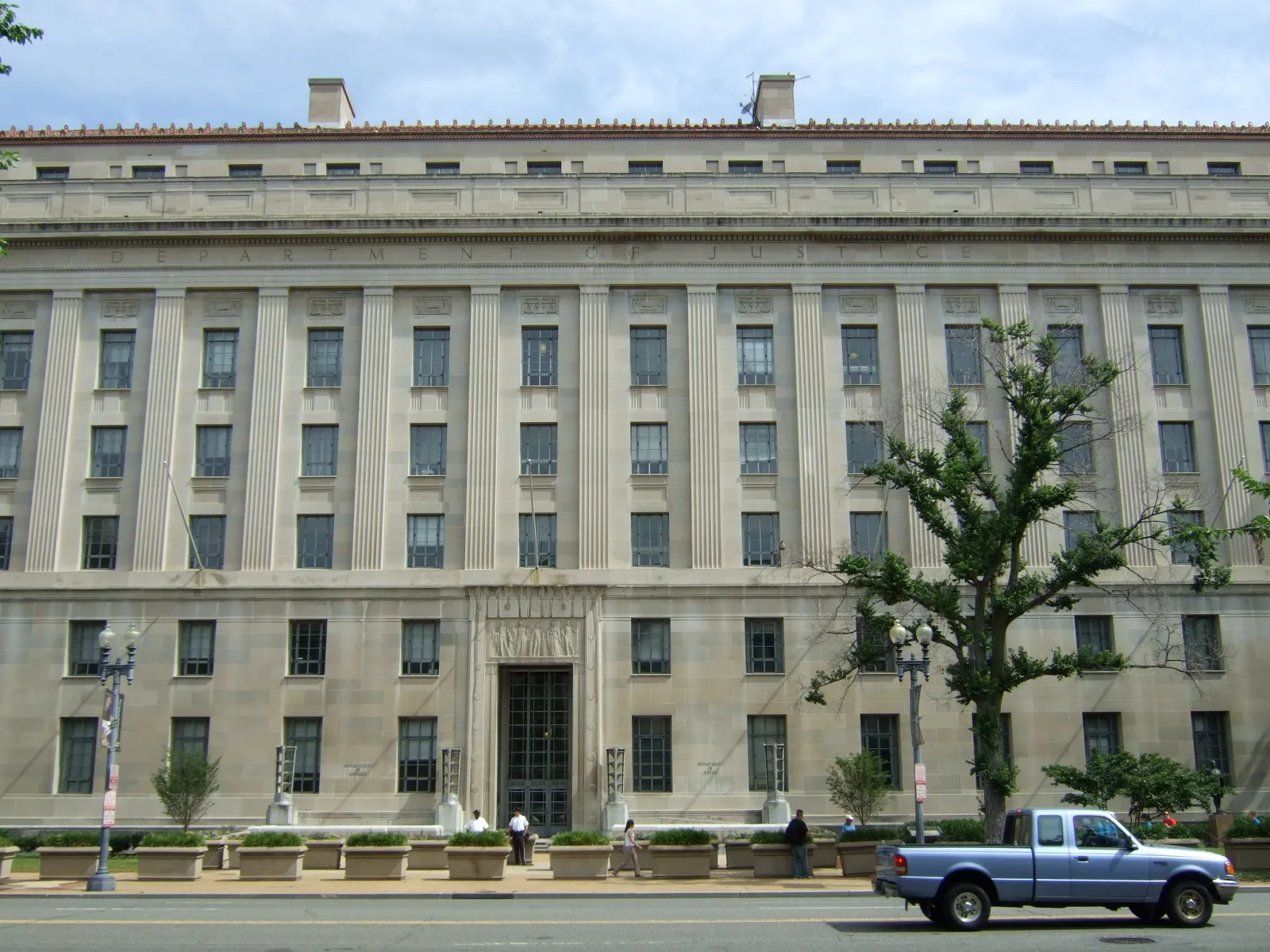
Thirty-five former federal judges have asked a Miami court to reopen President Trump’s dismissed $10 billion lawsuit against the IRS and investigate whether the Justice Department deceived a federal judge to create a $1.776 billion fund that permanently shields Trump, his family, and their businesses from any future IRS prosecution.
The motion, filed Wednesday in U.S. District Court for the Southern District of Florida, calls the settlement that spawned the fund “unprecedentedly fraudulent” and “a fraud on the Court.” It arrives as three other lawsuits in Washington, D.C., and Virginia are already challenging the Anti-Weaponization Fund — and as both Republican and Democratic lawmakers have pressed the administration to explain who qualifies and how the money will be spent.
Among the signatories: J. Michael Luttig, a former judge on the U.S. Court of Appeals for the Fourth Circuit who has been a prominent Trump critic; John Tinder, a retired Seventh Circuit appeals judge whose seat was later filled by now-Justice Amy Coney Barrett; and Ursula Mancusi Ungaro, a former federal trial judge in Miami appointed by President George H.W. Bush. The 35 judges served on courts across the country, spanning both parties, from the trial level through the federal appeals bench.
A Lawsuit Dropped Without Mentioning a Settlement
The Anti-Weaponization Fund traces to a decision Trump made this month to drop his $10 billion lawsuit against the IRS and Treasury Department. That suit arose after Charles Littlejohn, a former IRS contractor, was found to have leaked Trump’s private tax returns. Littlejohn was convicted and sentenced to five years in prison — the underlying injury that gave Trump his legal claim.
On May 18, Trump’s lawyers filed a Notice of Voluntary Dismissal under Rule 41(a)(1)(A)(i). The notice said nothing about a settlement.
Within hours, the Justice Department issued a press release announcing the creation of the Anti-Weaponization Fund, describing it as part of a “settlement agreement” with Trump. The DOJ said the fund would receive $1.776 billion — drawn from the federal Judgment Fund, a standing Treasury appropriation Congress created to satisfy court judgments the government loses — and that a five-member commission appointed by the Attorney General would decide who qualifies for payment.
A separate one-page addendum, posted to the DOJ’s website the following day, contained the language that has since drawn the most legal scrutiny. The government was, in its words, “FOREVER BARRED and PRECLUDED from prosecuting or pursuing, any and all claims” against Trump, Donald Trump Jr., Eric Trump, and the Trump Organization — including for “any matters currently pending or that could be pending (including tax returns filed before the Effective Date).” The addendum extended the same protection to other family members and affiliated companies.
That sequence is what the former judges call fraud. “The Court was deceived,” they wrote in their motion. They asked U.S. District Judge Kathleen M. Williams to investigate whether she was deceived “including with respect to the existence of an underlying case or controversy and any purported arms-length negotiations undertaken to resolve it.”
The DOJ’s response was dismissive. A department spokesperson called the motion “frivolous” and said dismissing cases without mentioning an attached settlement is “a routine move for plaintiffs.”
What the Fund Is — and Who Can Apply
The $1.776 billion figure, matching the year of American independence, was not accidental. The fund will compensate Americans who claim they were improperly targeted for political reasons by a prior administration. Eligibility rules will be written by the AG-appointed commission before claims are accepted; no payments have gone out and the commission has not yet been assembled.
But the fund’s open-ended eligibility became a source of immediate political friction. When pressed before a Senate budget committee, acting Attorney General Todd Blanche declined to rule out payments to Jan. 6 defendants who attacked Capitol Police officers. “Anybody in this country is eligible to apply if they believe they’re a victim of weaponization,” Blanche told senators. Vice President JD Vance was similarly uncommitted when asked the same question, saying, “I’m not committing to giving anybody money or committing to giving no one money,” before adding that the administration was not “trying to give money to anybody who attacked a police officer.”
Senate Majority Leader John Thune, a Republican, said he was “not a big fan” and that he was “not sure exactly how they intend to use it.” He also said he was not consulted before the fund was announced — and that consultation would have yielded “plenty of advice.”
The constitutional concerns — specifically whether the executive branch can convert a standing appropriation into a discretionary compensation pool without a new vote by Congress — were explored in detail when the fund was first announced. The lawsuits now pending in federal court have given those concerns legal standing.
The Fraud-on-the-Court Argument
A “fraud on the court” is not a routine legal accusation. It is a claim that a party used the judicial process itself as the instrument of deception — not merely that a deal was bad, but that the court was denied its opportunity to examine it.
The former judges’ argument has two interlocking parts. First: Trump’s lawyers chose a dismissal mechanism that, they argued, is “self-executing” and requires no judge’s signature, so the court never reviewed the terms. Second: the underlying lawsuit was arguably not a genuine adversarial proceeding at all — it was filed by Trump and resolved by Trump’s own Justice Department, with Trump as both plaintiff and head of the executive branch overseeing the defendants.
Courts have inherent power to set aside a dismissal obtained through fraud. Whether Judge Williams agrees she has jurisdiction to exercise that power is the first question she must answer. Trump’s lawyers contend the case is already closed.
“The unprecedentedly fraudulent scheme here more than warrants voiding the dismissal,” the judges wrote. If Williams accepts jurisdiction and reopens the case, the settlement terms — including the permanent immunity addendum — would come under judicial scrutiny for the first time.
Three Other Lawsuits Are Moving in Parallel
The former judges’ motion is the most prominent challenge but not the first. Three separate suits are already pending in other courts.
Citizens for Responsibility and Ethics in Washington, a nonprofit watchdog group, filed suit in U.S. District Court for the District of Columbia, calling the fund “a jaw-dropping act of presidential corruption” and asking a judge to halt its implementation. A second coalition — including former federal prosecutor Andrew Floyd, the City of New Haven, the National Abortion Federation, and the voting-rights group Common Cause — filed in the Eastern District of Virginia, arguing the fund could channel money to Jan. 6 participants and paramilitary organizations and that it violates federal transparency statutes.
The three cases advance different legal theories, and they are moving through different courts. Any one of them could produce a temporary injunction before the commission starts paying claims. Whether a judge would consolidate some of them, or whether they proceed on separate tracks, is not yet clear.
The DOJ, so far, has not publicly addressed the D.C. and Virginia suits with the same specificity it brought to dismissing the ex-judges’ motion.
What Comes Next
The five-member commission hasn’t been constituted. No payments have been authorized. The fund exists only as a DOJ order and a settlement agreement that no judge has reviewed. That means there is still time for a court to freeze it before it operates.
Judge Williams’s first decision — whether she has jurisdiction to reopen a case Trump’s lawyers say is already closed — could come quickly or take months. If she accepts jurisdiction, the inquiry the former judges are asking for would examine whether Trump’s lawyers and the DOJ engaged in what courts have called “collusive litigation”: a suit brought not to resolve a genuine legal dispute, but to use a dismissal as a vehicle for a prearranged executive action.
Congressional oversight remains a pressure point without teeth. Thune’s discomfort and the broader Republican unease — a product partly of DOJ actions that have raised questions about the department’s independence, and partly of concerns about the fund eventually paying people who attacked police — have not yet coalesced into formal legislative action.
The fund sits between two institutions that both claim authority over federal spending. Congress says it holds the power of the purse. The executive branch says the Judgment Fund already authorized the money and no new vote is required. The tension matters beyond this case: Moody’s stripped the United States of its last AAA credit rating last week, citing accumulating federal debt — and the Anti-Weaponization Fund represents, critics argue, exactly the kind of executive spending that bypasses the accountability the ratings agencies watch. Four federal courts are now the venue for resolving which answer is right.
Sources 8 cited · 2 primary
- Justice Department Announces Anti-Weaponization Fund
- Anti-Weaponization Fund Order
- Ex-judges mount bid to upend 'unprecedentedly fraudulent' Trump 'anti-weaponization' fund
- DOJ agrees to drop any pending tax claims against Trump as part of IRS deal
- 35 former judges ask court to investigate Trump's deal with IRS
- Vance, Blanche don't rule out Jan. 6 rioters getting 'Anti-Weaponization Fund' payouts
- Senate and House Republicans divided over DOJ 'anti-weaponization' fund
- Individuals, Organizations Sue to Block $1.776 Billion Slush Fund
American Courant cites its sources and links to primary documents where they exist. How we report →