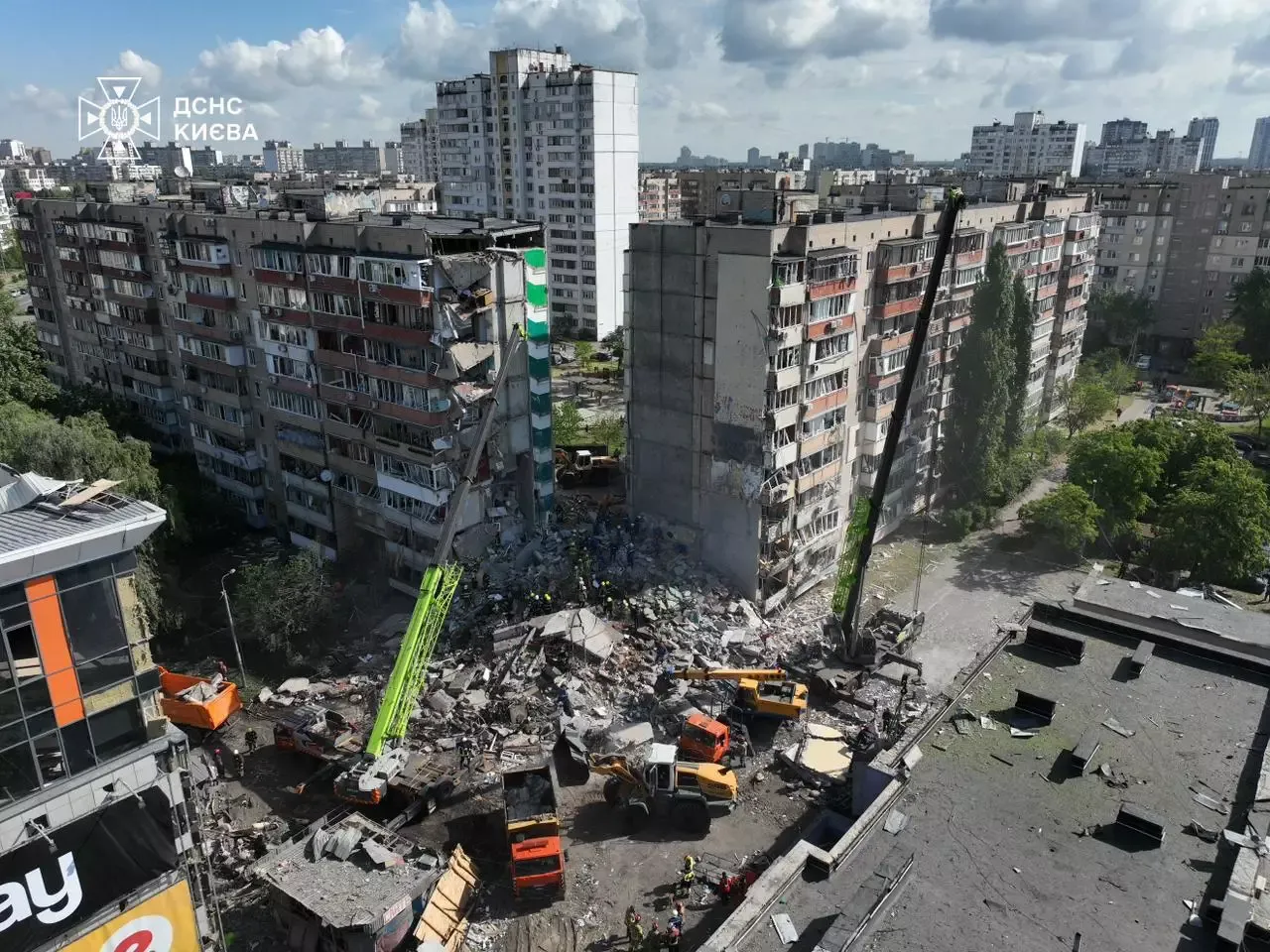
A Russian cruise missile tore through the entrance of a nine-story apartment building in Kyiv’s Darnytskyi district on Thursday, collapsing an entire corner section and trapping families beneath concrete and rebar. Rescue workers combed through the debris for more than 30 hours. By Friday morning, Ukrainian officials confirmed 24 people were dead, including three children — one of them 12 years old. At least 48 more were hospitalized.
Kyiv declared Friday a city-wide day of mourning.
The strike was not a single hit. It was the climax of what Ukraine’s military described as the largest combined aerial barrage Russia has launched since the full-scale invasion began more than four years ago — more than 1,500 drones and 56 cruise missiles fired at Ukrainian cities over roughly 48 hours. And according to Ukrainian President Volodymyr Zelensky, the timing was not accidental. Moscow launched the attack precisely as U.S. President Donald Trump arrived in Beijing for his first official summit with Chinese President Xi Jinping, making it a deliberate strike behind the cover of the world’s attention.
What Happened Over 48 Hours
The campaign started Wednesday evening, with Russia dispatching hundreds of drones against Kyiv, Kharkiv, Odesa, and Kremenchuk simultaneously. By Thursday morning, the attacks had grown to include cruise missiles. Ukraine’s air defenses scrambled to meet the volume.
In the overnight phase, Ukrainian forces shot down or jammed 693 aerial weapons — including 41 of 56 missiles and 652 of 675 drones. That works out to roughly a 97% drone intercept rate. For missiles, the figure was closer to 73%. The distinction matters, because the weapons that broke through were cruise missiles.
One Kh-101 cruise missile hit the corner entrance of the apartment building on Kyiv’s eastern side. That corner contained a stairwell serving multiple floors. When the missile struck, an 18-apartment section of the building — all nine stories of it — came down. Concrete floors pancaked. Residents who had not made it to shelters were caught inside.
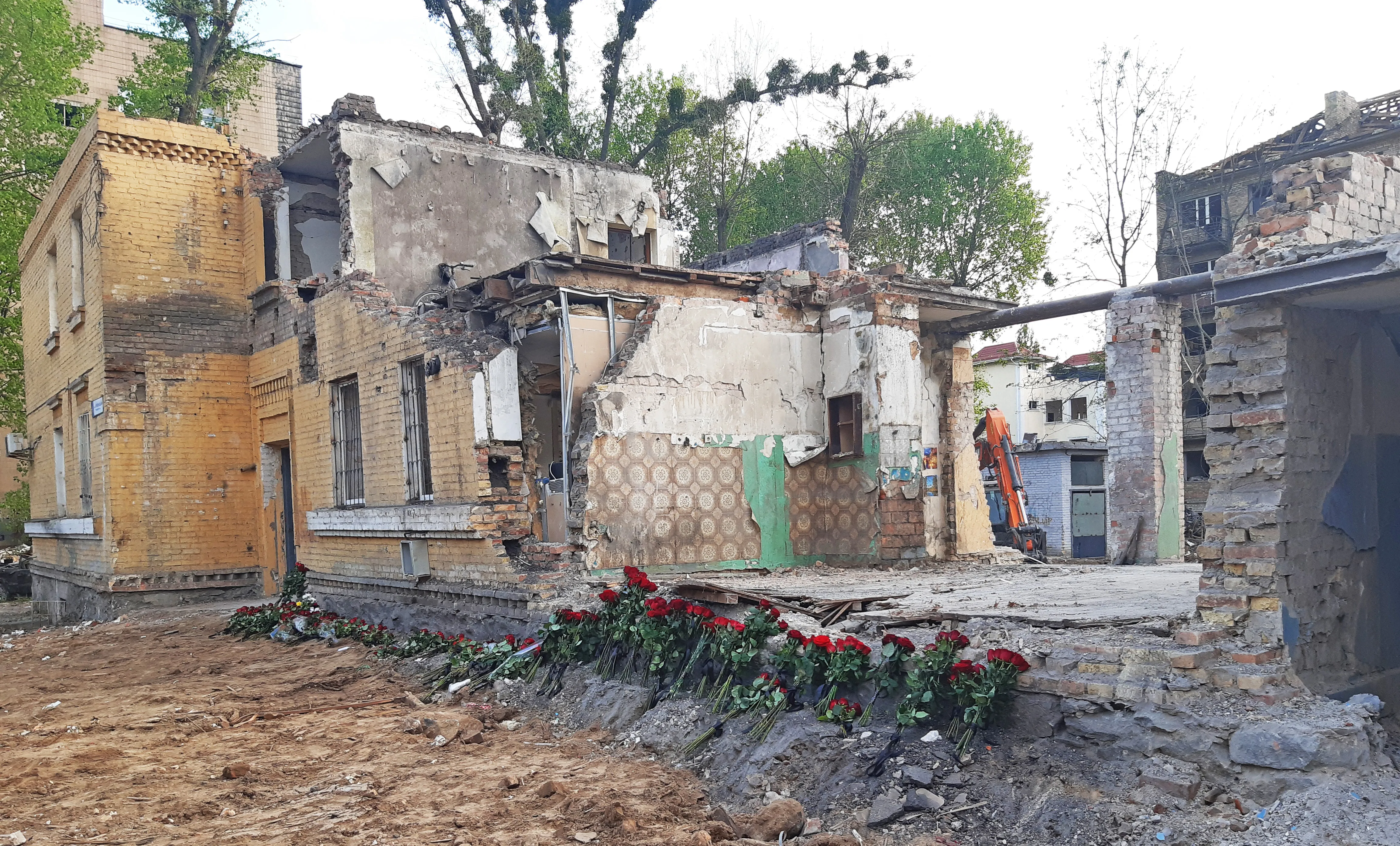
Zelensky visited the site Thursday evening. He placed flowers in the rubble.
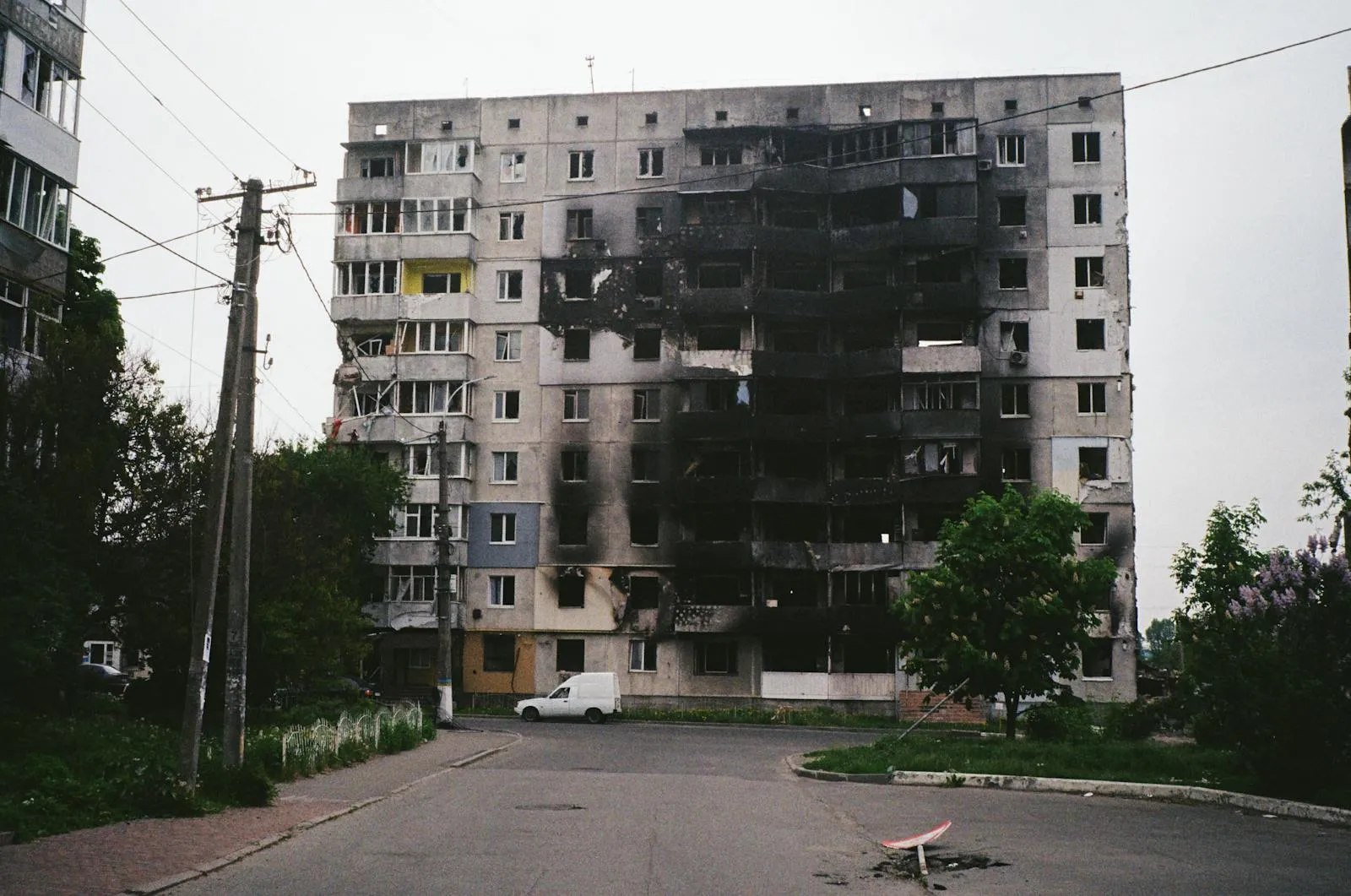
Russia damaged 180 sites across Ukraine in the attack, Ukrainian officials said, including more than 50 residential buildings spread across multiple oblasts. The scale was deliberate and systematic: not an attempt to hit military targets in the dark, but a mass civilian barrage designed to overwhelm air defenses and kill people in their homes.
Timed to the Summit
Ukraine’s president did not mince words. The attack, Zelensky said, was timed to coincide with Trump’s arrival in China — a moment when the United States and its closest allies would be focused on a historic diplomatic meeting rather than on Ukraine. He called the timing something that “certainly cannot be called a coincidence.”
The ceasefire that had briefly paused the conflict from May 9 to 11 — the only halt in major fighting in years — expired without extension and without a prisoner exchange, with both sides blaming the other. Kyiv had offered to extend the truce. Moscow refused. What followed, in the space of 72 hours, was Russia’s biggest air campaign of the war.
Earlier reporting outlined how the ceasefire pattern itself was a vulnerability: Russia treated the pause as an operational breathing room, repositioning forces and stockpiling weapons, rather than a genuine step toward negotiations. The Thursday attack fits that pattern. The drones and missiles did not appear from nowhere — they were accumulated and launched when Moscow calculated it could absorb the least diplomatic cost.
Trump’s Beijing summit centered on trade, the Iran war, and Taiwan policy. Neither leader made a public statement about the Kyiv attack during the first day of meetings.
A Missile Made This Quarter
The weapon used in the Darnytskyi strike offered a specific kind of evidence about Russia’s military capacity. Zelensky said the Kh-101 cruise missile recovered from the building had been manufactured in the second quarter of 2026 — this quarter — after the European Union had already imposed 21 consecutive packages of sanctions on Russia’s defense industrial base.
That is a direct challenge to the assumptions behind the Western sanctions strategy. The premise of those sanctions was that economic pressure would degrade Russia’s ability to produce precision weapons. The physical evidence from Thursday’s attack suggests the opposite. Russia is producing advanced cruise missiles quickly enough to use them against civilian apartment buildings in real time, regardless of the supply chain restrictions imposed on it.
The Kh-101 is a subsonic cruise missile with a range of roughly 2,500 kilometers. It flies low to evade radar and carries a conventional warhead sufficient to level a building’s entrance. Ukraine’s air defenses are far better at intercepting the cheaper Shahed drones — which account for the bulk of Russian aerial attacks — than they are at stopping cruise missiles. The physics of the problem are different: drones are slow and predictable, while cruise missiles fly at speed on varying trajectories and can be launched in coordinated volleys designed to saturate point defenses.
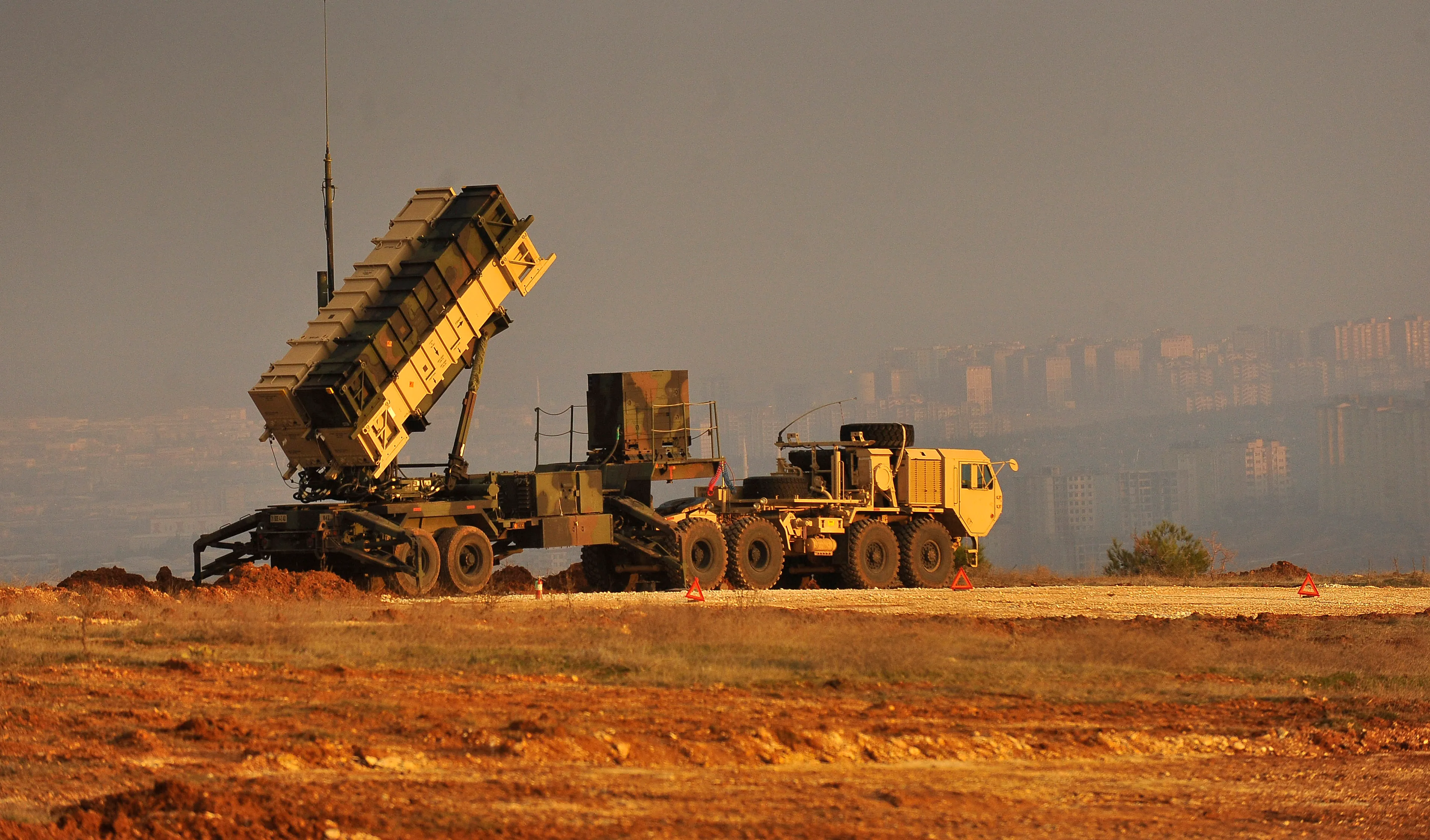
Ukraine has been pressing its Western partners for more long-range air defense systems, particularly Patriot batteries, for more than two years. The gap in missile interception rates — 97% for drones, roughly 73% for cruise missiles during Thursday’s attack — shows the problem is not resolved.
What Ukraine Does Next
Ukraine has operated under the threat of Russian air attack continuously since the full-scale invasion began in February 2022. Kyiv has air raid shelters distributed throughout the city, and its residents have long understood the drill: when sirens sound, go underground. But the sheer volume of Thursday’s attack — and the number of cruise missiles that broke through — overwhelmed a population that had largely kept its routines in place during the years of slower, grinding bombardment.
Zelensky ordered Ukraine’s military on Thursday to prepare “possible formats for our response” to the attack, without specifying what that means. Ukraine has previously targeted Russian oil facilities and military infrastructure with long-range drones, including strikes on refineries and airfields well inside Russian territory. Whether any of that changes Russia’s strategic calculus is an open question.
European governments have not issued coordinated statements in the hours since the death toll became clear. The EU’s diplomatic cycle with Ukraine has followed a pattern of strong rhetorical condemnation followed by continued but insufficient material support. Europe committed more than $106 billion in loans and aid to Ukraine over the course of the war, and a critical holdout on the most recent package broke only after an extended political standoff. But money moves slowly, and air defense batteries are in short supply across every NATO member.
What the attack demonstrated most plainly is that Russia is not exhausted. It launched its biggest combined air assault of the war from a position of apparent confidence. The drones and missiles were accumulated, the window was chosen, and the strike executed with a scale Ukraine had not seen in a single campaign window.
Twenty-four of the dead were residents of a residential building on an ordinary Thursday morning. Three were children. Their families knew the risks — Kyiv has been under intermittent air attack for more than four years — but knowing the risk and surviving a direct hit on your building are different things entirely.
Kyiv’s city administration asked citizens on Friday to observe the day of mourning and to remember the victims. Rescue workers had already finished their work at the Darnytskyi site. There was nobody left to find.
Sources 6 cited · 2 primary
- Death toll in attack on Kyiv apartment building now stands at 24
- Russian attack on Kyiv kills at least 24, including child | Zelensky tells military to prepare response
- Russia's latest attack on Kyiv: nine killed, including child, 44 people injured and 20 still missing
- Russian Kh-101 missile that killed 12 in Kyiv was manufactured this quarter — after 21 EU sanctions packages
- At least 24 killed, including 3 children, in Russian strike on Kyiv apartment block
- Kyiv Horror: 24 Dead, 3 Children Killed as Russian Missile Destroys Apartment Block Entrance
American Courant cites its sources and links to primary documents where they exist. How we report →