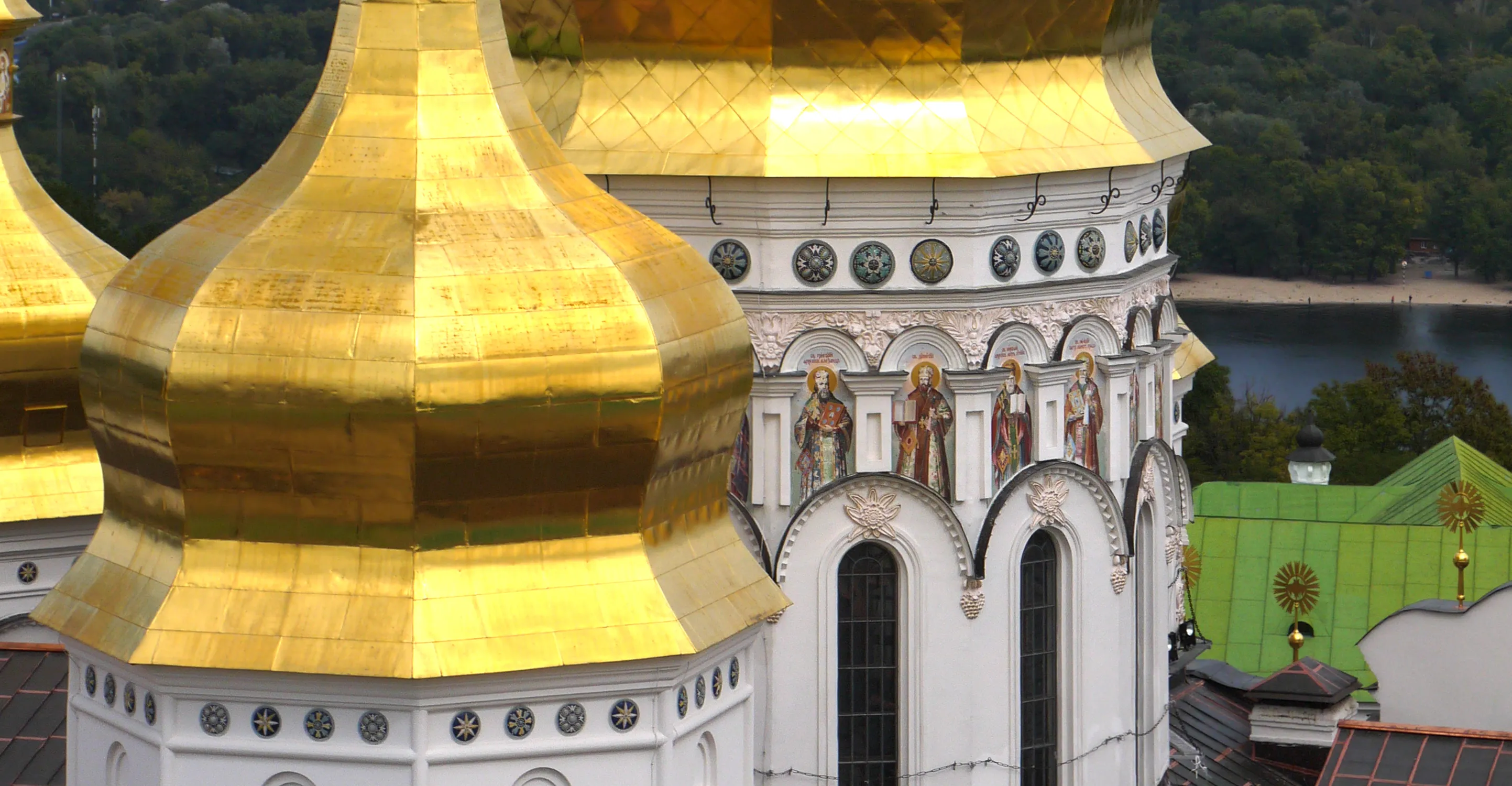
The fire that drew Kyiv’s eyes before dawn on Monday was not in an apartment block or a power plant. It was on the roof of the Dormition Cathedral, the gold-domed heart of the Kyiv Pechersk Lavra — the Monastery of the Caves — a complex first carved into the hills above the Dnipro River in 1051, when neither Ukraine nor the Russian state existed in any form recognizable today.
Ukraine’s emergency services said a Russian strike set roughly 800 square meters of the cathedral’s roof ablaze. Firefighters worked the structure as a wider barrage of missiles and drones rolled across the capital. By morning, at least five people were dead in Kyiv and 29 wounded, among them a pregnant woman and two children, ages 5 and 6. In the northeastern city of Kharkiv, at least five more were killed — including rescuers struck down by a second Russian blast as they fought a fire from the first.
President Volodymyr Zelensky called the cathedral strike “one of Russia’s most serious crimes against Christian culture to date.” Metropolitan Epiphanius, head of the Orthodox Church of Ukraine, said the roof of the 11th-century cathedral had caught fire and condemned the attack as a Russian crime “against humanity, against history, against Christianity.”
The Lavra is not just any landmark. It is the cradle of Eastern Slavic Orthodox monasticism, the place from which the faith spread across the lands that would later become Ukraine, Belarus and Russia. Yuri Dolgoruky, the prince traditionally credited with founding Moscow, is buried in a church on its grounds. A country that casts itself as the protector of Orthodox Christianity put a missile through the roof of Orthodoxy’s oldest home.
A shrine that was already on a danger list
The world had been warned. In September 2023, the UNESCO World Heritage Committee placed the Lavra — inscribed with Kyiv’s St. Sophia Cathedral on the World Heritage List since 1990 — on its List of World Heritage in Danger, citing the threat of Russian bombardment. The committee said the war meant “optimal conditions are no longer met to fully guarantee the protection” of the site, and warned that even strikes nearby could endanger it through shockwaves.
The Lavra now joins a long ledger. As of June 10, UNESCO had verified damage to 536 cultural sites across Ukraine since the full-scale invasion began in 2022, among them 154 religious sites — a tally the agency stresses counts only damage its experts have independently confirmed. Ukrainian authorities put the figure far higher. The destruction has rarely reached a site of the Lavra’s stature, which is part of why the images of smoke over the monastery’s domes traveled so far so fast.
The Dormition Cathedral that burned Monday is itself a monument to survival. An explosion leveled the original in 1941, during the Second World War, and it stood as rubble for half a century. Only after Ukraine won independence was it rebuilt, reopening in 2000 in the Ukrainian Baroque style of the 17th and 18th centuries — a deliberate act of national revival as much as religious restoration. For a generation of Ukrainians, the white-and-gold cathedral has been proof that what war destroys can be raised again.
That history is why the fire landed so hard. The attack did not merely damage a building; it reopened a wound the country had spent 60 years closing. And it did so at a site that Russian Orthodoxy itself reveres, complicating the Kremlin’s long-running claim to be defending the faith against a hostile West.
A deadly night across two cities
The cathedral fire was one piece of a much larger assault. Ukraine’s Air Force said Russia launched more than 600 attack drones overnight along with roughly 70 missiles, including Zircon anti-ship missiles, Iskander ballistic missiles and Kh-101 cruise missiles — the now-familiar mix of cheap drones meant to swarm and saturate, paired with high-speed missiles meant to slip through whatever air defenses remain.
In Kyiv, residents were ordered underground as a wave of ballistic missiles was followed by Shahed-type drones. The dead and wounded came from across the city, not a single block — the toll spread thin in a way that has become grimly routine for the capital.
Kharkiv, less than 30 miles from the Russian border and within range of weapons that give defenders almost no warning, again paid the steepest price for its geography. Interior Minister Ihor Klymenko said the rescuers there were killed by a follow-up strike as they battled a blaze touched off by an earlier hit — a tactic, sometimes called a “double tap,” that targets the very crews sent to save lives. At least five other emergency workers were wounded.
Russia’s Defense Ministry has consistently said it strikes only military and military-industrial targets and denies deliberately hitting civilians or cultural and religious sites. It had not commented specifically on the cathedral fire by Monday morning. But the night’s casualties — emergency workers, a pregnant woman, children — sit awkwardly against that claim, and Ukrainian officials have repeatedly accused Moscow of timing follow-up strikes to catch first responders in the open.
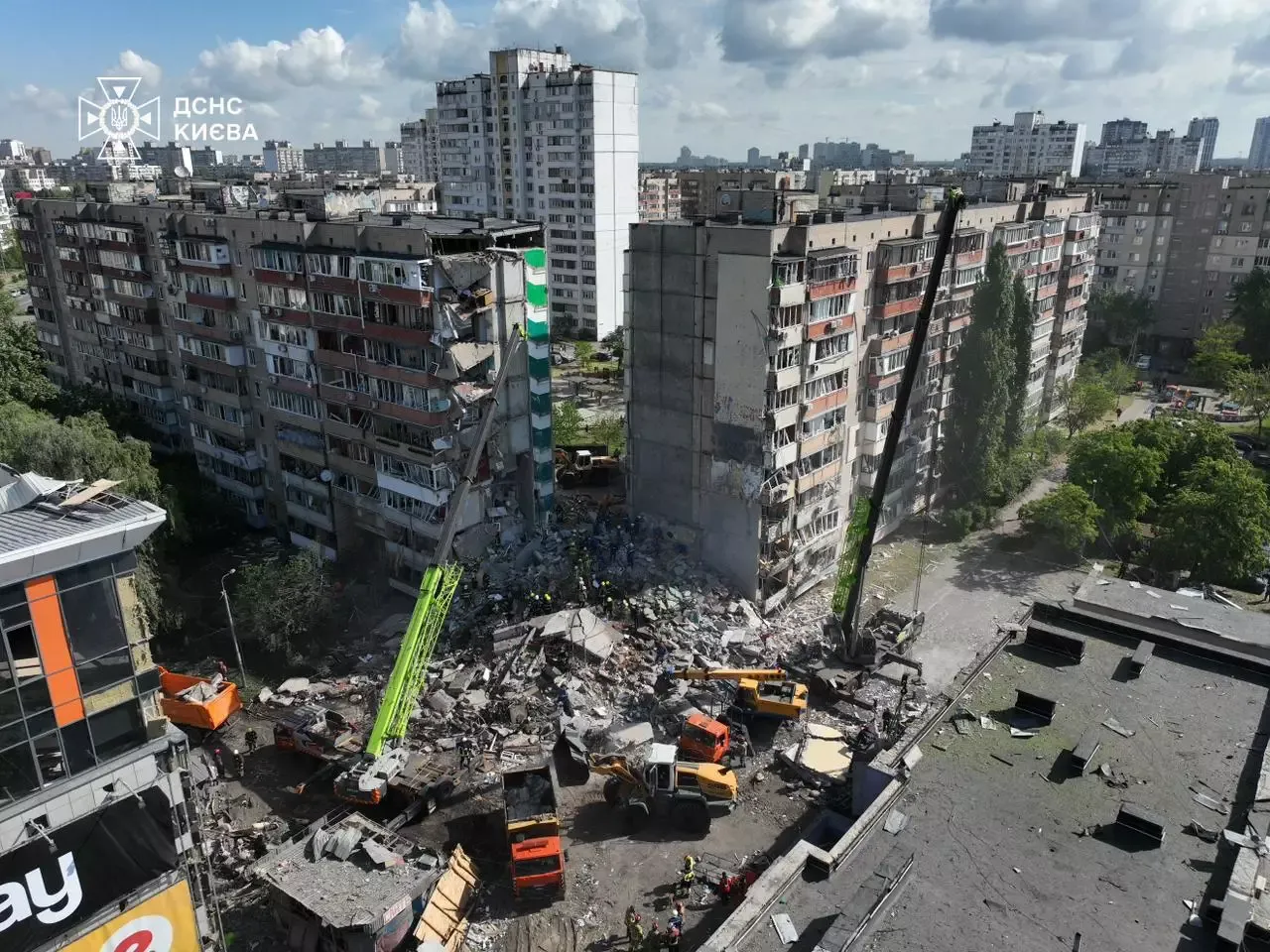
The pattern is not new. Russia’s June 2 barrage of 73 missiles and 656 drones killed at least 14 across Ukraine and exposed how thin the country’s air-defense coverage has worn. A month earlier, a Russian strike flattened a Kyiv apartment block and killed 24 in what officials then called the war’s biggest single aerial assault. Each record has been short-lived.
What changes now
The immediate consequence is cultural as much as human. A UNESCO-listed site that a generation of Ukrainians watched rise from ruins now carries fresh fire damage, and the body charged with protecting it had already conceded it could not guarantee its safety while the war continues. Restoration, if it comes, will again be measured in years.
The strike also lands in a diplomatic vacuum. The Trump administration spent the spring pushing for a deal, but the U.S.-brokered three-day ceasefire collapsed in May without an extension or a completed prisoner exchange, each side blaming the other for violations. Short truces have come and gone since; none has held. Monday’s barrage is a blunt answer to anyone who read the lull in headlines as a lull in the war.
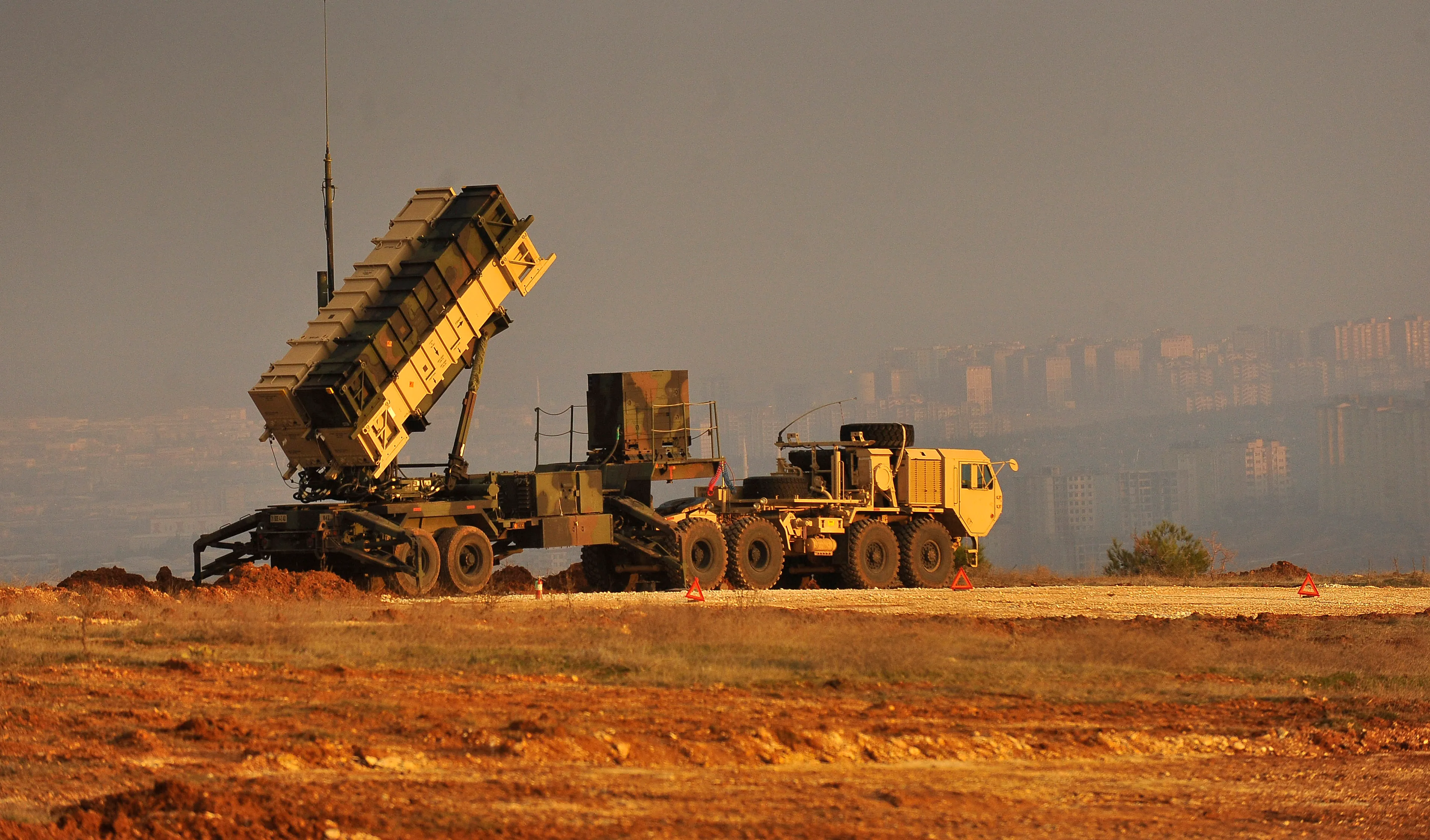
For Ukraine’s cities, the math has not changed. Air defense remains the difference between a missile intercepted over open ground and a roof on fire, and the supply remains short. Europe’s pledge of new Patriot batteries after the May attacks was real, but the delivery timelines stretch into months — time measured, in nights like this one, in lives and in landmarks.
What comes next is procedural and slow. UNESCO assessors will document the damage. Ukrainian prosecutors will add the cathedral to a war-crimes file that already runs to tens of thousands of entries. Conservators will photograph the roof and begin the long arithmetic of restoration. And in Kharkiv, where the rescuers died, the funerals will come first.
The Lavra has stood through Mongol raids, imperial rule, Soviet atheism and one world war that reduced its central cathedral to rubble. It will likely outlast this war too. The cost of getting there is what the country counted at sunrise on Monday: a burned roof, a pregnant woman in a hospital bed, two small children among the wounded, and five firefighters who will not go home.
Sources 5 cited · 1 primary
- Kyiv: Saint-Sophia Cathedral and Related Monastic Buildings, Kyiv-Pechersk Lavra
- Russian attack sets fire to centuries-old religious site in Kyiv and kills 5 in Kharkiv
- Ukraine's historic Kyiv Pechersk Lavra monastery set on fire following major Russian attack
- Kyiv's historic Pechersk Lavra burns as large-scale Russian strikes kill 5, injure 29 in capital
- Russia set fire to the Kyiv monastery where Moscow's founder is buried
American Courant cites its sources and links to primary documents where they exist. How we report →