Secretary of State Marco Rubio landed in New Delhi on Friday and met Prime Minister Narendra Modi on Saturday, opening a four-day diplomatic mission designed to stabilize a partnership the Trump administration’s tariff policies spent much of the past year straining. The visit came less than 72 hours before the Quad Foreign Ministers convene at Hyderabad House on Monday—an annual gathering that will include Australia’s Foreign Minister Penny Wong and Japan’s Foreign Minister Toshimitsu Motegi alongside Rubio and Indian External Affairs Minister S. Jaishankar.
The two leaders agreed to deepen trade and defense cooperation and accelerate collaboration on critical and emerging technologies, according to a State Department readout of the meeting. Rubio also extended, on behalf of President Trump, an invitation for Modi to visit the White House—a signal of intent that carries real weight after a year in which both governments managed genuine disputes without public confrontation.
“We want to sell them as much energy as they’ll buy,” Rubio told reporters, describing American liquefied natural gas and crude as both a commercial opportunity and a long-term alternative to Russian supply.
What Brought Rubio to India
The U.S.-India relationship has been under compressive strain since the Trump administration imposed steep tariffs on Indian goods. Washington more than doubled duties on India to 50 percent—among the highest applied to any major partner—primarily over New Delhi’s continued purchases of Russian oil. The tariffs carried a clear message: Washington expected India to reduce its dependence on Russian energy.
India, for its part, has been neither eager to stop buying discounted Russian crude nor ready to abandon a relationship with Moscow that predates its partnership with Washington by decades. New Delhi’s posture has been consistent: India pursues strategic autonomy, not alignment. But neither government wants the alliance to collapse. A partial rollback brought the effective reciprocal tariff rate down to 18 percent, easing the immediate tension without resolving what generated it.
Rubio’s energy pitch in New Delhi was thus both commercial and strategic. “We want to sell them as much energy as they’ll buy” is not a throwaway line—it is Washington’s explicit offer of an alternative supply chain. Civil nuclear energy, including small modular reactor technology, is also on India’s agenda. India’s electricity demand is growing faster than most large economies can manage, and SMRs represent a technology where American firms are eager to compete and where the economics of nuclear are becoming increasingly attractive to a government that has been expanding its grid for decades.
A comprehensive trade agreement has been under discussion for years without resolution, but Rubio signaled on Saturday that a deal covering tariff reductions, energy, critical minerals, advanced technologies, and supply-chain resilience is close. “Very soon,” he told Indian media. A further round of talks is scheduled for June.
Defense: From Buyer to Co-Producer
Beyond trade and energy, Rubio made an explicit case for expanding joint defense manufacturing. India could “become a tremendous contributor to the global defense base,” he told Indian officials, framing the potential relationship not as customer-and-vendor but as co-production partnership.
The framing matters. India has historically maintained a posture of strategic autonomy in its procurement, buying from Russia, France, Israel, and the United States depending on price, capability, and political circumstance. The Trump administration is now directly arguing that India should not merely acquire American defense technology but participate in building it—a structural shift that would deepen the bilateral relationship in ways that diplomatic communiqués alone cannot achieve.
The State Department readout noted that Rubio and Modi agreed to “accelerate collaboration on critical and emerging technologies”—language covering co-production of advanced electronics, defense systems, and semiconductor-related technologies. Rubio also said Washington sees India as increasingly important to the broader Western defense base, describing the country as a valued potential partner in filling global production gaps.
The Quad’s Monday Agenda
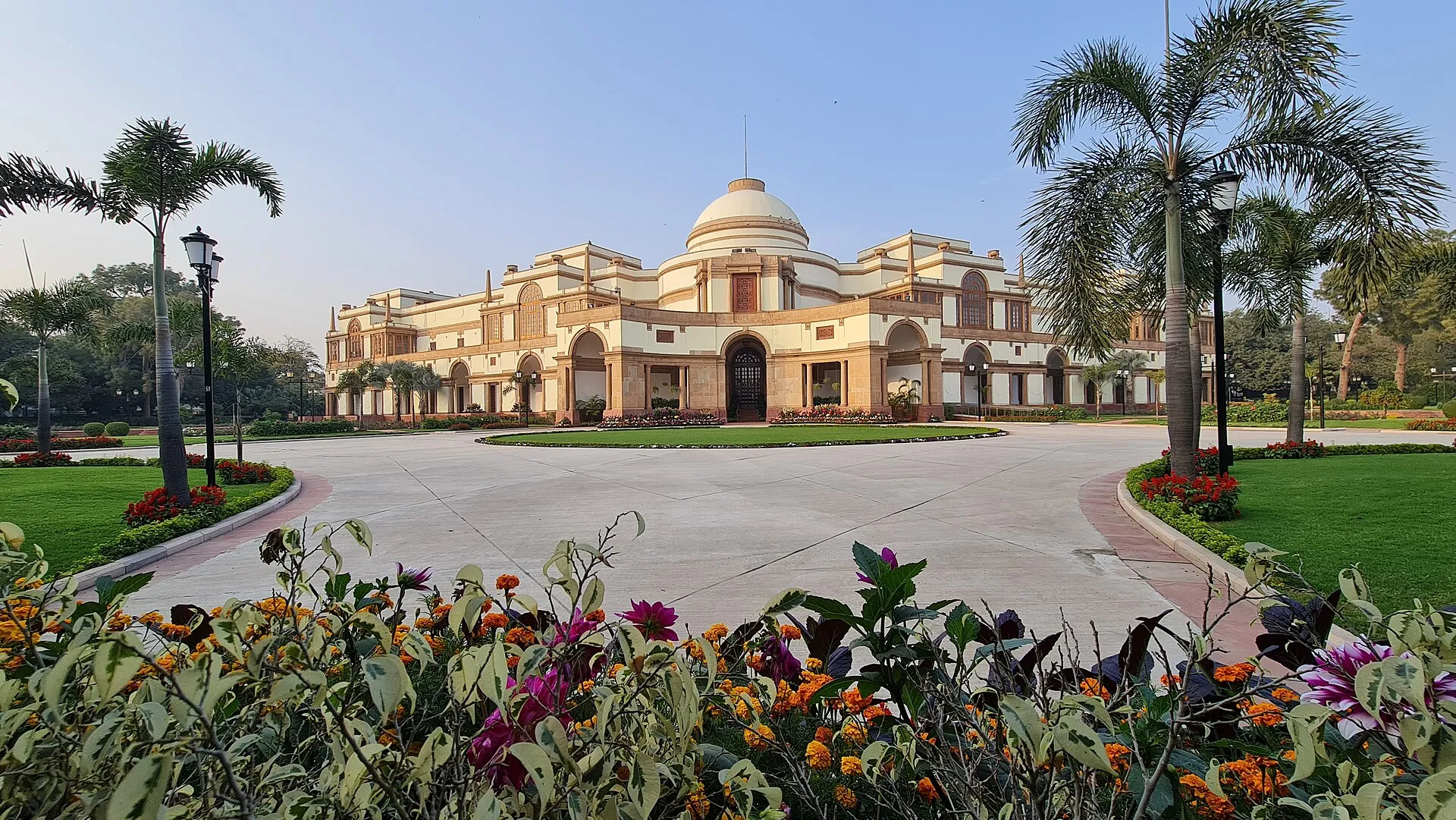
On Monday, at Hyderabad House—the Edwin Lutyens–designed estate in central New Delhi where India hosts its most significant foreign policy gatherings—Rubio will join Jaishankar, Wong, and Motegi for the Quad Foreign Ministers Meeting. The session will assess implementation progress on the Critical Minerals Initiative launched at the group’s July 2025 meeting in Washington, set working-group mandates for the months ahead, and begin structuring the agenda for the Quad Leaders’ Summit India plans to host later in 2026.
The Quad brings together four Indo-Pacific democracies whose mineral, manufacturing, and technology assets are individually substantial but are most valuable when coordinated. Australia holds major reserves of lithium, cobalt, and rare earth elements. India is building domestic processing capacity and has significant deposits of its own. Japan brings advanced manufacturing expertise and precision-engineering capability. The United States provides the market scale and defense procurement demand that gives supply-chain coordination commercial viability.
Chinese dominance in rare earth processing and refined-material supply creates structural vulnerability across all four economies. The Quad’s response is not to exclude China from all trade—that would be neither achievable nor strategically desirable—but to build a parallel network that reduces dependence on Chinese-controlled inputs for defense manufacturing, semiconductor fabrication, and clean energy infrastructure.
The fallout from the West Asia crisis is also expected to be on the agenda. The Strait of Hormuz threat and its ongoing effects on oil markets and tanker insurance costs have pushed energy security from a background concern to an immediate operational problem for all four Quad members. For India, which depends on Gulf oil shipments for a substantial portion of its crude, any sustained Hormuz disruption is an economic emergency, not merely a strategic inconvenience.
Maritime security and freedom of navigation in the Indo-Pacific remain explicit Quad commitments—commitments now given sharper definition by the parallel U.S.-China relationship that has developed since the Trump-Xi summit in Beijing earlier this month.
The China Question
The Quad has never been described by its members as an anti-China alliance. Its stated purpose is affirmative: a free and open Indo-Pacific, a rules-based order, infrastructure investment alternatives in developing nations, technology governance frameworks. The gap between that diplomatic framing and the strategic reality is transparent to everyone in the room.
The joint statement from the Beijing summit produced a trade framework and a managed equilibrium, not a resolution of the fundamental competition over technology standards, semiconductor supply chains, and influence across the Pacific. The Quad meeting Monday will, without ever saying so directly, position the four democracies to operate coherently whether U.S.-China relations hold at their current level or deteriorate.
For India, the Quad offers a distinctive kind of flexibility: a framework for deepening ties with Washington, Tokyo, and Canberra without formally choosing sides in a binary rivalry with Beijing. India’s trade relationship with China remains substantial. Its unresolved border tensions with China stretch across two thousand miles of disputed Himalayan terrain. The Quad allows New Delhi to hedge—and, as the host of both Monday’s ministerial and the planned Leaders’ Summit, to lead.
What Comes Next
Monday’s session is not a decisive event on its own. No treaties will be signed; the open questions in U.S.-India trade talks will not be resolved in a single working session. The meeting’s purpose is to consolidate and direct: take stock of what the Critical Minerals Initiative has produced since July, establish mandates for the months ahead, and set the architecture for a Leaders’ Summit that India intends to be the most consequential Quad gathering in the alliance’s eight-year history.
Three specific markers are worth tracking after Monday:
The U.S.-India critical minerals agreement, which Rubio described as coming “very soon,” with a negotiating round scheduled for June. If concluded, it would be the most concrete bilateral deliverable from the visit—a framework for joint mineral sourcing, processing investment, and supply-chain resilience that both sides have been building toward for two years.
Modi’s White House visit, which Rubio’s invitation set in motion without a date. The invitation is a political signal; a date on the calendar would be the substance. A confirmed visit before year’s end would mark the most significant milestone in the bilateral relationship since the two countries signed the Initiative on Critical and Emerging Technology framework in 2023.
The Quad Leaders’ Summit, which India plans to host before the end of 2026. Monday’s ministerial sets that summit’s agenda—on critical minerals, semiconductor governance, maritime security, and the long-term structure of Indo-Pacific cooperation. The New Delhi meeting is, in that sense, less an event than a planning session for the event that follows.
The broader arc of American diplomacy running through New Delhi this weekend—while Washington also manages domestic fiscal battles, a strained reconciliation process, and continuing fallout from the Iran war—reflects the scope of what the Trump administration is attempting to coordinate simultaneously. India is not the loudest item on that list. For the countries that share the Indo-Pacific, it may be the most durable one.
Sources 6 cited · 1 primary
- Secretary Rubio's Meeting with Indian Prime Minister Narendra Modi
- Rubio arrives in India ahead of Quad talks as U.S. tries to reset strained ties
- Rubio touts U.S. energy on India trip meant to repair ties
- US Secretary of State kicks off India visit, invites Modi to White House
- 'Very soon': Marco Rubio signals major India-US trade deal amid $20 billion investment push
- India to host Quad foreign ministers' meet on May 26: What's on the agenda this year?
American Courant cites its sources and links to primary documents where they exist. How we report →