Iranian Foreign Minister Abbas Araghchi told his counterparts at the BRICS foreign ministers’ meeting in New Delhi on Friday that Tehran “cannot trust” the United States, even as a second American-seized vessel and a cargo ship sunk by an Iranian drone strike the same day demonstrated how far the crisis over the Strait of Hormuz remained from any negotiated end.
The statement came at a gathering that Iran had hoped might produce a unified BRICS position pressuring Washington to lift its naval blockade of Iranian oil exports. It did not. India, hosting the meeting as the current BRICS chair, issued a chair’s statement in place of a consensus joint statement — a procedural signal that the bloc’s members could not agree on language strong enough to satisfy Tehran or specific enough to expose themselves to American diplomatic pressure.
What Araghchi Said — and Why It Matters
Araghchi’s remarks at the New Delhi session were direct. Speaking in a plenary that included counterparts from China, Russia, Brazil, South Africa, and several newer BRICS members, he said Iran had engaged in multiple rounds of diplomacy and found the American side unwilling to make binding commitments. “We cannot trust the Americans,” he said, according to officials present and multiple wire service reports from the meeting. “Every agreement reached has been walked back.”
The statement was not entirely new terrain. Iran has repeatedly accused the United States of bad faith since Operation Epic Fury began in February, and American officials have countered that Iran’s refusal to allow international inspections of its nuclear program is the core obstacle. But the BRICS setting gave Araghchi’s words particular resonance — he was delivering the message not to an adversary but to countries that have positioned themselves as potential mediators and alternative partners for Iranian oil.
What followed in the room was a notable absence of solidarity. Earlier in May, Iran’s counter-proposal to American ceasefire conditions was rejected by Washington as unacceptable, and several BRICS delegations appeared unwilling to endorse language that would implicitly validate Iran’s position on the blockade. China, which imports significant volumes of Iranian oil and has the most direct economic stake in the crisis, offered measured support but stopped short of calling for immediate American withdrawal from the Hormuz corridor.
Why BRICS Could Not Unite on Iran
The failure to produce a joint statement reflected the genuine complexity of BRICS members’ positions. The bloc includes countries with deeply different exposure to the crisis, different relationships with Washington, and different views on what a resolution should look like.
India, as host and chair, was in a particularly constrained position. New Delhi has maintained energy imports from both the United States and Iran and has consistently avoided language that would force a choice between them. Indian External Affairs Ministry officials said ahead of the meeting that the chair statement would be “balanced and constructive” — diplomatic shorthand for not naming the United States as the blockading party or endorsing Iran’s framing of the standoff as illegal.
Brazil and South Africa, both newer to the bloc’s expanded format, were similarly reluctant to anchor a joint statement to specific demands that could complicate their bilateral relationships with Washington.
Russia’s position was the most aligned with Iran’s, but even Moscow focused primarily on the language around sovereignty and international shipping law rather than calling explicitly for the United States to lift naval restrictions. The diplomatic calculus for Russia included the awareness that the Trump-Xi Beijing summit in April had produced at least a framework for de-escalation discussions that China was not eager to torpedo with blunt BRICS language.
The chair statement India issued acknowledged “concerns about disruptions to international shipping in the Persian Gulf region” and called for “dialogue and diplomatic solutions consistent with international law.” It named no country. Iranian officials described the outcome as disappointing. American officials did not comment on the New Delhi meeting.
The Blockade and the Ships
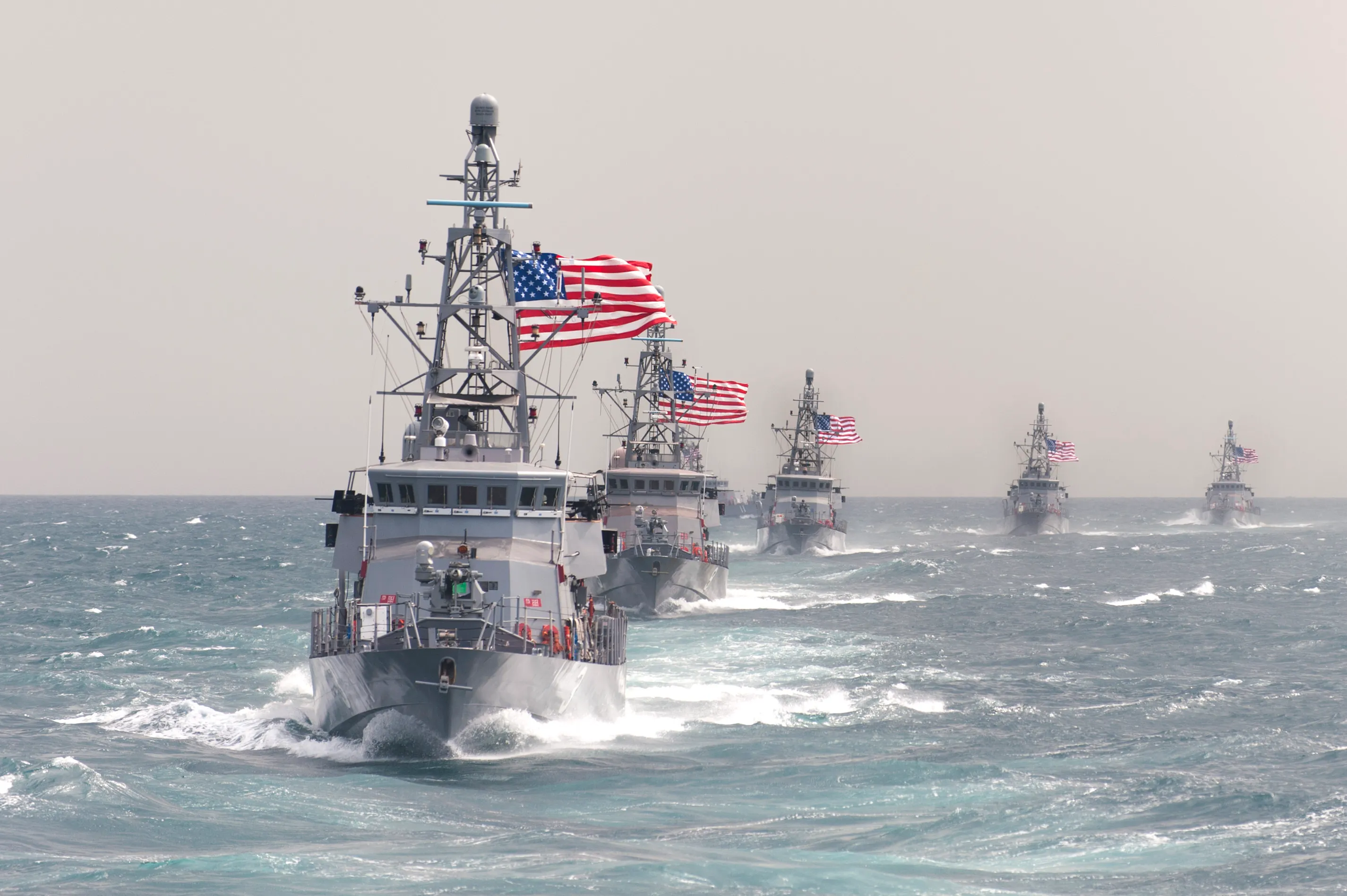
While the BRICS meeting proceeded in New Delhi, the operational situation at Hormuz produced two additional incidents. The U.S. Navy confirmed that the guided-missile destroyer USS Stout, operating as part of the Hormuz enforcement task force, intercepted a Marshall Islands-flagged vessel approximately 38 nautical miles northeast of Fujairah and diverted it to a holding area used for vessels suspected of violating American sanctions on Iranian cargo. The Marshall Islands vessel was the fourth ship seized this week under the enforcement operation.
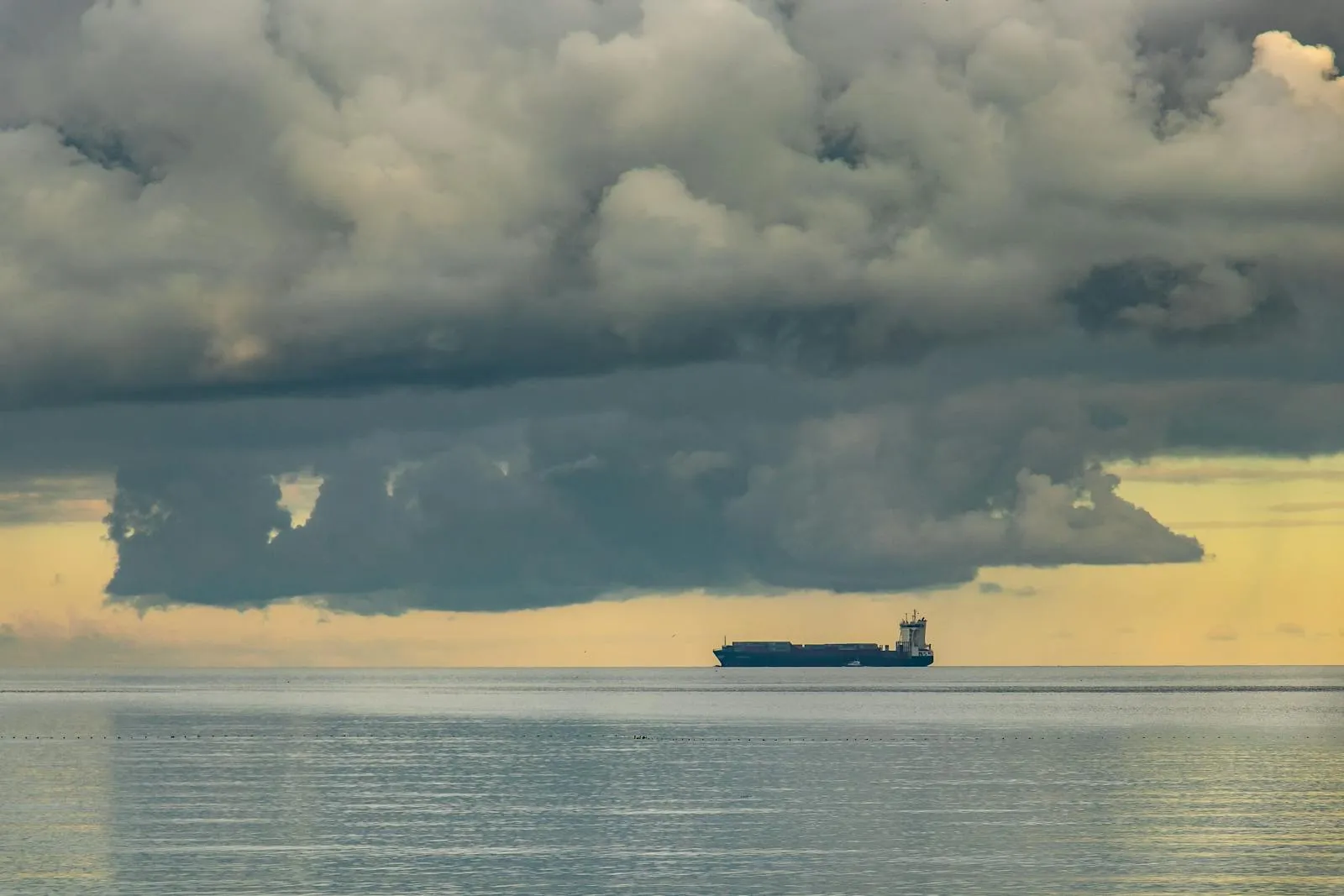
Separately, the Panamanian-flagged cargo vessel Bahr Al-Majd sank Friday afternoon in waters approximately 90 nautical miles south of Muscat, Oman, after sustaining damage that the Omani Maritime Authority attributed to an armed drone strike. The crew of 21 was rescued by a passing tanker. Iran’s Revolutionary Guard Corps declined comment on the sinking. CENTCOM confirmed it was not the attacking party.
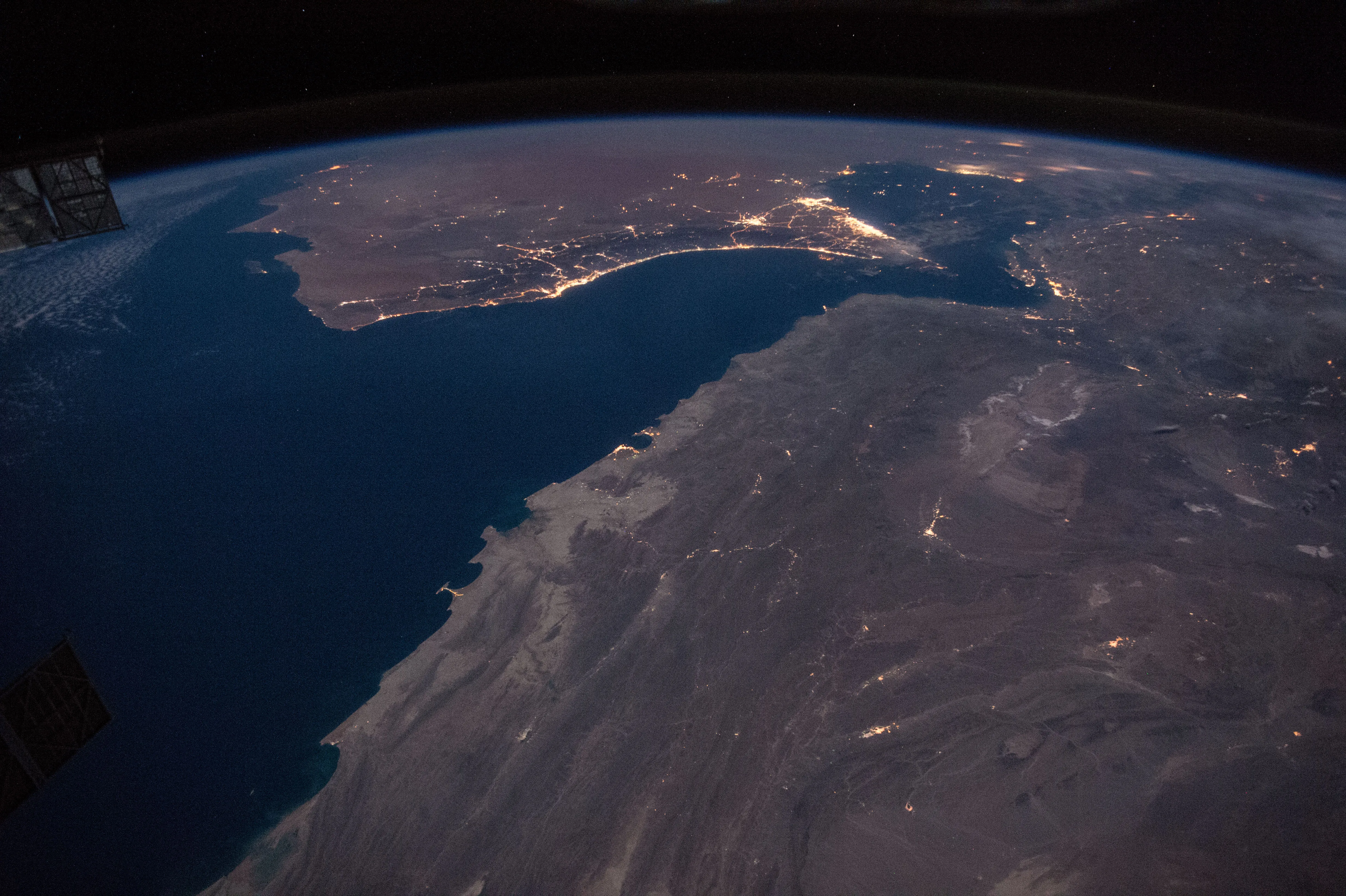
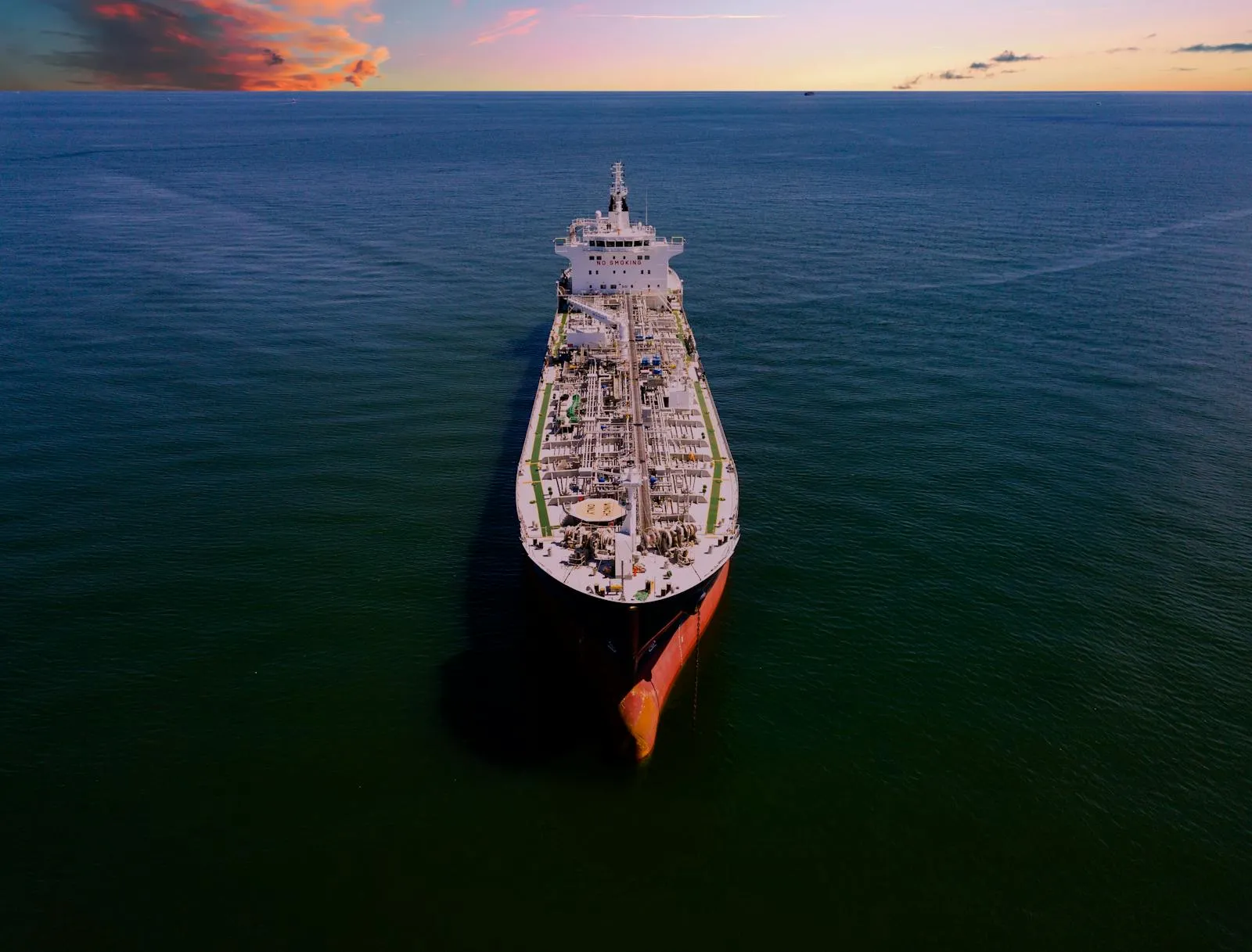
The Bahr Al-Majd had been traveling a routing used by vessels attempting to avoid the primary Hormuz transit corridor. Since the IRGC declared a “vast operational area” in the eastern Gulf and declared U.S. naval enforcement activity illegal, commercial shipping has been routed in increasingly divergent patterns — some ships through the main strait under risk of American diversion, others through longer southern detours under risk of Iranian drone coverage. There are now no safe corridors that satisfy both parties’ claims.
American officials have described the operation as legally authorized under existing sanctions authority and consistent with international maritime law. Iran disputes both characterizations. At the United Nations Security Council, a Russian and Chinese draft resolution calling for an end to the American enforcement operation failed after the United States exercised its veto. A subsequent American-backed resolution calling on Iran to cooperate with inspections likewise failed.
President Trump said in a social media post Friday that the United States “now controls the Strait of Hormuz” and that this control would remain “until Iran agrees to verifiable, complete denuclearization.” The statement drew a sharp response from Iranian Foreign Ministry spokesman Nasser Kanaani, who called the claim “an act of piracy dressed in legal language” and said Iran would pursue all available remedies under international law. Markets responded to the latest escalation with an oil price spike and equity selloff, continuing a pattern seen since the February strikes.
Where Talks Stand
Multiple rounds of Qatari and Omani mediation have not produced a framework both sides will accept. The core divide remains the same as it was in February: the United States and its allies insist that any normalization must include verifiable constraints on Iran’s nuclear program, specifically its enriched uranium stockpile. Iran insists that nuclear talks and the blockade are separate matters and that the United States must lift naval restrictions before any sustained diplomacy is possible.
Araghchi’s BRICS remarks made clear that Iran does not currently see a diplomatic opening it trusts. At the same time, Iran has not expanded the conflict beyond the Hormuz corridor — no attacks on American forces or facilities since the initial exchange in February, and no publicly stated intention to do so. The IRGC’s posture has been one of graduated enforcement and denial: seizing ships when possible, striking vessels suspected of sanction violations, and contesting the American legal framework without triggering a direct military confrontation.
That equilibrium is fragile. Each incident — a seized vessel, a sunk cargo ship, a drone that strikes a tanker taking a southern route — narrows the margin for accidental escalation. Shipping insurance rates for Gulf transits have risen to levels not seen since the peak of the tanker wars in the 1980s. Major shipping lines have suspended bookings for vessels transiting within range of both enforcement zones.
For the BRICS countries that gathered in New Delhi, the message from the session was that the bloc cannot deliver what Iran most wants — a unified political signal that would increase pressure on Washington — and that Iran knows this. Whether that recognition pushes Tehran toward a more flexible diplomatic posture or toward deeper entrenchment will depend in part on how much longer the commercial disruption at Hormuz can be sustained before Gulf states and major importers demand a resolution neither party is currently offering.
Sources 6 cited · 2 primary
- Iran's Araghchi says Tehran cannot trust US at BRICS meeting in New Delhi
- BRICS foreign ministers meet in New Delhi amid Iran, Russia-Ukraine tensions
- Iran foreign minister at BRICS: 'We cannot trust the Americans'
- Trump says US now 'controls' Strait of Hormuz, Iran says blockade illegal
- US seizes another vessel near Hormuz; cargo ship sinks after Iranian drone strike
- BRICS divided on Iran crisis as New Delhi avoids joint statement
American Courant cites its sources and links to primary documents where they exist. How we report →