President Trump on Sunday rejected Iran’s counter-proposal to end the 71-day war, posting to Truth Social that he had “just read the response from Iran’s so-called ‘Representatives’” and found it “TOTALLY UNACCEPTABLE” — delivering the sharpest American rebuke of Iran’s negotiating position since talks began in late March.
The rejection landed hours after Iran formally transmitted its counter-proposal to Washington through Pakistani mediators, the third formal exchange between the sides since Operation Epic Fury launched on February 28. The two governments have now publicly traded incompatible positions on every core issue — nuclear enrichment, maritime rights, sanctions, and financial compensation — leaving the ceasefire that took effect on April 8 hanging on the assumption that neither side wants resumed combat more than the other.
Earlier Sunday, before Tehran’s response arrived, Trump had already accused Iran of “playing games with the United States, and the rest of the World.” When the counter-proposal came in, his public position hardened to a flat rejection.
What Iran’s Counter-Proposal Actually Demanded
Iran’s Supreme National Security Council spent four days deliberating its answer — two days longer than the 48-hour window American officials had expected — before sending the document through Pakistani Foreign Minister Ishaq Dar. Iranian state media, the Tasnim news agency, and Al Jazeera’s reporting from Tehran officials all characterized the response as a comprehensive counter, not a narrow one.
The demands, as reported by Iran state broadcaster, Iranian news agencies, and confirmed through independent diplomatic reporting, include: war reparations from the United States for damage caused by Operation Epic Fury; international recognition of Iran’s sovereignty over the Strait of Hormuz, including a new multilateral mechanism governing transit rights; an immediate end to American sanctions on Iranian oil sales; the termination of the U.S. naval blockade of Iranian ports; the release of frozen Iranian assets during a 30-day window; guarantees against future U.S. or Israeli military action targeting Iran; the withdrawal of American forces from Iran’s immediate periphery; and an end to hostilities in Lebanon and against Iran’s regional partners.
The nuclear file is conspicuously absent from that list. Iran’s position, consistent since the April 8 ceasefire, is that nuclear negotiations are a Phase 2 matter that can begin only after a formal end to hostilities — not a precondition of the initial agreement. Iranian Foreign Ministry spokesman Esmail Baghaei confirmed that Tehran’s response had been delivered and described its goal as achieving a “comprehensive, just, and lasting” resolution, without specifying any nuclear concessions.
That sequencing is the structural sticking point. The 14-point U.S. framework reported by Axios on May 6 links both phases in a single document: it would require Iran to commit to a uranium enrichment moratorium of at least 12 years and surrender an estimated 440 kilograms of uranium enriched to 60 percent — a technical step from weapons-grade — in exchange for sanctions relief, a lifting of the naval blockade, and a gradual release of frozen assets. Washington has not publicly indicated any willingness to decouple those demands.
The gap between the two frameworks is not a matter of negotiating style; it is a disagreement about whether nuclear constraints are a prerequisite for peace or a consequence of it. Tehran says the latter. Washington says the former. After five rounds of formal engagement and the ceasefire’s passage into its second month, neither position has moved.
The Nuclear Sequencing Argument
Iran’s insistence on decoupling is grounded in a logic that its negotiators have articulated consistently since the war began. From Tehran’s perspective, committing to a nuclear moratorium before an end to the war exposes Iran to a scenario in which it gives up its primary leverage and still faces resumed strikes. Signing over 440 kilograms of highly enriched uranium — material that represents years of industrial effort and that Iran’s government frames as sovereign property — under wartime military pressure is, in Iran’s telling, surrender dressed as diplomacy.
American negotiators, led by special envoy Steve Witkoff and Jared Kushner, have argued the inverse: that nuclear constraints must be formalized first precisely because the ceasefire is fragile, and that allowing Iran to preserve its enrichment program through the negotiating window creates a fait accompli that outlasts any deal. Secretary of State Marco Rubio and Witkoff met Saturday in Miami with Qatari Prime Minister Mohammed bin Abdulrahman Al-Thani, one of several Gulf states now serving as informal channels alongside Pakistan’s official intermediary role.
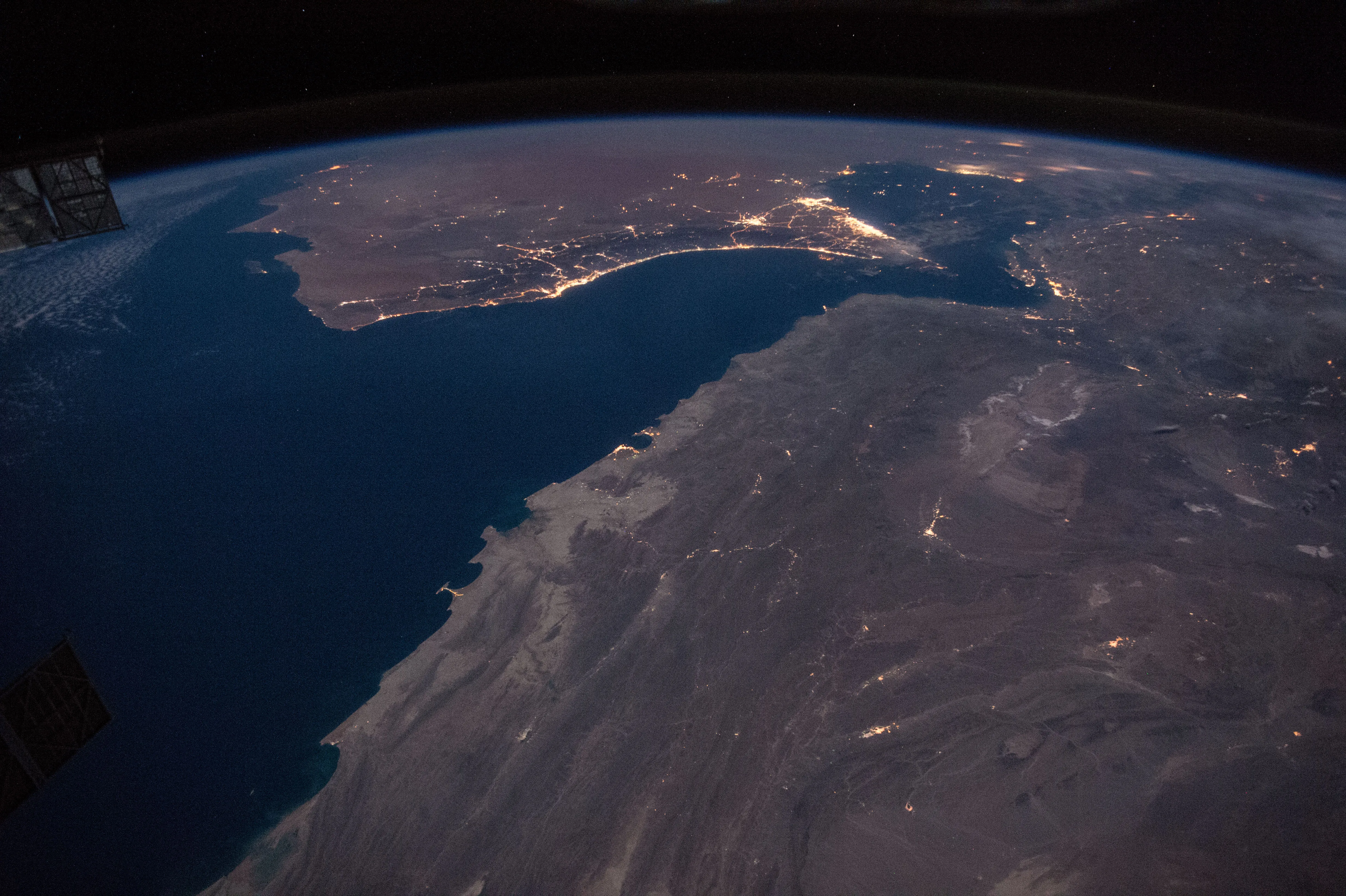
Pakistan’s Foreign Minister Dar, after transmitting Iran’s counter-proposal, urged Tehran publicly to “come to a middle ground” — language that signals Islamabad believes the gap is real, and that Iran’s current position is not a bridgeable distance from Washington’s opening. Pakistan has its own urgent economic stake in a resolution: the Al Kharaitiyat, the Qatari LNG carrier that crossed the Strait of Hormuz on Sunday for the first time since the war began, was bound for Pakistan’s Port Qasim, where rolling power outages tied to natural gas shortages have become a domestic political crisis for Prime Minister Shehbaz Sharif.
The reparations demand is the component most likely to be a non-starter with any American administration. No U.S. president has agreed to pay war reparations to an adversary following a military action, and the political optics of the Trump administration cutting a payment to Tehran would be devastating domestically. The Iranian side appears to understand this — analysts in Tehran and in Western capitals have characterized the reparations demand as a bargaining chip rather than a requirement, designed to create trade space on other issues like asset releases and sanctions rollback. But Trump’s flat rejection makes it harder to test that theory in the next round.
Drones Over the Gulf
Sunday’s diplomatic collapse unfolded against a backdrop of continued military activity across the Persian Gulf. The UAE’s Defense Ministry said its air defense systems shot down two drones Sunday and attributed the attack to Iran. Kuwait’s Defense Ministry spokesman Brigadier General Saud Abdulaziz Al Otaibi confirmed that hostile drones entered Kuwaiti airspace and that forces responded “in accordance with established procedures.” No casualties were reported in either country.
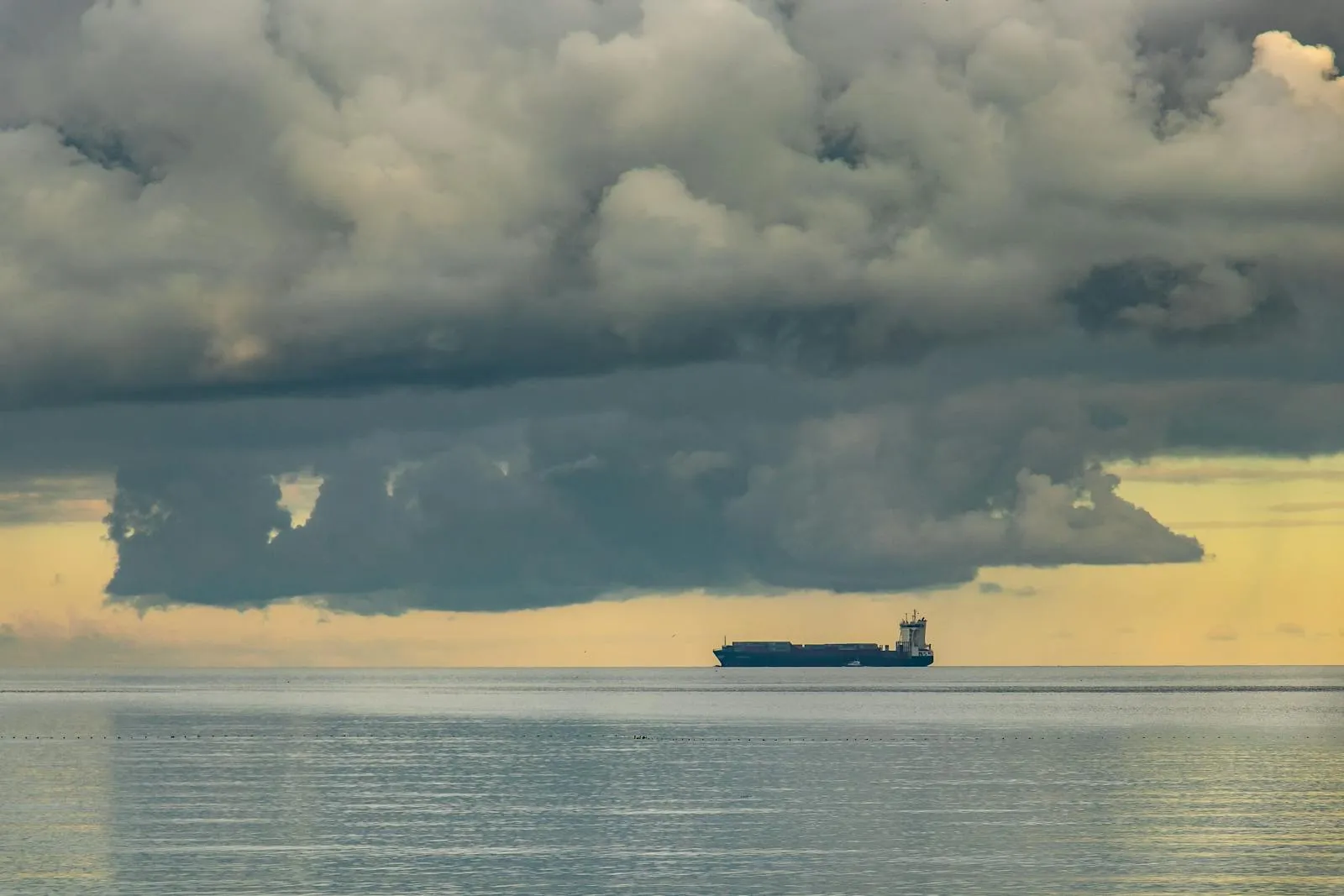
More seriously, Qatar’s Defense Ministry confirmed that a drone struck a commercial cargo vessel approximately 23 nautical miles northeast of Doha. The ship, traveling from Abu Dhabi into a southern Qatari port, sustained a fire that was controlled by the crew. No one immediately claimed responsibility for the strike, and Qatar condemned it as a violation of international maritime law.
The pattern of attacks on Gulf shipping — now extending from UAE territorial waters to Qatari coastal areas — has placed neutral Gulf states, including Qatar, Bahrain, Kuwait, and Oman, in an increasingly uncomfortable position. Qatar hosts the largest American military installation in the Middle East. Its public posture has been careful neutrality, but a drone strike inside Qatari waters is qualitatively different from attacks in international shipping lanes.
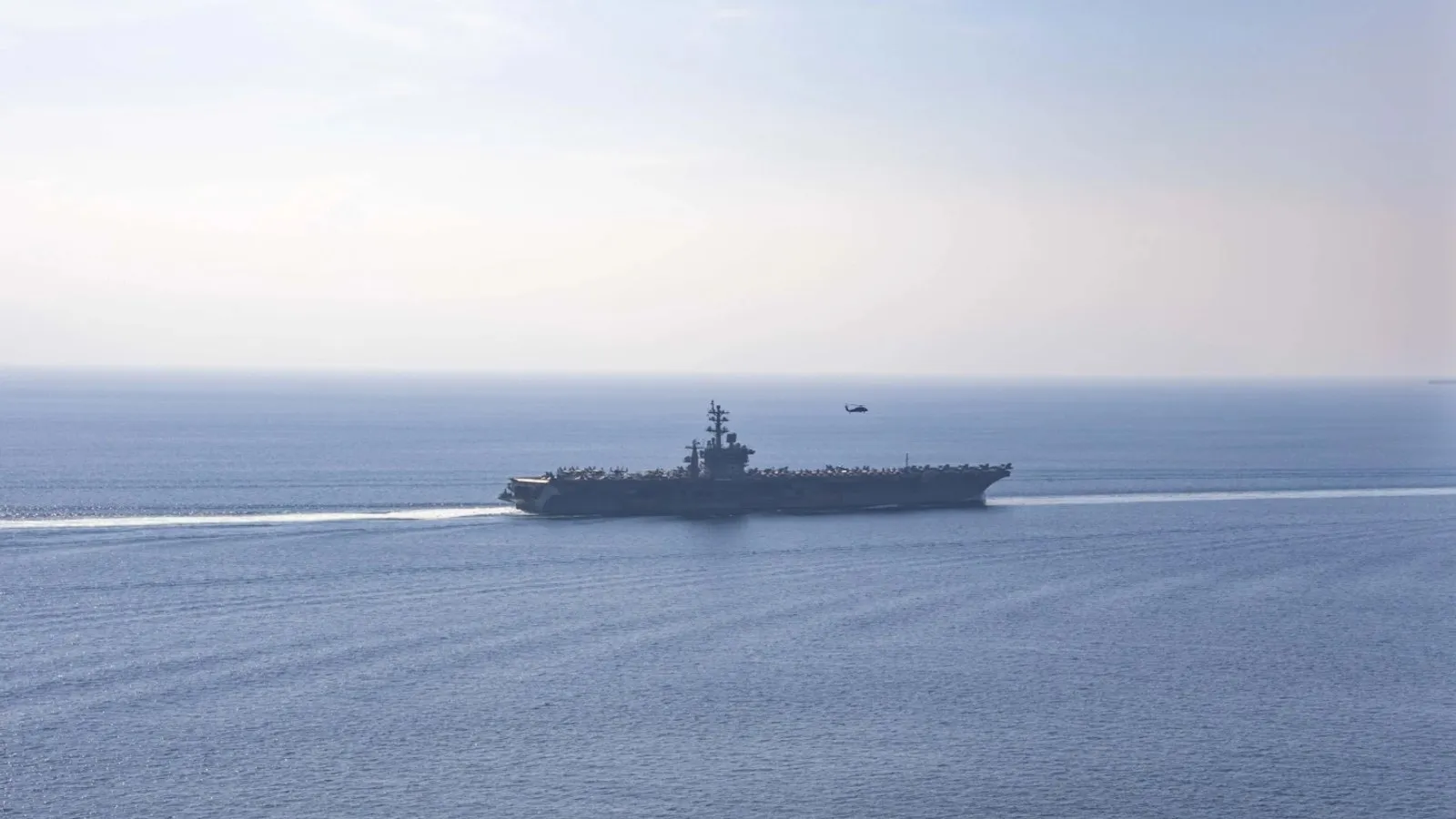
The Islamic Revolutionary Guard Corps warned the United States last week against further actions against Iranian-affiliated vessels, following engagements in which U.S. forces disabled two tankers attempting to evade the American naval blockade. Iran’s IRGC characterized those actions as piracy; American officials described them as lawful enforcement. Those competing legal claims remain unresolved and unaddressed in either side’s formal negotiating documents.
What Comes Next
Trump’s rejection of Iran’s counter-proposal does not necessarily mean a return to active strikes — Operation Epic Fury was officially declared concluded by the Pentagon on April 23, and the U.S. has not resumed the air campaign since the April 8 ceasefire. But it does reset the negotiating clock. Iran’s counter now sits with the American delegation; the U.S. is expected to deliver a response, which would be the fourth formal exchange since March.
The administration has maintained publicly that a deal is possible before the end of May — an informal deadline that now looks strained. Trump said last week he believed Iran “wants to make a deal” and that recent talks had been “very good.” Sunday’s Truth Social post suggests that assessment has curdled, at least for the moment.
The economic pressure from the prolonged closure remains acute on both sides. The Iran war has added an estimated $1,753 in annual household energy costs for the average American family, through gas prices, heating oil, and utility bills that have absorbed months of disrupted Hormuz flows. Iranian civilians and the economies of Pakistan, India, and South Korea — all major buyers of Gulf energy — have faced their own distinct versions of the same squeeze.
Whether those accumulating costs are sufficient to close a gap this wide — reparations vs. enrichment moratoriums, Hormuz sovereignty vs. open shipping lanes, nuclear sequencing vs. nuclear preconditions — remains an open question that the next formal exchange will either answer or extend.
The ceasefire, for now, holds in name. Whether it holds in fact depends on what happens in the 48 hours before Pakistan delivers Washington’s reply to Tehran.
Sources 6 cited · 2 primary
- Live Updates: Trump says Iran's response to peace proposal 'totally unacceptable'
- Trump rejects Iran's latest response to U.S. ceasefire proposal
- Iran replies to US proposal to end war, Trump finds response 'unacceptable'
- Shaky Iran war ceasefire tested again as drone hits cargo ship off Qatar coast while Kuwait and UAE repel drone attacks
- Trump Rejects New Iran Peace Offer as 'Totally Unacceptable'
- Iran responds to ceasefire proposal as drones target Gulf nations
American Courant cites its sources and links to primary documents where they exist. How we report →