For nearly two weeks, tens of thousands of Albanians have marched through the capital, Tirana, chanting “Albania is not for sale” and waving banners that read “Ivanka, go home.” The target of their anger is a luxury resort planned for one of the country’s most pristine stretches of Adriatic coast — and the man whose investment fund is behind it: Jared Kushner, son-in-law of U.S. President Donald Trump.
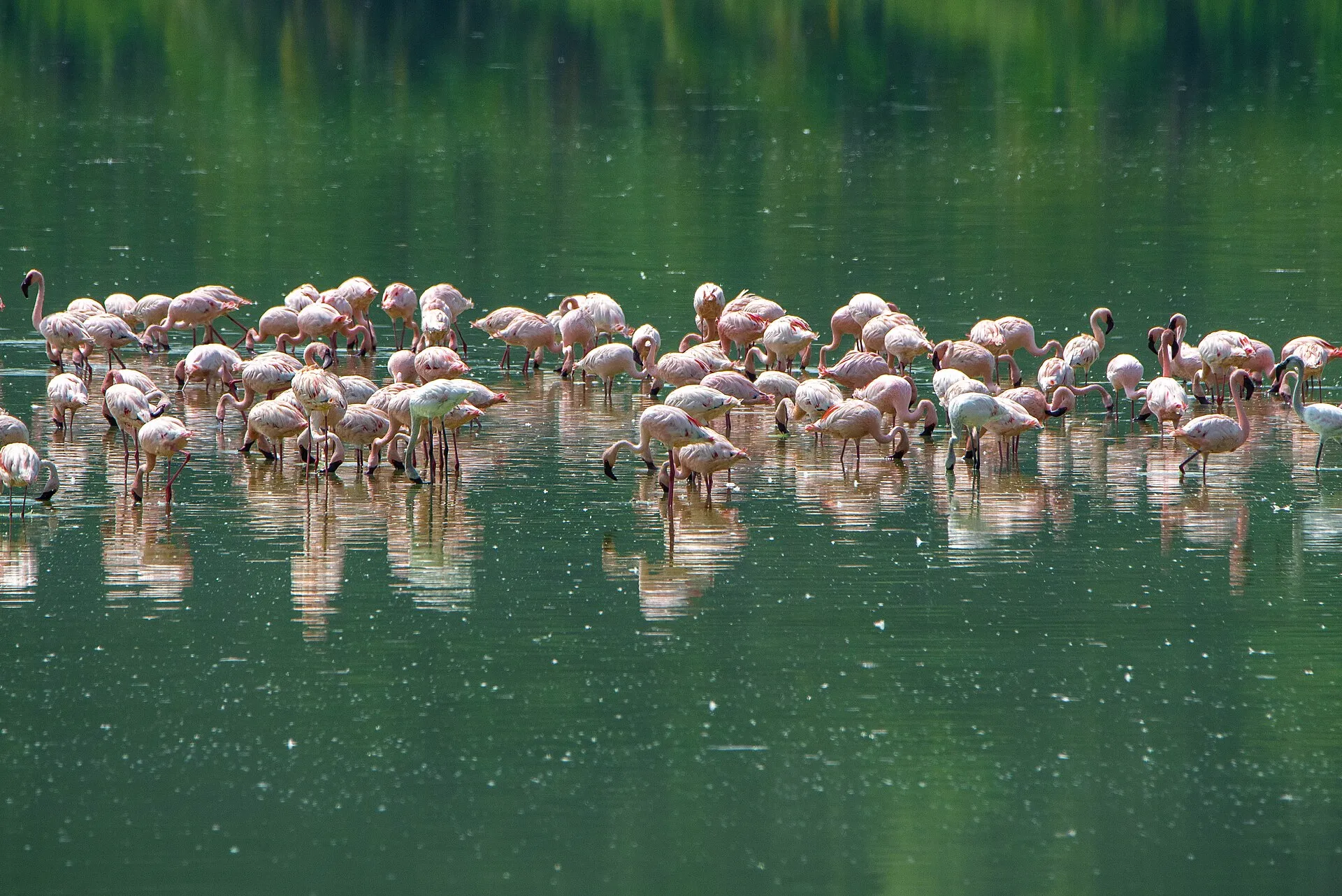
The demonstrations, which protesters have nicknamed the “Flamingo Revolution” after the birds that nest in the threatened wetland, began as an environmental campaign and have hardened into something larger: a broad protest movement against Prime Minister Edi Rama and what demonstrators call entrenched corruption after nearly 13 years of his rule. Rama has refused to retreat. Instead, he has vowed to build the resort anyway — and accused Iran of running an online influence operation to inflame the unrest, a charge Tehran denies. What started as a fight over flamingos has become a tangle of environmental law, U.S. political ties and international intrigue.
What the project is
At the center is a development valued at roughly €1.4 billion (about $1.6 billion) tied to Affinity Partners, the private-equity firm Kushner founded after leaving the White House at the end of Trump’s first term. The Albanian government granted “strategic investor” status to a firm linked to the fund after the project was announced in 2024, a designation that streamlines permitting and land access.
The plan has two parts. One is a coastal development near the Vjosa-Narta lagoon, a protected wetland on the southern Adriatic that conservationists say hosts more than 200 species of migratory birds, including flamingos, alongside seals and nesting sea turtles. The other is a smaller, high-end resort on Sazan, an uninhabited island that served as a secret military base during Albania’s communist era. Project documents describe an eco-resort to be managed by the luxury operator Aman, plus hotels, private villas, a marina and recreational facilities, with backers projecting roughly 1,000 jobs.
To supporters, including Rama’s government, the project is exactly the kind of marquee foreign investment a small, lower-income country on the edge of the European Union has long sought. To its opponents, building luxury villas inside a protected ecosystem is a betrayal of environmental commitments — and the speed with which protections appear to have been eased for a well-connected American investor is itself the scandal.
Why the protests grew
The environmental objection was the spark, but it is no longer the whole fire. Albanian authorities have been examining decisions on land protections, permitting and ownership changes that cleared the way for the development — the kind of scrutiny that turns a zoning fight into a corruption story. For many demonstrators, the resort became a symbol of a government they see as too comfortable trading public land and natural assets for private gain.
That is why the crowds swelled and the chants shifted from saving the lagoon to demanding Rama’s resignation. The prime minister, in office since 2013 and recently reelected, now faces the most sustained street pressure of his tenure. The protests have folded into a wider opposition movement that has simmered for months over governance and the country’s stalled path toward EU membership, lending the resort dispute a weight far beyond a single development. The unrest echoes the kind of frustration over governance and outside influence that has surfaced across Europe’s periphery, from the EU’s fraught internal politics over Ukraine aid to the leaders’ summits where Washington’s economic reach is a recurring theme.
Rama’s response has been defiance. He has said the development will proceed and dismissed much of the criticism as misguided, framing the project as good for Albania regardless of who is behind it. That posture has done little to calm the streets and a great deal to keep the story alive.
The U.S. angle
This is not a routine foreign land dispute, because of who the developer is. Affinity Partners is run by Kushner, who served as a senior White House adviser during Trump’s first term and remains the president’s son-in-law. The fund is backed largely by Gulf sovereign wealth, and its move into the Balkans has drawn attention precisely because it sits at the intersection of private business and a sitting president’s family.
That intersection is what gives the “Ivanka, go home” banners their charge. Protesters are not only objecting to concrete and villas on a protected coast; they are objecting to the optics of a Trump-family-linked fund securing favorable treatment from a friendly government abroad. For American readers, the episode is a window into how the Trump family’s overseas business ventures land in the countries that host them — welcomed by governments eager for investment and access, contested by citizens who see the arrangements as too cozy. The administration’s economic footprint in Europe has already been a flashpoint at recent summits over tariffs and trade; the Albania protests show the same dynamic playing out at the level of a single coastline.
The Iran twist
The most unexpected turn is Rama’s claim that the unrest is being amplified from abroad. The prime minister alleges that online campaigns boosting the protests are part of an Iranian-backed “hybrid war” against Albania — a serious accusation that has pulled a NATO member’s domestic crisis into the orbit of its long-running feud with Tehran.
Albania and Iran have history. Tirana hosts thousands of members of an exiled Iranian opposition group, and the two countries severed diplomatic relations in 2022 after Albania blamed Iran for a major cyberattack on government systems. Against that backdrop, Rama’s charge is plausible enough to take seriously and convenient enough to question: critics note that blaming a foreign adversary is a familiar way for an embattled leader to discredit domestic dissent. Iran has rejected the accusation outright. No public evidence has been released that resolves how much, if any, of the online activity traces to Tehran, and the dispute now adds a diplomatic standoff to an already combustible mix — at a moment when tensions between Iran and the West remain high over the Gulf.
What comes next
The immediate questions are whether the protests sustain their momentum and whether Albania’s corruption investigation produces findings that force the government’s hand. Rama has the votes and the legal machinery to press ahead, but a prolonged movement on the streets — and the international attention a Kushner-linked project guarantees — raises the political cost of doing so.
For the resort itself, the path runs through Albanian courts, regulators and the strength of the protected-area designations that conservationists are fighting to enforce. For Rama, the calculation is whether a single development is worth the broadest challenge to his rule in over a decade. And for a wider audience, the Flamingo Revolution is a test of a recurring 2026 question: what happens when a politically connected American investment meets a population that decides its coastline is not, in fact, for sale. Tracking how that plays out is the kind of story that will keep recurring across the global affairs beat this year.
Sources 6 cited
- Jared Kushner-backed luxury resort stokes days of protests in Albania
- Why the Kushners' plan to build an Albanian resort has sparked protests
- Albania's Rama Vows to Push on With Kushner-Linked Luxury Resort Despite Protests
- Everything you need to know about the Jared Kushner resort protests in Albania
- Albanian PM says Iran cyber op is amplifying protests against Kushner-linked development plan
- What to Know About the Jared Kushner-Backed Luxury Resort Drawing Protests in Albania
American Courant cites its sources and links to primary documents where they exist. How we report →