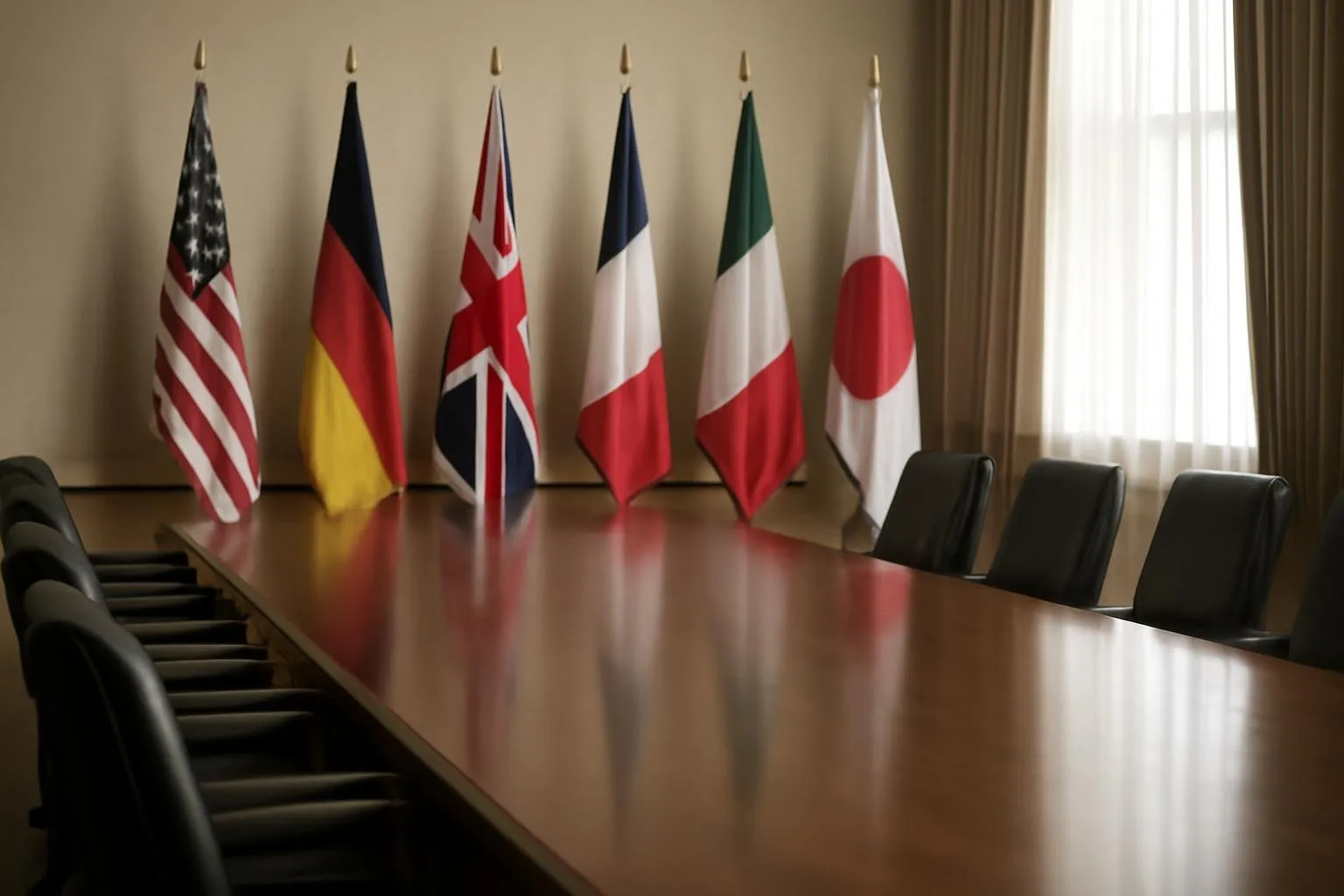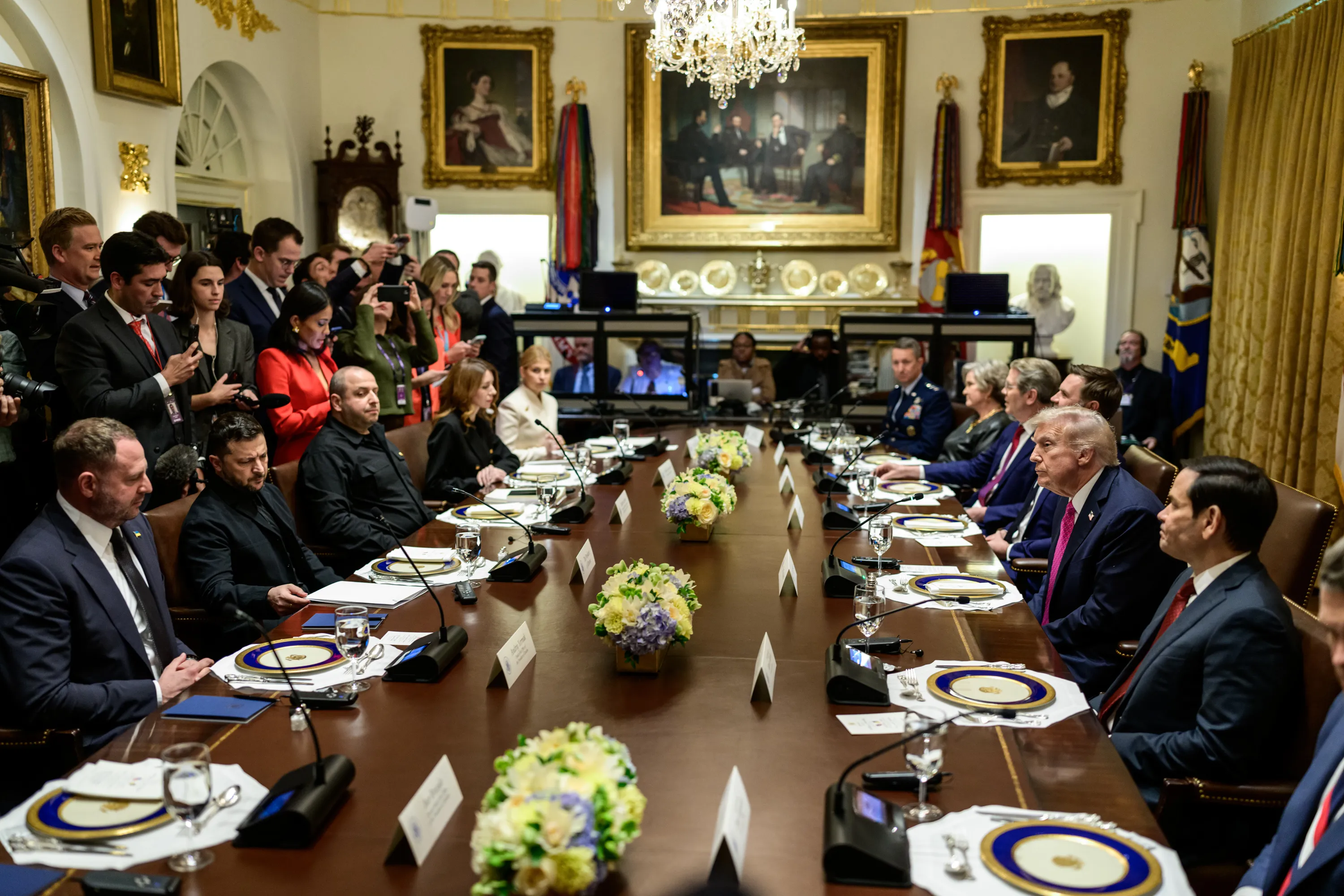
President Donald Trump arrived at the Group of Seven summit in Évian-les-Bains, France, this week carrying the kind of momentum he likes best: a war he says he just ended, and another he says he can end next. Fresh from announcing an agreement to wind down the U.S. conflict with Iran, Trump told reporters he had spoken by phone over the weekend with both Volodymyr Zelensky and Vladimir Putin, and that the two men were ready to talk. “Maybe we can do something,” he said on arrival. “They’re both open to it.”
By Tuesday, that optimism had run into a harder fact. Zelensky, who joined the G7 leaders in Évian for a working session devoted to Ukraine, had offered to sit down with Putin on the sidelines of the summit, with Trump and European leaders alongside them. Washington and its European partners backed the idea. Moscow did not. Putin saw no point in meeting, according to reporting on the exchange — leaving the centerpiece of Trump’s Ukraine push without the one participant it needed.
The distance between what Trump described and what actually happened defined the summit’s opening days. The president framed the war in Ukraine, now in its fifth year since Russia’s 2022 full-scale invasion, as the next problem he intends to solve. The leader he needs at the table declined to come.
From Iran to Ukraine in a Single Weekend
Trump came to France having declared the roughly three-and-a-half-month U.S. war with Iran over, a settlement American Courant covered in the deal Trump announced to wind down the conflict and ease oil markets. He spent little time savoring it before pointing at the next file.
“Now that this is finished, we’re going to be focusing on that,” Trump said during a Monday bilateral meeting with French President Emmanuel Macron, referring to Ukraine. He had marked his 80th birthday on Sunday, and by his own account used part of the weekend to work the phones, speaking with Zelensky and Putin in separate calls before flying to Europe.
The 52nd G7 summit, hosted by France from June 15 to 17 on the shore of Lake Geneva, was never going to be a quiet one. Ukraine, the just-ended Middle East war, a looming U.S. tariff deadline, and a scramble over critical minerals were all on Macron’s agenda — pressures American Courant laid out in a preview of the three crises converging on the Évian summit. What Trump added on arrival was a fresh claim: that the diplomacy that produced the Iran agreement could be turned, quickly, on the war in Eastern Europe.
The summit’s schedule reflected the shift in attention. Zelensky was welcomed by Macron ahead of a morning session with G7 leaders centered on Ukraine, with a separate session on Iran — attended by Arab leaders — set for later in the day. For a gathering planned around trade and energy, the war Russia started had moved back to the front of the room.
The Meeting That Didn’t Happen
The clearest test of Trump’s “both open to it” claim came not from Washington but from Kyiv. Zelensky said he had proposed meeting Putin directly on the sidelines of the G7, with Trump and European leaders taking part — a format designed to put the American president in the room as broker rather than spectator.
According to Zelensky, the United States and European partners supported the proposal. A Ukrainian official told Reuters that Kyiv informed both the U.S. and French governments and passed the invitation to Russian representatives. The answer from Moscow, when it came, was no: Putin saw no point in meeting Zelensky, and the Kremlin did not take up the offer.
That refusal punctured the symmetry in Trump’s description. The Ukrainian side had said yes to talks and proposed a venue; the Russian side had declined to show. Rather than treat the rejection as the end of the matter, Zelensky reframed it, telling Trump in a subsequent call that he would be willing to meet Putin in the United States instead — moving the proposed venue across the Atlantic in search of a format Moscow might accept.
There was a second, quieter gap in Évian. Despite Trump’s weekend calls and his stated focus on Ukraine, Zelensky was not scheduled to hold one-on-one talks with the American president while both were in France; Bloomberg reported that Zelensky did not appear on Trump’s list of G7 bilateral meetings. The two leaders were in the same town, working the same war, without a confirmed sit-down between them.
What Trump Is Promising — and What Stands in the Way
Trump’s pitch is that personal diplomacy, applied directly to the principals, can force outcomes that years of grinding negotiation have not. He has now staked part of his summer on it: an Iran settlement in hand, a Ukraine settlement advertised as within reach.
The obstacle on display in Évian was not Ukraine’s willingness. It was Russia’s. Putin’s refusal to meet — even in a format that would have handed him a seat across from the American president — signaled that Moscow does not yet see terms it prefers to continued fighting. That is a different kind of problem than the one Trump solved with Iran, where U.S. leverage and the threat to shipping in the Strait of Hormuz concentrated minds. In Ukraine, the front line has been largely frozen for months, and Russia has shown it can absorb pressure while pressing its own attacks.
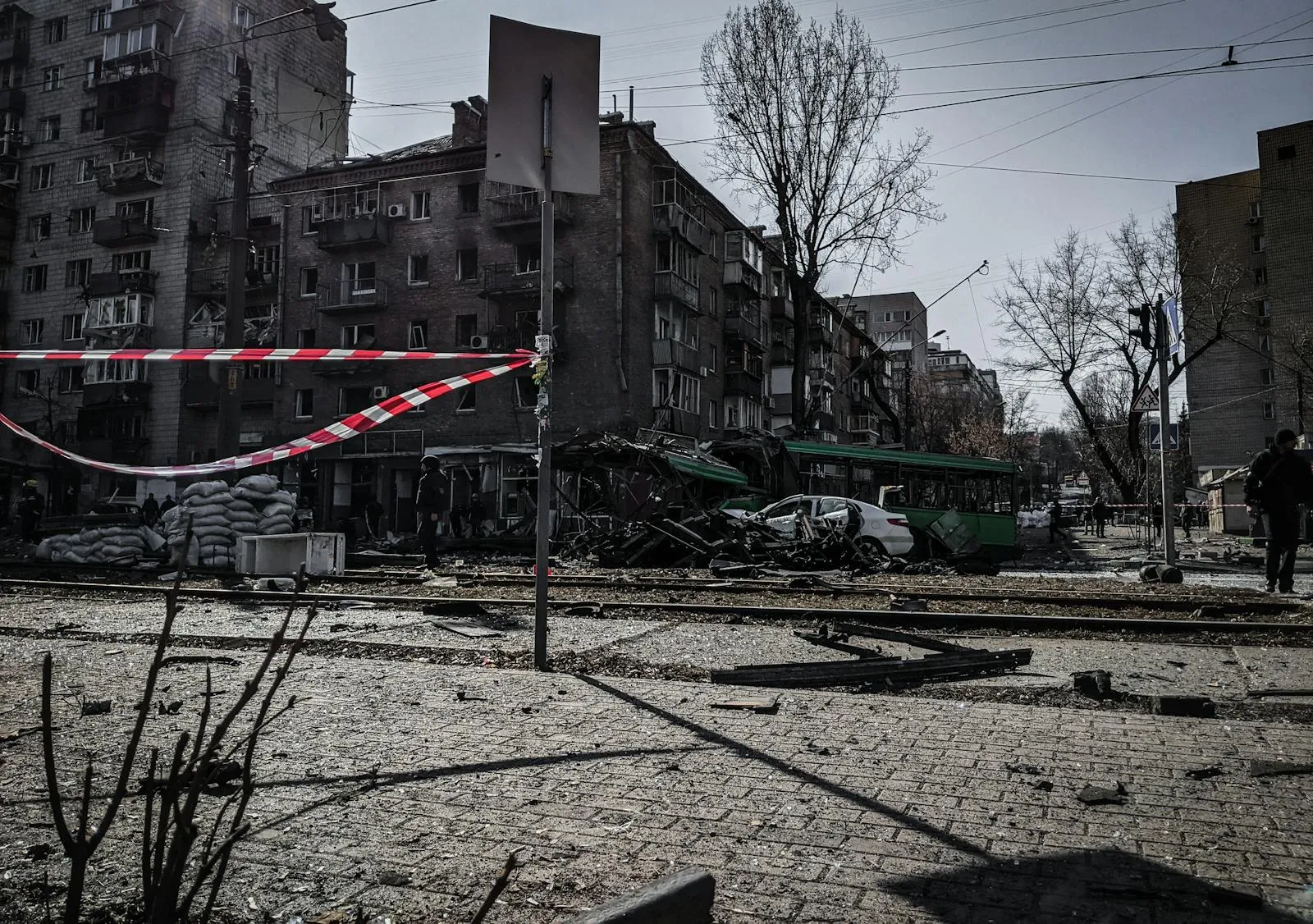
Those attacks have not paused for the diplomacy. Days before the summit, a Russian strike set fire to the Kyiv Pechersk Lavra, the ancient monastery complex at the heart of Ukrainian Orthodoxy — a reminder that the war Trump wants to end is still being waged in real time. The contrast between summit optimism and battlefield reality is the central tension of any push for talks now.
Why It Matters
For American readers, the stakes run beyond the diplomacy itself. The war shapes U.S. defense spending, the size and durability of aid packages, and the cohesion of the NATO alliance — questions that have already divided Congress, as in the House fight over renewing U.S. support for Ukraine. A genuine move toward negotiations would reset all of them; a public push that stalls would test how much political capital the administration is willing to spend.
It also matters for what it reveals about Trump’s method at a summit built on the opposite premise. The G7 traditionally prizes joint statements and coordinated positions. Trump arrived offering bilateral deal-making, conducted by phone and in person with adversaries as much as allies. Whether that approach can move Putin — who just declined the most direct invitation on offer — is the question the rest of the summit, and the weeks after it, will answer.
What Comes Next
The summit runs through Wednesday, with the Ukraine and Iran sessions giving way to the trade and minerals talks that France built the agenda around. The most concrete near-term marker is not in Évian at all: it is whether the meeting Zelensky has now proposed in the United States draws any response from Moscow, or whether Putin’s refusal in France hardens into a longer silence.
Trump, for his part, left no doubt about his framing. One war, he says, is finished; the next is one he means to take on. The opening days in Évian showed both the ambition and its limit — a president declaring two sides ready to deal, and one of those sides, before the talks could begin, declining to sit down.
Sources 6 cited · 2 primary
- 2026 G7 Summit of Évian — official site
- G7 leaders open summit talks in France on Ukraine and the Middle East
- Zelensky arrives ahead of G7 summit as Trump signals possible Ukraine breakthrough
- Trump touts Iran deal and Ukraine ambition as he arrives at G7
- Zelenskyy says he proposed meeting with Putin at G7 summit
- Zelensky Says Putin Refused G7 Meeting Offer to End War
American Courant cites its sources and links to primary documents where they exist. How we report →