The three-day ceasefire brokered by President Trump between Russia and Ukraine frayed badly through its second day Sunday, with both governments accusing the other of hundreds of violations while Kremlin leader Vladimir Putin made his most expansive public statement yet about what the war’s end might look like — and on whose terms.
The truce expires at midnight Monday. Whether it will be extended, allowed to lapse, or collapse amid mutual accusations of bad faith is the question driving frantic diplomatic activity on both sides of the front line.
The Violations: What Happened on Day Two
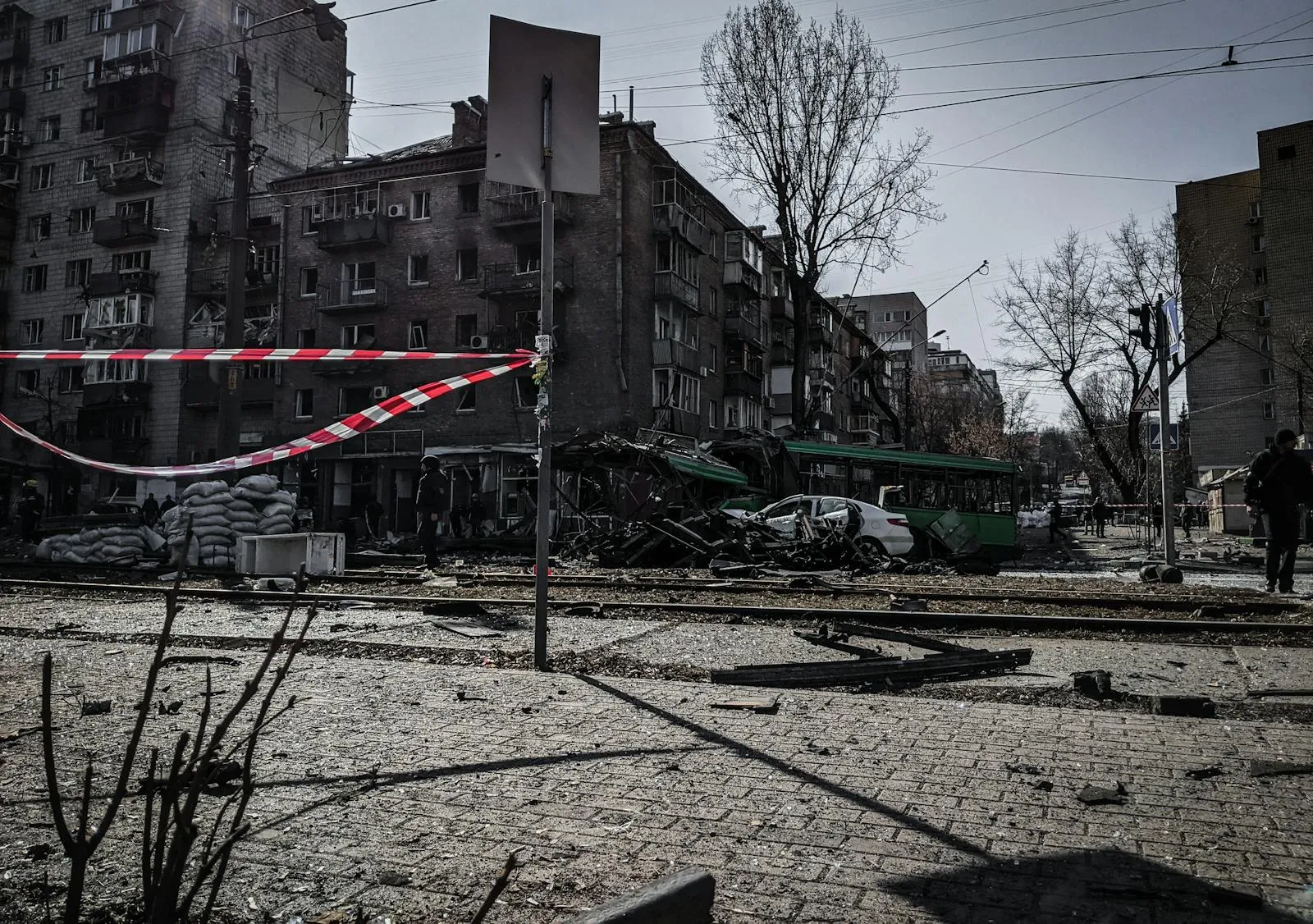
Ukrainian officials reported more than 150 battlefield clashes in the 24 hours following the ceasefire’s start at midnight Saturday. Drone strikes attributed to Russia’s military struck the Kharkiv and Dnipropetrovsk regions during daylight hours, according to regional governors who provided detailed casualty accounts.
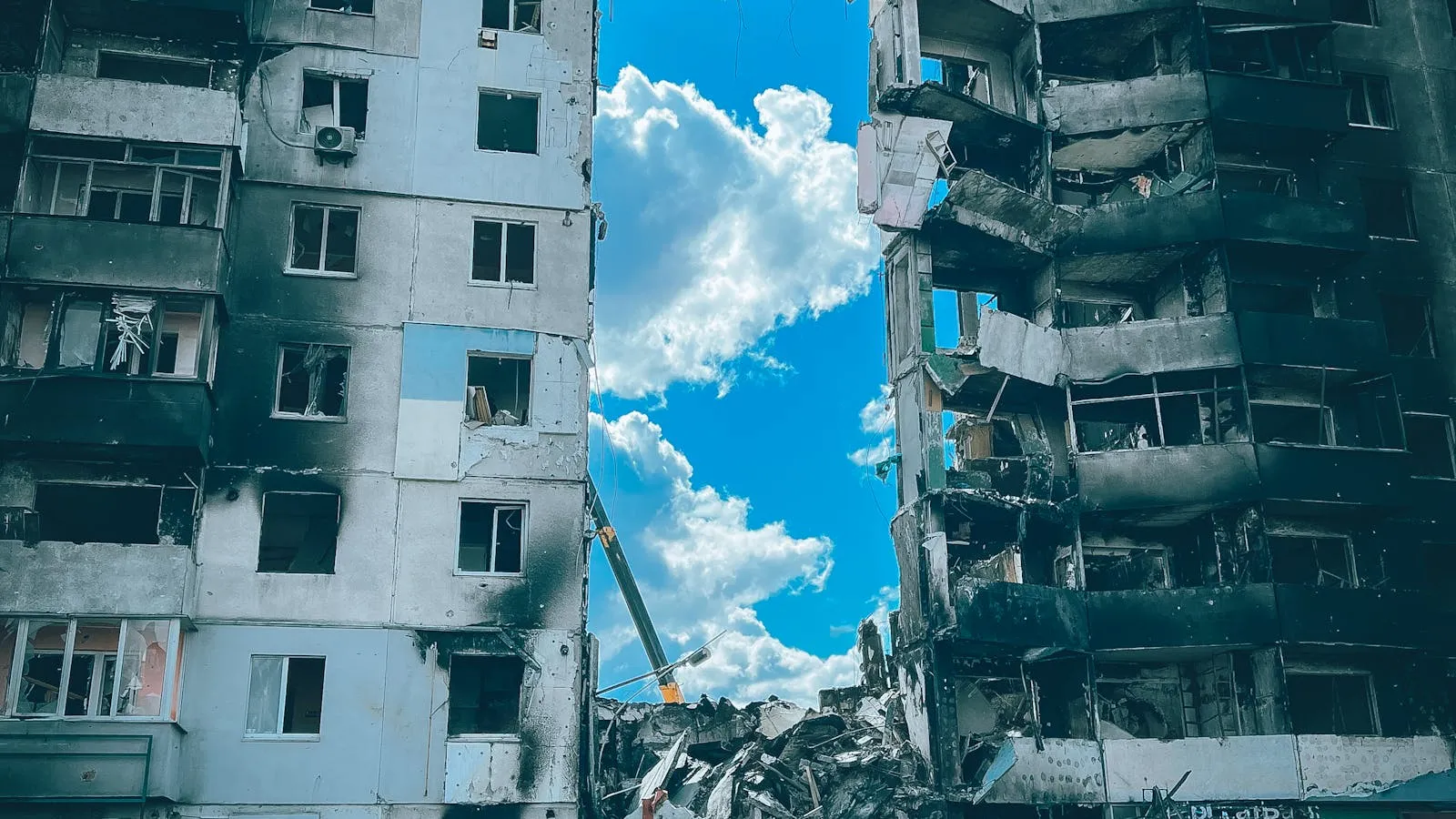
In Kharkiv, Ukraine’s second-largest city and the metropolitan area closest to Russian-held territory, Governor Oleh Syniehubov said eight people were wounded in drone attacks on the city itself and on nearby settlements. Among the wounded were two eight-year-old boys who suffered acute stress reactions after a drone struck a high-rise residential building in the city Saturday evening. A separate strike hit a residential district during daylight Sunday. Kharkiv has faced near-continuous Russian shelling for more than four years; the ceasefire brought no observable pause in strikes on the city’s outskirts.
In the Dnipropetrovsk region to the south, a Russian drone struck a fire-rescue vehicle responding to an earlier incident, injuring a 23-year-old rescuer, according to Ukrainian emergency services. A 46-year-old woman was killed and an 87-year-old man injured in separate strikes on the Myrivska community. Three people were confirmed dead in Russian strikes over the 24-hour period, Ukrainian officials said, with more than 200 battlefield clashes logged across the entire front line.
Russia’s Defense Ministry offered a mirror-image account. Its statement accused Ukraine of launching more than 1,000 ceasefire violations, including drone attacks on Russian-held positions and what it described as artillery strikes against Russian troop concentrations. The ministry said Russian forces had “responded in kind” after Ukrainian formations “ignored” the ceasefire terms and shot down 57 Ukrainian drones.
Both governments issued detailed violation tallies within hours of each other — a pattern that suggests neither side intended the ceasefire to constrain its front-line activity significantly, and each reserved the right to define its own military responses as defensive.
Putin’s “Coming to an End” Statement
Against this backdrop of continued strikes, Putin made a striking public comment Sunday that received wide attention in European capitals and Washington: “I think that the matter is coming to an end.”
The statement, made to reporters at an event marking Russia’s scaled-back Victory Day parade — the Soviet-era holiday commemorating the end of World War II — was the most direct acknowledgment yet from the Kremlin that Russia’s senior leadership perceives the war as approaching a resolution, even as Russian forces continued attacking Ukrainian civilian areas on the same day.
Putin offered no timeline and attached significant conditions. He reiterated that he would be willing to meet with Ukrainian President Volodymyr Zelensky in a third country, but only to sign a final agreement — not to negotiate. “A meeting in a third country is also possible,” he said, “but only after a peace treaty aimed at a long-term historic perspective is finalised.” The formulation effectively rules out a pre-agreement summit and signals that Russia still expects Ukraine to accept terms negotiated elsewhere before any Zelensky-Putin encounter takes place.
Putin also claimed that Russia had submitted a list of 500 Ukrainian prisoners of war for exchange on May 5, but that Ukrainian negotiators had “gone off the radar” and declared they were “not ready” for the deal. Ukraine’s presidential office dismissed those claims as “utter fabrications,” with Serhiy Leshchenko, an adviser to Zelensky, calling them part of a pattern of Russian disinformation around the prisoner swap process.
The Prisoner Exchange: Disputed Progress
The 1,000-for-1,000 prisoner exchange — one of the headline commitments of Trump’s three-day ceasefire announcement — has become its own contested front. Trump announced on Friday that both Russia and Ukraine had agreed to swap 1,000 prisoners each as part of the truce, with the International Committee of the Red Cross serving as an independent monitor.
Ukraine confirmed it had received Russia’s formal consent to the exchange and that the ICRC was coordinating logistics. But the process has moved more slowly than either government projected in its public statements. The Kyiv Post reported Sunday that Ukraine and Russia are engaged in what amounts to a war of words over the prisoner lists themselves — each side questioning the other’s count, the condition of the prisoners on offered lists, and whether the 1,000-person figures are net new exchanges or recalibrated versions of commitments already made.
The prisoner exchange issue matters beyond its immediate humanitarian dimensions. It is the most concrete, verifiable confidence-building measure embedded in the ceasefire agreement. If it fails to materialize in full before the truce expires Monday, it will be harder for either side to claim the ceasefire produced any durable outcome — and harder for Trump to argue that his diplomacy delivered results.
Trump said Sunday that talks are continuing and that “we are getting closer and closer every day.” He added: “Hopefully, it is the beginning of the end of a very long, deadly, and hard fought War.” The White House has not commented on the scale of violations reported by both parties.
Extension: The Conditions and the Obstacles
Zelensky, in a statement posted to social media Sunday evening, reiterated the three conditions he set at the start of the ceasefire for agreeing to any extension beyond Monday midnight: a full and verified halt to Russian strikes on civilian infrastructure, progress on the prisoner exchange, and a credible Russian commitment to begin formal peace negotiations.
None of the three conditions had been demonstrably met as of Sunday evening. Russian strikes on civilian areas in Kharkiv and Dnipropetrovsk continued through the day, the prisoner exchange remained incomplete and disputed, and no date for formal talks had been announced by either government.
European allies have been watching the ceasefire closely, mindful that the EU’s €106 billion loan to Ukraine approved in late April carries implicit assumptions about a negotiating process that leads toward a political settlement. German Chancellor Friedrich Merz, whose government has been one of the loudest voices urging an extension, said Sunday that Berlin supports “every hour the guns are not firing” and urged both parties to extend the truce regardless of violations. French and British officials offered similar statements.
Russia’s position on extension is formally noncommittal. Kremlin spokesman Dmitry Peskov said the ceasefire was agreed as a three-day arrangement and that its extension would require a new agreement, not an automatic rollover. He did not say Russia would reject an extension proposal, but the framing suggests Moscow is making Kyiv carry the diplomatic weight of proposing one.
Why Monday’s Deadline Matters More Than the Truce Itself
The three-day ceasefire was never designed primarily to stop the fighting — it was designed to test whether the two sides could manage a formal agreement and to create the conditions for something more durable. On that narrower test, the record through Day 2 is poor but not categorically disqualifying. Ceasefire agreements in other conflicts have survived early violation patterns when there was enough political will on both sides to manage them.
The prisoner exchange is the more important measure. A completed 1,000-for-1,000 swap would mean roughly 2,000 individuals return to their families — a tangible human outcome that creates political space for both governments to argue the ceasefire was worth something.
The alternative, if the ceasefire expires without extension and without the swap, is a return to the pre-May 9 situation: sustained Ukrainian strikes on Russian logistics targets and continued Russian drone and missile campaigns against Ukrainian cities and infrastructure, with no formal diplomatic process underway.
Trump’s insistence that he “would like to see a big extension” reflects an understanding that the three days served mostly as a proof of concept. Whether Russia and Ukraine can agree on the terms of a longer arrangement — and whether Putin’s “coming to an end” statement reflects a genuine Kremlin decision to pursue one, or was a statement calibrated for a Victory Day audience — will define the next phase of the longest land war in Europe since World War II.
As of Sunday evening, the front line remained active across a roughly 1,200-kilometer stretch. Zelensky had not yet signaled whether Ukraine would formally propose an extension. Russia had not moved its forces back from their positions in advance of the Monday midnight deadline. And the prisoner exchange that was supposed to be the ceasefire’s signature accomplishment remained, as of Sunday, incomplete.
Sources 6 cited · 3 primary
- Putin suggests Russia's war on Ukraine 'coming to an end'
- Russia Violates Holiday Ceasefire With Deadly Drone Strikes Across Ukraine
- Ukraine reports battlefield clashes, drone strikes despite ceasefire
- Putin says he thinks Russia-Ukraine war is coming to an end
- Trump says Russia and Ukraine have agreed to his request for a 3-day ceasefire
- War of Words Over 2,000-Prisoner Swap: Ukraine Dismisses Putin's Claims of 'Disappearing' From Talks
American Courant cites its sources and links to primary documents where they exist. How we report →