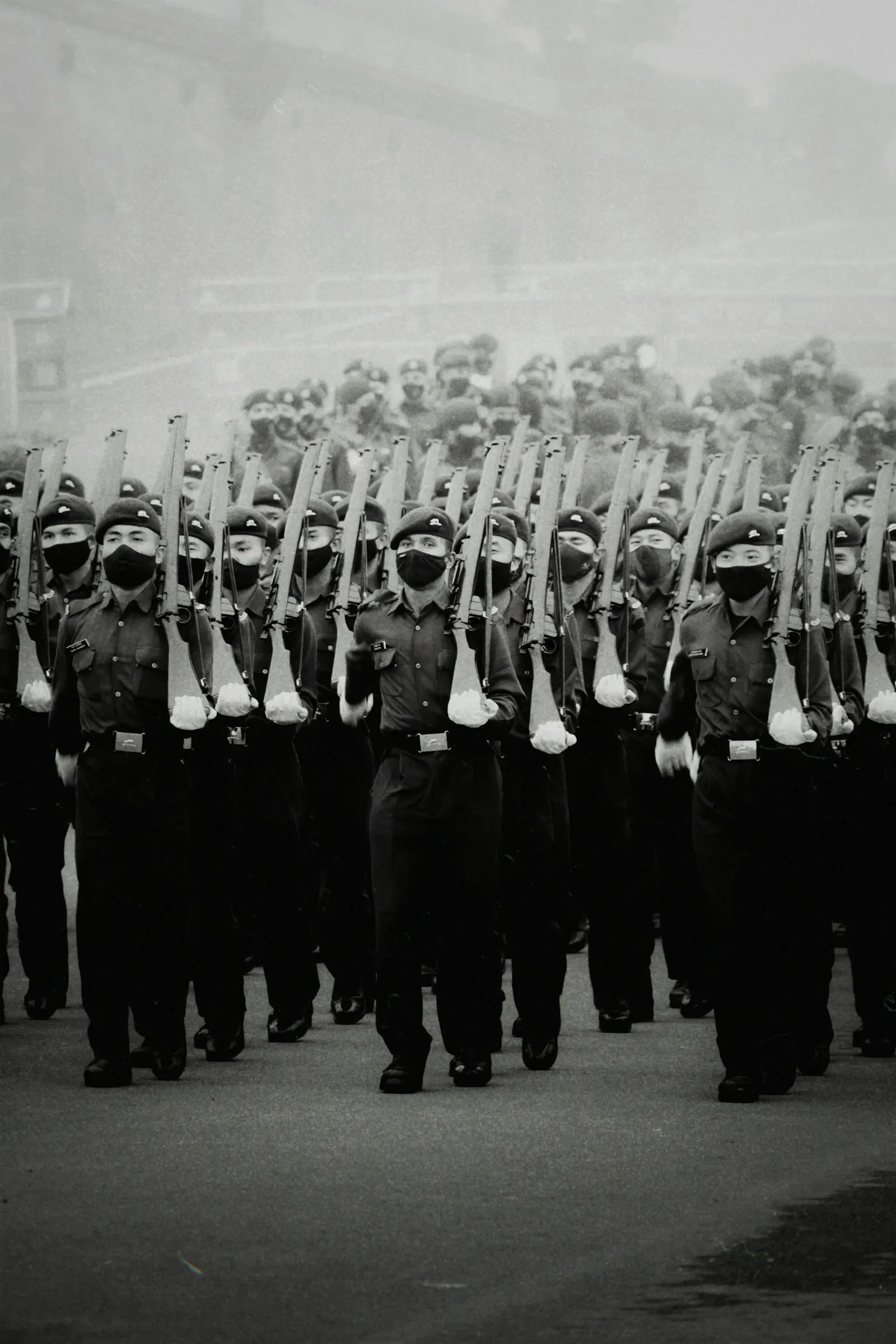
Russian President Vladimir Putin stood on Red Square Saturday morning and declared, for the 81st consecutive year, that the Soviet Union’s victory over Nazi Germany is eternal. This year he did it without tanks. Without missiles. With North Korean troops marching past his reviewing stand. And with a three-day ceasefire in effect across Ukraine.
The Victory Day parade, Russia’s most symbolically freighted annual event, lasted approximately 45 minutes — the shortest in the modern era and a stark contrast to the displays of military power that defined the spectacle during the years before Russia’s full-scale invasion of Ukraine. For the first time in nearly two decades, no armored vehicles, no missile systems, and no heavy military equipment appeared on Red Square’s cobblestones.
The stripped-down format was not incidental. It was a direct consequence of the war that has consumed Russia’s military resources, elevated Ukrainian long-range strike capabilities to unprecedented reach, and drained the political will of most Western-aligned governments to share the same stage with Putin. The parade that once broadcast Moscow’s military ambitions to the world took place behind closed press credentials and against the backdrop of a war that has yet to produce a single verified ceasefire that lasted more than a day.
What the Parade Showed — and What It Didn’t
The ceremonial flyover was the only military hardware on display: Su-25 ground-attack jets passed over Red Square trailing smoke in the red, white, and blue of the Russian flag. Beyond that, Russian state television filled the broadcast with pre-recorded footage — drone systems, strategic missile complexes, and what the broadcast described as “the latest Russian military equipment.” None of it appeared on Red Square in real time.
North Korean troops marched in the parade for the first time, a moment Russian state television framed explicitly as recognition of their service. Pyongyang sent soldiers to fight alongside Russian forces in Russia’s Kursk region beginning in late 2024, following Ukrainian incursions across the border. On Saturday, a Russian announcer on state television credited North Korea’s contingent with making “a significant contribution” to the fighting. For Moscow, the public acknowledgment accomplished two things simultaneously: honoring an ally and daring Western governments to note the alliance’s depth.
The roster of foreign leaders attending was conspicuously thin. Belarusian President Alexander Lukashenko was present, as was Kazakh President Kassym-Jomart Tokayev, Malaysian King Sultan Ibrahim Iskandar, and delegations from Uzbekistan and Laos. Slovakia’s Prime Minister Robert Fico arrived in Moscow but did not attend the Red Square parade, instead laying flowers at the Tomb of the Unknown Soldier and meeting privately with Putin — a distinction Fico drew himself in public statements, though one that drew sharp criticism from German Chancellor Friedrich Merz and other European leaders regardless.
Russia revoked press credentials for all foreign news outlets before the parade, ensuring that international coverage would rely on Russian state media footage and images captured outside the security perimeter.
What Putin Said
Standing before the assembled columns of troops, Putin struck themes that have anchored his Victory Day addresses throughout the war. He declared Russian soldiers were “standing up to an aggressive force that is armed and supported by the entire bloc of NATO,” framing the invasion of Ukraine as a defensive act against a hostile Western alliance rather than a war of conquest.
“Victory has always been and will be ours,” he told the troops. He described the war as a “just cause” and invoked the rhetoric of moral superiority that has characterized Kremlin communications since February 2022: “The key to success is our moral strength, courage and valour, our unity and ability to endure anything and overcome any challenge.”
Putin made no mention of ceasefire negotiations or the three-day pause that had taken effect that morning. He gave no timeline for the war’s end. The speech ran to roughly the same duration and themes as his Victory Day addresses in 2023, 2024, and 2025 — a continuity that was itself a message, suggesting that whatever short-term diplomatic activity surrounded the event, Russia’s stated strategic purpose had not changed.
The Three-Day Ceasefire Behind the Parade
What changed was the diplomatic context. President Trump announced the ceasefire on Friday evening via Truth Social, writing: “I’m pleased to announce that there will be a THREE DAY CEASEFIRE (May 9th, 10th, and 11th) in the War between Russia and Ukraine.” He described the pause as coming “at my request” and called it “the beginning of the end of a very long, deadly, and hard fought War.”
Ukrainian President Volodymyr Zelensky confirmed Ukraine’s agreement, focusing his public statement on the element he said mattered most: a prisoner exchange “in the format of 1,000 for 1,000.” The swap — the largest of the war if completed — would return one thousand Ukrainian prisoners of war from Russian captivity in exchange for one thousand Russian prisoners held by Ukraine. “Red Square is less important to us than the lives of Ukrainian POWs who can be returned home,” Zelensky said.
Zelensky also issued what Ukrainian media described as a mock presidential decree “allowing” Russia to hold the Victory Day parade, including a sardonic provision listing what his office termed the exact military coordinates of Red Square. The gesture carried a pointed subtext: Ukraine has demonstrated, through its long-range drone and missile campaign, that it can reach targets deep inside Russian territory. Ukraine’s FP-5 Flamingo cruise missile struck a Russian defense plant more than 1,000 miles from the front line in early May, underscoring the reach that makes Moscow’s security posture around the parade genuinely defensive rather than ceremonial.
The Days of Fighting That Preceded It
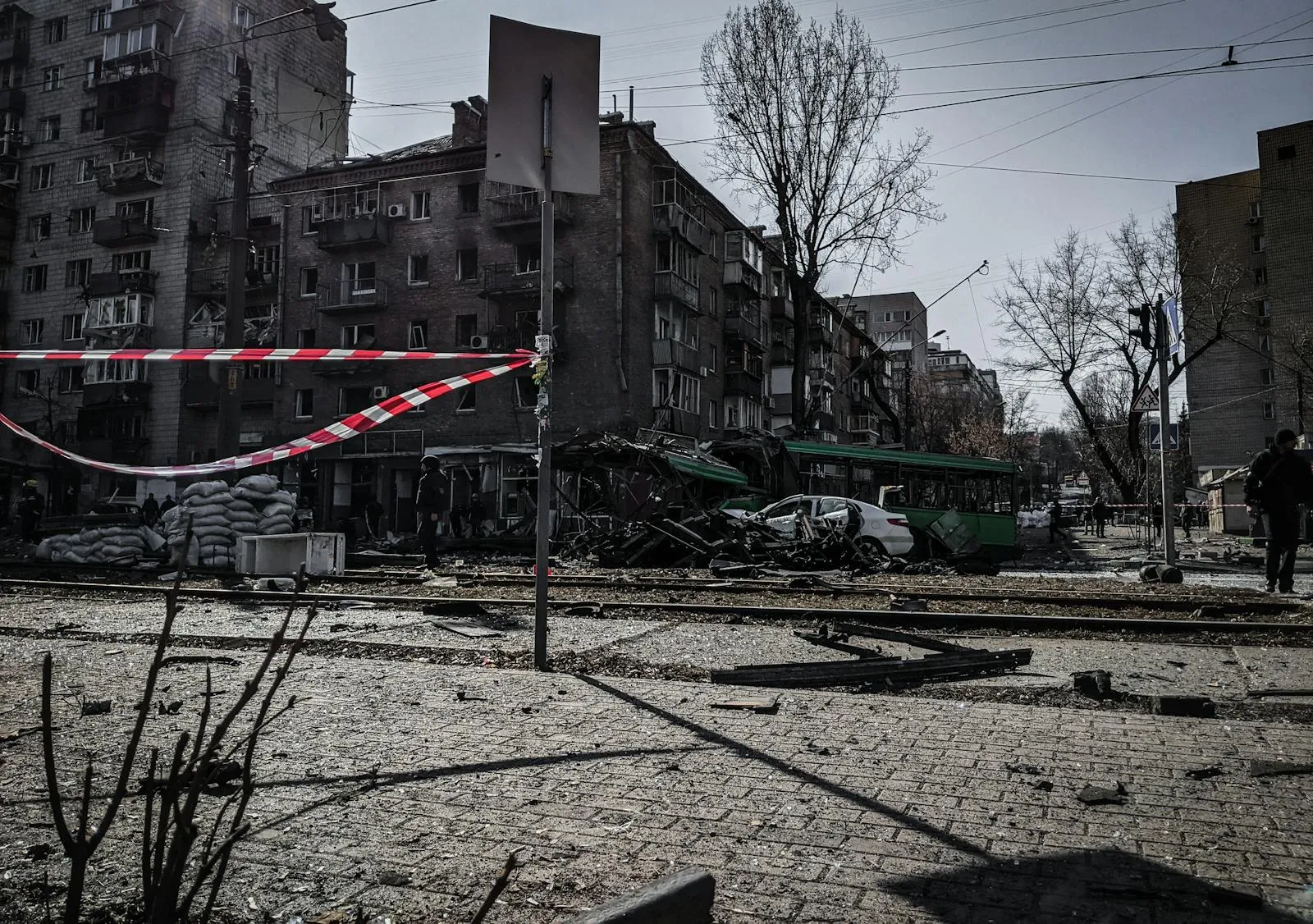
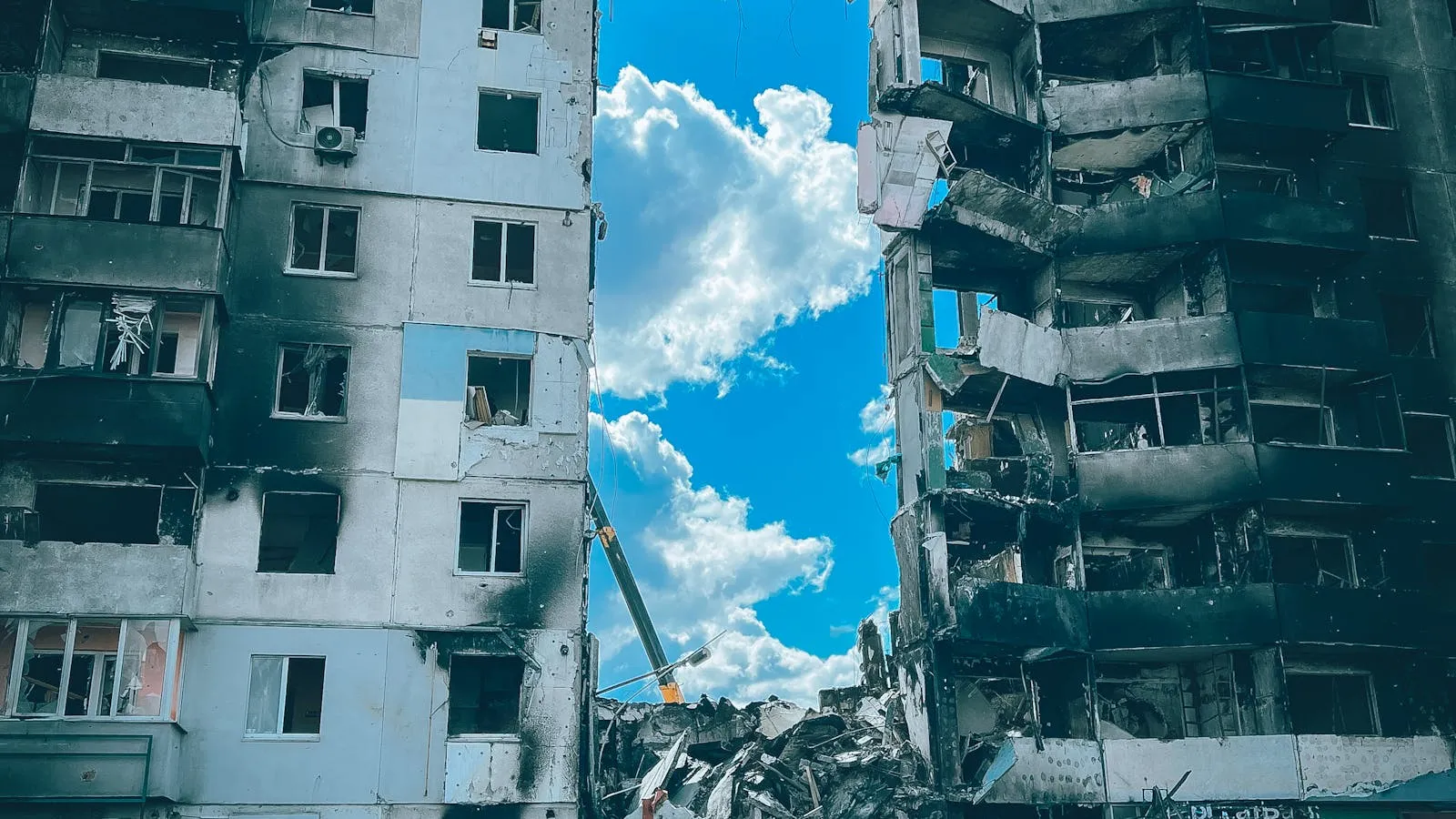
The three-day ceasefire followed one of the most intense periods of air warfare in months. Ukraine launched what Russian air defense described as approximately 347 drone sorties overnight on May 7 into May 8, striking across more than 20 Russian regions. A Ukrainian drone hit the air traffic control center in Rostov-on-Don on May 8, forcing suspension of operations at more than a dozen regional airports and temporarily restricting flights at Moscow’s Vnukovo and Domodedovo airports — the first time the war had disrupted the capital’s civilian air traffic to that degree.
Ukraine’s General Staff reported 45 combat clashes along the front lines on the night before the ceasefire took effect, along with more than 850 Russian drone attacks against Ukrainian positions in the days leading up to Trump’s announcement. Those numbers reflect a war that has not substantially slowed at the operational level even as the diplomatic track has accelerated.
The ceasefire itself has a fraught track record. Russia’s strikes killed 22 Ukrainian civilians hours before its own unilateral ceasefire window opened earlier this week, and both sides have repeatedly accused the other of violating the terms of previous pauses almost immediately. The original Putin-proposed Victory Day ceasefire, backed by Trump in late April, stretched through weeks of diplomatic maneuvering before the current three-day framework emerged as its replacement.
What Happens Next
The ceasefire runs through Monday, May 11. The prisoner swap, if it proceeds as announced in the 1,000-for-1,000 format, would be the largest single exchange since the war began — a concrete humanitarian outcome even if the ceasefire itself collapses on Tuesday, as previous pauses have.
The deeper question is whether Saturday’s events represent anything durable. Putin’s stripped-back parade is an artifact of military overextension, not a signal of restraint. North Korean troops marching on Red Square is a formalization of an alliance that has materially sustained Russia’s artillery-intensive approach for more than a year. And Trump’s “beginning of the end” framing — his most optimistic public statement on Ukraine to date — has not yet produced a framework that both sides have formally agreed to beyond the 72-hour pause.
The next test of the ceasefire’s durability will arrive before the end of the weekend. If it holds through Monday, it will be the longest uninterrupted ceasefire of the war. If it breaks — as every previous pause has — it will add another data point to what has become a persistent pattern: diplomatic windows that open, generate attention, and close without producing binding terms.
Sources 6 cited · 2 primary
- Victory Parade on Red Square — President of Russia
- Zelensky 'allows' Putin to hold Victory Day parade as Trump declares 3-day Ukraine, Russia ceasefire
- Trump says Russia and Ukraine have agreed to his request for a 3-day ceasefire
- Moscow marks Victory Day with a Red Square parade under tight security
- North Korean troops join Putin's scaled-back military parade as Ukraine agrees to temporary ceasefire
- Moscow's Victory Day Parade Lasted Just 45 Minutes, Shortest in Modern Russian History
American Courant cites its sources and links to primary documents where they exist. How we report →