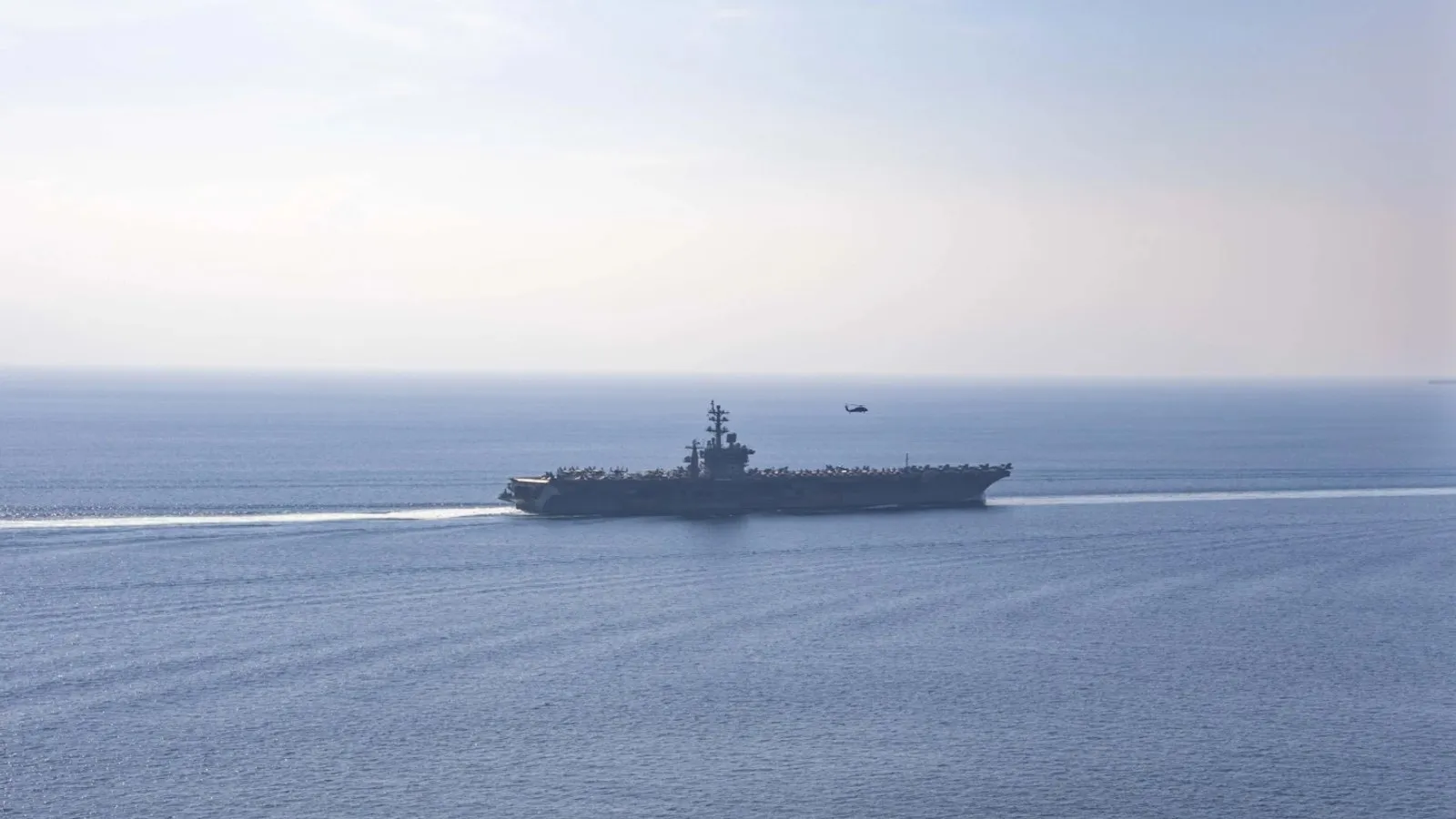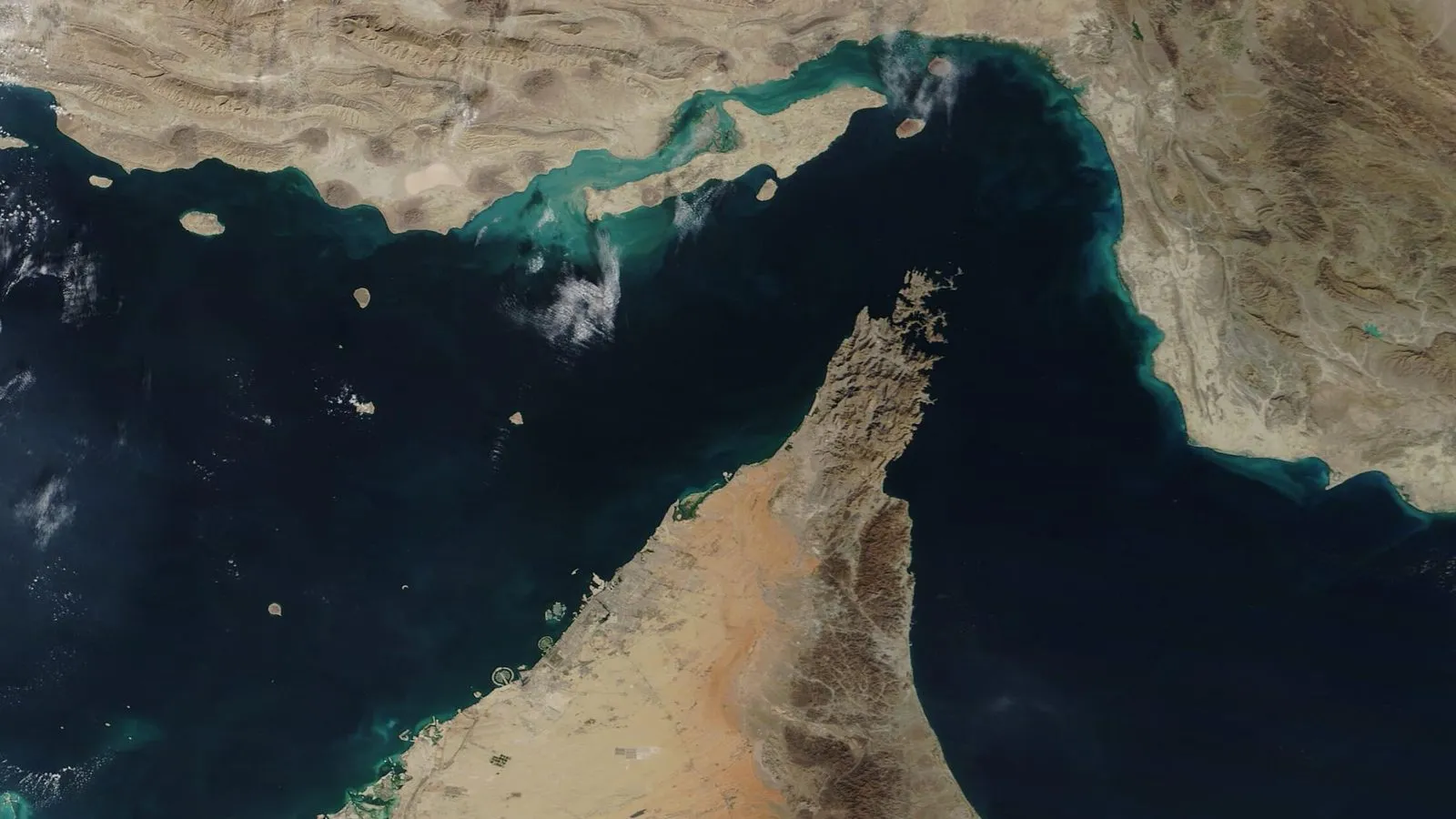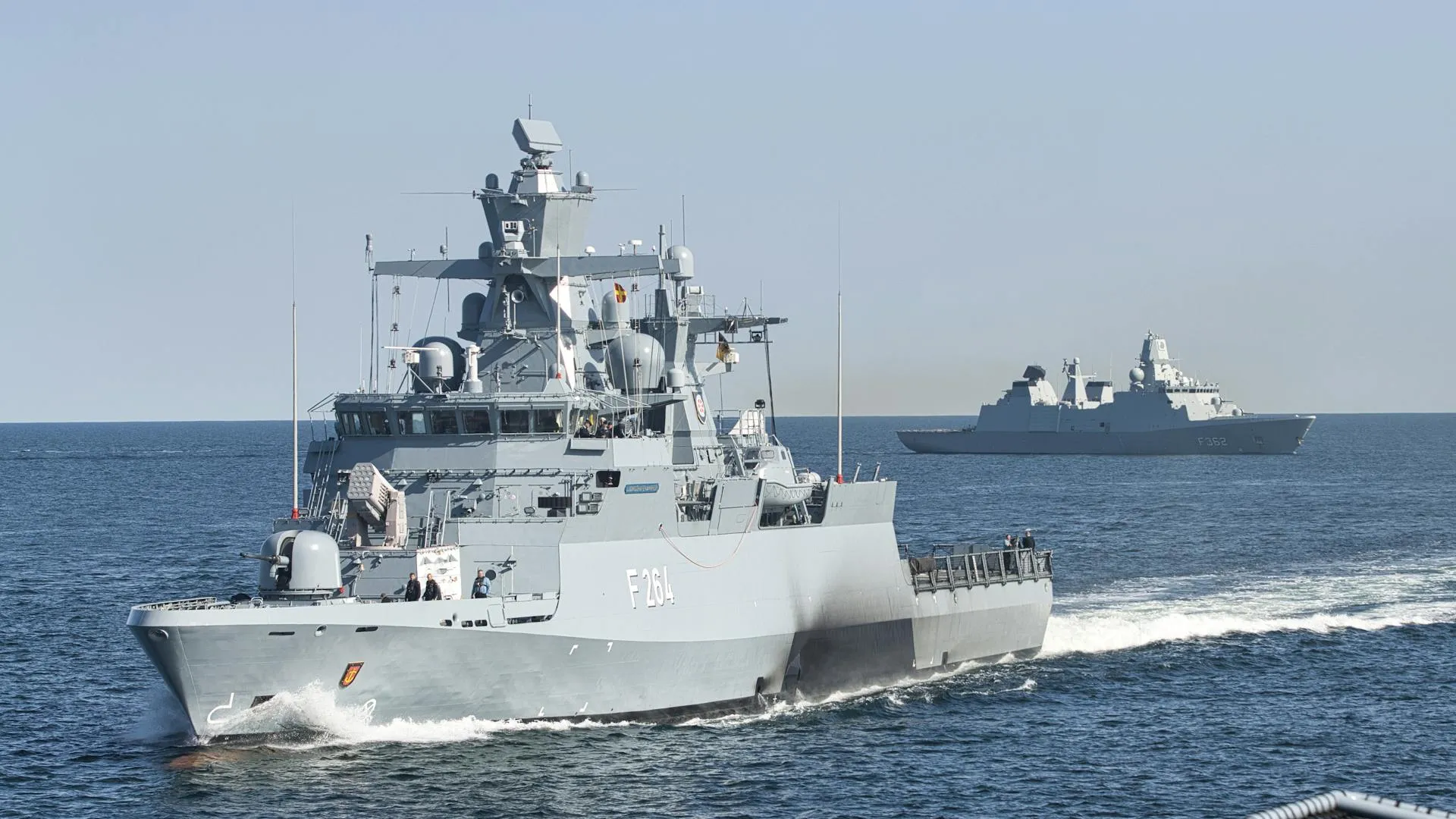
Three U.S. guided-missile destroyers came under attack in the Strait of Hormuz Thursday morning as they attempted a transit to the Gulf of Oman. Iranian forces launched missiles, drones, and small boat swarms at USS Truxtun (DDG-103), USS Rafael Peralta (DDG-115), and USS Mason (DDG-87). No U.S. warship was struck. American forces responded by bombing military infrastructure at Bandar Abbas and Qeshm Island — the same stretch of Iranian coastline whose waters both countries are separately racing to reopen through a nuclear deal that both sides say is within reach.
Both things are true at once: the United States and Iran are actively fighting in the Strait of Hormuz, and they are actively negotiating over it. They have been doing both since February 28. Thursday made the contradiction harder to ignore.
What CENTCOM Said Happened
U.S. Central Command confirmed the engagement in a press release Thursday, describing the Iranian attack as “unprovoked” and noting that American forces responded with self-defense strikes targeting “missile and drone launch sites, command and control locations; and intelligence, surveillance and reconnaissance nodes” at Bandar Abbas and Qeshm Island. A U.S. official told CNN that strikes were carried out in multiple coastal locations across both sites. No U.S. assets were damaged in the exchange.
CENTCOM’s statement carried a carefully calibrated phrase: “U.S. forces do not seek escalation but are ready to protect American forces.” The formulation has become the standard Pentagon framing for a series of clashes in the Strait that have occurred even while ceasefire talks continue — a way of simultaneously claiming defensive posture and reserving the right to strike again.
Iran’s armed forces disputed CENTCOM’s account of the engagement. An Iranian military spokesperson said U.S. aircraft struck civilian areas along the coasts of Qeshm Island, Bandar Khamir, and Sirik, and that Iranian forces responded with “reciprocal action” against U.S. naval vessels east of the Strait, south of the port of Chabahar. Neither side’s account could be independently verified.
President Trump, speaking from Washington, put it more plainly: he said the U.S. had “destroyed Iranian seacraft that fired on US Navy ships” and left open the possibility of further action if Iranian attacks continued.
The three destroyers — Truxtun, Peralta, and Mason — have all operated in recent days as part of U.S. Navy operations connected to the Abraham Lincoln Carrier Strike Group, which has anchored American military power in the Arabian Sea throughout the 66-day conflict. According to Iran International, U.S. forces had already intercepted more than 10 Iranian attacks since the formal ceasefire framework was announced. Thursday’s exchange was the largest single-day escalation since Iran struck the UAE’s Fujairah oil zone last weekend.
The Deal That Keeps Surviving the Fighting
A few hundred miles away — in diplomatic back-channels and in talks mediated by Pakistan and Oman — both governments say they are closer to a formal agreement than at any point since February 28.
The document at the center of those talks is the one-page, 14-point memorandum of understanding reported by Axios Wednesday. As currently drafted, the MOU would declare a formal end to the war, commit Iran to halting uranium enrichment for between 12 and 15 years, require Iran to transfer its stockpile of highly enriched uranium to a neutral third country, allow United Nations snap inspections of nuclear facilities, and trigger a 30-day negotiating window for a more detailed binding agreement — in exchange for the United States phasing out the war-era sanctions and releasing frozen Iranian funds.
The 48-hour window Secretary of State Marco Rubio announced when he declared Operation Epic Fury concluded Wednesday night expires Friday morning. Iranian leaders have been reviewing the MOU text. The Trump administration’s two lead negotiators — special envoy Steve Witkoff and senior adviser Jared Kushner — are continuing discussions with Iranian counterparts through direct contacts and intermediaries.
Iranian Foreign Minister Abbas Araghchi, who traveled to Beijing on Wednesday to meet Chinese Foreign Minister Wang Yi, said Tehran “would only accept a fair and comprehensive agreement.” China’s Wang called for Iran and the U.S. to reopen the Strait of Hormuz “as soon as possible” — a position Beijing has pressed with increasing urgency as President Trump’s summit with Xi Jinping approaches on May 14 and 15. China imports roughly a third of its oil through the Strait, and Beijing has been pushing Iran privately to reach a deal before the two presidents meet in person.
Three sticking points remain. The duration of the enrichment moratorium is still contested: Washington has pressed for up to 20 years; Tehran’s opening position was a single-digit figure; current discussions appear to center on 12 to 15 years. The disposition of Iran’s roughly 450 kilograms of uranium enriched to 60 percent purity — stored in reinforced tunnels at the Isfahan nuclear complex and unverified by international inspectors since June 2025 — is a second unresolved question, with the U.S. seeking full transfer out of the country and Iran proposing to “down-blend” a portion domestically under monitoring. The timeline for reopening the Strait constitutes the third disputed item, with Iran seeking simultaneous action at signing and the U.S. preferring a phased approach tied to verified compliance.
Why Both Things Can Be True at Once
The combination of military exchanges and active negotiation is less paradoxical historically than it appears. Armistice talks in Korea ran alongside sustained combat for two years. What the Strait situation adds is the particular volatility of a contested chokepoint: every ship struck, every missile battery bombed, changes the commercial calculus for the roughly 20 percent of global seaborne oil that once transited the Strait before the blockade.
Secretary Rubio met Pope Leo XIV at the Vatican Thursday morning in a 2.5-hour session the State Department said was intended partly to repair the public rift between the Trump administration and the Catholic Church over the Iran conflict. The meeting carried quiet diplomatic weight beyond its theological framing: the Holy See maintains communication channels with Tehran that bypass normal diplomatic circuits, and a shift in the Vatican’s posture on the negotiations could reduce certain pressures on Iran’s clerical leadership.
For Tehran, the military exchanges in the Strait serve a legible purpose: they demonstrate that Iran retains the capacity to impose costs even after 66 days of U.S. and Israeli strikes against its military infrastructure. After Iran attacked the UAE’s Fujairah oil zone last week in the conflict’s biggest escalation since the April ceasefire, Brent crude surged past $114. Each Iranian strike that reaches U.S. forces — even when unsuccessful — reinforces the message that any deal must offer Iran something worth the concession of its enrichment program.
For the Trump administration, the calculus runs in reverse: responding militarily to attacks on U.S. warships is a domestic and strategic necessity, but each escalatory exchange narrows the diplomatic window and raises the stakes of a collapse.
What Comes Next
The 48-hour window expires Friday morning. If the MOU is signed, a 30-day detailed negotiating period begins. The U.S. would start phasing out war-era sanctions. Brent crude futures fell roughly 8 percent when the original MOU report broke Wednesday; a signing would likely push prices further toward pre-war levels, unwinding what remains of the war premium. Shipping companies — including Maersk, which successfully transited the Strait under U.S. Navy escort last week for the first time since March — would face a clearer path to resuming normal operations.
If no agreement is reached by Friday, the options narrow but do not disappear. Trump’s public warning — that a failure to agree means “the bombing starts, and it will be, sadly, at a much higher level and intensity than it was before” — has been read by analysts as consistent with his negotiating posture throughout the conflict: a credible threat that also preserves space for extension.
A third scenario is also possible: a brief extension of the window, buying time toward the Trump-Xi summit in Beijing. The symbolic value to both leaders of arriving at those talks with the Strait reopened — or at least a deal in hand — would be substantial. China has made clear it is pressing Tehran in that direction.
What Thursday in the Strait demonstrated, more clearly than any single day since the ceasefire, is that the two channels are not alternatives. The fighting and the negotiating are happening simultaneously, each side calculating that it can sustain both long enough for the other to blink first.
Sources 6 cited · 1 primary
- CENTCOM Protects U.S. Warships Transiting Strait of Hormuz
- US military strikes sites in Iran as countries exchange fire
- U.S. military says it intercepted Iranian attacks on 3 Navy ships in Strait of Hormuz
- US, Iran exchange fire in Strait of Hormuz
- China presses Iran against resuming war, urges Hormuz reopening ahead of Trump-Xi summit
- U.S. and Iran Offer Mixed Messages on Deal to End War
American Courant cites its sources and links to primary documents where they exist. How we report →