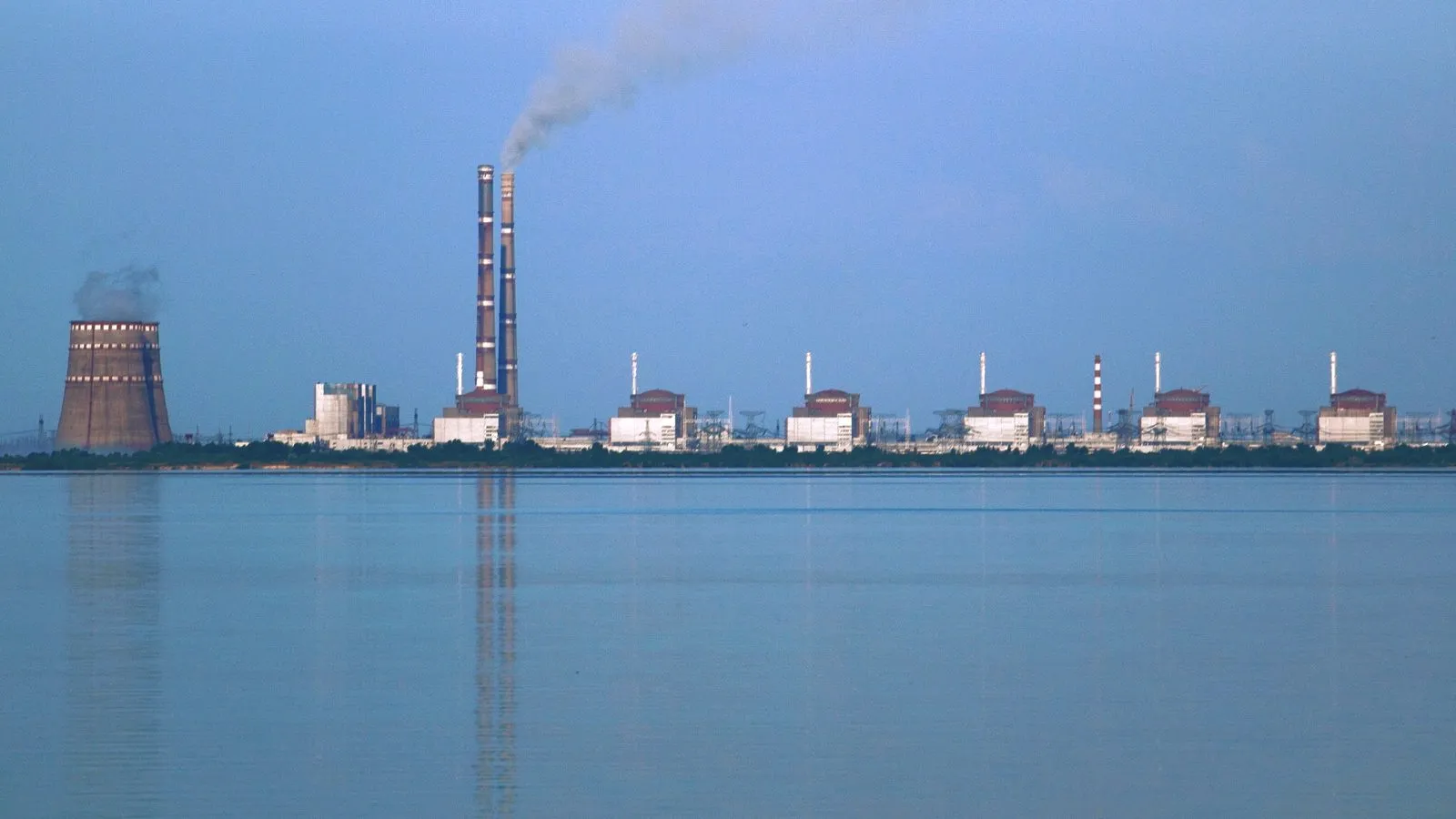
Over the past several weeks, drones have repeatedly struck or cut power to the Zaporizhzhia Nuclear Power Plant — Europe’s largest — which has been under Russian control since 2022 and is now leaning on emergency diesel generators after losing its connection to the outside electrical grid. On June 5, the head of the International Atomic Energy Agency, Rafael Grossi, negotiated the sixth localized ceasefire of the war to let technicians repair the damage. What he could not negotiate was agreement on a far simpler question: who is firing the drones.
Russia says Ukraine is deliberately attacking the plant. Ukraine says Russia is staging provocations and spreading disinformation. The IAEA — the only independent body with inspectors stationed at the site — says it can document the damage but cannot determine who caused it. Months into a dangerous standoff at an active nuclear facility, the basic factual question of responsibility remains unresolved, and the safety margin keeps getting thinner.
What Is Confirmed
A core set of facts is not in dispute, most of it documented by the IAEA’s on-site team.
The Zaporizhzhia plant is the largest nuclear facility in Europe, with six reactors that have been held in “cold shutdown” since Russian forces seized the site early in the 2022 invasion. Even shut down, the reactors need a steady supply of electricity to keep cooling water moving over the fuel; a prolonged loss of power is the scenario nuclear-safety officials most want to avoid.
By the IAEA’s account, the plant lost its primary external power line, known as the Dniprovska line, more than two months ago and has since depended on a single remaining backup connection — which it has lost repeatedly, forcing it onto emergency diesel generators. The agency has reported that a drone struck the plant’s turbine building, “reportedly causing a hole in its wall,” and that a separate strike on the Nikopolska substation across the Dnipro River temporarily severed the plant’s last external line before it was restored. Our coverage of Russia’s recent strikes on Ukrainian cities has tracked the wider escalation this fits into.
Grossi’s June 5 ceasefire is also confirmed. The IAEA chief said the localized pause — the sixth he has brokered since 2022 — was agreed “for the sake of nuclear safety” to repair the Dniprovska line, and he urged “maximum military restraint and full adherence to the ceasefire.” The IAEA has separately said it was aware of “a serious incident at the plant which injured some Russian military personnel,” while pointedly declining to assign blame for the strike. Fighting in the surrounding region continued even after the pause took effect.
Where the Accounts Diverge
The dispute is over a single word: who.
Russia’s account is the more specific. Rosatom, the Russian state nuclear corporation that now operates the plant, says Ukraine launched a deliberate drone strike on a team of engineers clearing mines. Its director general, Alexei Likhachev, said the attack was intentional. “The strike was clearly calculated,” he said, adding that three of the company’s engineers were injured and two were in serious condition. A separate Rosatom statement put the number of wounded at five. Russian officials have said the drone attacks were witnessed by the UN inspectors on site.
Ukraine rejects the accusation outright. An official at Energoatom, Ukraine’s state nuclear operator, blamed Russia for the attacks, describing them as “a provocation” engineered to malign Ukraine, and the company accused Moscow of publishing propaganda and “false statements” to turn public opinion against Kyiv. Ukraine’s broader position, which its officials have repeated throughout the war, is that Russia controls the plant and its perimeter, so strikes on the facility serve Moscow’s narrative rather than Ukraine’s military aims — a framing Russia in turn dismisses.
Between the two governments sits the IAEA, which has consistently said it can verify that strikes and damage occurred but cannot independently establish who launched the drones. As PBS NewsHour summarized the standoff, Russia and Ukraine have “once again” accused each other of targeting the plant. The agency’s inspectors can hear the explosions and inspect the craters; they were not, by their own account, in a position to watch the drones take off. American Courant cannot independently determine responsibility, and neither party’s claim has been confirmed by an outside investigation.
The Timeline
The current crisis is the latest chapter in a confrontation that has simmered for more than three years.
Russian forces captured the Zaporizhzhia plant in the opening weeks of the 2022 invasion, and its reactors were progressively moved into cold shutdown. Since then, the site has been hit by recurring shelling and, more recently, drone incidents, with Moscow and Kyiv blaming each other after nearly every episode.
More than two months ago — in roughly late March or April 2026 — the plant lost the Dniprovska line, its main link to the grid. Through late May and early June, the situation sharpened: the IAEA reported the drone strike on the turbine building, and the strike on the Nikopolska substation briefly knocked out the plant’s last external connection, leaving it on diesel power. On June 5, Grossi announced the sixth localized ceasefire to allow repairs to the Dniprovska line. In the days that followed, strikes continued in the Zaporizhzhia region, underscoring how fragile the pause was. The repeated diplomacy — and its repeated unraveling — has played out against the backdrop of stalled efforts to negotiate a broader end to the war.
What Remains Unknown
Several crucial questions have no verified answer.
The first is the central one: who is firing the drones. There is no independent attribution, and the only neutral monitor on the ground says it cannot provide one. The competing claims — Russia’s that Ukraine is striking deliberately, Ukraine’s that Russia is manufacturing provocations — cannot both be true, and outside observers have no confirmed basis to choose between them.
The casualty figures are also unverified. The counts of injured engineers come from Rosatom, the operator run by one of the parties to the war, and have not been independently confirmed; even Rosatom’s own statements have given different numbers. And the most consequential unknown is the safety margin itself: how long the diesel generators can reliably sustain cooling, how degraded the plant’s grid connections have become, and how close any of this has actually brought the site to a genuine emergency. The IAEA has warned for years that the situation is precarious without saying a disaster is imminent.
What Comes Next
The immediate work is physical: under the June 5 ceasefire, technicians are meant to repair the Dniprovska line and restore a stable external power supply, reducing the plant’s reliance on diesel. Whether that holds depends on whether the pause does.
Beyond the repairs, the IAEA’s inspectors remain stationed at the plant, and Grossi has continued to press both sides for restraint and to keep the agency’s monitoring in place — the only continuous independent presence at the site. The fact that this is the sixth such ceasefire is itself telling: it points to a pattern that has repeated through the war and is likely to again, with each new incident producing the same dueling accusations and the same absence of an agreed account.
For readers, the safest way to hold the story is to separate what is established from what is asserted. It is established that drones have struck a nuclear plant and that it has been running on backup power. It is asserted — by each government, about the other — who is to blame. Until an independent investigation closes that gap, the question at the center of one of the most dangerous standoffs of the war stays open.
Sources 5 cited · 1 primary
- IAEA Director General statements and updates on the situation in Ukraine
- IAEA brokers localised Ukraine ceasefire to allow nuclear plant repairs
- Russia and Ukraine once again accuse each other of targeting Zaporizhzhia nuclear power plant
- Drone Strike Cuts Last External Power Line to Zaporizhzhia Nuclear Plant Temporarily, IAEA Says
- Drone Hits Captured Nuclear Plant in Ukraine – IAEA
American Courant cites its sources and links to primary documents where they exist. How we report →