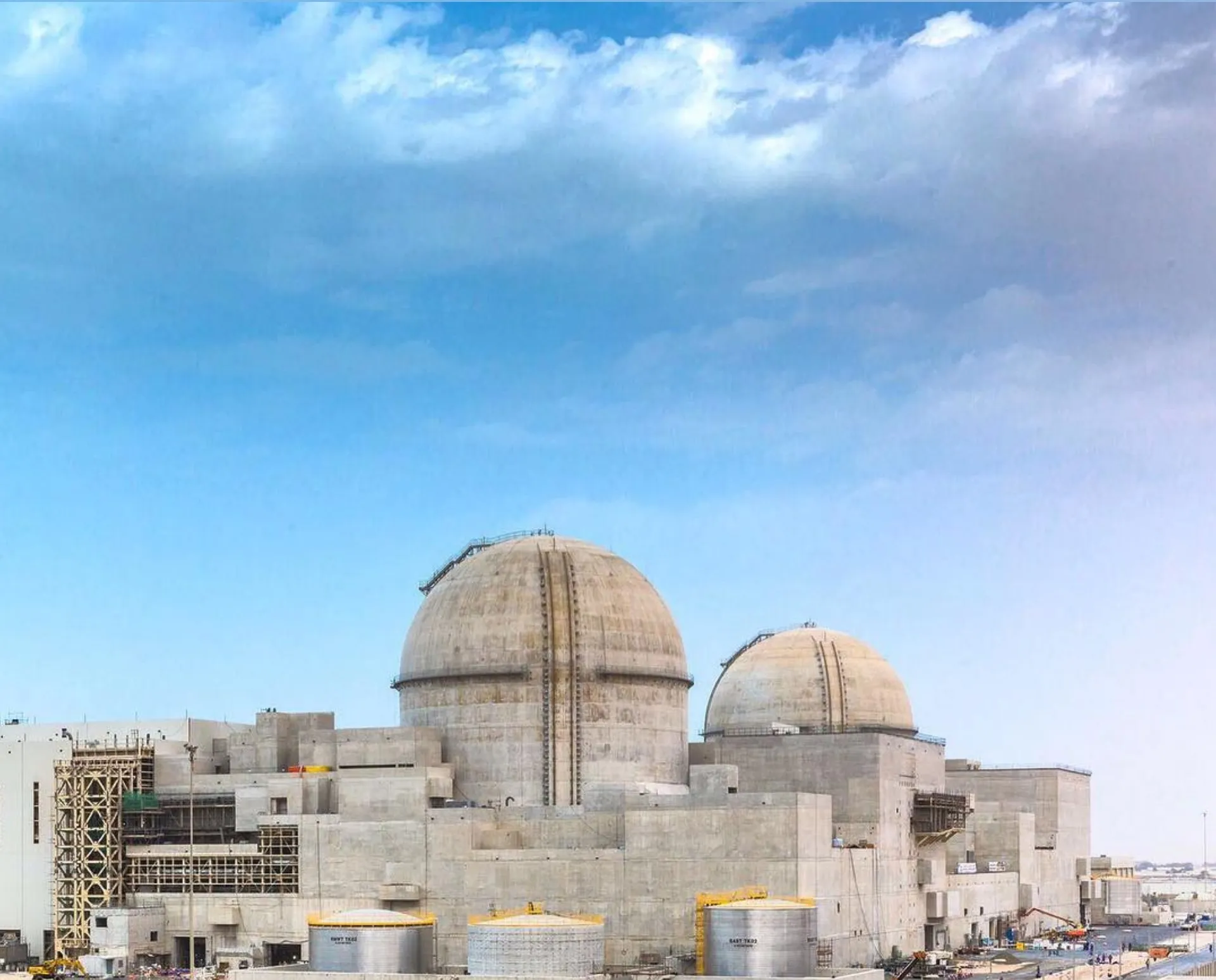
A drone struck an electrical generator at the perimeter of the United Arab Emirates’ Barakah nuclear power plant Sunday, igniting a fire and forcing one reactor onto emergency backup power — the first attack on the facility since the Iran war began, and a development that sent the already-strained ceasefire further toward collapse.
No one claimed responsibility. The UAE’s Ministry of Defence said three drones entered the country from its western border with Saudi Arabia on Sunday. Two were intercepted by air-defense systems; the third struck an electrical generator located outside the plant’s inner security perimeter. The blaze was extinguished without injuries. The UAE’s Federal Authority for Nuclear Regulation confirmed that radiation levels at the facility remained normal and all reactors were operating, though one had temporarily been powered by emergency diesel generators.
“The fire did not affect the safety of the power plant or the operational readiness of its essential systems,” FANR said in a statement.
The UAE’s Foreign Ministry called the strike a “terrorist attack” constituting a “dangerous escalation, an unacceptable act of aggression, and a direct threat.” An investigation is underway to determine the drone’s origin; the ministry said findings would be announced once inquiries were complete. The UAE has accused Iran of launching multiple drone and missile attacks against its infrastructure in recent days as tensions over the Strait of Hormuz have escalated.
What Barakah Is — and Why It Was Targeted
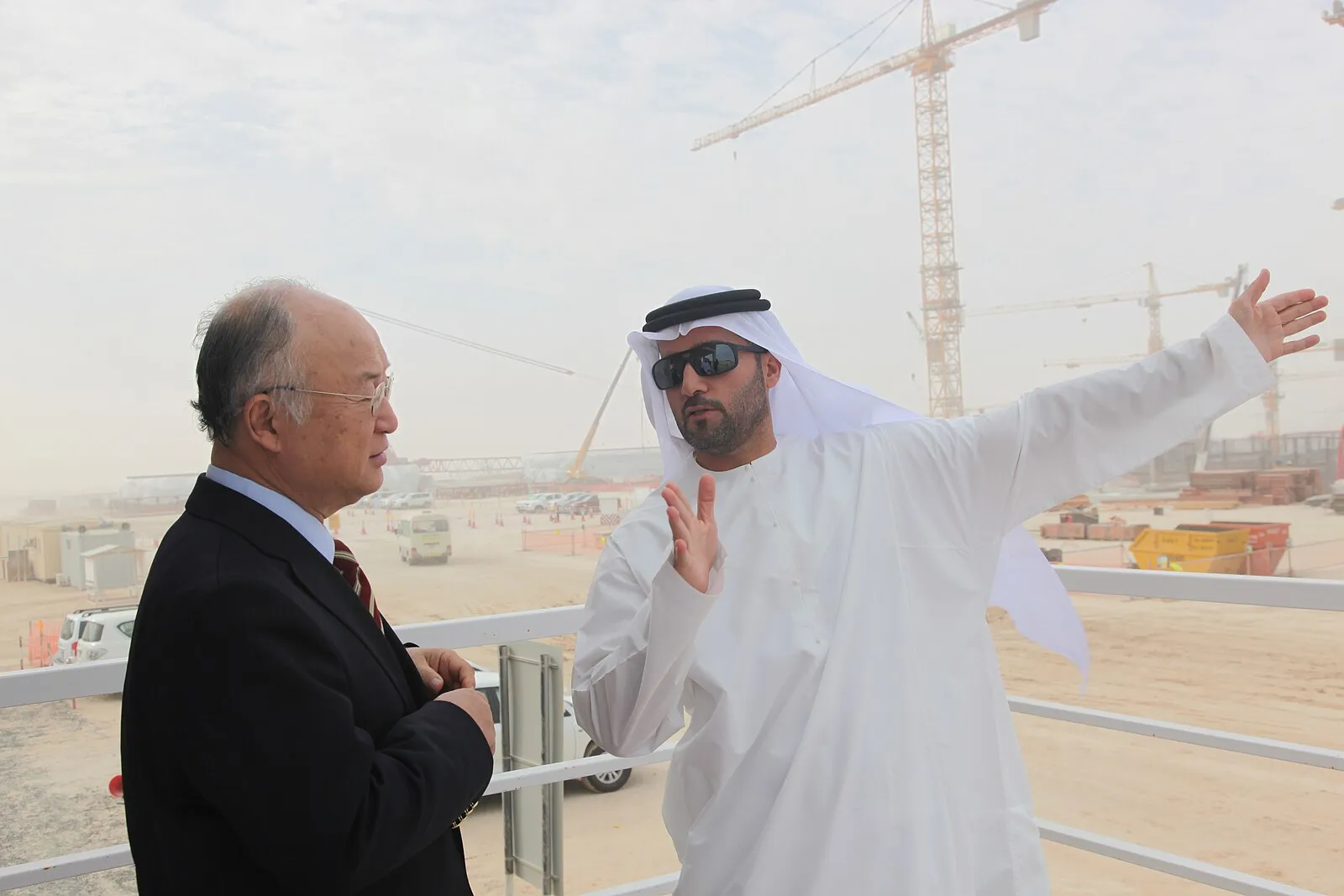
The Barakah nuclear energy plant is the Arab world’s first operating commercial nuclear power station. Located in the Al Dhafra region of Abu Dhabi, roughly 53 kilometers west-southwest of the coastal town of Al Dhannah along the Persian Gulf, the complex consists of four APR1400 pressurized-water reactors built by Korea Electric Power Corporation. The UAE awarded KEPCO the contract in December 2009, a $20 billion deal that gave South Korea its first overseas nuclear project. The four units have a combined nameplate capacity of 5,600 megawatts — enough to supply roughly 25 percent of the UAE’s annual electricity demand when running at full output.
That combination of scale, strategic relevance, and symbolic importance makes Barakah a high-value target in Iranian threat calculations. Iran’s state media had listed the facility among potential military targets in March 2026, following a Trump administration ultimatum to reopen the Strait of Hormuz. Iran had previously warned the UAE against allowing its territory to be used in support of U.S. military operations in the region. Prior to Sunday’s strike, Iranian attacks inside the UAE had focused on oil and maritime infrastructure — including the May 5 strikes on Fujairah’s oil zone and a series of interdictions in the strait. Targeting a nuclear facility — even a generator on its perimeter — represents a qualitative shift.
The plant also carries particular significance for South Korea, which has been watching the conflict’s effects on its Gulf defense and energy partnerships. Seoul’s government was expected to issue a formal response to Sunday’s attack.
The incident also illustrates the limits of the UAE’s regional posture. Abu Dhabi has pursued a studied neutrality throughout much of the Iran war, maintaining diplomatic contact with Tehran while hosting U.S. forces and supporting Washington’s strategic objectives in the Gulf. That balancing act has become harder to sustain as Iranian attacks have moved progressively closer to the UAE’s most critical infrastructure.
IAEA: “Grave Concern” Over Nuclear Safety
IAEA Director General Rafael Mariano Grossi expressed what the agency called “grave concern” about the incident within hours of the strike. In a formal statement, Grossi said that “military activity that threatens nuclear safety is unacceptable” and reiterated calls for “maximum military restraint” near any nuclear power plant anywhere in the world.
The IAEA communicated with UAE regulators and confirmed the strike had not breached the plant’s inner containment structures, and that fuel storage and reactor core systems were unaffected. The agency said it was monitoring the situation and had offered technical support to FANR.
Grossi has issued multiple appeals throughout the Iran conflict for ceasefire parties to avoid targeting energy infrastructure with potential radiological consequences. Sunday’s strike involved a generator on the outer perimeter rather than the reactor buildings themselves — falling short of what the IAEA defines as a direct threat to nuclear safety — but Grossi’s language made clear the agency views any strike near the facility as crossing a serious threshold.
International reaction was swift. France called for an emergency session of the United Nations Security Council. The U.S. position on any formal UN censure remained consistent with its stance throughout the conflict: Washington has vetoed or threatened to veto Security Council measures it views as constraining the military and diplomatic pressure it is applying to Tehran. Any UN resolution would need to be paired with clear pressure on Iran to resume ceasefire negotiations, U.S. officials signaled.
”The Clock Is Ticking”: Trump’s Response and the State of Talks
President Trump posted on social media Sunday afternoon, shortly after a call with Israeli Prime Minister Benjamin Netanyahu. “For Iran, the Clock is Ticking, and they better get moving, FAST, or there won’t be anything left of them,” Trump wrote.
The post arrived as formal U.S.-Iran negotiations over a permanent end to hostilities remained at a standstill. The two core sticking points — Iran’s insistence on maintaining sovereignty over the Strait of Hormuz and U.S. demands that Tehran surrender or destroy its stockpile of highly enriched uranium — have not moved in weeks. Earlier this month, Tehran rejected a draft framework that included removing Iranian-enriched uranium to U.S. custody and accepting limits on nuclear infrastructure in exchange for sanctions relief and a partial unfreeze of frozen assets.
Iran has in the days since introduced what it calls a transit-fee system for commercial shipping through the Strait, including a cryptocurrency payment option — a move the United States and European Union have condemned as an illegal levy on international commerce. The IRGC’s combat alert in the Strait of Hormuz weeks ago had already made tanker operators reluctant to attempt the transit, accelerating the rerouting of oil tankers around the Cape of Good Hope that has added weeks to voyage times and pushed global freight rates to record levels.
The Israeli dimension also complicates the diplomatic picture. Fighting between Israel and Iran-backed Hezbollah has intensified despite a separate Lebanese ceasefire arrangement, and Sunday’s Trump-Netanyahu call appeared focused in part on coordinating messaging to Tehran. Whether that coordination amounts to a shared strategy or parallel pressure is unclear; the two governments have at times diverged on the question of when and whether to resume offensive military operations against Iranian targets.
What Comes Next
The immediate question is attribution. If UAE investigators definitively link the Sunday drones to Iranian state forces — or to Iranian-backed groups operating from Yemen or Iraq — it would represent the most direct Iranian attack on a nuclear facility in the Gulf since the conflict began. That finding would have implications for how the UAE interprets its right to respond and could put new pressure on the United States to take additional military action.
For Barakah itself, the operational path is likely a temporary shutdown of the affected unit while engineers assess the generator systems and regulators complete a safety inspection. FANR has not announced a timeline. The plant’s four units have all reached commercial operation since 2020 and represent a significant fraction of the UAE’s generating capacity.
The broader ceasefire calculus has not improved from where it stood before Sunday’s attack — it has narrowed. Every strike on UAE infrastructure increases pressure from Gulf partners on Washington to take a harder line with Tehran, reduces the space for compromise in already-stalled negotiations, and makes the task of reconvening formal talks between Iran and the United States harder to accomplish before what U.S. officials have described in recent days as a ceasefire structure “on life support” gives way entirely.
Sources 6 cited · 2 primary
- UAE Ministry of Defence statement: three drones engaged, one hits Barakah generator
- UAE says 'terrorist' drone strike near Barakah nuclear plant 'unacceptable aggression'
- IAEA raises alarm over drone strike near UAE nuclear plant
- US and Iran Far From Hormuz Deal as Drone Hits UAE Power Plant
- Drone strike sparks fire on perimeter of UAE's Barakah nuclear power plant
- Trump says 'Clock is Ticking' for Iran as shaky ceasefire continues
American Courant cites its sources and links to primary documents where they exist. How we report →