Drone strikes have killed more than 1,000 civilians in Sudan during the first five months of 2026, the United Nations human rights office said, a toll that has turned unmanned aircraft into the deadliest threat to noncombatants in a war now grinding through its third year.
The figure, attributed to the office of U.N. High Commissioner for Human Rights Volker Türk, marks a sharp escalation in a conflict that has already produced the world’s largest displacement crisis. Türk has condemned what his office called a “sharp increase” in drone warfare by both sides of the war — the Sudanese Armed Forces (SAF) and the paramilitary Rapid Support Forces (RSF) — and warned that the weapons are being used in ways that repeatedly strike markets, camps and other civilian areas.
“Armed drones have now become by far and away the leading cause of civilian deaths,” Türk’s office said in assessing the pattern of attacks. Earlier in the year, the U.N. reported that drones were responsible for more than 80% of civilian deaths recorded in the war’s first four months, when at least 880 people were killed by such strikes — a share that has only grown as the death toll has climbed past 1,000.
Why It Matters
Sudan’s war rarely commands the attention that the conflicts in Ukraine and the Middle East do, even as it has displaced more people than either. The drone escalation is a turning point worth understanding because it changes how the war is fought and who dies in it.
When the conflict erupted in April 2023, it was largely a ground and artillery war between two rival military forces fighting for control of the state. The mass adoption of long-range drones has stretched the battlefield across the entire country, allowing each side to hit targets hundreds of miles from any front line — power stations, airports, fuel depots and the dense civilian areas around them. The result is a war in which a family in a displacement camp can be killed by an aircraft launched from a province away, with no warning and no front to flee from.
For Washington, the trajectory matters because the United States has already formally declared that one side of this war is committing genocide, and the civilian toll is now rising faster, not slower.
What the U.N. Has Documented
The U.N. human rights office has issued repeated alarms through 2026 as the strikes intensified. In the spring, Türk said he was “appalled” by a surge of deadly drone attacks on civilians in Kordofan and White Nile state, two regions away from the historic flashpoint of Darfur, underscoring how far the air war has spread.
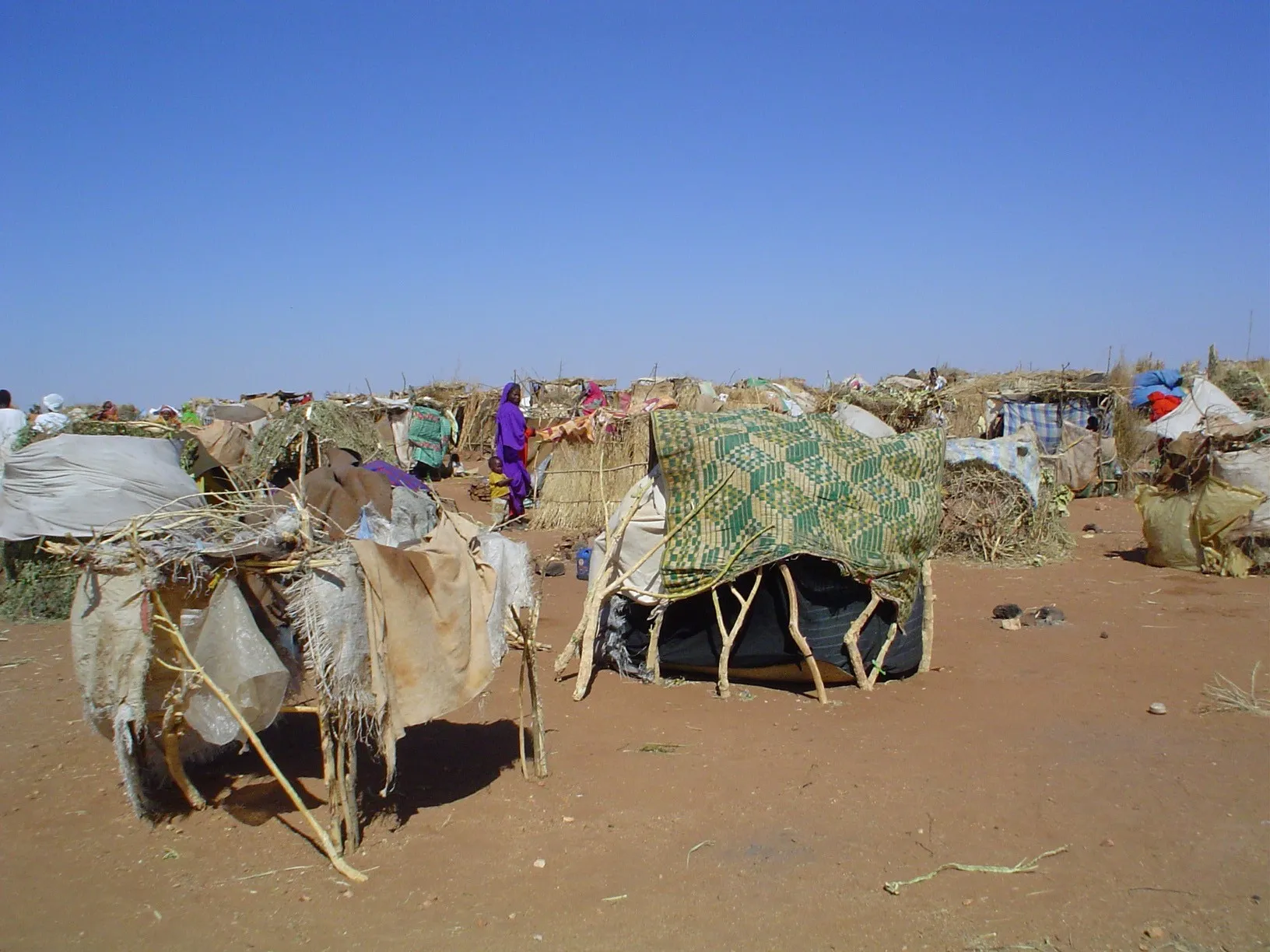
Darfur remains the epicenter of the suffering. The RSF’s drive to seize El Fasher, the army’s last major stronghold in the region, drew warnings from the U.N. about the risk of large-scale, ethnically driven atrocities against the civilians trapped there. The Zamzam settlement near El Fasher — one of the largest camps for internally displaced people in Sudan, established two decades ago during the first Darfur war — has been among the populations caught in the violence.
The human rights office has been careful to assign responsibility to both belligerents. The SAF, which controls a conventional air force, and the RSF, which has expanded its drone arsenal dramatically, have each carried out strikes that killed civilians. Neither side, the U.N. has stressed, is sparing populated areas.
The U.S. Angle
The United States is not a bystander to this war on paper, even if it has stayed out of the fighting. In January 2025, the State Department formally determined that the RSF and allied militias had committed genocide in Sudan, citing the systematic murder of men and boys on an ethnic basis and the targeting of women and girls for sexual violence. Alongside that determination, Washington sanctioned RSF leader Mohammad Hamdan Daglo Mousa, known as Hemedti, along with seven RSF-linked companies based in the United Arab Emirates and an individual accused of helping the group procure weapons.
U.S. policy has held that it backs neither side. The State Department has said that while the RSF bears responsibility for genocide, the SAF has also attacked civilians and obstructed humanitarian aid, and that both forces lack the legitimacy to govern a peaceful Sudan. That posture mirrors Washington’s approach to other African conflicts where it has reached for sanctions rather than direct involvement — including the recent U.S. sanctions against rebel commanders driving the war in eastern Congo.
The drone surge complicates that approach. Sanctions target the leaders and the money; they do not ground the aircraft. With both sides expanding their drone fleets, often using commercially available technology and components routed through third countries, the tools that have made the war so lethal to civilians are precisely the ones hardest to choke off from the outside.
The Global Impact
Sudan sits on the Red Sea and borders seven countries, several of them fragile. A war that drives millions from their homes and starves whole regions does not stay within its borders: it pushes refugees into Chad, Egypt and South Sudan, strains aid systems already stretched thin, and creates the kind of ungoverned space that draws armed groups and smugglers.
The crisis has unfolded largely outside the spotlight that the G7 summit in France this week trained on trade and Ukraine. Aid agencies have repeatedly warned that funding for Sudan’s humanitarian response falls far short of need, even as the U.N. describes a famine taking hold in parts of the country. The drone figures add a grim data point to that picture: the war is not winding down or stabilizing into a frozen stalemate. It is becoming more lethal to the people least able to escape it.
The targeting pattern is part of what alarms U.N. officials. Long-range drones have repeatedly hit markets, hospitals, water and power infrastructure, and the camps where displaced families shelter — sites with no military value that nonetheless sit in a war now waged across the whole map of the country rather than along a defined front. Each strike on that kind of target compounds the displacement crisis, pushing more people toward the borders and deeper into reliance on an aid system that is already running out of money.
What Comes Next
Türk’s office has called for accountability and for both sides to halt attacks on civilian areas, but the U.N. has no power to enforce either demand. International attention now centers on whether outside states supplying or financing the combatants can be pressured to stop, and on whether the famine warnings translate into a humanitarian response that matches the scale of the catastrophe.
For now, the trend the U.N. has documented points one direction. Drone strikes that killed at least 880 civilians by April had killed more than 1,000 by the end of May. Without a change in how the war is fought — or in who is arming it — that number is set to keep rising through the rest of 2026.
Sources 6 cited · 3 primary
- Armed drones leading cause of civilian death in Sudan war: UN rights chief
- Sudan: Türk appalled by surge in deadly drone attacks on civilians in Kordofan and White Nile
- Drone warfare kills over 1,000 in Sudan in 2026 as strikes multiply: UN
- Drone strikes have killed more than 1,000 civilians in Sudan this year, UN rights chief says
- Sudan drone strikes kill over 1,000 in first five months of 2026: UN
- Genocide Determination in Sudan and Imposing Accountability Measures
American Courant cites its sources and links to primary documents where they exist. How we report →