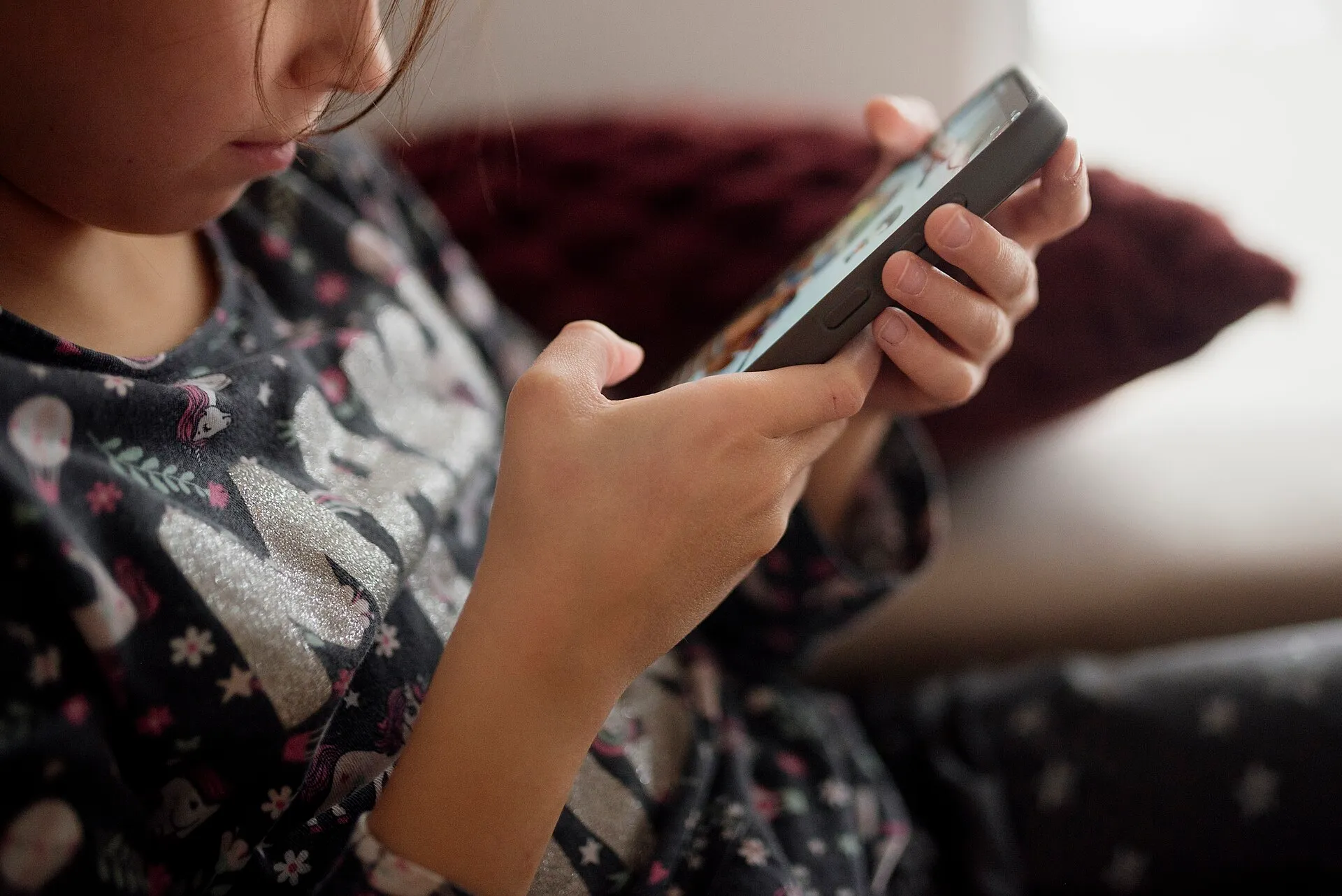
Britain announced plans on Monday to bar children under 16 from the largest social media platforms, a sweeping move that would make the United Kingdom one of the most aggressive Western governments yet to wall minors off from the apps that shape much of modern childhood.
Prime Minister Keir Starmer cast the decision in personal terms. “Social media is making our children unhappy and unsafe, and as a parent, as much as a Prime Minister, I just can’t let that go on anymore,” he said, pledging that the policy would “give kids their childhood back.” The government wants to pass the enabling regulation before Christmas, with the first restrictions expected to take effect by spring 2027.
The plan would cover Snapchat, TikTok, YouTube, Instagram, Facebook and X, while exempting private messaging services such as WhatsApp and Signal. Platforms that fail to take reasonable steps to keep under-16s off their services could face multimillion-pound fines. For American parents, regulators and tech companies, the announcement is more than a foreign headline: it pushes a fight the United States has been having for years — and has not resolved — into sharper relief.
What the Ban Would Do
The proposal goes beyond a simple age cutoff. The government said it would introduce additional restrictions on features it considers especially harmful, including blocking livestreaming and contact from strangers for users under 16, with similar protections switched on by default for 16- and 17-year-olds. Officials have also floated overnight curfews on access and limits on the infinite-scroll mechanics that keep young users glued to feeds, along with curbs on AI chatbots aimed at children.
Technology Secretary Liz Kendall, who leads the Department for Science, Innovation and Technology, put the blame squarely on the platforms. “Tech companies have had countless opportunities to keep children safe, yet they have failed to act,” she said. “That is why we are taking power away from the tech giants and putting it back in parents’ hands.” Kendall asked Ofcom, the U.K.’s communications regulator, to define what “highly effective age assurance” should look like and to publish that assessment by October, so Parliament can debate the rules with a clear sense of how they would actually be enforced.
The government argues it has a mandate. In a public consultation, more than 83 percent of parents who responded said the risks of social media use outweigh the benefits, and roughly nine in ten backed a minimum age of 16 before children can hold accounts.
Following Australia’s Lead
Britain is not acting first. Australia became the world’s first country to impose a comprehensive under-16 social media ban when its law took effect on December 10, 2025, requiring platforms including TikTok, Snapchat, YouTube, Instagram, Facebook, Reddit, Threads, Twitch and X to stop minors from holding accounts or face penalties that can reach tens of millions of dollars. Australian officials framed their law as a “first domino,” and governments worldwide have been watching how enforcement plays out.
The U.K. says it intends to model its approach on Australia’s but to go further, layering on the feature-level restrictions and default protections for older teenagers. That makes Britain an important second test case: a large, English-speaking democracy with a developed tech sector attempting something close to a wholesale removal of minors from mainstream platforms. If it works — or fails — the lessons will travel quickly.
Australia’s early experience offers a preview of the friction ahead. When its ban took effect, platforms moved to deactivate or restrict accounts believed to belong to under-16s, and the rollout immediately raised questions that Britain will now face: how to identify a user’s age reliably, what to do about the many teenagers who simply log in with an adult’s credentials, and how to weigh the privacy cost of asking an entire population to prove how old it is. Several platforms had argued before the law passed that hard age limits were difficult to enforce and that less drastic safety tools were a better fit — objections the U.K. government has now answered by putting the legal obligation, and the threat of fines, on the companies rather than on parents or children.
The U.S. Angle
The contrast with the United States is the part American readers should watch. Washington has no federal social media age ban, and the leading attempts to write one have stalled. The Kids Online Safety Act and related bills have moved through committees and floor fights for years without becoming law, leaving a patchwork in their place. Roughly half of U.S. states have passed some form of age-gating or age-verification requirement for social media or adult content, and more are slated to take effect through 2026.
That patchwork is colliding with the First Amendment. In Free Speech Coalition v. Paxton, the Supreme Court last year upheld a Texas law requiring age verification to access sexual content online, a decision that emboldened states pursuing similar mandates but did not settle the harder questions about minors and general-purpose social platforms. Civil-liberties groups warn that strict age checks force every user — adult and child alike — to prove their identity to use ordinary speech platforms, raising privacy and free-expression concerns that Britain’s parliamentary system can sidestep more easily than American courts can. The U.S. is still working through the policy vacuum around children and technology that American Courant has flagged, and through a broader fight over holding tech platforms accountable for what they do to young users. Britain’s move sharpens both.
The Hard Part: Enforcement
The biggest doubts are practical. Age verification at scale is notoriously difficult: birthdates are trivial to fake, document checks raise privacy alarms, and determined teenagers have a long history of routing around restrictions with borrowed logins and VPNs that disguise their location. The methods under discussion — uploading identity documents, facial age-estimation software that guesses a user’s age from a selfie, or cross-checks against existing records — each carry their own tradeoffs in accuracy, cost and data collection, and none has yet proven reliable enough to satisfy both regulators and privacy advocates at once. Independent experts reacting to the announcement cautioned that the policy’s success hinges entirely on whether “highly effective age assurance” can be built without creating new surveillance risks for everyone else — the same problem that has tripped up similar efforts elsewhere.
Those warnings now have names attached. The Molly Rose Foundation, an online-safety charity, cautioned that a rushed, politically driven ban could be bypassed within days by tech-savvy teenagers using VPNs to disguise their location. The digital-rights campaigners at the Open Rights Group raised the opposite danger — that handing age checks to private verification firms could expose the personal data of every user, not just children. And while messaging apps such as Signal are exempt from the ban, Signal’s president, Meredith Whittaker, has warned more broadly that her service would “rather exit a market than undermine the technical guarantees” its users trust for privacy — a preview of how some platforms may react if age-verification mandates keep spreading.
Enforcement also depends on the platforms, which have resisted hard age limits in part because younger users are valuable and because verification is costly and imperfect. Ofcom’s October assessment will be the first real signal of whether the government’s timeline is realistic or aspirational.
For now, the sequence is set: Ofcom reports in the autumn, Parliament debates and aims to pass the rules before year’s end, and the restrictions are slated to begin in spring 2027. Whether Britain can actually keep tens of millions of teenagers off the world’s most popular apps — and what that means for the American debate over the same question — will be one of the defining tests of tech regulation in the year ahead, and a story the world desk will keep following.
Sources 6 cited · 1 primary
- Social media age restrictions
- UK to ban social media for under-16s to 'give kids their childhood back'
- Britain will ban under-16s from social media apps, including TikTok and YouTube
- Britain unveils sweeping ban on social media for under-16s
- Rapid reaction: UK under-16s social media ban
- How are tech companies and experts reacting to the UK's proposed social media ban for under-16s?
American Courant cites its sources and links to primary documents where they exist. How we report →